

Egg substitute, omelet, scrambled, or fried, with cheese
Common food

Photo: Wikipedia
This is a savory, protein-rich dish made from egg substitutes cooked into omelets, scrambles, or fried forms and melted with cheese. It offers a soft, slightly spongy texture with a rich, cheesy flavor, delivering a high-protein, low-carb meal at just 128 calories per 100g.
Calorie split: 33% protein · 7% carbs · 60% fat
↓ Full nutrition💚 Why it's loved
People love it for its comforting, cheesy flavor and its incredible versatility—it can be a quick breakfast, a light lunch, or a simple dinner base. It's a familiar, satisfying staple in many home kitchens.
⚠️ Watch-outs & how to enjoy it better
Some commercial egg substitutes can be high in sodium, which may be a concern for those monitoring blood pressure. To counteract this, choose low-sodium varieties and pair the dish with potassium-rich foods like spinach or tomatoes.
Key benefits
- High in protein for muscle maintenance and satiety
- Very low in carbohydrates, suitable for low-carb diets
- Quick and easy to prepare for a fast meal
- Can be a cholesterol-free alternative to whole eggs
🍽️ Popular dishes

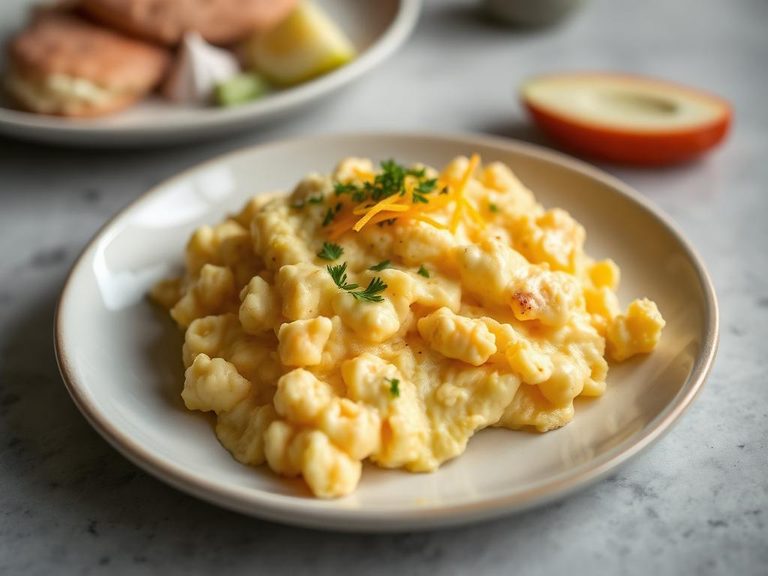


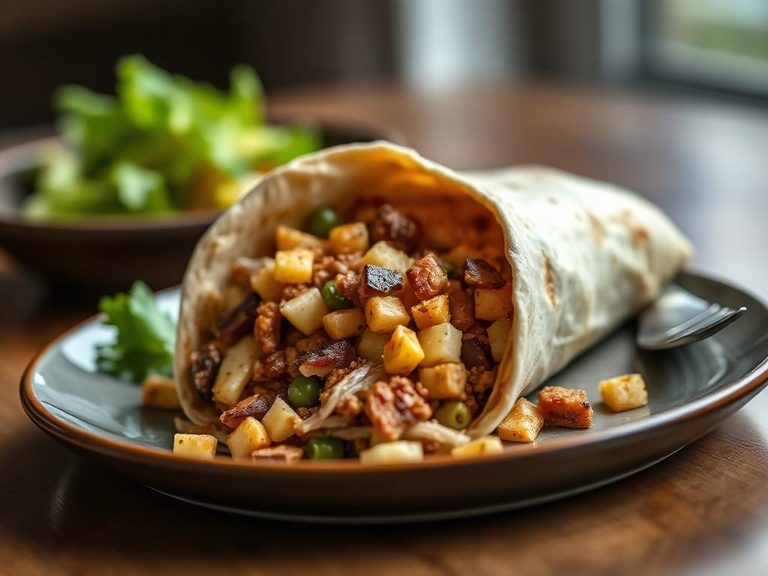
🌍 Where it's eaten
💡 Did you know?
The concept of a cheese omelet is so iconic that it's often the first dish taught in culinary schools to teach fundamental egg-cooking techniques.
Full nutrition (USDA data · scales with serving)
| Water | 76.8 g |
| Energy | 128 kcal |
| Protein | 10.7 g |
| Total lipid (fat) | 8.5 g |
| Carbohydrate, by difference | 2.3 g |
| Fiber, total dietary | 0.00 g |
| Total Sugars | 2.0 g |
| Calcium, Ca | 171 mg |
| Iron, Fe | 1.7 mg |
| Magnesium, Mg | 16.0 mg |
| Phosphorus, P | 130 mg |
| Potassium, K | 193 mg |
| Sodium, Na | 398 mg |
| Zinc, Zn | 1.2 mg |
| Copper, Cu | 0.02 mg |
| Selenium, Se | 36.5 ug |
| Vitamin C, total ascorbic acid | 0.30 mg |
| Thiamin | 0.08 mg |
| Riboflavin | 0.34 mg |
| Niacin | 0.12 mg |
| Vitamin B-6 | 0.14 mg |
| Folate, total | 12.0 ug |
| Folic acid | 0.00 ug |
| Folate, food | 12.0 ug |
| Folate, DFE | 12.0 ug |
| Choline, total | 4.7 mg |
| Vitamin B-12 | 0.40 ug |
| Vitamin B-12, added | 0.00 ug |
| Vitamin A, RAE | 64.0 ug |
| Retinol | 54.0 ug |
| Carotene, beta | 130 ug |
| Carotene, alpha | 0.00 ug |
| Cryptoxanthin, beta | 1.0 ug |
| Lycopene | 0.00 ug |
| Lutein + zeaxanthin | 2.0 ug |
| Vitamin E (alpha-tocopherol) | 2.1 mg |
| Vitamin E, added | 0.00 mg |
| Vitamin D (D2 + D3) | 1.8 ug |
| Vitamin K (phylloquinone) | 4.6 ug |
| Alcohol, ethyl | 0.00 g |
| Caffeine | 0.00 mg |
| Theobromine | 0.00 mg |
Fat & fatty acid profile (per 100g)
| Fatty acids, total saturated | 3.3 g |
| SFA 4:0 | 0.11 g |
| SFA 6:0 | 0.08 g |
| SFA 8:0 | 0.05 g |
| SFA 10:0 | 0.12 g |
| SFA 12:0 | 0.14 g |
| SFA 14:0 | 0.45 g |
| SFA 16:0 | 1.6 g |
| SFA 18:0 | 0.61 g |
| Fatty acids, total monounsaturated | 2.6 g |
| MUFA 16:1 | 0.09 g |
| MUFA 18:1 | 2.5 g |
| MUFA 20:1 | 0.03 g |
| MUFA 22:1 | 0.00 g |
| Fatty acids, total polyunsaturated | 1.6 g |
| PUFA 18:2 | 1.4 g |
| PUFA 18:3 | 0.17 g |
| PUFA 18:4 | 0.00 g |
| PUFA 20:4 | 0.01 g |
| PUFA 20:5 n-3 (EPA) | 0.00 g |
| PUFA 22:5 n-3 (DPA) | 0.00 g |
| PUFA 22:6 n-3 (DHA) | 0.00 g |
| Cholesterol | 15.0 mg |
Amino acid profile (per 100g)
Estimated from Egg substitute, liquid or frozen, fat free — USDA does not publish this profile for Egg substitute.
| Tryptophan | 0.16 g |
| Threonine | 0.48 g |
| Isoleucine | 0.66 g |
| Leucine | 0.97 g |
| Lysine | 0.71 g |
| Methionine | 0.39 g |
| Cystine | 0.23 g |
| Phenylalanine | 0.65 g |
| Tyrosine | 0.46 g |
| Valine | 0.79 g |
| Arginine | 0.58 g |
| Histidine | 0.26 g |
| Alanine | 0.62 g |
| Aspartic acid | 0.93 g |
| Glutamic acid | 1.7 g |
| Glycine | 0.36 g |
| Proline | 0.56 g |
| Serine | 0.75 g |
FAQ
Is this dish suitable for a low-carb or keto diet?
Yes, with only 2.26g of carbs per 100g, it fits very well into low-carb and ketogenic dietary patterns.
Can I make this with regular eggs instead of a substitute?
Absolutely. The nutritional profile will change slightly (higher cholesterol, similar protein), but the dishes and methods remain the same.
What kind of cheese works best?
Melting cheeses like cheddar, mozzarella, Swiss, or American are classic choices. For a sharper flavor, try feta or goat cheese.
Nutrient density (calculated · NRF9.3)
Nutrient Rich Foods index: beneficial nutrients (protein, fiber, vitamins, minerals) minus saturated fat, added sugar & sodium, per 100 kcal.
NRF9.3 index — Fulgoni, Keast & Drewnowski, 2009. Computed from USDA nutrients.
Weight-loss friendliness (composite index)
Energy density 1.28 kcal/g · 33% calories from protein · 0.0 g fiber · 2.0 g sugar per 100 g.
Composite of energy density (Rolls et al., 1999), protein & fiber satiety, minus sugar. A calculated heuristic — ranks satiety-per-calorie, not a clinical measure.
Dietary load (calculated from USDA values)
Potential renal acid load. Positive = acid-forming, negative = alkaline-forming.
Sodium-to-potassium ratio: 2.06 (lower is better — aim for ≤ 1)
Sodium:potassium per WHO potassium guidance. Computed from USDA nutrients.