

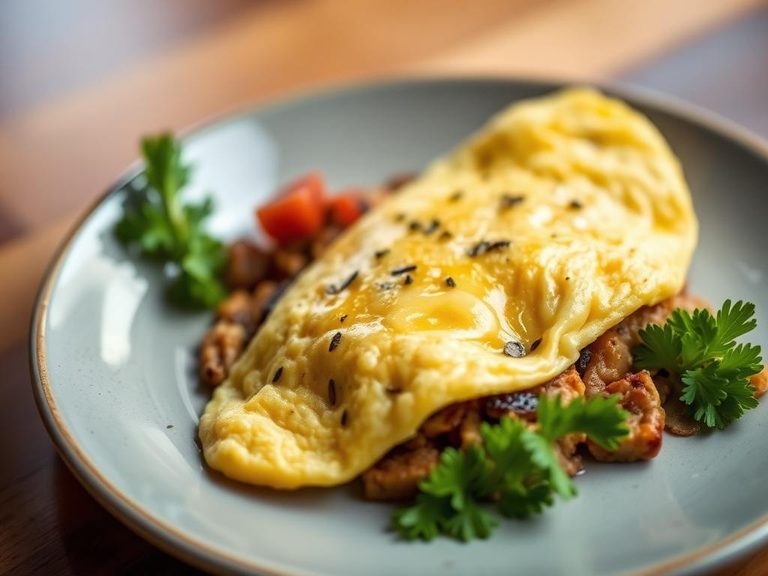
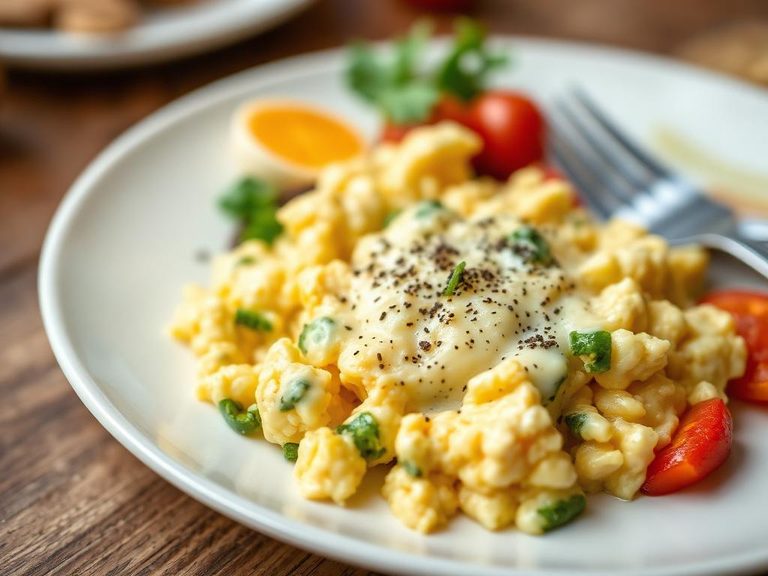
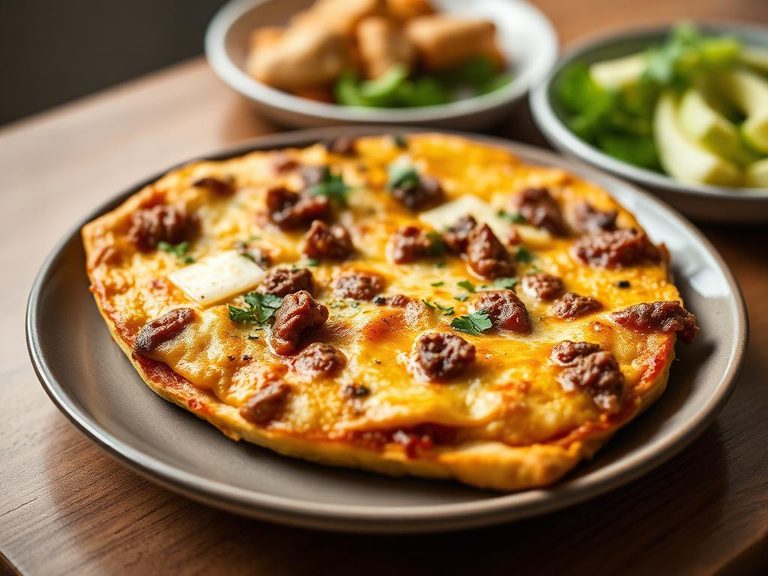
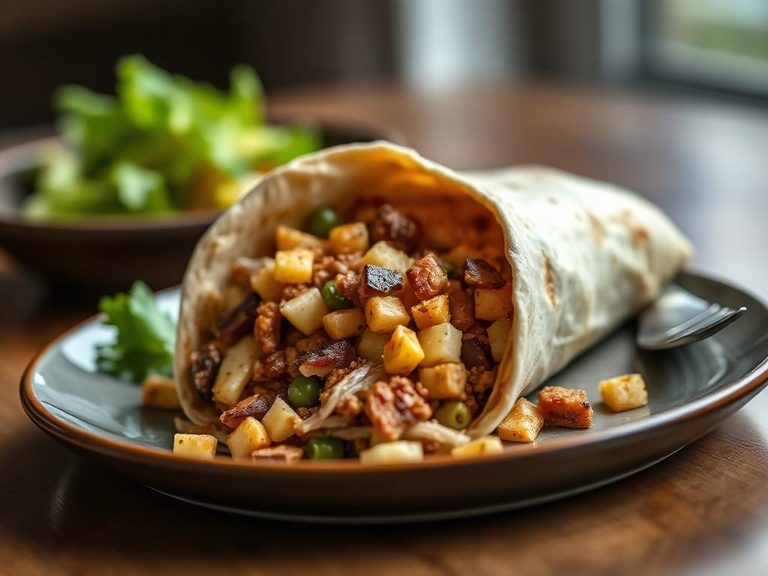
Egg substitute, omelet, scrambled, or fried, with cheese, meat, and vegetables
Common food

Photo: Wikipedia
A savory, protein-rich blend of egg substitute, melted cheese, meat, and vegetables, cooked to a tender, slightly fluffy texture. It delivers a satisfying, umami-forward flavor with a creamy mouthfeel from the cheese, making it a hearty, low-carb option for any meal. With nearly 11 grams of protein per 100 grams, it's a nutrient-dense choice that supports muscle maintenance and satiety.
Calorie split: 33% protein · 7% carbs · 60% fat
↓ Full nutrition💚 Why it's loved
People love it for its comforting, cheesy flavor and the satisfying texture of a well-cooked omelet or scramble, which feels indulgent yet nutritious. Its versatility allows for endless combinations of meats and vegetables, making it a staple in many cultures from American diners to Mediterranean breakfasts.
⚠️ Watch-outs & how to enjoy it better
The egg substitute may contain additives or allergens like soy, and the cheese and meat can add sodium and saturated fat, which might concern those with heart health issues. To counteract, choose low-sodium cheese and lean meats, and pair with a side of fiber-rich vegetables to balance the meal and slow digestion.
Key benefits
- High protein content supports muscle health and satiety.
- Low carbohydrate and sugar levels make it suitable for low-carb diets.
- Provides essential vitamins and minerals from added vegetables.
- Versatile for breakfast, lunch, or dinner meals.
🍽️ Popular dishes


🌍 Where it's eaten
💡 Did you know?
Egg substitutes like this one often use soy protein or potato starch to mimic the binding and texture of real eggs, a technique that dates back to the 1940s for military rations.
Full nutrition (USDA data · scales with serving)
| Water | 76.1 g |
| Energy | 132 kcal |
| Protein | 11.0 g |
| Total lipid (fat) | 8.7 g |
| Carbohydrate, by difference | 2.4 g |
| Fiber, total dietary | 0.10 g |
| Total Sugars | 1.9 g |
| Calcium, Ca | 154 mg |
| Iron, Fe | 1.6 mg |
| Magnesium, Mg | 20.0 mg |
| Phosphorus, P | 134 mg |
| Potassium, K | 221 mg |
| Sodium, Na | 431 mg |
| Zinc, Zn | 1.2 mg |
| Copper, Cu | 0.03 mg |
| Selenium, Se | 34.0 ug |
| Vitamin C, total ascorbic acid | 2.3 mg |
| Thiamin | 0.10 mg |
| Riboflavin | 0.33 mg |
| Niacin | 0.61 mg |
| Vitamin B-6 | 0.17 mg |
| Folate, total | 15.0 ug |
| Folic acid | 0.00 ug |
| Folate, food | 15.0 ug |
| Folate, DFE | 15.0 ug |
| Choline, total | 10.5 mg |
| Vitamin B-12 | 0.40 ug |
| Vitamin B-12, added | 0.00 ug |
| Vitamin A, RAE | 71.0 ug |
| Retinol | 48.0 ug |
| Carotene, beta | 278 ug |
| Carotene, alpha | 0.00 ug |
| Cryptoxanthin, beta | 1.0 ug |
| Lycopene | 0.00 ug |
| Lutein + zeaxanthin | 363 ug |
| Vitamin E (alpha-tocopherol) | 2.0 mg |
| Vitamin E, added | 0.00 mg |
| Vitamin D (D2 + D3) | 1.6 ug |
| Vitamin K (phylloquinone) | 27.7 ug |
| Alcohol, ethyl | 0.00 g |
| Caffeine | 0.00 mg |
| Theobromine | 0.00 mg |
Fat & fatty acid profile (per 100g)
| Fatty acids, total saturated | 3.3 g |
| SFA 4:0 | 0.09 g |
| SFA 6:0 | 0.07 g |
| SFA 8:0 | 0.04 g |
| SFA 10:0 | 0.10 g |
| SFA 12:0 | 0.12 g |
| SFA 14:0 | 0.41 g |
| SFA 16:0 | 1.7 g |
| SFA 18:0 | 0.66 g |
| Fatty acids, total monounsaturated | 2.8 g |
| MUFA 16:1 | 0.10 g |
| MUFA 18:1 | 2.7 g |
| MUFA 20:1 | 0.04 g |
| MUFA 22:1 | 0.00 g |
| Fatty acids, total polyunsaturated | 1.6 g |
| PUFA 18:2 | 1.4 g |
| PUFA 18:3 | 0.17 g |
| PUFA 18:4 | 0.00 g |
| PUFA 20:4 | 0.01 g |
| PUFA 20:5 n-3 (EPA) | 0.00 g |
| PUFA 22:5 n-3 (DPA) | 0.00 g |
| PUFA 22:6 n-3 (DHA) | 0.00 g |
| Cholesterol | 18.0 mg |
Amino acid profile (per 100g)
Estimated from Egg substitute, liquid or frozen, fat free — USDA does not publish this profile for Egg substitute.
| Tryptophan | 0.16 g |
| Threonine | 0.48 g |
| Isoleucine | 0.66 g |
| Leucine | 0.97 g |
| Lysine | 0.71 g |
| Methionine | 0.39 g |
| Cystine | 0.23 g |
| Phenylalanine | 0.65 g |
| Tyrosine | 0.46 g |
| Valine | 0.79 g |
| Arginine | 0.58 g |
| Histidine | 0.26 g |
| Alanine | 0.62 g |
| Aspartic acid | 0.93 g |
| Glutamic acid | 1.7 g |
| Glycine | 0.36 g |
| Proline | 0.56 g |
| Serine | 0.75 g |
FAQ
Is this food suitable for a vegan diet?
No, because it contains cheese and meat, which are animal products. However, the egg substitute itself might be vegan if made from plant-based ingredients like soy or pea protein.
How does the protein content compare to regular eggs?
This dish has about 10.97g protein per 100g, which is similar to or slightly higher than regular scrambled eggs (around 10g per 100g), thanks to the added cheese and meat.
Can I make this dish at home with regular eggs?
Yes, you can substitute regular eggs for the egg substitute, and the dish will be very similar in taste and texture, though the nutritional values may vary slightly.
Nutrient density (calculated · NRF9.3)
Nutrient Rich Foods index: beneficial nutrients (protein, fiber, vitamins, minerals) minus saturated fat, added sugar & sodium, per 100 kcal.
NRF9.3 index — Fulgoni, Keast & Drewnowski, 2009. Computed from USDA nutrients.
Weight-loss friendliness (composite index)
Energy density 1.32 kcal/g · 33% calories from protein · 0.1 g fiber · 1.9 g sugar per 100 g.
Composite of energy density (Rolls et al., 1999), protein & fiber satiety, minus sugar. A calculated heuristic — ranks satiety-per-calorie, not a clinical measure.
Dietary load (calculated from USDA values)
Potential renal acid load. Positive = acid-forming, negative = alkaline-forming.
Sodium-to-potassium ratio: 1.95 (lower is better — aim for ≤ 1)
Sodium:potassium per WHO potassium guidance. Computed from USDA nutrients.