

Egg substitute, omelet, scrambled, or fried, with meat and vegetables
Common food

Photo: Wikipedia
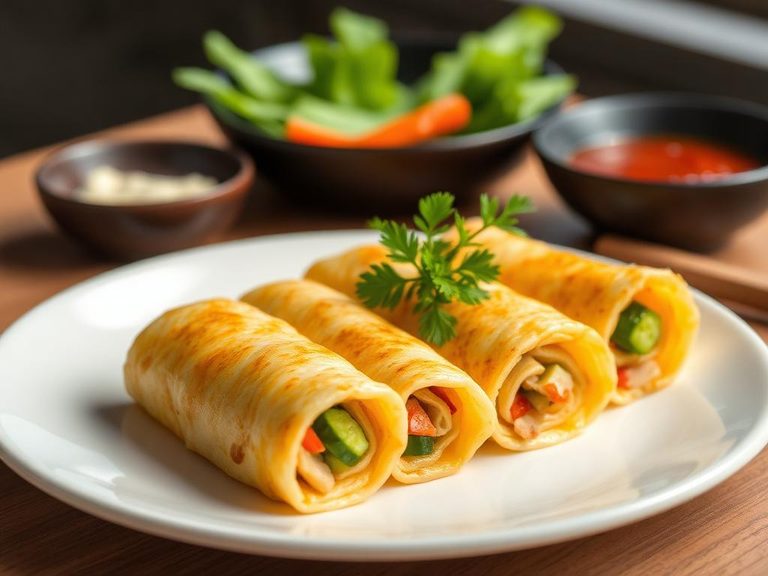
A protein-packed, savory base made from plant-based or egg-white substitutes, cooked with meat and vegetables to mimic the fluffy, tender texture of a classic omelet or scramble. It's a lean, low-carb foundation that absorbs the flavors of its mix-ins, offering a satisfying, hearty bite without the cholesterol of whole eggs. With nearly 10g of protein per 100g, it's a nutritionally dense option for a quick meal.
Calorie split: 38% protein · 9% carbs · 54% fat
↓ Full nutrition💚 Why it's loved
People love its incredible versatility and speed—it's a blank canvas that can be customized with any leftover meat, herbs, or veggies in minutes. It delivers the comforting, familiar satisfaction of a breakfast scramble with a cleaner nutritional profile.
⚠️ Watch-outs & how to enjoy it better
Some commercial egg substitutes can be high in sodium or contain additives to mimic texture and flavor, which may concern those monitoring salt intake. The texture can sometimes be less rich or slightly spongy compared to whole eggs. To counteract, choose low-sodium versions, rinse canned ingredients like mushrooms, and cook with flavorful herbs and spices instead of salt.
Key benefits
- High in protein for muscle maintenance and satiety.
- Very low in carbohydrates and sugars, suitable for low-carb diets.
- Low in fat, especially if using lean meat and minimal cooking oil.
- Quick and versatile base for a balanced meal with added vegetables.
- Often cholesterol-free if using plant-based substitutes.
🍽️ Popular dishes
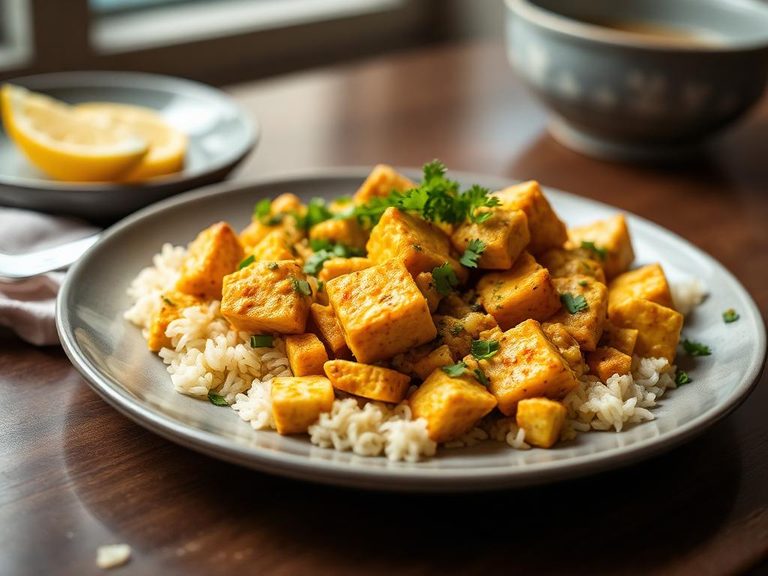
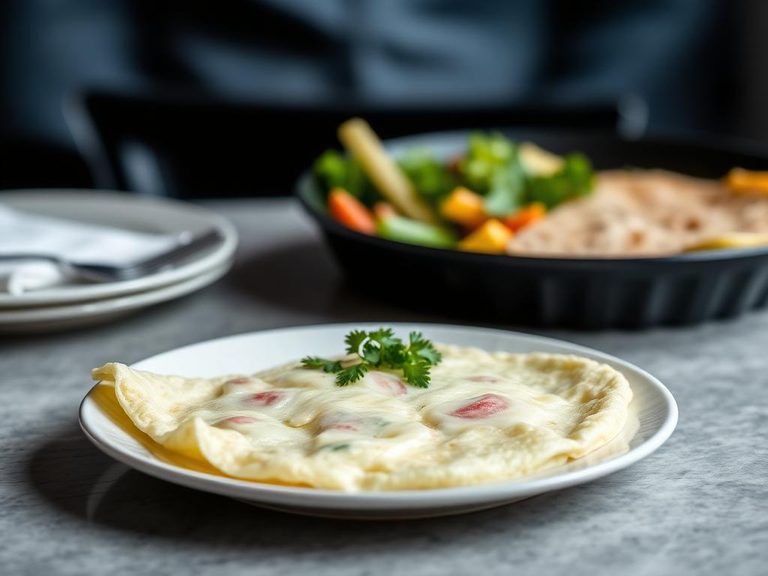
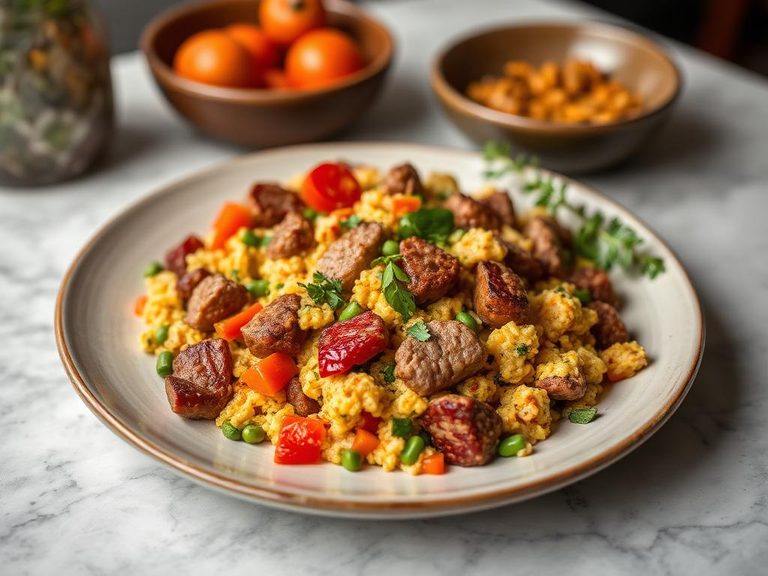
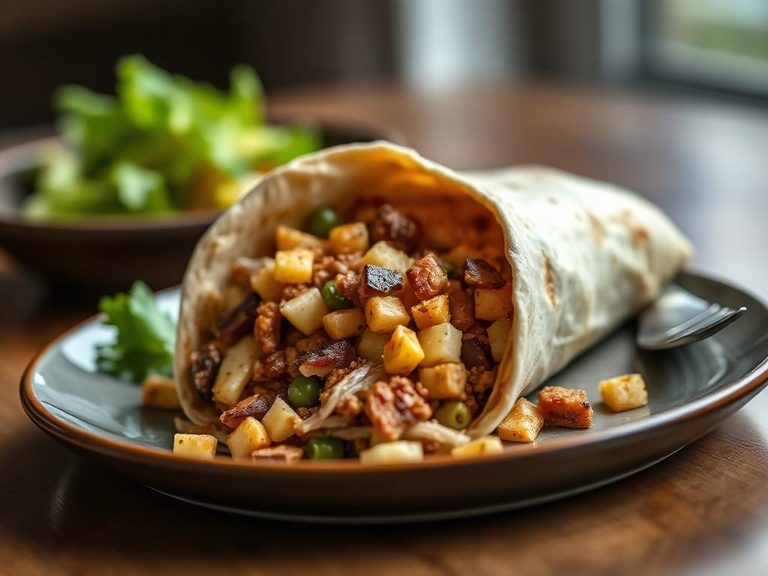
🌍 Where it's eaten
💡 Did you know?
The 'omelet' technique is so ancient that the first known recipe appears in a 4th-century Roman cookbook, but using a plant-based substitute to replicate it is a distinctly modern innovation.
Full nutrition (USDA data · scales with serving)
| Water | 80.9 g |
| Energy | 101 kcal |
| Protein | 9.5 g |
| Total lipid (fat) | 6.0 g |
| Carbohydrate, by difference | 2.1 g |
| Fiber, total dietary | 0.20 g |
| Total Sugars | 1.7 g |
| Calcium, Ca | 64.0 mg |
| Iron, Fe | 1.7 mg |
| Magnesium, Mg | 22.0 mg |
| Phosphorus, P | 79.0 mg |
| Potassium, K | 241 mg |
| Sodium, Na | 348 mg |
| Zinc, Zn | 0.97 mg |
| Copper, Cu | 0.03 mg |
| Selenium, Se | 33.6 ug |
| Vitamin C, total ascorbic acid | 4.3 mg |
| Thiamin | 0.10 mg |
| Riboflavin | 0.32 mg |
| Niacin | 0.66 mg |
| Vitamin B-6 | 0.18 mg |
| Folate, total | 19.0 ug |
| Folic acid | 0.00 ug |
| Folate, food | 19.0 ug |
| Folate, DFE | 19.0 ug |
| Choline, total | 9.8 mg |
| Vitamin B-12 | 0.26 ug |
| Vitamin B-12, added | 0.00 ug |
| Vitamin A, RAE | 57.0 ug |
| Retinol | 21.0 ug |
| Carotene, beta | 439 ug |
| Carotene, alpha | 0.00 ug |
| Cryptoxanthin, beta | 1.0 ug |
| Lycopene | 0.00 ug |
| Lutein + zeaxanthin | 717 ug |
| Vitamin E (alpha-tocopherol) | 2.1 mg |
| Vitamin E, added | 0.00 mg |
| Vitamin D (D2 + D3) | 1.3 ug |
| Vitamin K (phylloquinone) | 51.0 ug |
| Alcohol, ethyl | 0.00 g |
| Caffeine | 0.00 mg |
| Theobromine | 0.00 mg |
Fat & fatty acid profile (per 100g)
| Fatty acids, total saturated | 1.7 g |
| SFA 4:0 | 0.03 g |
| SFA 6:0 | 0.02 g |
| SFA 8:0 | 0.01 g |
| SFA 10:0 | 0.03 g |
| SFA 12:0 | 0.04 g |
| SFA 14:0 | 0.13 g |
| SFA 16:0 | 0.95 g |
| SFA 18:0 | 0.38 g |
| Fatty acids, total monounsaturated | 2.2 g |
| MUFA 16:1 | 0.06 g |
| MUFA 18:1 | 2.1 g |
| MUFA 20:1 | 0.03 g |
| MUFA 22:1 | 0.00 g |
| Fatty acids, total polyunsaturated | 1.6 g |
| PUFA 18:2 | 1.4 g |
| PUFA 18:3 | 0.17 g |
| PUFA 18:4 | 0.00 g |
| PUFA 20:4 | 0.01 g |
| PUFA 20:5 n-3 (EPA) | 0.00 g |
| PUFA 22:5 n-3 (DPA) | 0.00 g |
| PUFA 22:6 n-3 (DHA) | 0.00 g |
| Cholesterol | 10.0 mg |
Amino acid profile (per 100g)
Estimated from Egg substitute, liquid or frozen, fat free — USDA does not publish this profile for Egg substitute.
| Tryptophan | 0.16 g |
| Threonine | 0.48 g |
| Isoleucine | 0.66 g |
| Leucine | 0.97 g |
| Lysine | 0.71 g |
| Methionine | 0.39 g |
| Cystine | 0.23 g |
| Phenylalanine | 0.65 g |
| Tyrosine | 0.46 g |
| Valine | 0.79 g |
| Arginine | 0.58 g |
| Histidine | 0.26 g |
| Alanine | 0.62 g |
| Aspartic acid | 0.93 g |
| Glutamic acid | 1.7 g |
| Glycine | 0.36 g |
| Proline | 0.56 g |
| Serine | 0.75 g |
FAQ
Is this the same as a tofu scramble?
It's very similar. A tofu scramble is a specific type of egg substitute dish using crumbled tofu, often seasoned with turmeric for color. This category is broader and includes other plant-based or egg-white products cooked with meat and vegetables.
Why is the protein content so high?
The high protein comes from the core egg substitute (like egg whites or pea protein) combined with the added meat (chicken, turkey, ham, etc.), making it a protein-dense meal.
Can I make this vegan?
Absolutely. Use a plant-based egg substitute (like tofu, chickpea flour batter, or commercial vegan egg) and pair it with plant-based meats or just extra vegetables.
Nutrient density (calculated · NRF9.3)
Nutrient Rich Foods index: beneficial nutrients (protein, fiber, vitamins, minerals) minus saturated fat, added sugar & sodium, per 100 kcal.
NRF9.3 index — Fulgoni, Keast & Drewnowski, 2009. Computed from USDA nutrients.
Weight-loss friendliness (composite index)
Energy density 1.01 kcal/g · 38% calories from protein · 0.2 g fiber · 1.7 g sugar per 100 g.
Composite of energy density (Rolls et al., 1999), protein & fiber satiety, minus sugar. A calculated heuristic — ranks satiety-per-calorie, not a clinical measure.
Dietary load (calculated from USDA values)
Potential renal acid load. Positive = acid-forming, negative = alkaline-forming.
Sodium-to-potassium ratio: 1.44 (lower is better — aim for ≤ 1)
Sodium:potassium per WHO potassium guidance. Computed from USDA nutrients.