

Korean Gyeran-mari
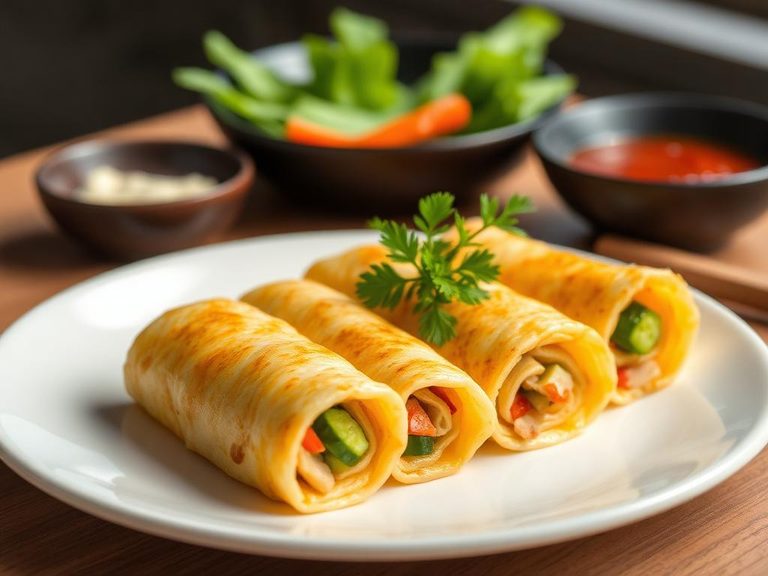
Korean Gyeran-mari is a savory rolled omelet made by layering beaten eggs with finely chopped vegetables like carrots, green onions, and sometimes zucchini or kimchi. It's a staple in Korean home cooking and banchan (side dish) culture, known for its neat, spiral cross-section when sliced. The dish is believed to have been influenced by Japanese tamagoyaki but has evolved with distinctly Korean flavors.
🍽️ Nutrition at a glance
Gyeran-mari is a high-protein, low-carbohydrate dish, with each serving providing around 150-200 calories. It's rich in vitamins A and C from the vegetables, and offers healthy fats from the eggs and any sesame oil used in cooking.
Nutrition breakdown
| Calories | 180 kcal |
| Protein | 12 g |
| Carbs | 3 g |
| Fat | 13 g |
| Fiber | 1 g |
| Sugar | 1 g |
| Sodium | 350 mg |
| Vitamin A | 150 mcg RAE |
| Vitamin D | 1.5 mcg |
| Vitamin B12 | 0.8 mcg |
| Riboflavin (B2) | 0.3 mg |
| Selenium | 15 mcg |
| Phosphorus | 150 mg |
| Choline | 180 mg |
| Iron | 1.5 mg |
Per 1 roll (approx. 100 g) · estimated, varies by recipe
💡 What's interesting
Culturally, Gyeran-mari is a symbol of meticulous home cooking, as the rolling technique requires patience and skill. Nutritionally, it's a clever way to pack vegetables into a protein-rich meal, making it a popular choice for children and adults alike.
🍽️ Related dishes

AI estimate may be inaccurate · Terms