

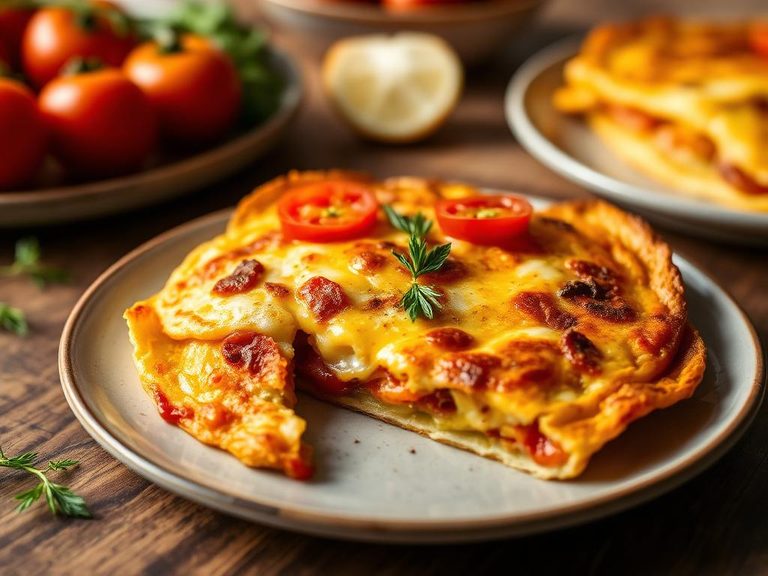
Egg omelet or scrambled egg, with tomatoes, fat added
Common food
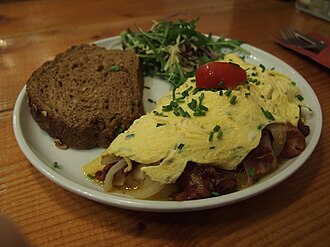
Photo: Wikipedia
This is a classic, savory dish of eggs cooked with tomatoes and a touch of added fat, creating a rich, protein-packed meal with a slightly tangy, sweet tomato flavor. The texture is typically soft and fluffy, with the juicy tomatoes adding a pleasant contrast to the tender eggs. With 10.29g of protein and 13.19g of fat per 100g, it's a highly satiating, low-carb option that provides lasting energy.
Calorie split: 25% protein · 4% carbs · 72% fat
↓ Full nutrition💚 Why it's loved
People love this dish for its comforting, savory flavor and incredible versatility—it can be a quick breakfast, a light lunch, or a simple dinner. It's a staple in many cultures, often enjoyed with bread or rice, and its simple preparation makes it a go-to for home cooks worldwide.
⚠️ Watch-outs & how to enjoy it better
Some may find it high in fat (13.19g per 100g) if they're watching calorie intake or have specific dietary restrictions. To counteract this, use a non-stick pan with minimal added fat (like a spray oil) and pair it with a side of leafy greens or whole-grain toast to add fiber and balance the meal. Those with egg allergies should avoid it, but a tofu scramble with tomatoes can be a suitable alternative.
Key benefits
- Excellent source of high-quality protein for muscle maintenance and satiety.
- Rich in healthy fats from the cooking oil and egg yolks.
- Low in carbohydrates (1.47g) and sugar (0.59g), making it suitable for low-carb diets.
- Provides essential vitamins and minerals like Vitamin D, B12, and selenium.
- Tomatoes add lycopene, a powerful antioxidant, and a burst of flavor.
🍽️ Popular dishes
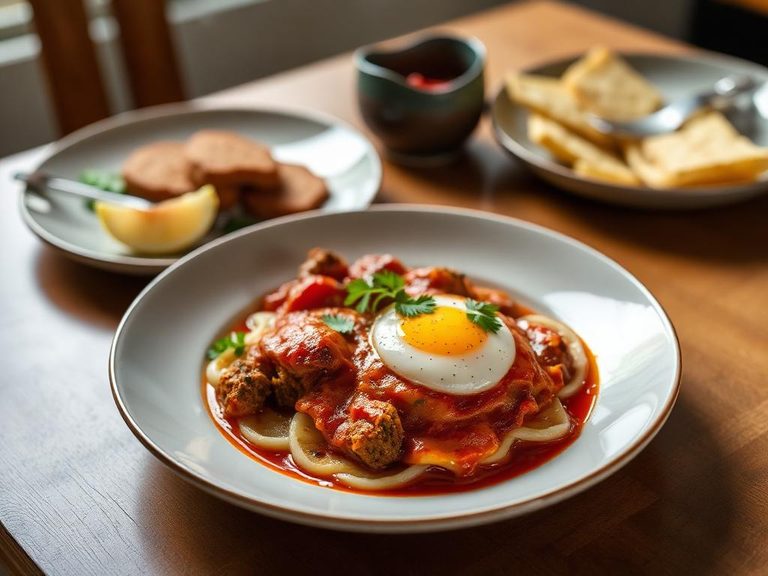 Shakshuka (eggs poached in a tomato sauce, often with peppers and spices)
 Huevos a la Mexicana (scrambled eggs with tomato, onion, and chili)
 Tomato Omelette (a simple, classic breakfast dish)
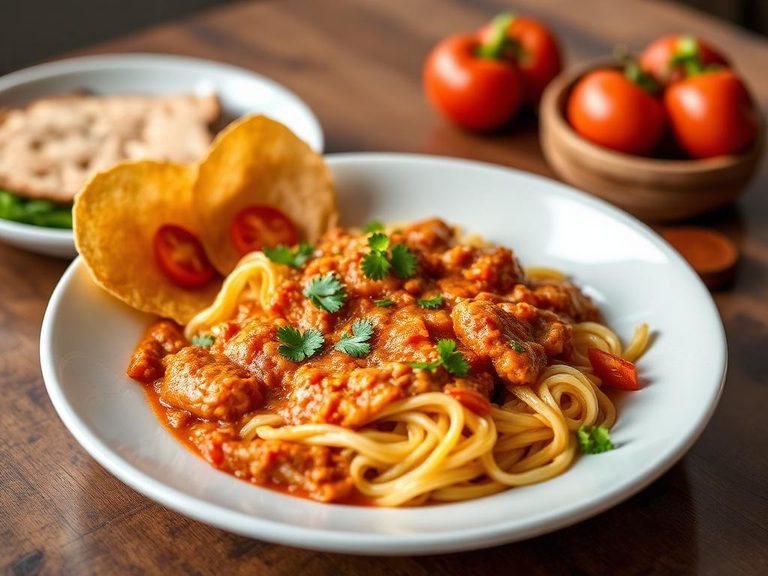 Menemen (Turkish scrambled eggs with tomatoes, peppers, and spices)
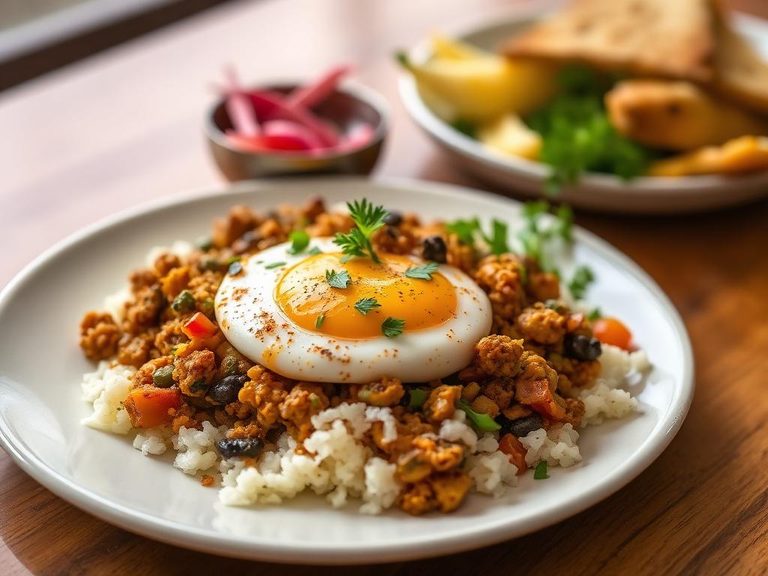 Egg Bhurji (Indian spiced scrambled eggs with tomatoes and onions)
 Tortilla de Tomate (Spanish tomato omelette)
🌍 Where it's eaten
💡 Did you know?
In the 18th century, tomatoes were once called 'poison apples' in Europe, and it was the combination with eggs—a safe, familiar food—that helped people overcome their fear and embrace them in cooking.
Full nutrition (USDA data · scales with serving)
| Water | 74.0 g |
| Energy | 165 kcal |
| Protein | 10.3 g |
| Total lipid (fat) | 13.2 g |
| Carbohydrate, by difference | 1.5 g |
| Fiber, total dietary | 0.20 g |
| Total Sugars | 0.59 g |
| Calcium, Ca | 42.0 mg |
| Iron, Fe | 1.4 mg |
| Magnesium, Mg | 11.0 mg |
| Phosphorus, P | 155 mg |
| Potassium, K | 143 mg |
| Sodium, Na | 218 mg |
| Zinc, Zn | 1.0 mg |
| Copper, Cu | 0.01 mg |
| Selenium, Se | 25.4 ug |
| Vitamin C, total ascorbic acid | 2.3 mg |
| Thiamin | 0.06 mg |
| Riboflavin | 0.33 mg |
| Niacin | 0.08 mg |
| Vitamin B-6 | 0.09 mg |
| Folate, total | 45.0 ug |
| Folic acid | 0.00 ug |
| Folate, food | 45.0 ug |
| Folate, DFE | 45.0 ug |
| Choline, total | 221 mg |
| Vitamin B-12 | 0.67 ug |
| Vitamin B-12, added | 0.00 ug |
| Vitamin A, RAE | 175 ug |
| Retinol | 168 ug |
| Carotene, beta | 67.0 ug |
| Carotene, alpha | 13.0 ug |
| Cryptoxanthin, beta | 11.0 ug |
| Lycopene | 319 ug |
| Lutein + zeaxanthin | 429 ug |
| Vitamin E (alpha-tocopherol) | 1.7 mg |
| Vitamin E, added | 0.00 mg |
| Vitamin D (D2 + D3) | 2.1 ug |
| Vitamin K (phylloquinone) | 5.5 ug |
| Alcohol, ethyl | 0.00 g |
| Caffeine | 0.00 mg |
| Theobromine | 0.00 mg |
Fat & fatty acid profile (per 100g)
| Fatty acids, total saturated | 3.9 g |
| SFA 4:0 | 0.04 g |
| SFA 6:0 | 0.03 g |
| SFA 8:0 | 0.01 g |
| SFA 10:0 | 0.03 g |
| SFA 12:0 | 0.04 g |
| SFA 14:0 | 0.15 g |
| SFA 16:0 | 2.6 g |
| SFA 18:0 | 0.93 g |
| Fatty acids, total monounsaturated | 4.8 g |
| MUFA 16:1 | 0.22 g |
| MUFA 18:1 | 4.5 g |
| MUFA 20:1 | 0.02 g |
| MUFA 22:1 | 0.00 g |
| Fatty acids, total polyunsaturated | 2.9 g |
| PUFA 18:2 | 2.5 g |
| PUFA 18:3 | 0.17 g |
| PUFA 18:4 | 0.00 g |
| PUFA 20:4 | 0.00 g |
| PUFA 20:5 n-3 (EPA) | 0.00 g |
| PUFA 22:5 n-3 (DPA) | 0.00 g |
| PUFA 22:6 n-3 (DHA) | 0.00 g |
| Cholesterol | 340 mg |
Amino acid profile (per 100g)
Estimated from Egg, whole, cooked, omelet — USDA does not publish this profile for Egg omelet or scrambled egg.
| Tryptophan | 0.14 g |
| Threonine | 0.47 g |
| Isoleucine | 0.56 g |
| Leucine | 0.91 g |
| Lysine | 0.77 g |
| Methionine | 0.32 g |
| Cystine | 0.23 g |
| Phenylalanine | 0.57 g |
| Tyrosine | 0.42 g |
| Valine | 0.72 g |
| Arginine | 0.69 g |
| Histidine | 0.26 g |
| Alanine | 0.62 g |
| Aspartic acid | 1.1 g |
| Glutamic acid | 1.4 g |
| Glycine | 0.36 g |
| Proline | 0.43 g |
| Serine | 0.82 g |
FAQ
Is this dish suitable for a low-carb diet?
Yes, it's very low in carbohydrates (1.47g per 100g) and sugar (0.59g), making it an excellent choice for low-carb or ketogenic diets.
How can I reduce the fat content without losing flavor?
Use a non-stick pan with a minimal amount of oil (or cooking spray), and consider using egg whites or a mix of whole eggs and whites to cut down on fat while keeping the protein high.
Can I add other vegetables to this dish?
Absolutely! Spinach, bell peppers, onions, mushrooms, and zucchini are great additions that boost fiber, vitamins, and flavor without adding many carbs.
Nutrient density (calculated · NRF9.3)
Nutrient Rich Foods index: beneficial nutrients (protein, fiber, vitamins, minerals) minus saturated fat, added sugar & sodium, per 100 kcal.
NRF9.3 index — Fulgoni, Keast & Drewnowski, 2009. Computed from USDA nutrients.
Weight-loss friendliness (composite index)
Energy density 1.65 kcal/g · 25% calories from protein · 0.2 g fiber · 0.6 g sugar per 100 g.
Composite of energy density (Rolls et al., 1999), protein & fiber satiety, minus sugar. A calculated heuristic — ranks satiety-per-calorie, not a clinical measure.
Dietary load (calculated from USDA values)
Potential renal acid load. Positive = acid-forming, negative = alkaline-forming.
Sodium-to-potassium ratio: 1.52 (lower is better — aim for ≤ 1)
Sodium:potassium per WHO potassium guidance. Computed from USDA nutrients.