

Egg omelet or scrambled egg, with cheese, made with animal fat or meat drippings
Common food

Photo: Wikipedia
A rich, savory breakfast staple where eggs are scrambled or folded into an omelet, enriched with melted cheese and cooked in flavorful animal fat or meat drippings. The texture ranges from soft and custardy to firm and golden, with a deep, umami-rich flavor profile from the fat and cheese. It's a protein-dense, low-carb meal that provides substantial energy and essential nutrients like choline and vitamin D.
Calorie split: 24% protein · 3% carbs · 73% fat
↓ Full nutrition💚 Why it's loved
People love it for its comforting, savory richness and incredible versatility—it can be a quick weeknight dinner or a luxurious brunch centerpiece. The combination of fluffy eggs, gooey cheese, and the deep flavor from animal fat creates a satisfying, umami-packed bite that feels both simple and indulgent.
⚠️ Watch-outs & how to enjoy it better
The high saturated fat and cholesterol content from the animal fat and cheese may be a concern for individuals managing heart health or watching their lipid levels. To counteract this, consider using a smaller portion of a strong-flavored cheese (like Parmesan) for impact, and pair the dish with a large side of fiber-rich vegetables like spinach or tomatoes to balance the meal. Those with dairy allergies or lactose intolerance should opt for a lactose-free cheese or omit it entirely.
Key benefits
- Excellent source of high-quality, complete protein for muscle maintenance.
- Rich in choline, crucial for brain health and liver function.
- Provides fat-soluble vitamins like A, D, E, and K from the eggs and fat.
- Naturally low in carbohydrates, making it suitable for low-carb diets.
- The cooking fat increases satiety and helps absorb nutrients from the eggs.
🍽️ Popular dishes
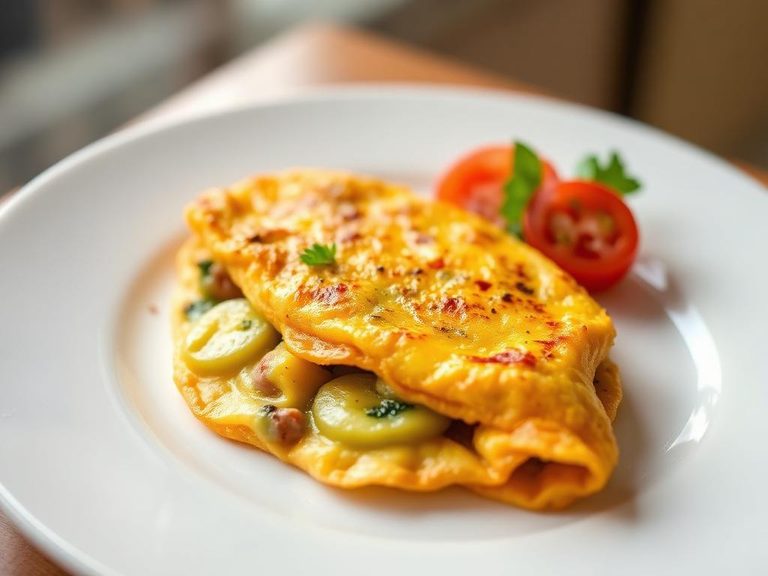
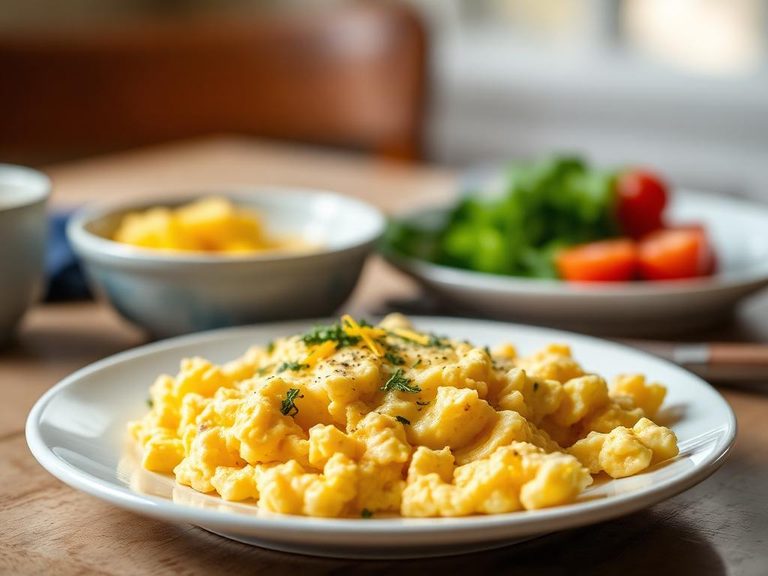
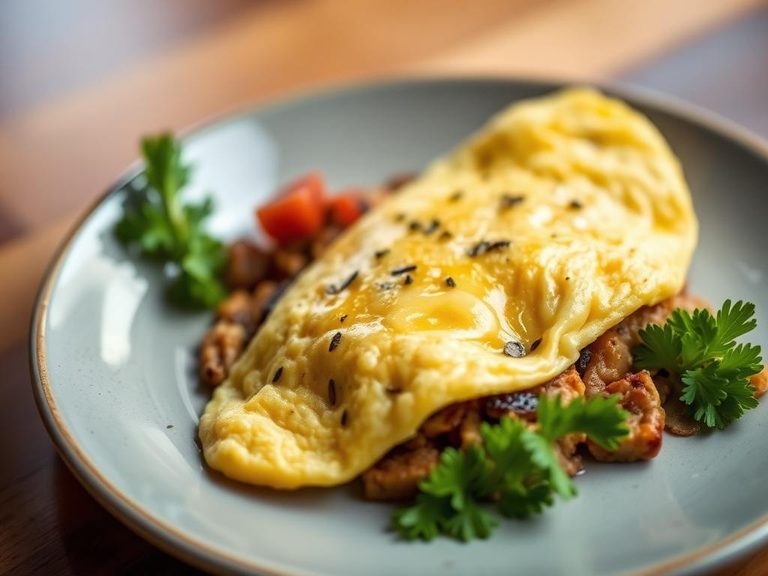
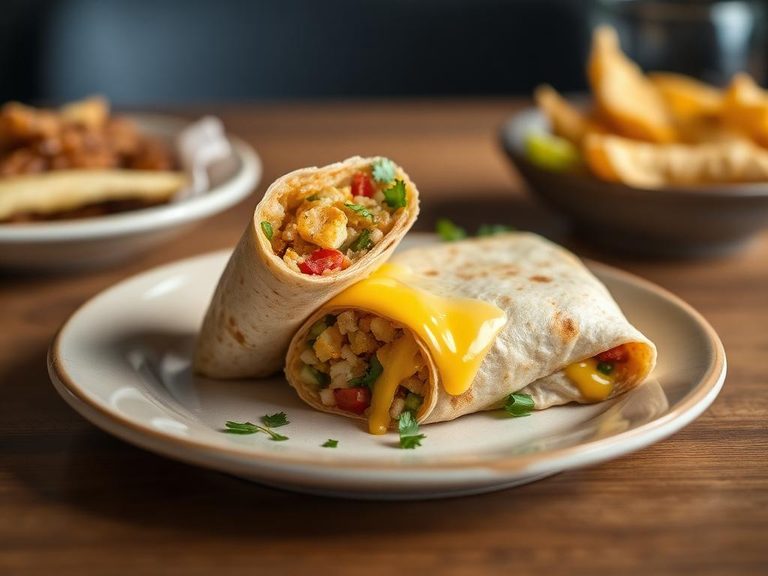
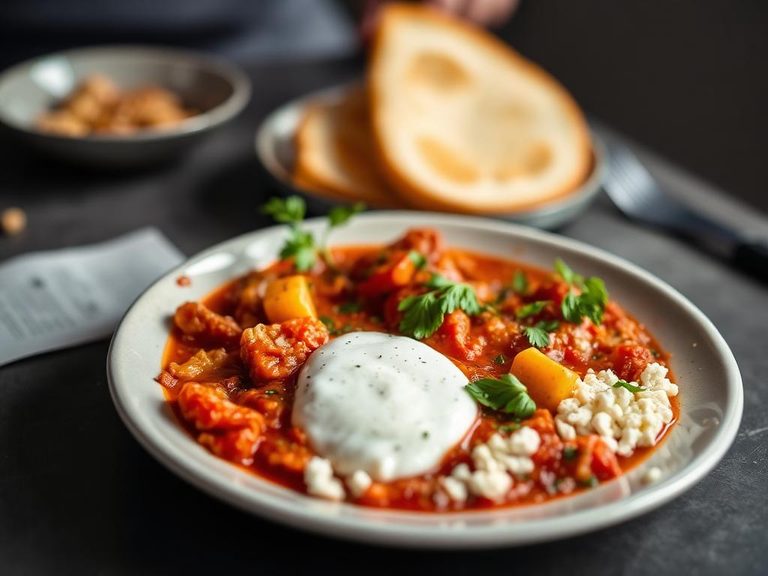
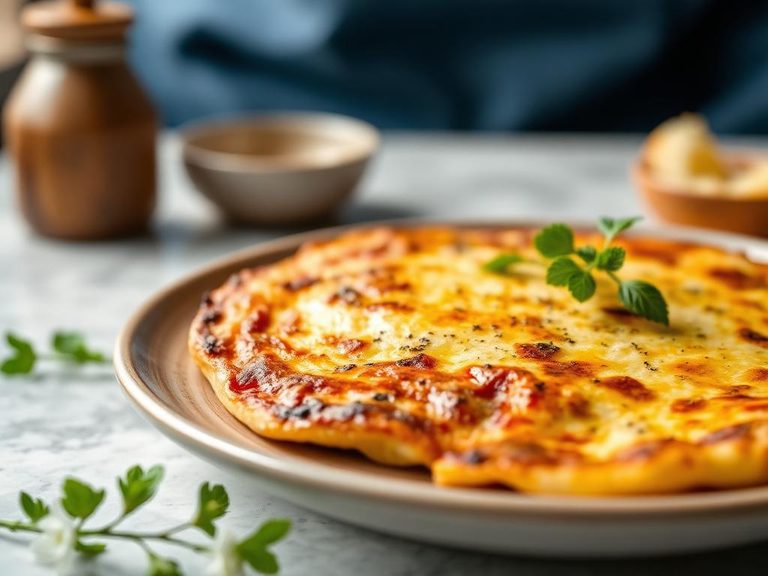
🌍 Where it's eaten
💡 Did you know?
The French technique for scrambled eggs ('baveuse') involves constant stirring over low heat to create a soft, custard-like curd, a stark contrast to the firm, dry curds often preferred in American diners.
Full nutrition (USDA data · scales with serving)
| Water | 67.2 g |
| Energy | 209 kcal |
| Protein | 12.8 g |
| Total lipid (fat) | 16.9 g |
| Carbohydrate, by difference | 1.4 g |
| Fiber, total dietary | 0.00 g |
| Total Sugars | 0.51 g |
| Calcium, Ca | 150 mg |
| Iron, Fe | 1.4 mg |
| Magnesium, Mg | 13.0 mg |
| Phosphorus, P | 222 mg |
| Potassium, K | 128 mg |
| Sodium, Na | 359 mg |
| Zinc, Zn | 1.4 mg |
| Copper, Cu | 0.00 mg |
| Selenium, Se | 28.3 ug |
| Vitamin C, total ascorbic acid | 0.00 mg |
| Thiamin | 0.05 mg |
| Riboflavin | 0.37 mg |
| Niacin | 0.03 mg |
| Vitamin B-6 | 0.06 mg |
| Folate, total | 45.0 ug |
| Folic acid | 0.00 ug |
| Folate, food | 45.0 ug |
| Folate, DFE | 45.0 ug |
| Choline, total | 225 mg |
| Vitamin B-12 | 0.86 ug |
| Vitamin B-12, added | 0.00 ug |
| Vitamin A, RAE | 180 ug |
| Retinol | 179 ug |
| Carotene, beta | 10.0 ug |
| Carotene, alpha | 0.00 ug |
| Cryptoxanthin, beta | 11.0 ug |
| Lycopene | 0.00 ug |
| Lutein + zeaxanthin | 414 ug |
| Vitamin E (alpha-tocopherol) | 0.98 mg |
| Vitamin E, added | 0.00 mg |
| Vitamin D (D2 + D3) | 2.6 ug |
| Vitamin K (phylloquinone) | 0.60 ug |
| Alcohol, ethyl | 0.00 g |
| Caffeine | 0.00 mg |
| Theobromine | 0.00 mg |
Fat & fatty acid profile (per 100g)
| Fatty acids, total saturated | 6.7 g |
| SFA 4:0 | 0.07 g |
| SFA 6:0 | 0.06 g |
| SFA 8:0 | 0.04 g |
| SFA 10:0 | 0.09 g |
| SFA 12:0 | 0.11 g |
| SFA 14:0 | 0.43 g |
| SFA 16:0 | 4.1 g |
| SFA 18:0 | 1.7 g |
| Fatty acids, total monounsaturated | 6.1 g |
| MUFA 16:1 | 0.42 g |
| MUFA 18:1 | 5.6 g |
| MUFA 20:1 | 0.05 g |
| MUFA 22:1 | 0.00 g |
| Fatty acids, total polyunsaturated | 2.2 g |
| PUFA 18:2 | 1.8 g |
| PUFA 18:3 | 0.08 g |
| PUFA 18:4 | 0.00 g |
| PUFA 20:4 | 0.01 g |
| PUFA 20:5 n-3 (EPA) | 0.00 g |
| PUFA 22:5 n-3 (DPA) | 0.00 g |
| PUFA 22:6 n-3 (DHA) | 0.00 g |
| Cholesterol | 352 mg |
Amino acid profile (per 100g)
Estimated from Egg, whole, cooked, omelet — USDA does not publish this profile for Egg omelet or scrambled egg.
| Tryptophan | 0.14 g |
| Threonine | 0.47 g |
| Isoleucine | 0.56 g |
| Leucine | 0.91 g |
| Lysine | 0.77 g |
| Methionine | 0.32 g |
| Cystine | 0.23 g |
| Phenylalanine | 0.57 g |
| Tyrosine | 0.42 g |
| Valine | 0.72 g |
| Arginine | 0.69 g |
| Histidine | 0.26 g |
| Alanine | 0.62 g |
| Aspartic acid | 1.1 g |
| Glutamic acid | 1.4 g |
| Glycine | 0.36 g |
| Proline | 0.43 g |
| Serine | 0.82 g |
FAQ
What's the best cheese to use for an omelet or scrambled eggs?
Good melting cheeses are key. Classic choices include Cheddar, Gruyère, Monterey Jack, or Gouda. For a stronger flavor, try feta or goat cheese, but note they don't melt as smoothly. Pre-shredded cheese often contains anti-caking agents that can affect melt quality, so grating your own is ideal.
Why use animal fat or meat drippings instead of butter or oil?
Using bacon grease, sausage drippings, or duck fat infuses the eggs with a deeper, savory, meaty flavor that butter or neutral oil can't replicate. It's a traditional way to add richness and utilize flavorful byproducts from cooking other meats.
How do I prevent my eggs from becoming rubbery when cooking with high-fat methods?
The key is moderate heat and patience. Cook over medium-low heat, stirring or folding gently. Remove the pan from the heat while the eggs are still slightly underdone, as residual heat will continue cooking them. The cheese also adds moisture and helps prevent drying.
Nutrient density (calculated · NRF9.3)
Nutrient Rich Foods index: beneficial nutrients (protein, fiber, vitamins, minerals) minus saturated fat, added sugar & sodium, per 100 kcal.
NRF9.3 index — Fulgoni, Keast & Drewnowski, 2009. Computed from USDA nutrients.
Weight-loss friendliness (composite index)
Energy density 2.09 kcal/g · 24% calories from protein · 0.0 g fiber · 0.5 g sugar per 100 g.
Composite of energy density (Rolls et al., 1999), protein & fiber satiety, minus sugar. A calculated heuristic — ranks satiety-per-calorie, not a clinical measure.
Dietary load (calculated from USDA values)
Potential renal acid load. Positive = acid-forming, negative = alkaline-forming.
Sodium-to-potassium ratio: 2.80 (lower is better — aim for ≤ 1)
Sodium:potassium per WHO potassium guidance. Computed from USDA nutrients.