

Egg omelet or scrambled egg, made with cooking spray
Common food

Photo: Wikipedia
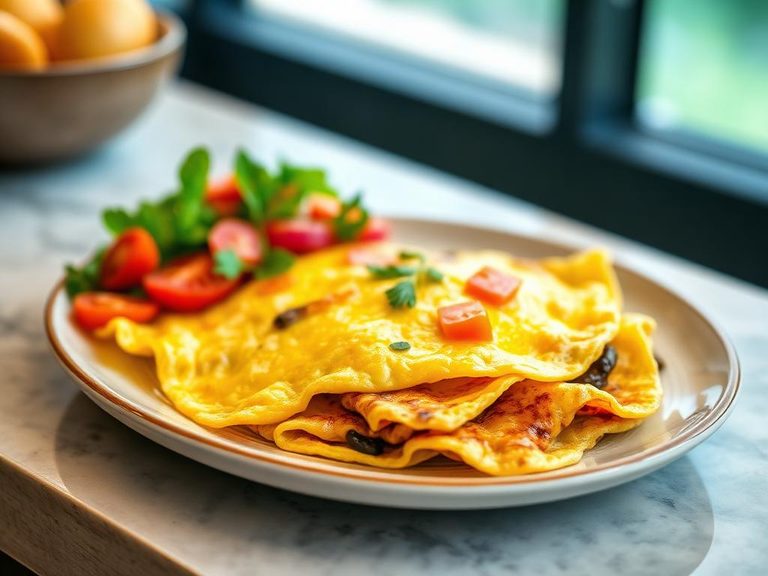
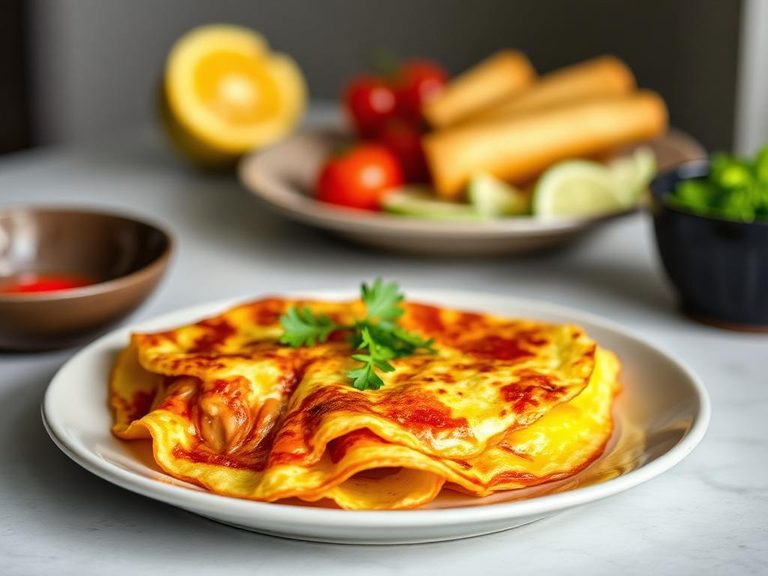
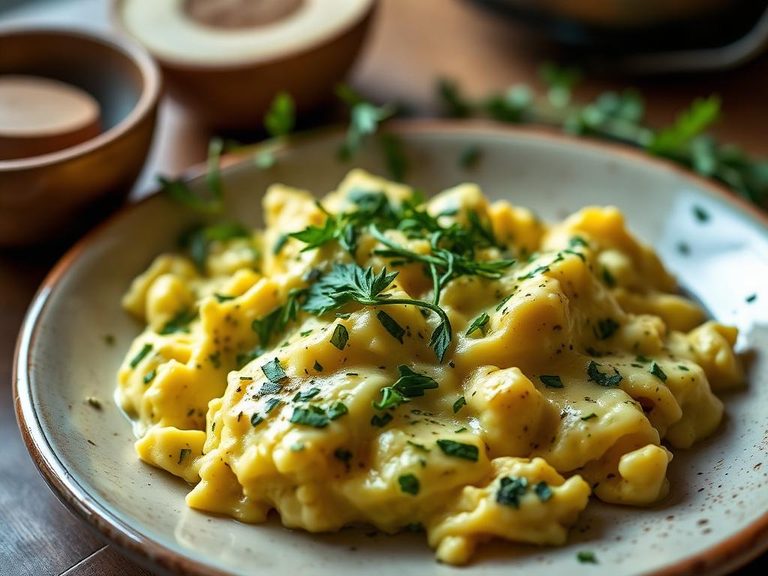
A light, protein-packed breakfast staple, this egg preparation uses minimal fat from cooking spray to create a tender, fluffy texture with a mild, savory flavor. At just 149 kcal per 100g, it's an exceptionally lean way to enjoy eggs, with 12.24g of protein and only 1.15g of carbohydrates, making it ideal for low-carb or calorie-conscious diets.
Calorie split: 33% protein · 3% carbs · 64% fat
↓ Full nutrition💚 Why it's loved
People love it for its incredible versatility and satisfying, savory taste that forms the foundation of countless quick meals. Its simplicity makes it a universal comfort food, easily adapted with herbs, vegetables, or cheeses to suit any palate or cuisine.
⚠️ Watch-outs & how to enjoy it better
The primary concern is the potential for high cholesterol in individuals with specific dietary restrictions, and the lack of fiber means it doesn't promote satiety on its own. To counteract this, pair it with fiber-rich vegetables like spinach or whole-grain toast, and consider using egg whites or a mix of whole eggs and whites to manage cholesterol intake.
Key benefits
- High-quality complete protein source
- Very low in carbohydrates and sugar
- Low-calorie preparation method
- Rich in choline for brain health
- Quick and versatile cooking base
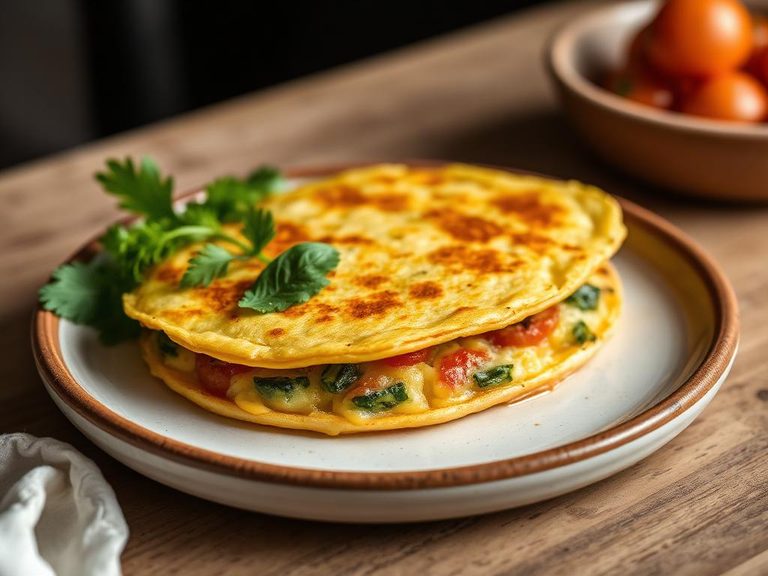
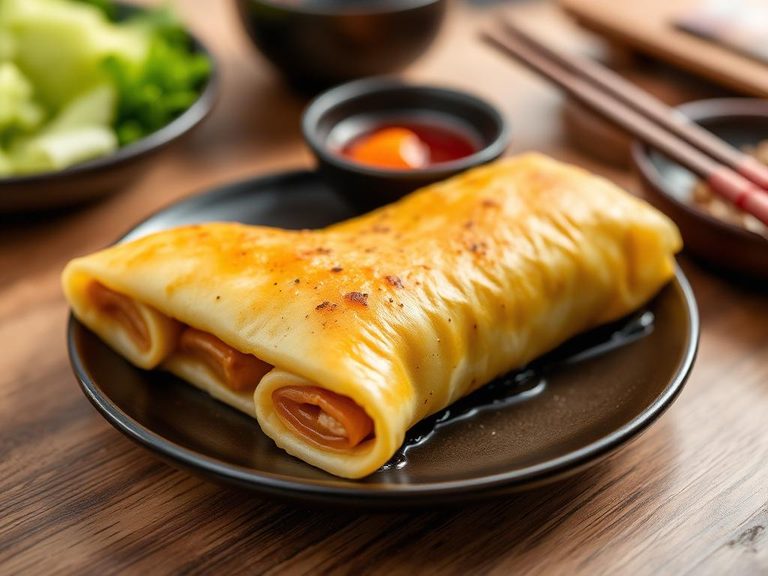
🍽️ Popular dishes
🌍 Where it's eaten
💡 Did you know?
The world's largest omelette, made with 147,000 eggs, was cooked in Portugal in 2012, weighing over 6.5 tons and requiring a 10-meter-diameter pan.
Full nutrition (USDA data · scales with serving)
| Water | 74.8 g |
| Energy | 149 kcal |
| Protein | 12.2 g |
| Total lipid (fat) | 10.6 g |
| Carbohydrate, by difference | 1.1 g |
| Fiber, total dietary | 0.00 g |
| Total Sugars | 0.20 g |
| Calcium, Ca | 48.0 mg |
| Iron, Fe | 1.6 mg |
| Magnesium, Mg | 11.0 mg |
| Phosphorus, P | 182 mg |
| Potassium, K | 130 mg |
| Sodium, Na | 243 mg |
| Zinc, Zn | 1.2 mg |
| Copper, Cu | 0.00 mg |
| Selenium, Se | 30.7 ug |
| Vitamin C, total ascorbic acid | 0.00 mg |
| Thiamin | 0.06 mg |
| Riboflavin | 0.39 mg |
| Niacin | 0.00 mg |
| Vitamin B-6 | 0.06 mg |
| Folate, total | 53.0 ug |
| Folic acid | 0.00 ug |
| Folate, food | 53.0 ug |
| Folate, DFE | 53.0 ug |
| Choline, total | 265 mg |
| Vitamin B-12 | 0.81 ug |
| Vitamin B-12, added | 0.00 ug |
| Vitamin A, RAE | 178 ug |
| Retinol | 177 ug |
| Carotene, beta | 0.00 ug |
| Carotene, alpha | 0.00 ug |
| Cryptoxanthin, beta | 13.0 ug |
| Lycopene | 0.00 ug |
| Lutein + zeaxanthin | 497 ug |
| Vitamin E (alpha-tocopherol) | 1.0 mg |
| Vitamin E, added | 0.00 mg |
| Vitamin D (D2 + D3) | 2.5 ug |
| Vitamin K (phylloquinone) | 0.30 ug |
| Alcohol, ethyl | 0.00 g |
| Caffeine | 0.00 mg |
| Theobromine | 0.00 mg |
Fat & fatty acid profile (per 100g)
| Fatty acids, total saturated | 3.2 g |
| SFA 4:0 | 0.00 g |
| SFA 6:0 | 0.00 g |
| SFA 8:0 | 0.00 g |
| SFA 10:0 | 0.00 g |
| SFA 12:0 | 0.00 g |
| SFA 14:0 | 0.03 g |
| SFA 16:0 | 2.3 g |
| SFA 18:0 | 0.82 g |
| Fatty acids, total monounsaturated | 4.1 g |
| MUFA 16:1 | 0.24 g |
| MUFA 18:1 | 3.8 g |
| MUFA 20:1 | 0.01 g |
| MUFA 22:1 | 0.00 g |
| Fatty acids, total polyunsaturated | 2.0 g |
| PUFA 18:2 | 1.6 g |
| PUFA 18:3 | 0.08 g |
| PUFA 18:4 | 0.00 g |
| PUFA 20:4 | 0.00 g |
| PUFA 20:5 n-3 (EPA) | 0.00 g |
| PUFA 22:5 n-3 (DPA) | 0.00 g |
| PUFA 22:6 n-3 (DHA) | 0.00 g |
| Cholesterol | 406 mg |
Amino acid profile (per 100g)
Estimated from Egg, whole, cooked, omelet — USDA does not publish this profile for Egg omelet or scrambled egg.
| Tryptophan | 0.14 g |
| Threonine | 0.47 g |
| Isoleucine | 0.56 g |
| Leucine | 0.91 g |
| Lysine | 0.77 g |
| Methionine | 0.32 g |
| Cystine | 0.23 g |
| Phenylalanine | 0.57 g |
| Tyrosine | 0.42 g |
| Valine | 0.72 g |
| Arginine | 0.69 g |
| Histidine | 0.26 g |
| Alanine | 0.62 g |
| Aspartic acid | 1.1 g |
| Glutamic acid | 1.4 g |
| Glycine | 0.36 g |
| Proline | 0.43 g |
| Serine | 0.82 g |
FAQ
How does cooking spray affect the nutritional profile compared to butter or oil?
Cooking spray significantly reduces the fat and calorie content compared to using butter or oil, as it provides a thin, non-stick coating without adding substantial fat. This makes the dish lighter and more suitable for low-fat diets, while still allowing the eggs to cook without sticking.
Is this dish suitable for a low-carb or keto diet?
Yes, it's an excellent choice for low-carb and keto diets due to its very low carbohydrate content (1.15g per 100g) and high protein and fat content. It provides a satisfying, energy-dense meal without spiking blood sugar levels.
Can I add vegetables or other ingredients without significantly changing the nutrition?
Adding non-starchy vegetables like spinach, peppers, or mushrooms will increase fiber and micronutrients while keeping the dish low in carbs. However, adding cheese or meats will increase the fat and calorie content, so portion control is key to maintaining the dish's lean profile.
Nutrient density (calculated · NRF9.3)
Nutrient Rich Foods index: beneficial nutrients (protein, fiber, vitamins, minerals) minus saturated fat, added sugar & sodium, per 100 kcal.
NRF9.3 index — Fulgoni, Keast & Drewnowski, 2009. Computed from USDA nutrients.
Weight-loss friendliness (composite index)
Energy density 1.49 kcal/g · 33% calories from protein · 0.0 g fiber · 0.2 g sugar per 100 g.
Composite of energy density (Rolls et al., 1999), protein & fiber satiety, minus sugar. A calculated heuristic — ranks satiety-per-calorie, not a clinical measure.
Dietary load (calculated from USDA values)
Potential renal acid load. Positive = acid-forming, negative = alkaline-forming.
Sodium-to-potassium ratio: 1.87 (lower is better — aim for ≤ 1)
Sodium:potassium per WHO potassium guidance. Computed from USDA nutrients.