

Japanese Tamagoyaki
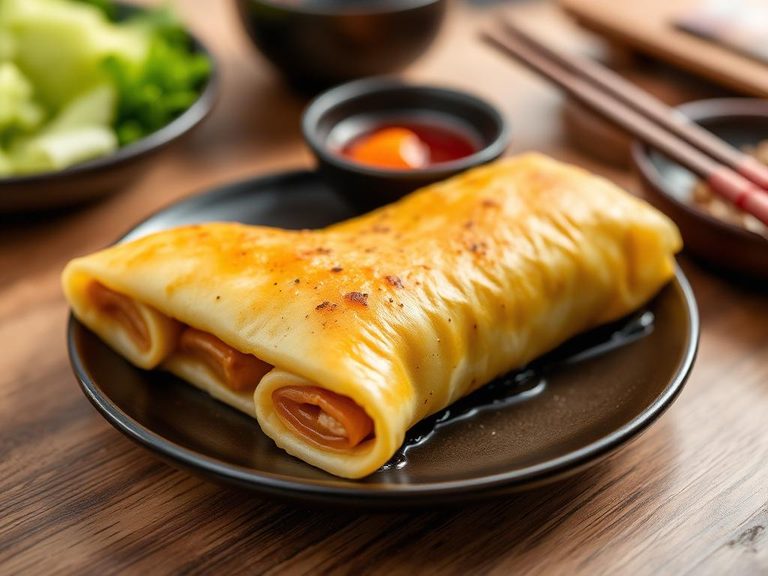
Tamagoyaki is a classic Japanese rolled omelet made by layering thin sheets of sweetened, savory egg mixture in a rectangular pan. Its typical ingredients include eggs, dashi (Japanese soup stock), mirin, sugar, and a touch of soy sauce, creating a delicate balance of flavors. Originating from Japan, it is a staple in bento boxes, sushi rolls, and breakfast platters.
🍳 View the full Japanese Tamagoyaki recipe →
🍽️ Nutrition at a glance
Tamagoyaki is primarily a high-protein dish with a moderate fat content from the eggs, and it is relatively low in carbohydrates unless extra sugar is added. It provides essential nutrients like vitamin D, B vitamins, and selenium, with a typical serving of two pieces containing around 150-200 calories.
Nutrition breakdown
| Calories | 120 kcal |
| Protein | 7 g |
| Carbs | 2 g |
| Fat | 9 g |
| Fiber | 0 g |
| Sugar | 1 g |
| Sodium | 200 mg |
| Vitamin A | 150 mcg RAE |
| Vitamin D | 1 mcg |
| Vitamin B12 | 0.5 mcg |
| Riboflavin (B2) | 0.2 mg |
| Selenium | 10 mcg |
| Phosphorus | 100 mg |
| Choline | 130 mg |
| Iron | 1 mg |
Per 1 piece (about 80 g) · estimated, varies by recipe
💡 What's interesting
Culturally, tamagoyaki is a symbol of home cooking and care in Japan, often prepared by parents for children's bento boxes. Its unique cooking technique of rolling layers in a special rectangular pan (makiyakinabe) requires skill, resulting in a fluffy yet firm texture that holds up well in sushi and other dishes.
🍽️ Related dishes


AI estimate may be inaccurate · Terms