

Egg omelet or scrambled egg, with cheese and meat, made with cooking spray
Common food

Photo: Wikipedia
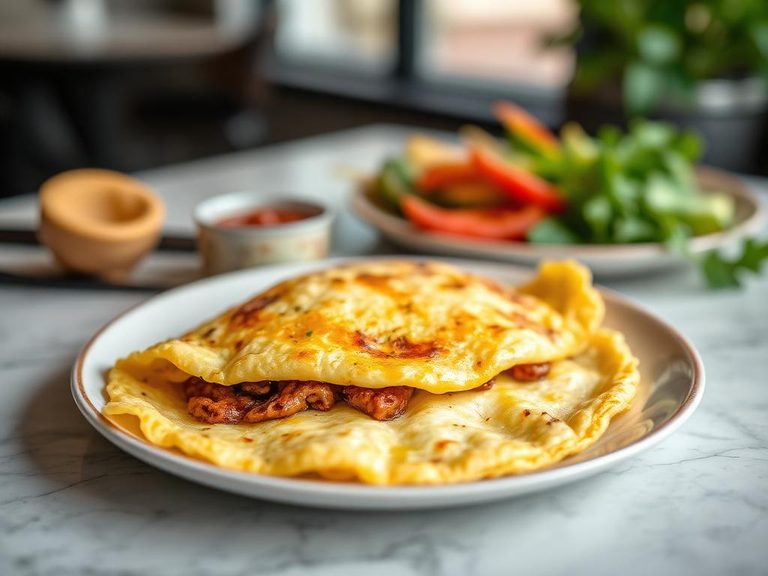
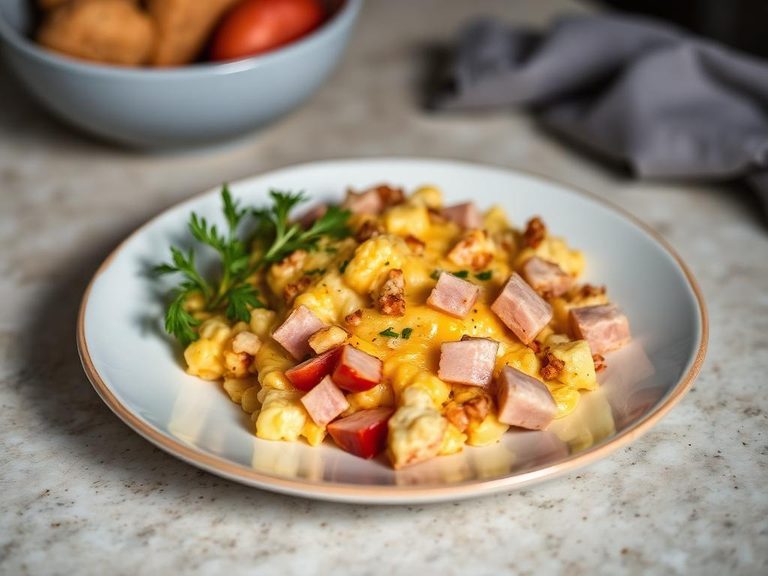
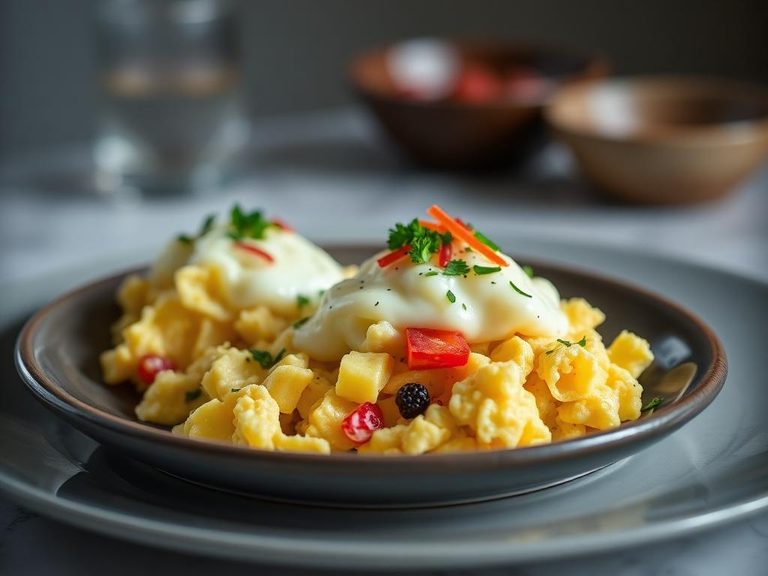
A fluffy, golden egg omelet or scrambled egg, enriched with melted cheese and savory meat, cooked to a tender finish with a light mist of cooking spray. The texture is soft and custardy, with the cheese adding a creamy pull and the meat providing a satisfying, salty bite. Nutritionally, it's a protein powerhouse with minimal carbs, making it a low-glycemic, high-satiety meal.
Calorie split: 31% protein · 4% carbs · 66% fat
↓ Full nutrition💚 Why it's loved
People love it for its comforting, savory flavor profile and the satisfying contrast of soft eggs with gooey cheese and hearty meat. It's a beloved, customizable staple in breakfast cultures worldwide, from American diners to French bistros.
⚠️ Watch-outs & how to enjoy it better
The high fat and sodium content from cheese and processed meats can be a concern for those monitoring heart health or blood pressure. To counteract, opt for lower-fat cheese, choose lean meats like turkey or ham, and pair with a side of fiber-rich vegetables like spinach or tomatoes to balance the meal.
Key benefits
- High-quality complete protein for muscle repair and satiety
- Rich in choline for brain health and B-vitamins for energy metabolism
- Low-carb and keto-friendly, supporting stable blood sugar levels
- Contains calcium and vitamin D from cheese for bone health
- Quick and versatile, ideal for a nutrient-dense breakfast or snack
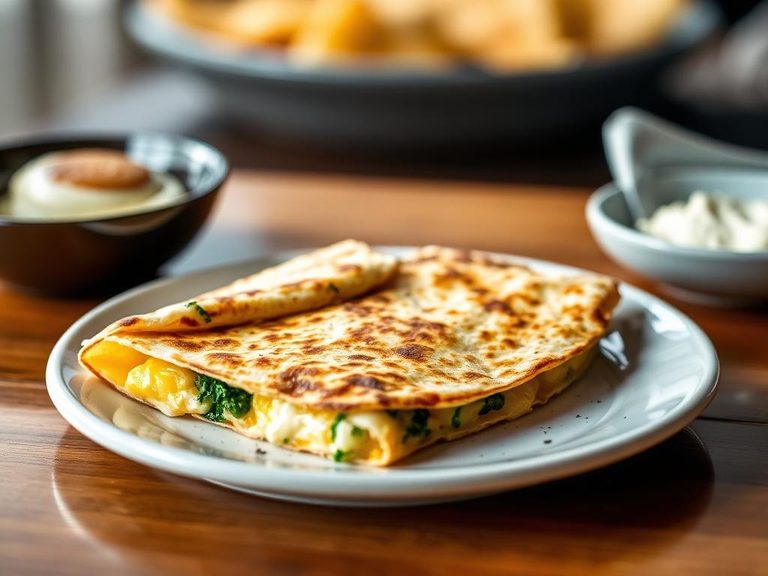
🍽️ Popular dishes
🌍 Where it's eaten
💡 Did you know?
The word 'omelet' is believed to derive from the French 'omelette,' but the first known recipe in English was published in 1723 under the name 'A Lemony Omelet.'
Full nutrition (USDA data · scales with serving)
| Water | 69.3 g |
| Energy | 182 kcal |
| Protein | 13.9 g |
| Total lipid (fat) | 13.3 g |
| Carbohydrate, by difference | 1.6 g |
| Fiber, total dietary | 0.00 g |
| Total Sugars | 0.56 g |
| Calcium, Ca | 146 mg |
| Iron, Fe | 1.5 mg |
| Magnesium, Mg | 14.0 mg |
| Phosphorus, P | 234 mg |
| Potassium, K | 152 mg |
| Sodium, Na | 402 mg |
| Zinc, Zn | 1.5 mg |
| Copper, Cu | 0.01 mg |
| Selenium, Se | 29.7 ug |
| Vitamin C, total ascorbic acid | 0.00 mg |
| Thiamin | 0.08 mg |
| Riboflavin | 0.38 mg |
| Niacin | 0.54 mg |
| Vitamin B-6 | 0.09 mg |
| Folate, total | 44.0 ug |
| Folic acid | 0.00 ug |
| Folate, food | 44.0 ug |
| Folate, DFE | 44.0 ug |
| Choline, total | 221 mg |
| Vitamin B-12 | 0.88 ug |
| Vitamin B-12, added | 0.00 ug |
| Vitamin A, RAE | 176 ug |
| Retinol | 174 ug |
| Carotene, beta | 9.0 ug |
| Carotene, alpha | 0.00 ug |
| Cryptoxanthin, beta | 11.0 ug |
| Lycopene | 0.00 ug |
| Lutein + zeaxanthin | 401 ug |
| Vitamin E (alpha-tocopherol) | 0.96 mg |
| Vitamin E, added | 0.00 mg |
| Vitamin D (D2 + D3) | 2.5 ug |
| Vitamin K (phylloquinone) | 0.60 ug |
| Alcohol, ethyl | 0.00 g |
| Caffeine | 0.00 mg |
| Theobromine | 0.00 mg |
Fat & fatty acid profile (per 100g)
| Fatty acids, total saturated | 5.0 g |
| SFA 4:0 | 0.07 g |
| SFA 6:0 | 0.06 g |
| SFA 8:0 | 0.04 g |
| SFA 10:0 | 0.08 g |
| SFA 12:0 | 0.10 g |
| SFA 14:0 | 0.35 g |
| SFA 16:0 | 3.1 g |
| SFA 18:0 | 1.1 g |
| Fatty acids, total monounsaturated | 4.6 g |
| MUFA 16:1 | 0.28 g |
| MUFA 18:1 | 4.3 g |
| MUFA 20:1 | 0.03 g |
| MUFA 22:1 | 0.00 g |
| Fatty acids, total polyunsaturated | 2.0 g |
| PUFA 18:2 | 1.6 g |
| PUFA 18:3 | 0.09 g |
| PUFA 18:4 | 0.00 g |
| PUFA 20:4 | 0.01 g |
| PUFA 20:5 n-3 (EPA) | 0.00 g |
| PUFA 22:5 n-3 (DPA) | 0.00 g |
| PUFA 22:6 n-3 (DHA) | 0.00 g |
| Cholesterol | 342 mg |
Amino acid profile (per 100g)
Estimated from Egg, whole, cooked, omelet — USDA does not publish this profile for Egg omelet or scrambled egg.
| Tryptophan | 0.14 g |
| Threonine | 0.47 g |
| Isoleucine | 0.56 g |
| Leucine | 0.91 g |
| Lysine | 0.77 g |
| Methionine | 0.32 g |
| Cystine | 0.23 g |
| Phenylalanine | 0.57 g |
| Tyrosine | 0.42 g |
| Valine | 0.72 g |
| Arginine | 0.69 g |
| Histidine | 0.26 g |
| Alanine | 0.62 g |
| Aspartic acid | 1.1 g |
| Glutamic acid | 1.4 g |
| Glycine | 0.36 g |
| Proline | 0.43 g |
| Serine | 0.82 g |
FAQ
How many eggs are typically in a serving like this?
A standard 100g serving usually contains about 2 large eggs, plus the added cheese and meat.
Is this a good post-workout meal?
Yes, its high protein content (nearly 14g per 100g) makes it excellent for muscle recovery. The fat slows digestion, providing sustained energy.
Can I make this ahead of time?
Scrambled eggs are best served fresh, but an omelet can be refrigerated for 1-2 days. Reheat gently in a microwave or oven to avoid rubbery texture.
Nutrient density (calculated · NRF9.3)
Nutrient Rich Foods index: beneficial nutrients (protein, fiber, vitamins, minerals) minus saturated fat, added sugar & sodium, per 100 kcal.
NRF9.3 index — Fulgoni, Keast & Drewnowski, 2009. Computed from USDA nutrients.
Weight-loss friendliness (composite index)
Energy density 1.82 kcal/g · 31% calories from protein · 0.0 g fiber · 0.6 g sugar per 100 g.
Composite of energy density (Rolls et al., 1999), protein & fiber satiety, minus sugar. A calculated heuristic — ranks satiety-per-calorie, not a clinical measure.
Dietary load (calculated from USDA values)
Potential renal acid load. Positive = acid-forming, negative = alkaline-forming.
Sodium-to-potassium ratio: 2.64 (lower is better — aim for ≤ 1)
Sodium:potassium per WHO potassium guidance. Computed from USDA nutrients.