

Double cheeseburger, on wheat bun, 2 small patties
Common food

Photo: Wikipedia
A classic double cheeseburger on a wheat bun delivers a satisfying, savory bite with the juicy, umami-rich flavor of two small beef patties and melted cheese. The wheat bun adds a subtle nutty sweetness and a slightly denser, chewier texture compared to a standard white bun. Nutritionally, it's a protein-packed meal with nearly 20 grams of protein per 100 grams, though it also contains a notable amount of fat and a modest amount of fiber from the whole wheat.
Calorie split: 27% protein · 17% carbs · 56% fat
↓ Full nutrition💚 Why it's loved
People love it for the comforting, familiar combination of savory beef, melted cheese, and the satisfying chew of a wheat bun, making it a go-to comfort food. Its versatility allows for endless customization with toppings like lettuce, tomato, and onions, fitting into casual meals, fast-food culture, and backyard barbecues alike.
⚠️ Watch-outs & how to enjoy it better
The high fat content (17.88g per 100g) and potential for added sodium in the cheese and patties can be a concern for those monitoring heart health or blood pressure. To counteract this, pair it with a side salad or steamed vegetables to add fiber and volume without excess calories, and opt for leaner beef or turkey patties to reduce saturated fat. For blood sugar management, the wheat bun's fiber helps, but pairing with a protein-rich side can further stabilize glucose levels.
Key benefits
- High-quality protein source (19.72g per 100g) for muscle maintenance.
- Wheat bun provides more dietary fiber (1.4g) than a typical white bun.
- Contains essential nutrients like iron and B vitamins from the beef patties.
- A convenient, calorie-dense meal for active individuals needing quick energy.
- Can be part of a balanced diet when paired with vegetables and mindful portions.
🍽️ Popular dishes
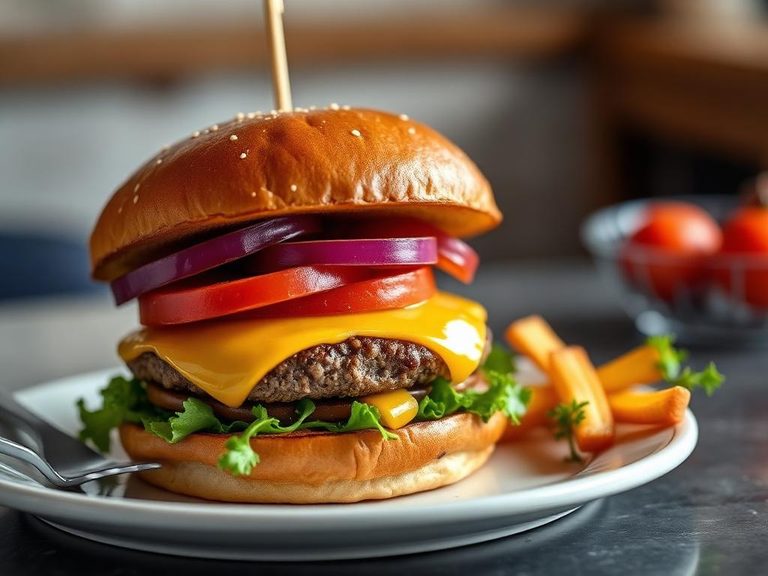
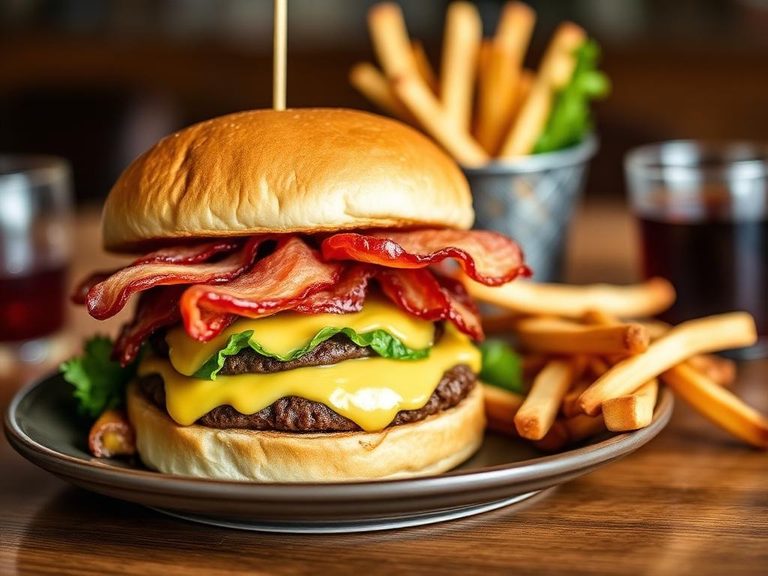
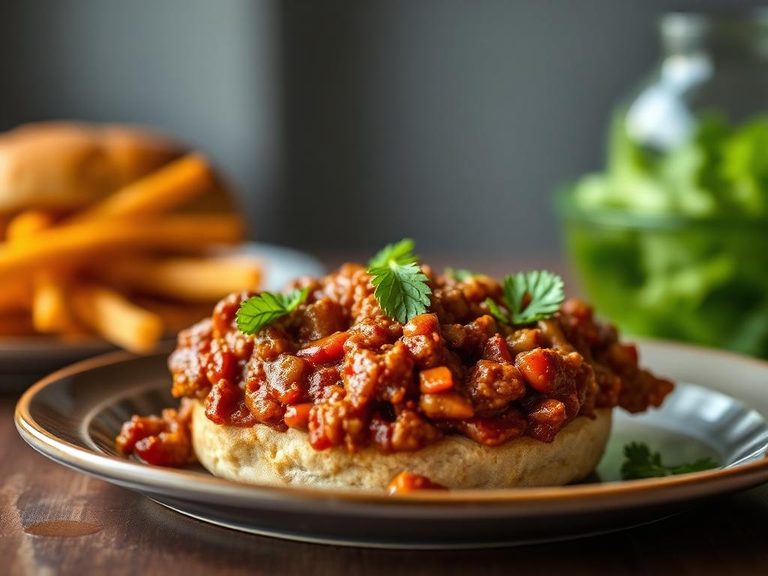
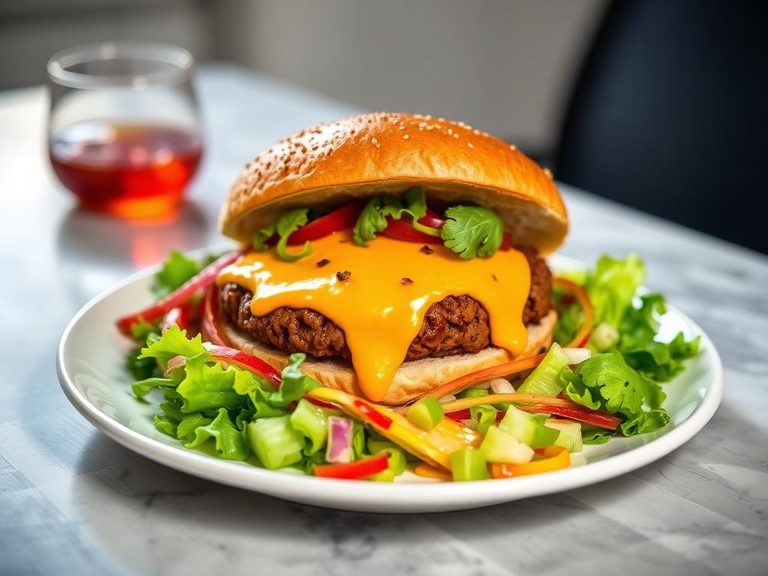
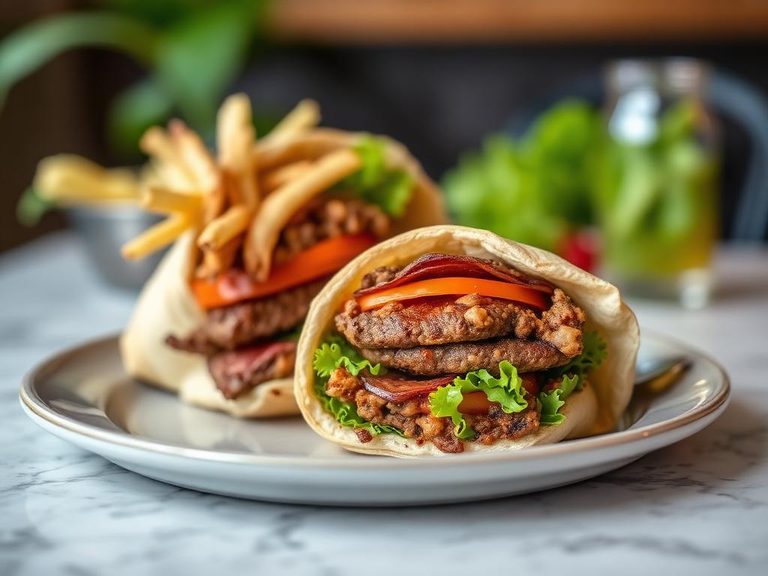
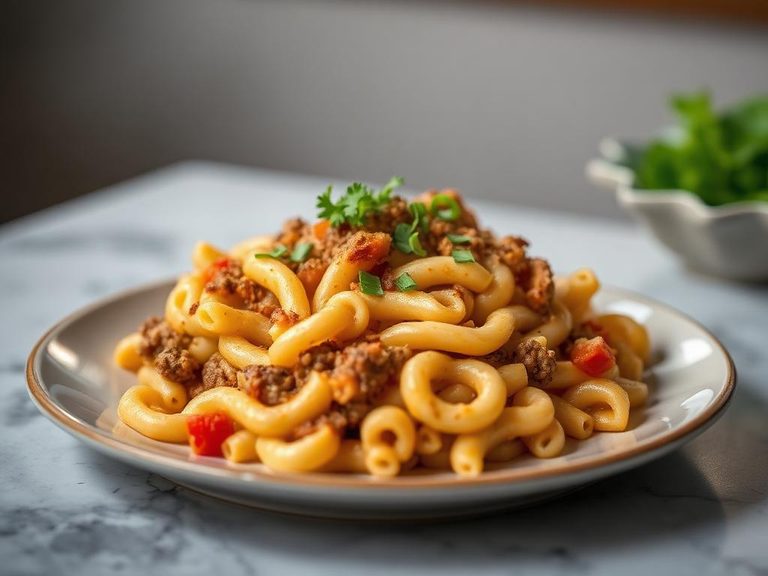
🌍 Where it's eaten
💡 Did you know?
The cheeseburger is believed to have been invented in the 1920s or 1930s in the United States, with multiple diners claiming the title, including Lionel Sternberger in Pasadena, California, who allegedly added cheese to a hamburger while working at his father's restaurant.
Full nutrition (USDA data · scales with serving)
| Water | 48.1 g |
| Energy | 292 kcal |
| Protein | 19.7 g |
| Total lipid (fat) | 17.9 g |
| Carbohydrate, by difference | 12.1 g |
| Fiber, total dietary | 1.4 g |
| Total Sugars | 1.6 g |
| Calcium, Ca | 141 mg |
| Iron, Fe | 2.4 mg |
| Magnesium, Mg | 30.0 mg |
| Phosphorus, P | 213 mg |
| Potassium, K | 258 mg |
| Sodium, Na | 399 mg |
| Zinc, Zn | 3.8 mg |
| Copper, Cu | 0.10 mg |
| Selenium, Se | 23.1 ug |
| Vitamin C, total ascorbic acid | 0.00 mg |
| Thiamin | 0.12 mg |
| Riboflavin | 0.20 mg |
| Niacin | 4.6 mg |
| Vitamin B-6 | 0.33 mg |
| Folate, total | 33.0 ug |
| Folic acid | 4.0 ug |
| Folate, food | 30.0 ug |
| Folate, DFE | 36.0 ug |
| Choline, total | 55.3 mg |
| Vitamin B-12 | 1.9 ug |
| Vitamin B-12, added | 0.00 ug |
| Vitamin A, RAE | 28.0 ug |
| Retinol | 27.0 ug |
| Carotene, beta | 8.0 ug |
| Carotene, alpha | 0.00 ug |
| Cryptoxanthin, beta | 1.0 ug |
| Lycopene | 0.00 ug |
| Lutein + zeaxanthin | 18.0 ug |
| Vitamin E (alpha-tocopherol) | 0.16 mg |
| Vitamin E, added | 0.00 mg |
| Vitamin D (D2 + D3) | 0.50 ug |
| Vitamin K (phylloquinone) | 3.1 ug |
| Alcohol, ethyl | 0.00 g |
| Caffeine | 0.00 mg |
| Theobromine | 0.00 mg |
Fat & fatty acid profile (per 100g)
| Fatty acids, total saturated | 7.5 g |
| SFA 4:0 | 0.06 g |
| SFA 6:0 | 0.05 g |
| SFA 8:0 | 0.03 g |
| SFA 10:0 | 0.07 g |
| SFA 12:0 | 0.09 g |
| SFA 14:0 | 0.71 g |
| SFA 16:0 | 4.0 g |
| SFA 18:0 | 2.1 g |
| Fatty acids, total monounsaturated | 6.8 g |
| MUFA 16:1 | 0.49 g |
| MUFA 18:1 | 6.2 g |
| MUFA 20:1 | 0.04 g |
| MUFA 22:1 | 0.00 g |
| Fatty acids, total polyunsaturated | 0.93 g |
| PUFA 18:2 | 0.83 g |
| PUFA 18:3 | 0.08 g |
| PUFA 18:4 | 0.00 g |
| PUFA 20:4 | 0.00 g |
| PUFA 20:5 n-3 (EPA) | 0.00 g |
| PUFA 22:5 n-3 (DPA) | 0.01 g |
| PUFA 22:6 n-3 (DHA) | 0.00 g |
| Cholesterol | 63.0 mg |
Amino acid profile (per 100g)
Estimated from Fast foods, cheeseburger; double, regular patty; double decker bun with condiments and special sauce — USDA does not publish this profile for Double cheeseburger.
| Tryptophan | 0.11 g |
| Threonine | 0.39 g |
| Isoleucine | 0.44 g |
| Leucine | 0.81 g |
| Lysine | 0.67 g |
| Methionine | 0.24 g |
| Cystine | 0.15 g |
| Phenylalanine | 0.45 g |
| Tyrosine | 0.24 g |
| Valine | 0.52 g |
| Arginine | 0.58 g |
| Histidine | 0.29 g |
| Alanine | 0.61 g |
| Aspartic acid | 0.74 g |
| Glutamic acid | 2.4 g |
| Glycine | 0.70 g |
| Proline | 0.86 g |
| Serine | 0.44 g |
FAQ
Is a double cheeseburger on a wheat bun healthier than on a white bun?
Yes, the wheat bun typically provides more dietary fiber and a lower glycemic index, which can help with satiety and blood sugar regulation compared to a refined white bun.
How much protein is in a double cheeseburger?
Based on the provided data, it contains about 19.72 grams of protein per 100 grams, so a typical 118-gram serving would have roughly 23 grams of protein.
Can I make a double cheeseburger lower in fat?
You can reduce fat by using leaner ground beef (e.g., 90% lean), opting for a single slice of cheese, and choosing a whole wheat bun without added butter or oil. Grilling instead of frying also helps reduce added fats.
Nutrient density (calculated · NRF9.3)
Nutrient Rich Foods index: beneficial nutrients (protein, fiber, vitamins, minerals) minus saturated fat, added sugar & sodium, per 100 kcal.
NRF9.3 index — Fulgoni, Keast & Drewnowski, 2009. Computed from USDA nutrients.
Weight-loss friendliness (composite index)
Energy density 2.92 kcal/g · 27% calories from protein · 1.4 g fiber · 1.6 g sugar per 100 g.
Composite of energy density (Rolls et al., 1999), protein & fiber satiety, minus sugar. A calculated heuristic — ranks satiety-per-calorie, not a clinical measure.
Dietary load (calculated from USDA values)
Potential renal acid load. Positive = acid-forming, negative = alkaline-forming.
Sodium-to-potassium ratio: 1.55 (lower is better — aim for ≤ 1)
Sodium:potassium per WHO potassium guidance. Computed from USDA nutrients.