

Cream substitute, powdered, light
Whole food · Dairy and Egg Products

Photo: Wikipedia
A shelf-stable, dehydrated powder designed to mimic the richness of light cream when reconstituted with water. It offers a smooth, milky mouthfeel and a distinctly sweet, vanilla-like flavor profile. Despite its 'light' designation, it is an energy-dense product, with over 73% of its weight coming from pure sugar.
Calorie split: 2% protein · 66% carbs · 32% fat
↓ Full nutrition💚 Why it's loved
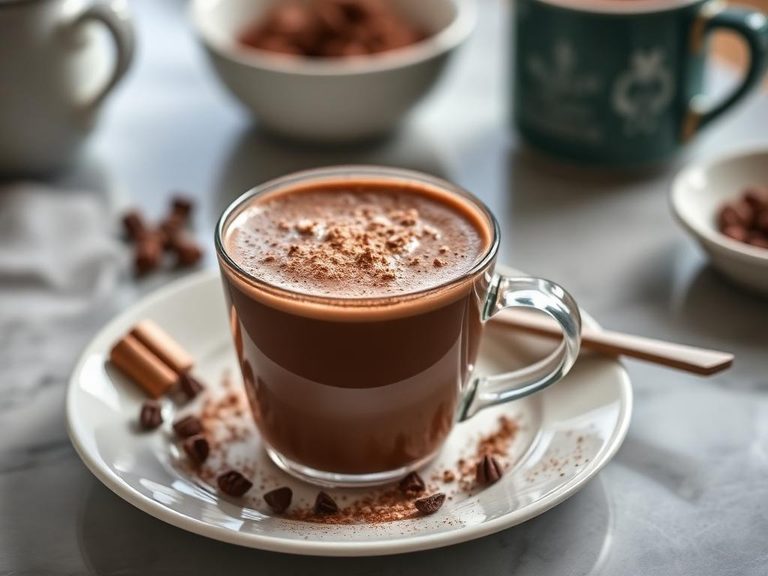
People love it for its incredible convenience and the nostalgic, sweet creaminess it adds to coffee or tea. It is a versatile staple in many kitchens for instantly transforming hot beverages and simple desserts.
⚠️ Watch-outs & how to enjoy it better
The primary concern is the exceptionally high sugar content (73.4g per 100g), which can cause rapid blood-sugar spikes and is problematic for those managing diabetes or low-carb diets. To mitigate this, use only a small portion (e.g., 1-2 teaspoons) and pair it with a source of protein or healthy fat, like nuts or a piece of cheese, to slow sugar absorption.
Key benefits
- Extremely long shelf life without refrigeration
- Convenient and lightweight for camping or travel
- Provides a creamy texture to beverages without liquid milk
- Instantly dissolves in hot or cold liquids
- Offers a consistent, predictable flavor for baking
🍽️ Popular dishes

🌍 Where it's eaten
💡 Did you know?
The 'light' designation refers to its lower fat content compared to regular powdered cream, but it often contains more sugar to compensate for flavor and texture.
Full nutrition (USDA data · scales with serving)
| Water | 6.2 g |
| Energy | 431 kcal |
| Energy | 1803 kj |
| Protein | 1.9 g |
| Total lipid (fat) | 15.7 g |
| Ash | 2.8 g |
| Carbohydrate, by difference | 73.4 g |
| Fiber, total dietary | 0.00 g |
| Total Sugars | 73.4 g |
| Calcium, Ca | 1.0 mg |
| Iron, Fe | 0.03 mg |
| Magnesium, Mg | 0.00 mg |
| Phosphorus, P | 136 mg |
| Potassium, K | 902 mg |
| Sodium, Na | 229 mg |
| Zinc, Zn | 0.02 mg |
| Copper, Cu | 0.01 mg |
| Selenium, Se | 0.80 ug |
| Vitamin C, total ascorbic acid | 0.00 mg |
| Thiamin | 0.00 mg |
| Riboflavin | 0.00 mg |
| Niacin | 0.00 mg |
| Vitamin B-6 | 0.00 mg |
| Folate, total | 1.0 ug |
| Folic acid | 0.00 ug |
| Folate, food | 1.0 ug |
| Folate, DFE | 1.0 ug |
| Choline, total | 2.3 mg |
| Vitamin B-12 | 0.00 ug |
| Vitamin B-12, added | 0.00 ug |
| Vitamin A, RAE | 1.0 ug |
| Retinol | 0.00 ug |
| Carotene, beta | 9.0 ug |
| Carotene, alpha | 0.00 ug |
| Cryptoxanthin, beta | 0.00 ug |
| Vitamin A, IU | 15.0 iu |
| Lycopene | 0.00 ug |
| Lutein + zeaxanthin | 0.00 ug |
| Vitamin E (alpha-tocopherol) | 0.26 mg |
| Vitamin E, added | 0.00 mg |
| Vitamin D (D2 + D3), International Units | 0.00 iu |
| Vitamin D (D2 + D3) | 0.00 ug |
| Vitamin K (phylloquinone) | 3.9 ug |
| Alcohol, ethyl | 0.00 g |
| Caffeine | 0.00 mg |
| Theobromine | 0.00 mg |
Fat & fatty acid profile (per 100g)
| Fatty acids, total saturated | 3.8 g |
| SFA 4:0 | 0.00 g |
| SFA 6:0 | 0.00 g |
| SFA 8:0 | 0.00 g |
| SFA 10:0 | 0.00 g |
| SFA 12:0 | 0.00 g |
| SFA 14:0 | 0.00 g |
| SFA 16:0 | 1.1 g |
| SFA 18:0 | 2.7 g |
| Fatty acids, total monounsaturated | 11.5 g |
| MUFA 16:1 | 0.00 g |
| MUFA 18:1 | 11.5 g |
| MUFA 20:1 | 0.00 g |
| MUFA 22:1 | 0.00 g |
| Fatty acids, total polyunsaturated | 0.20 g |
| PUFA 18:2 | 0.20 g |
| PUFA 18:3 | 0.00 g |
| PUFA 18:4 | 0.00 g |
| PUFA 20:4 | 0.00 g |
| PUFA 20:5 n-3 (EPA) | 0.00 g |
| PUFA 22:5 n-3 (DPA) | 0.00 g |
| PUFA 22:6 n-3 (DHA) | 0.00 g |
| Cholesterol | 0.00 mg |
Amino acid profile (per 100g)
Estimated from Cream substitute, liquid, with hydrogenated vegetable oil and soy protein — USDA does not publish this profile for Cream substitute.
| Tryptophan | 0.01 g |
| Threonine | 0.04 g |
| Isoleucine | 0.06 g |
| Leucine | 0.09 g |
| Lysine | 0.07 g |
| Methionine | 0.01 g |
| Cystine | 0.02 g |
| Phenylalanine | 0.06 g |
| Tyrosine | 0.04 g |
| Valine | 0.06 g |
| Arginine | 0.08 g |
| Histidine | 0.03 g |
| Alanine | 0.05 g |
| Aspartic acid | 0.13 g |
| Glutamic acid | 0.20 g |
| Glycine | 0.05 g |
| Proline | 0.06 g |
| Serine | 0.06 g |
FAQ
How do you use powdered light cream substitute?
Typically, you mix 1-2 tablespoons of the powder with 1/4 cup of hot or cold water to create a liquid cream substitute. It can be added directly to beverages or used in recipes.
Is powdered light cream substitute the same as powdered milk?
No. Powdered milk is made from skim or whole milk and has a different nutritional profile, usually with less sugar and more protein. This product is a 'cream substitute' designed to mimic cream, often with added sugars and fats.
Can I use it in baking?
Yes, it can be used in baking to add creaminess and sweetness to cakes, cookies, and frostings. However, you may need to adjust the sugar and liquid in the recipe accordingly.
Nutrient density (calculated · NRF9.3)
Nutrient Rich Foods index: beneficial nutrients (protein, fiber, vitamins, minerals) minus saturated fat, added sugar & sodium, per 100 kcal.
NRF9.3 index — Fulgoni, Keast & Drewnowski, 2009. Computed from USDA nutrients.
Weight-loss friendliness (composite index)
Energy density 4.31 kcal/g · 2% calories from protein · 0.0 g fiber · 73.4 g sugar per 100 g.
Composite of energy density (Rolls et al., 1999), protein & fiber satiety, minus sugar. A calculated heuristic — ranks satiety-per-calorie, not a clinical measure.
Dietary load (calculated from USDA values)
Potential renal acid load. Positive = acid-forming, negative = alkaline-forming.
Sodium-to-potassium ratio: 0.25 (lower is better — aim for ≤ 1)
Sodium:potassium per WHO potassium guidance. Computed from USDA nutrients.