

Cranberry juice, 100%, not a blend
Common food

Photo: Wikipedia
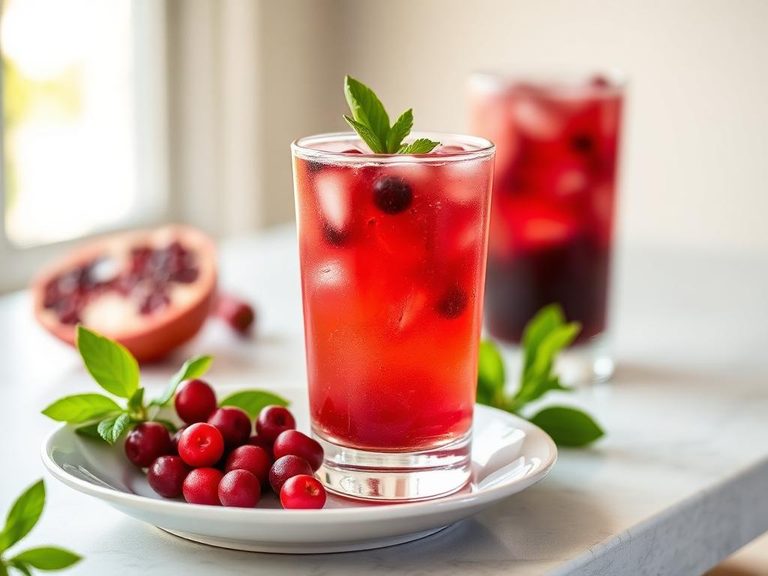
This is pure, unadulterated cranberry juice, a tart, ruby-red liquid pressed from the berry itself without added sugars or dilution. Its texture is thin and smooth, delivering an intense, mouth-puckering sourness balanced by subtle, earthy undertones. Nutritionally, it's a low-calorie source of carbohydrates, primarily from naturally occurring sugars like fructose and glucose.
Calorie split: 0% protein · 90% carbs · 10% fat
↓ Full nutrition💚 Why it's loved
People love its bold, uncompromising tartness that cuts through sweetness and richness, making it a versatile mixer and flavor enhancer. It's deeply embedded in North American culinary traditions, especially as a holiday staple and a symbol of harvest.
⚠️ Watch-outs & how to enjoy it better
Its extreme sourness can be overwhelming for some palates, and its high organic acid content may aggravate acid reflux or sensitive stomachs in susceptible individuals. To enjoy it, consider diluting it with water or sparkling water to mellow the acidity, or pair it with a small amount of healthy fat or protein (like nuts or yogurt) to buffer the impact on blood sugar and digestion.
Key benefits
- Rich in polyphenol antioxidants, particularly proanthocyanidins (PACs)
- May support urinary tract health by inhibiting bacterial adhesion
- Provides a quick source of natural carbohydrates for energy
- Contains vitamin C, an essential antioxidant
- Low in calories and fat-free
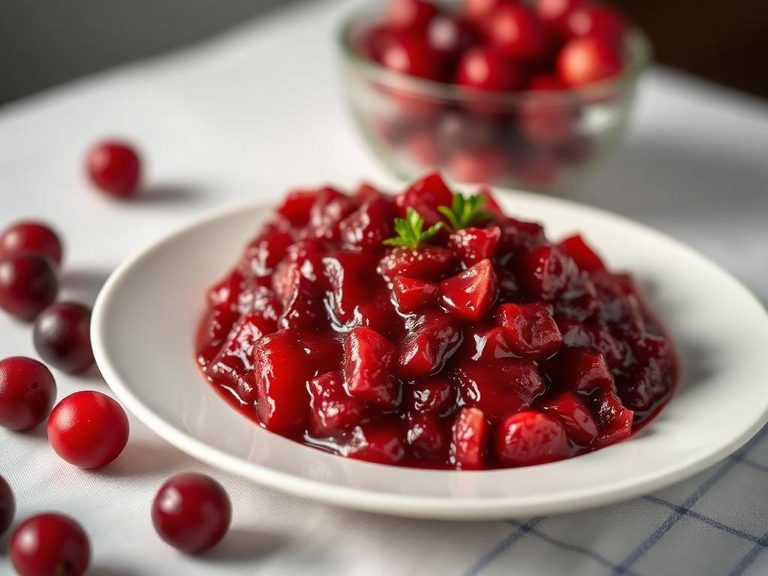
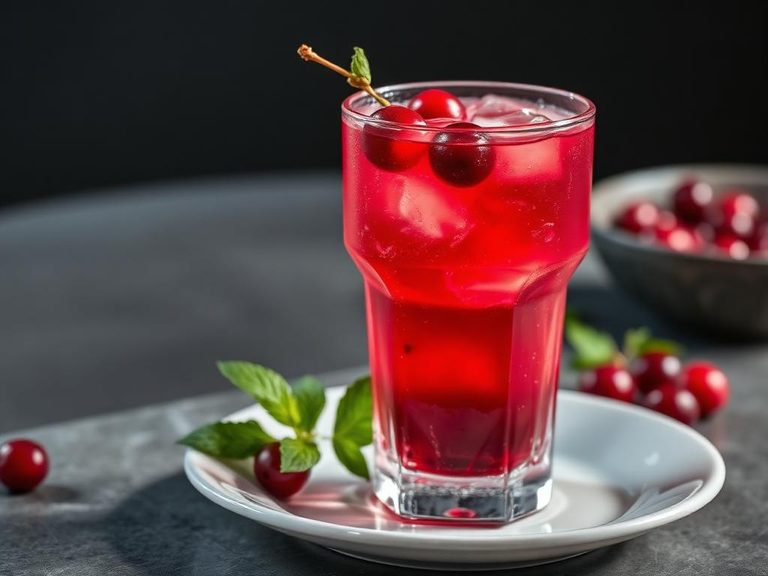
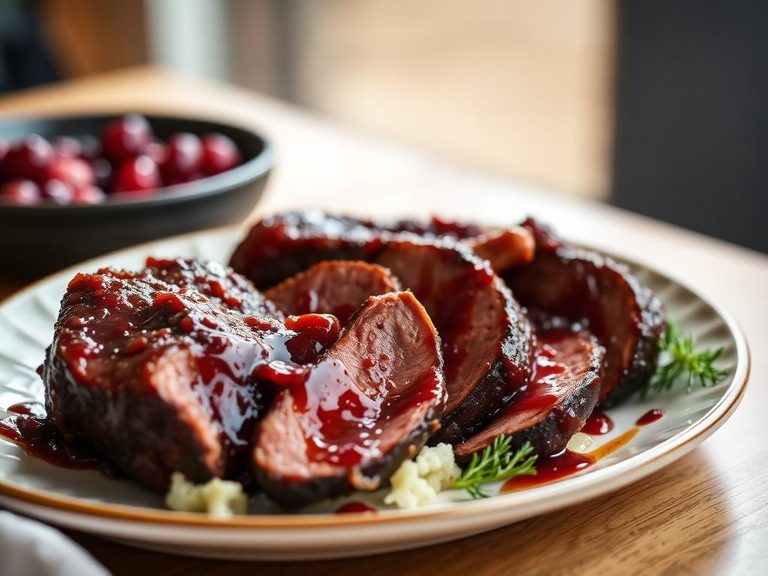
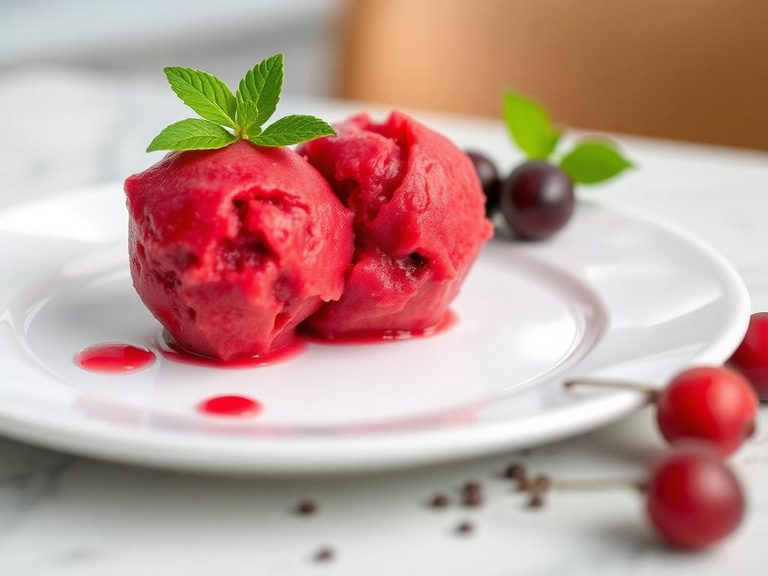
🍽️ Popular dishes
🌍 Where it's eaten
💡 Did you know?
Cranberries don't grow in water; they are grown on vines in bogs and are harvested by flooding the fields, which allows the air-filled berries to float to the surface for easy collection.
Full nutrition (USDA data · scales with serving)
| Water | 92.3 g |
| Energy | 32.0 kcal |
| Protein | 0.00 g |
| Total lipid (fat) | 0.34 g |
| Carbohydrate, by difference | 7.3 g |
| Fiber, total dietary | 0.10 g |
| Total Sugars | 3.4 g |
| Calcium, Ca | 7.0 mg |
| Iron, Fe | 0.13 mg |
| Magnesium, Mg | 4.0 mg |
| Phosphorus, P | 3.0 mg |
| Potassium, K | 71.0 mg |
| Sodium, Na | 6.0 mg |
| Zinc, Zn | 0.04 mg |
| Copper, Cu | 0.01 mg |
| Selenium, Se | 0.10 ug |
| Vitamin C, total ascorbic acid | 0.00 mg |
| Thiamin | 0.02 mg |
| Riboflavin | 0.02 mg |
| Niacin | 0.01 mg |
| Vitamin B-6 | 0.01 mg |
| Folate, total | 9.0 ug |
| Folic acid | 0.00 ug |
| Folate, food | 9.0 ug |
| Folate, DFE | 9.0 ug |
| Choline, total | 3.3 mg |
| Vitamin B-12 | 0.00 ug |
| Vitamin B-12, added | 0.00 ug |
| Vitamin A, RAE | 2.0 ug |
| Retinol | 0.00 ug |
| Carotene, beta | 27.0 ug |
| Carotene, alpha | 0.00 ug |
| Cryptoxanthin, beta | 0.00 ug |
| Lycopene | 0.00 ug |
| Lutein + zeaxanthin | 68.0 ug |
| Vitamin E (alpha-tocopherol) | 1.2 mg |
| Vitamin E, added | 0.00 mg |
| Vitamin D (D2 + D3) | 0.00 ug |
| Vitamin K (phylloquinone) | 5.1 ug |
| Alcohol, ethyl | 0.00 g |
| Caffeine | 0.00 mg |
| Theobromine | 0.00 mg |
Fat & fatty acid profile (per 100g)
| Fatty acids, total saturated | 0.01 g |
| SFA 4:0 | 0.00 g |
| SFA 6:0 | 0.00 g |
| SFA 8:0 | 0.00 g |
| SFA 10:0 | 0.00 g |
| SFA 12:0 | 0.00 g |
| SFA 14:0 | 0.00 g |
| SFA 16:0 | 0.01 g |
| SFA 18:0 | 0.00 g |
| Fatty acids, total monounsaturated | 0.02 g |
| MUFA 16:1 | 0.00 g |
| MUFA 18:1 | 0.02 g |
| MUFA 20:1 | 0.00 g |
| MUFA 22:1 | 0.00 g |
| Fatty acids, total polyunsaturated | 0.07 g |
| PUFA 18:2 | 0.04 g |
| PUFA 18:3 | 0.03 g |
| PUFA 18:4 | 0.00 g |
| PUFA 20:4 | 0.00 g |
| PUFA 20:5 n-3 (EPA) | 0.00 g |
| PUFA 22:5 n-3 (DPA) | 0.00 g |
| PUFA 22:6 n-3 (DHA) | 0.00 g |
| Cholesterol | 0.00 mg |
Amino acid profile (per 100g)
Estimated from Cranberry juice cocktail, bottled, low calorie, with calcium, saccharin and corn sweetener — USDA does not publish this profile for Cranberry juice.
| Tryptophan | 0.00 g |
| Threonine | 0.00 g |
| Isoleucine | 0.00 g |
| Leucine | 0.00 g |
| Lysine | 0.00 g |
| Methionine | 0.00 g |
| Cystine | 0.00 g |
| Phenylalanine | 0.00 g |
| Tyrosine | 0.00 g |
| Valine | 0.00 g |
| Arginine | 0.00 g |
| Histidine | 0.00 g |
| Alanine | 0.00 g |
| Aspartic acid | 0.00 g |
| Glutamic acid | 0.00 g |
| Glycine | 0.00 g |
| Proline | 0.00 g |
| Serine | 0.00 g |
FAQ
Is 100% cranberry juice the same as cranberry cocktail?
No. 100% cranberry juice is pure juice with no added sugars, resulting in a very tart taste. Cranberry cocktail or juice drink typically contains added sugars or other fruit juices to sweeten it.
Why is pure cranberry juice so sour?
Cranberries contain high levels of organic acids, primarily citric and malic acid, which give them their characteristic sharp, tart flavor. The lack of added sugar in 100% juice makes this sourness very prominent.
Can I use this juice for baking?
Yes, but it will impart a strong tart flavor. It's excellent in glazes, reductions, or to add moisture and a tangy kick to cakes and muffins. You may need to adjust the sugar in your recipe accordingly.
Nutrient density (calculated · NRF9.3)
Nutrient Rich Foods index: beneficial nutrients (protein, fiber, vitamins, minerals) minus saturated fat, added sugar & sodium, per 100 kcal.
NRF9.3 index — Fulgoni, Keast & Drewnowski, 2009. Computed from USDA nutrients.
Weight-loss friendliness (composite index)
Energy density 0.32 kcal/g · 0% calories from protein · 0.1 g fiber · 3.4 g sugar per 100 g.
Composite of energy density (Rolls et al., 1999), protein & fiber satiety, minus sugar. A calculated heuristic — ranks satiety-per-calorie, not a clinical measure.
Dietary load (calculated from USDA values)
Potential renal acid load. Positive = acid-forming, negative = alkaline-forming.
Sodium-to-potassium ratio: 0.08 (lower is better — aim for ≤ 1)
Sodium:potassium per WHO potassium guidance. Computed from USDA nutrients.