

Collards, fresh, cooked with butter or margarine
Common food

Photo: Wikipedia
Collard greens are hearty, dark leafy greens with a thick, slightly waxy texture that softens into a tender, silky bite when slow-cooked. Their flavor is earthy and subtly bitter, often mellowed and enriched by the addition of butter or margarine. Nutritionally, they are a low-calorie powerhouse, providing significant fiber and protein for their weight.
Calorie split: 20% protein · 36% carbs · 43% fat
↓ Full nutrition💚 Why it's loved
People love collards for their robust, soulful flavor that forms the backbone of comfort food in many cuisines. They are incredibly versatile, absorbing the flavors of smoky meats, spices, or the simple richness of butter.
⚠️ Watch-outs & how to enjoy it better
The natural bitterness can be off-putting to some, and they contain oxalates, which can contribute to kidney stones in susceptible individuals. To counteract bitterness, cook with a splash of vinegar or lemon juice; to reduce oxalates, blanch them in a large pot of boiling water before the final cooking and discard the water.
Key benefits
- Excellent source of dietary fiber for digestive health.
- Provides plant-based protein with minimal calories.
- Rich in vitamins K, A, and C, as well as calcium.
- Contains antioxidants like lutein and zeaxanthin.
- Low in natural sugars, making it a stable energy source.
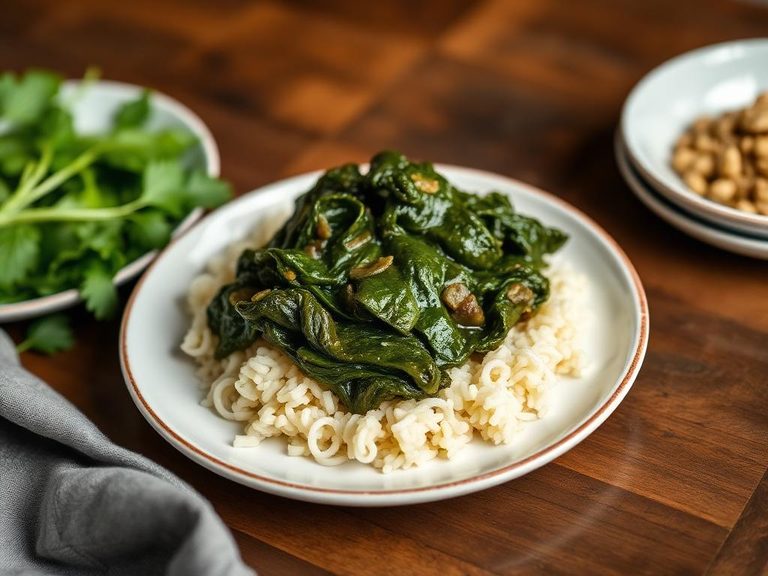
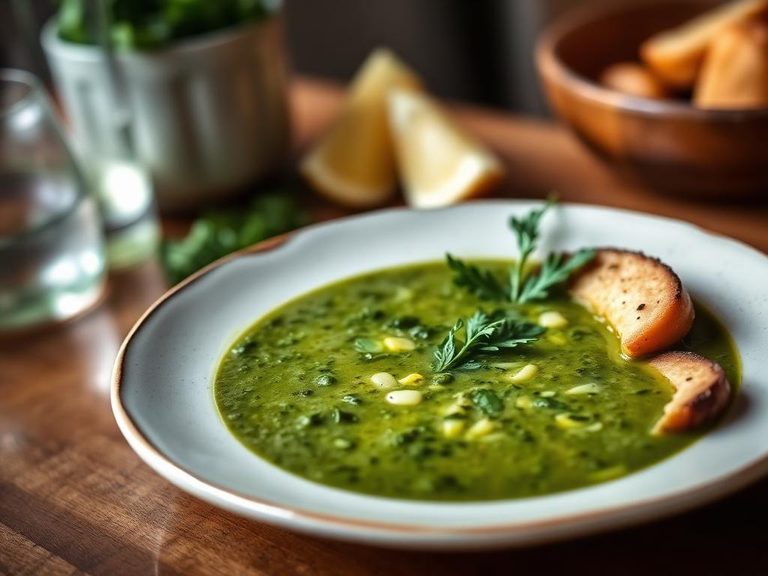
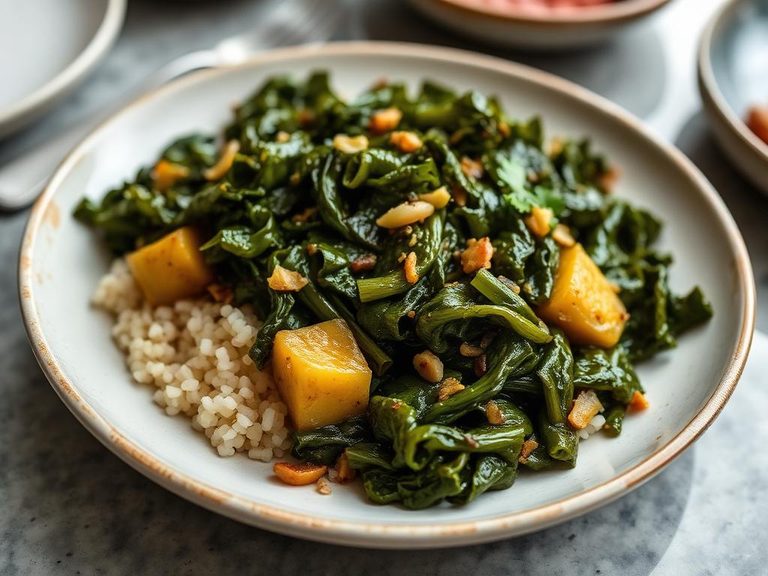
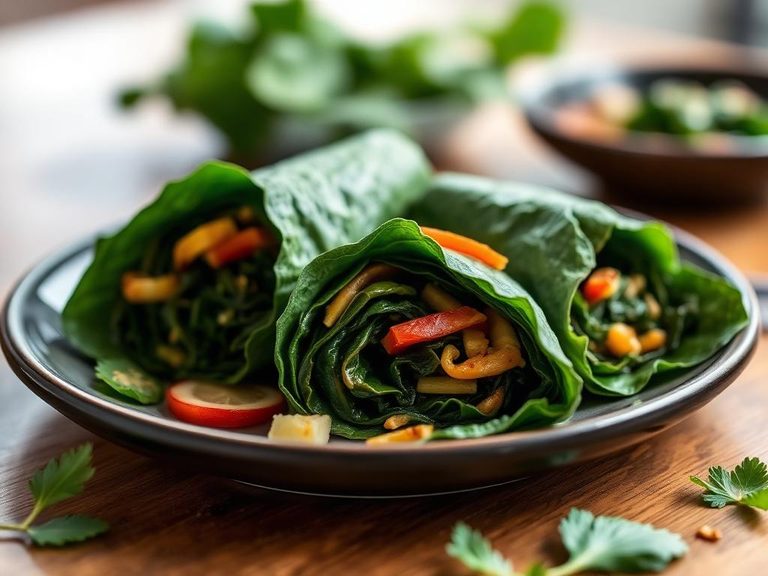
🍽️ Popular dishes
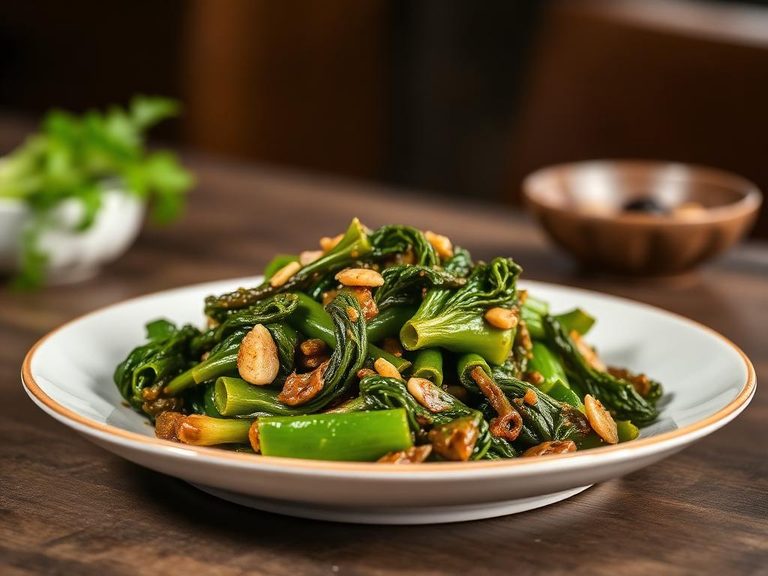
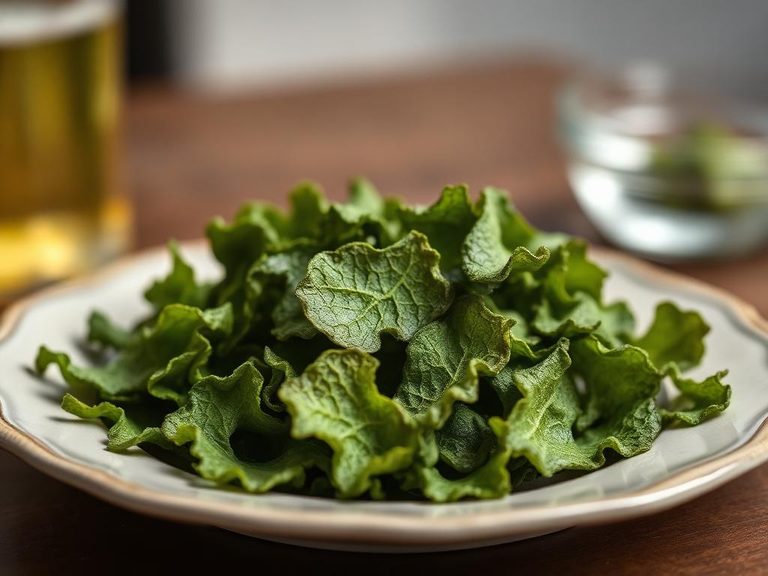
🌍 Where it's eaten
💡 Did you know?
The tradition of eating collard greens on New Year's Day in the American South is believed to symbolize wealth, as the green leaves resemble folded paper money.
Full nutrition (USDA data · scales with serving)
| Water | 86.5 g |
| Energy | 54.0 kcal |
| Protein | 3.2 g |
| Total lipid (fat) | 3.0 g |
| Carbohydrate, by difference | 5.7 g |
| Fiber, total dietary | 4.2 g |
| Total Sugars | 0.49 g |
| Calcium, Ca | 242 mg |
| Iron, Fe | 0.49 mg |
| Magnesium, Mg | 28.0 mg |
| Phosphorus, P | 27.0 mg |
| Potassium, K | 222 mg |
| Sodium, Na | 157 mg |
| Zinc, Zn | 0.22 mg |
| Copper, Cu | 0.05 mg |
| Selenium, Se | 1.4 ug |
| Vitamin C, total ascorbic acid | 25.7 mg |
| Thiamin | 0.05 mg |
| Riboflavin | 0.13 mg |
| Niacin | 0.73 mg |
| Vitamin B-6 | 0.20 mg |
| Folate, total | 101 ug |
| Folic acid | 0.00 ug |
| Folate, food | 101 ug |
| Folate, DFE | 101 ug |
| Choline, total | 24.6 mg |
| Vitamin B-12 | 0.00 ug |
| Vitamin B-12, added | 0.00 ug |
| Vitamin A, RAE | 273 ug |
| Retinol | 24.0 ug |
| Carotene, beta | 2968 ug |
| Carotene, alpha | 14.0 ug |
| Cryptoxanthin, beta | 28.0 ug |
| Lycopene | 0.00 ug |
| Lutein + zeaxanthin | 4275 ug |
| Vitamin E (alpha-tocopherol) | 2.6 mg |
| Vitamin E, added | 0.00 mg |
| Vitamin D (D2 + D3) | 0.10 ug |
| Vitamin K (phylloquinone) | 456 ug |
| Alcohol, ethyl | 0.00 g |
| Caffeine | 0.00 mg |
| Theobromine | 0.00 mg |
Fat & fatty acid profile (per 100g)
| Fatty acids, total saturated | 1.1 g |
| SFA 4:0 | 0.04 g |
| SFA 6:0 | 0.03 g |
| SFA 8:0 | 0.02 g |
| SFA 10:0 | 0.04 g |
| SFA 12:0 | 0.04 g |
| SFA 14:0 | 0.14 g |
| SFA 16:0 | 0.53 g |
| SFA 18:0 | 0.20 g |
| Fatty acids, total monounsaturated | 0.65 g |
| MUFA 16:1 | 0.02 g |
| MUFA 18:1 | 0.61 g |
| MUFA 20:1 | 0.00 g |
| MUFA 22:1 | 0.00 g |
| Fatty acids, total polyunsaturated | 0.58 g |
| PUFA 18:2 | 0.42 g |
| PUFA 18:3 | 0.15 g |
| PUFA 18:4 | 0.00 g |
| PUFA 20:4 | 0.00 g |
| PUFA 20:5 n-3 (EPA) | 0.00 g |
| PUFA 22:5 n-3 (DPA) | 0.00 g |
| PUFA 22:6 n-3 (DHA) | 0.00 g |
| Cholesterol | 4.0 mg |
Amino acid profile (per 100g)
Estimated from Collards, cooked, boiled, drained, with salt — USDA does not publish this profile for Collards.
| Tryptophan | 0.03 g |
| Threonine | 0.07 g |
| Isoleucine | 0.09 g |
| Leucine | 0.13 g |
| Lysine | 0.10 g |
| Methionine | 0.03 g |
| Cystine | 0.02 g |
| Phenylalanine | 0.07 g |
| Tyrosine | 0.06 g |
| Valine | 0.10 g |
| Arginine | 0.11 g |
| Histidine | 0.04 g |
| Alanine | 0.09 g |
| Aspartic acid | 0.16 g |
| Glutamic acid | 0.18 g |
| Glycine | 0.08 g |
| Proline | 0.09 g |
| Serine | 0.07 g |
FAQ
How do I reduce the bitterness in collard greens?
A common technique is to add an acidic ingredient like apple cider vinegar, lemon juice, or a splash of tomato during the last 15-30 minutes of cooking. Cooking them slowly with a fatty element like butter, bacon fat, or smoked turkey also mellows the flavor.
What's the difference between collard greens and kale?
Collard greens have large, flat, dark green leaves with a sturdy central stem and a milder, earthier flavor. Kale leaves are often curly or bumpy, can be more tender or very tough depending on the variety, and often have a more pronounced, peppery bite.
Can I eat collard greens raw?
Yes, but they are very tough and fibrous raw. To use them raw, such as in salads, it's best to remove the tough stems, slice the leaves very thinly (chiffonade), and massage them with a dressing or oil to soften the texture.
Nutrient density (calculated · NRF9.3)
Nutrient Rich Foods index: beneficial nutrients (protein, fiber, vitamins, minerals) minus saturated fat, added sugar & sodium, per 100 kcal.
NRF9.3 index — Fulgoni, Keast & Drewnowski, 2009. Computed from USDA nutrients.
Weight-loss friendliness (composite index)
Energy density 0.54 kcal/g · 23% calories from protein · 4.2 g fiber · 0.5 g sugar per 100 g.
Composite of energy density (Rolls et al., 1999), protein & fiber satiety, minus sugar. A calculated heuristic — ranks satiety-per-calorie, not a clinical measure.
Dietary load (calculated from USDA values)
Potential renal acid load. Positive = acid-forming, negative = alkaline-forming.
Sodium-to-potassium ratio: 0.71 (lower is better — aim for ≤ 1)
Sodium:potassium per WHO potassium guidance. Computed from USDA nutrients.