

Collards, frozen, cooked with butter or margarine
Common food

Photo: Wikipedia
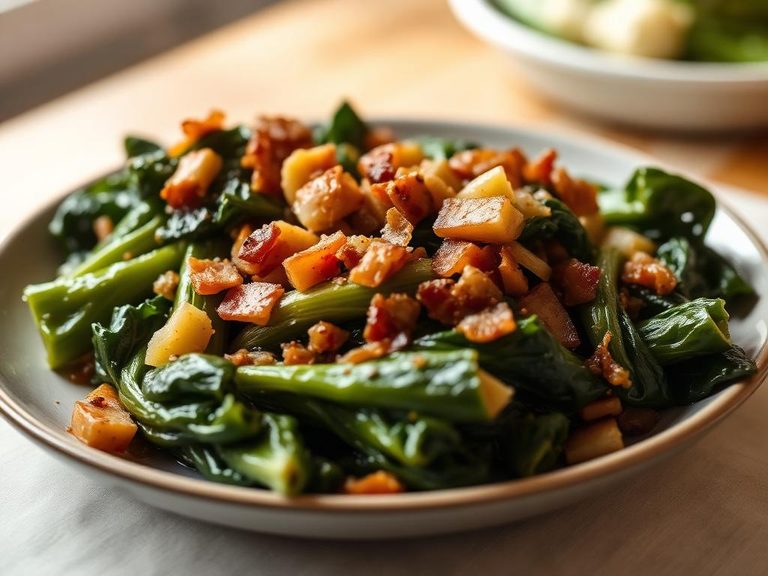
Frozen collard greens, cooked with butter or margarine, are a tender, savory side dish with a deep, earthy flavor and a silky, slightly chewy texture. At just 55 calories per 100g, they are a low-calorie, nutrient-dense option that delivers a satisfying, rich mouthfeel thanks to the added fat. This preparation transforms the tough, fibrous leaves into a comforting, melt-in-your-mouth staple.
Calorie split: 19% protein · 44% carbs · 37% fat
↓ Full nutrition💚 Why it's loved
People love this dish for its deep, soulful flavor and the way the butter or margarine mellows the greens' natural bitterness into something rich and comforting. It's a beloved staple in Southern U.S. cuisine, often evoking a sense of home and tradition.
⚠️ Watch-outs & how to enjoy it better
The high oxalate content in collards can inhibit calcium absorption and may be a concern for those prone to kidney stones. To counteract this, pair them with a calcium-rich food like cheese or yogurt, and consider a quick blanch-and-drain before final cooking to reduce oxalates. Additionally, if using margarine, be mindful of potential trans fats; opting for butter or a heart-healthy oil can be a better choice.
Key benefits
- Excellent source of dietary fiber (2.7g per 100g) supporting digestive health.
- Very low in sugar (0.56g per 100g), making it a blood-sugar-friendly vegetable.
- Rich in vitamins A, C, and K, as well as calcium and manganese.
- A good plant-based protein source (2.89g per 100g) for a leafy green.
- Convenient and affordable year-round due to freezing preservation.
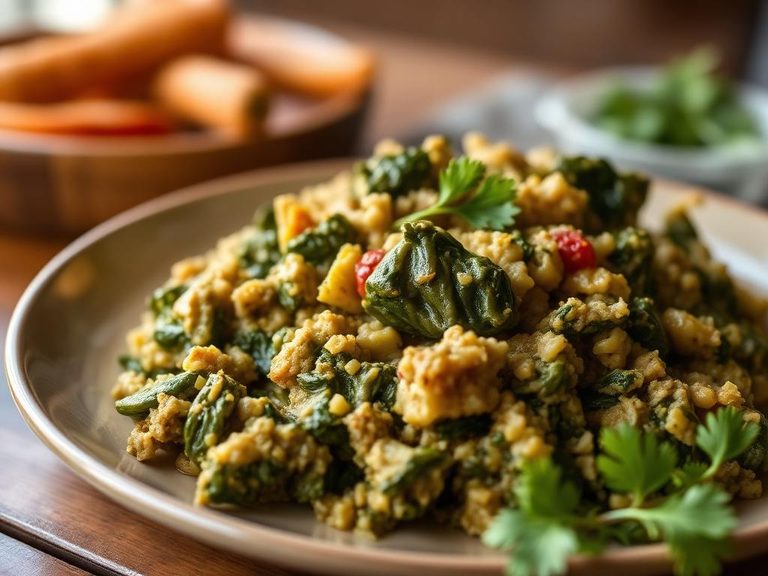
🍽️ Popular dishes
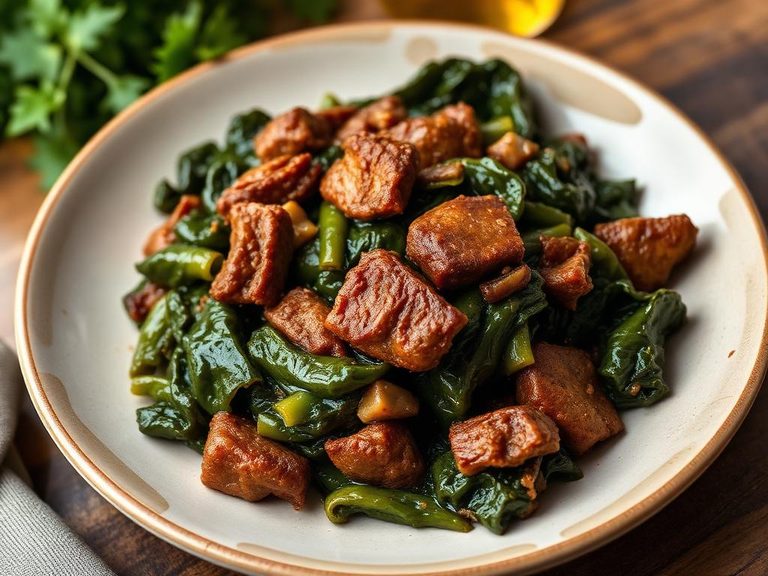
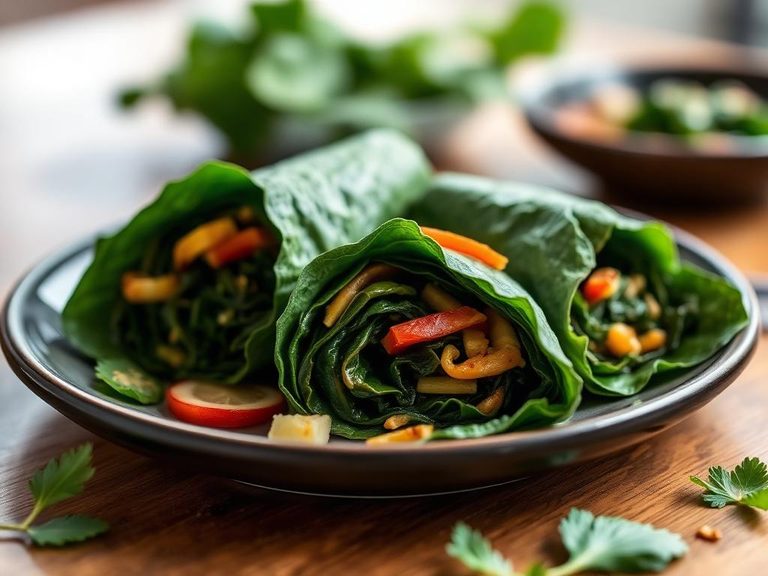
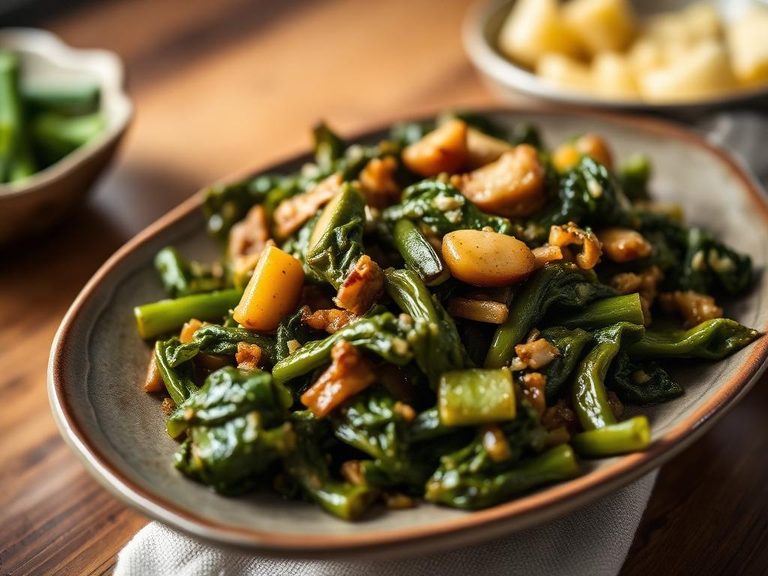
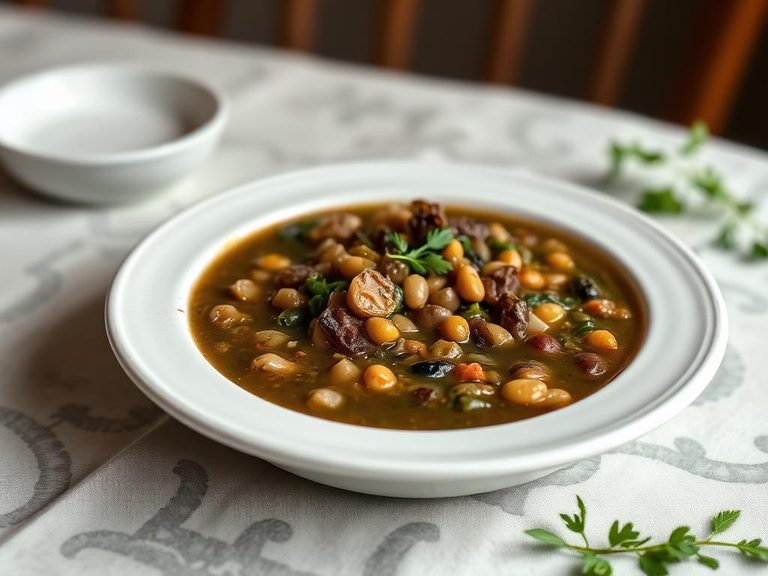
🌍 Where it's eaten
💡 Did you know?
Collard greens are one of the oldest members of the cabbage family, with evidence of their cultivation dating back to ancient Greece and Rome, long before the modern cabbage was developed.
Full nutrition (USDA data · scales with serving)
| Water | 86.3 g |
| Energy | 55.0 kcal |
| Protein | 2.9 g |
| Total lipid (fat) | 2.6 g |
| Carbohydrate, by difference | 6.9 g |
| Fiber, total dietary | 2.7 g |
| Total Sugars | 0.56 g |
| Calcium, Ca | 204 mg |
| Iron, Fe | 1.1 mg |
| Magnesium, Mg | 29.0 mg |
| Phosphorus, P | 27.0 mg |
| Potassium, K | 244 mg |
| Sodium, Na | 178 mg |
| Zinc, Zn | 0.26 mg |
| Copper, Cu | 0.05 mg |
| Selenium, Se | 1.5 ug |
| Vitamin C, total ascorbic acid | 25.6 mg |
| Thiamin | 0.05 mg |
| Riboflavin | 0.11 mg |
| Niacin | 0.61 mg |
| Vitamin B-6 | 0.14 mg |
| Folate, total | 74.0 ug |
| Folic acid | 0.00 ug |
| Folate, food | 74.0 ug |
| Folate, DFE | 74.0 ug |
| Choline, total | 44.1 mg |
| Vitamin B-12 | 0.00 ug |
| Vitamin B-12, added | 0.00 ug |
| Vitamin A, RAE | 579 ug |
| Retinol | 22.0 ug |
| Carotene, beta | 6610 ug |
| Carotene, alpha | 123 ug |
| Cryptoxanthin, beta | 27.0 ug |
| Lycopene | 0.00 ug |
| Lutein + zeaxanthin | 10550 ug |
| Vitamin E (alpha-tocopherol) | 1.4 mg |
| Vitamin E, added | 0.00 mg |
| Vitamin D (D2 + D3) | 0.00 ug |
| Vitamin K (phylloquinone) | 605 ug |
| Alcohol, ethyl | 0.00 g |
| Caffeine | 0.00 mg |
| Theobromine | 0.00 mg |
Fat & fatty acid profile (per 100g)
| Fatty acids, total saturated | 1.0 g |
| SFA 4:0 | 0.04 g |
| SFA 6:0 | 0.03 g |
| SFA 8:0 | 0.01 g |
| SFA 10:0 | 0.03 g |
| SFA 12:0 | 0.04 g |
| SFA 14:0 | 0.13 g |
| SFA 16:0 | 0.50 g |
| SFA 18:0 | 0.19 g |
| Fatty acids, total monounsaturated | 0.59 g |
| MUFA 16:1 | 0.03 g |
| MUFA 18:1 | 0.55 g |
| MUFA 20:1 | 0.00 g |
| MUFA 22:1 | 0.00 g |
| Fatty acids, total polyunsaturated | 0.55 g |
| PUFA 18:2 | 0.37 g |
| PUFA 18:3 | 0.16 g |
| PUFA 18:4 | 0.00 g |
| PUFA 20:4 | 0.00 g |
| PUFA 20:5 n-3 (EPA) | 0.00 g |
| PUFA 22:5 n-3 (DPA) | 0.00 g |
| PUFA 22:6 n-3 (DHA) | 0.00 g |
| Cholesterol | 4.0 mg |
Amino acid profile (per 100g)
Estimated from Collards, cooked, boiled, drained, with salt — USDA does not publish this profile for Collards.
| Tryptophan | 0.03 g |
| Threonine | 0.07 g |
| Isoleucine | 0.09 g |
| Leucine | 0.13 g |
| Lysine | 0.10 g |
| Methionine | 0.03 g |
| Cystine | 0.02 g |
| Phenylalanine | 0.07 g |
| Tyrosine | 0.06 g |
| Valine | 0.10 g |
| Arginine | 0.11 g |
| Histidine | 0.04 g |
| Alanine | 0.09 g |
| Aspartic acid | 0.16 g |
| Glutamic acid | 0.18 g |
| Glycine | 0.08 g |
| Proline | 0.09 g |
| Serine | 0.07 g |
FAQ
Are frozen collard greens as nutritious as fresh?
Yes, frozen collard greens are often just as nutritious as fresh, and sometimes more so, because they are flash-frozen at peak ripeness, preserving vitamins and minerals that can degrade in fresh greens over time.
How can I reduce the bitterness of cooked collard greens?
To reduce bitterness, you can add a splash of apple cider vinegar or a pinch of sugar during cooking, or use a longer, slower cooking method with a fat like butter or bacon grease to mellow the flavor.
What is the best way to store leftover cooked collard greens?
Store leftover cooked collard greens in an airtight container in the refrigerator for up to 4 days, or freeze them for up to 3 months for longer storage.
Nutrient density (calculated · NRF9.3)
Nutrient Rich Foods index: beneficial nutrients (protein, fiber, vitamins, minerals) minus saturated fat, added sugar & sodium, per 100 kcal.
NRF9.3 index — Fulgoni, Keast & Drewnowski, 2009. Computed from USDA nutrients.
Weight-loss friendliness (composite index)
Energy density 0.55 kcal/g · 21% calories from protein · 2.7 g fiber · 0.6 g sugar per 100 g.
Composite of energy density (Rolls et al., 1999), protein & fiber satiety, minus sugar. A calculated heuristic — ranks satiety-per-calorie, not a clinical measure.
Dietary load (calculated from USDA values)
Potential renal acid load. Positive = acid-forming, negative = alkaline-forming.
Sodium-to-potassium ratio: 0.73 (lower is better — aim for ≤ 1)
Sodium:potassium per WHO potassium guidance. Computed from USDA nutrients.