

Collards, fresh, cooked, fat added, NS as to fat type
Common food

Photo: Wikipedia
Cooked collard greens are tender, dark leafy greens with a robust, slightly earthy flavor and a silky texture when braised. They are a low-calorie, high-fiber powerhouse, delivering a significant dose of vitamins K and A in every bite. The addition of fat in cooking helps unlock and absorb these fat-soluble vitamins.
Calorie split: 19% protein · 34% carbs · 46% fat
↓ Full nutrition💚 Why it's loved
People love collards for their hearty, soulful flavor that forms the backbone of comfort food, especially in the American South. Their sturdy leaves hold up beautifully to long, slow cooking, absorbing the flavors of smoked meats, vinegar, or spices.
⚠️ Watch-outs & how to enjoy it better
Collards are high in vitamin K, which can interfere with blood-thinning medications like warfarin; individuals on such therapy should maintain consistent intake. They also contain oxalates, which can contribute to kidney stones in susceptible people. To mitigate oxalates, boiling and discarding the cooking water can reduce their content, and pairing with calcium-rich foods can help.
Key benefits
- Excellent source of Vitamin K, crucial for bone health and blood clotting.
- Rich in Vitamin A, supporting vision and immune function.
- High in dietary fiber, promoting digestive health and satiety.
- Contains antioxidants like lutein and zeaxanthin for eye health.
- Low in calories and carbohydrates, suitable for various diets.
🍽️ Popular dishes
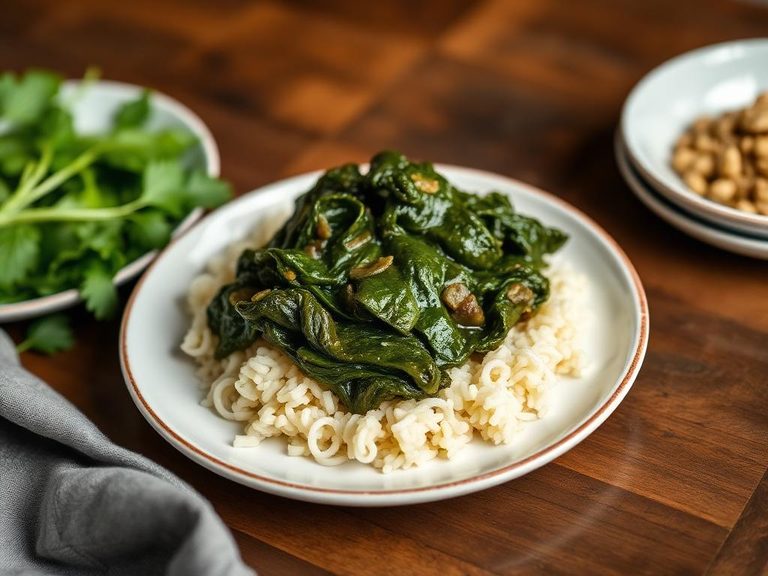
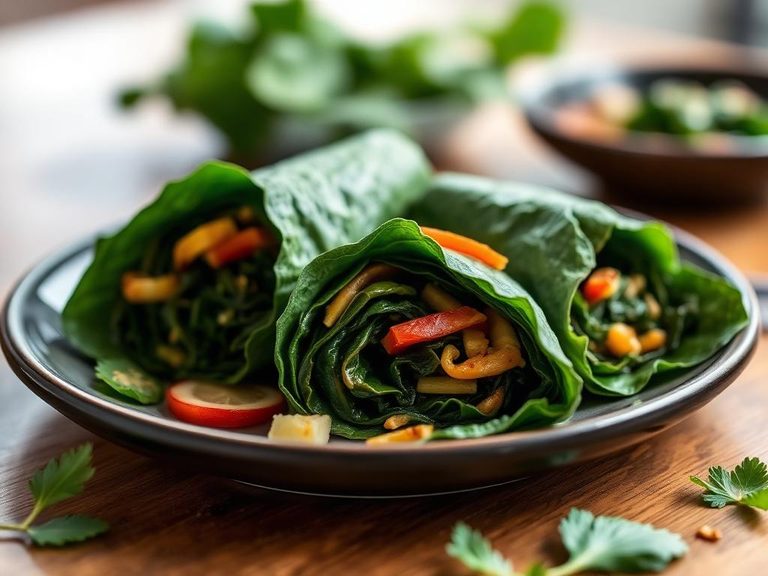
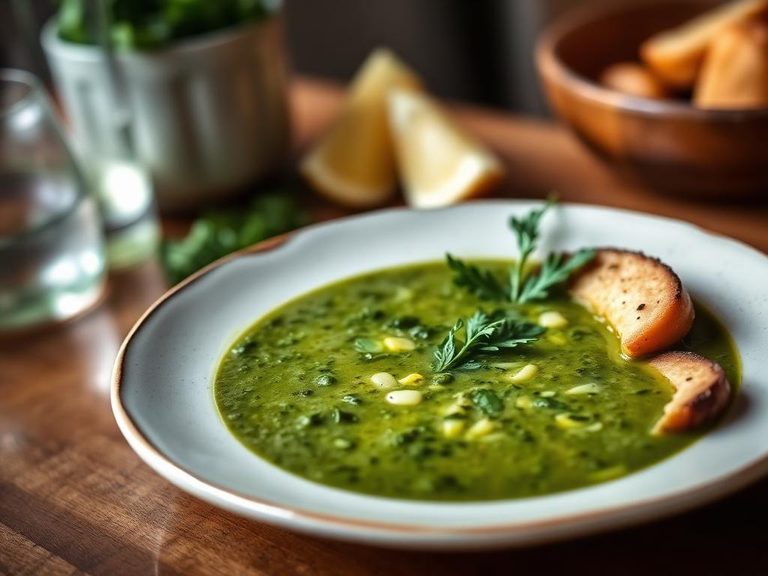
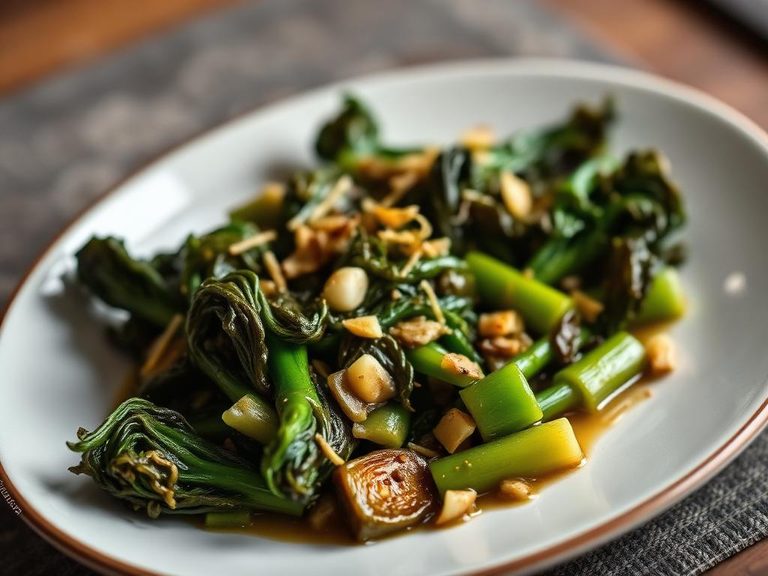
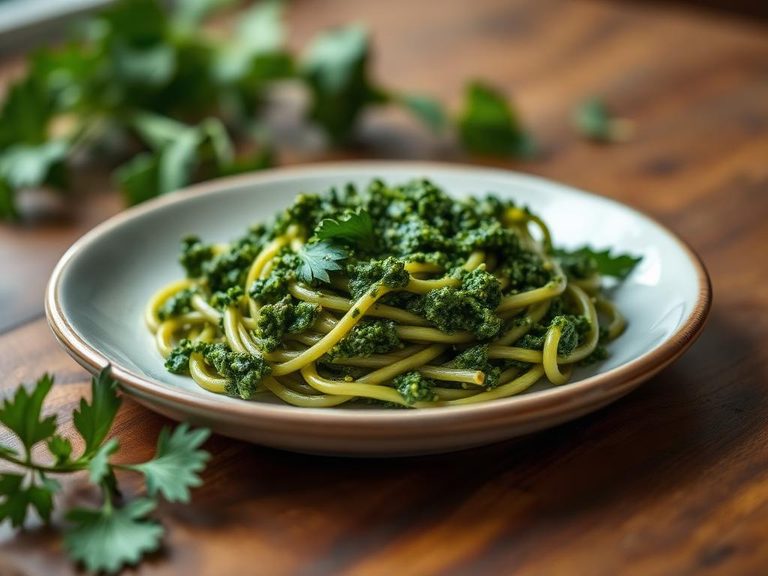
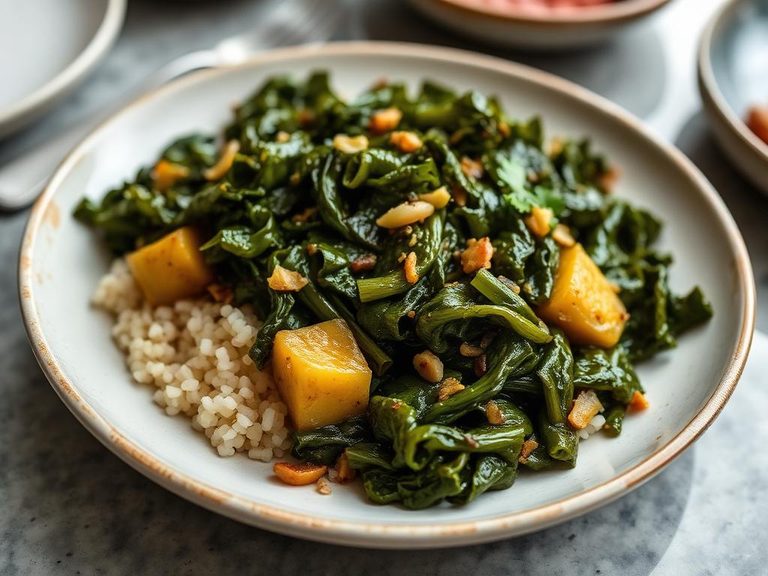
🌍 Where it's eaten
💡 Did you know?
Collard greens are a member of the same species as wild cabbage and kale, making them botanical cousins to broccoli, cauliflower, and Brussels sprouts.
Full nutrition (USDA data · scales with serving)
| Water | 86.1 g |
| Energy | 58.0 kcal |
| Protein | 3.1 g |
| Total lipid (fat) | 3.4 g |
| Carbohydrate, by difference | 5.7 g |
| Fiber, total dietary | 4.2 g |
| Total Sugars | 0.48 g |
| Calcium, Ca | 242 mg |
| Iron, Fe | 0.49 mg |
| Magnesium, Mg | 28.0 mg |
| Phosphorus, P | 26.0 mg |
| Potassium, K | 222 mg |
| Sodium, Na | 148 mg |
| Zinc, Zn | 0.22 mg |
| Copper, Cu | 0.05 mg |
| Selenium, Se | 1.4 ug |
| Vitamin C, total ascorbic acid | 25.7 mg |
| Thiamin | 0.05 mg |
| Riboflavin | 0.13 mg |
| Niacin | 0.73 mg |
| Vitamin B-6 | 0.18 mg |
| Folate, total | 101 ug |
| Folic acid | 0.00 ug |
| Folate, food | 101 ug |
| Folate, DFE | 101 ug |
| Choline, total | 24.4 mg |
| Vitamin B-12 | 0.00 ug |
| Vitamin B-12, added | 0.00 ug |
| Vitamin A, RAE | 260 ug |
| Retinol | 12.0 ug |
| Carotene, beta | 2963 ug |
| Carotene, alpha | 14.0 ug |
| Cryptoxanthin, beta | 28.0 ug |
| Lycopene | 0.00 ug |
| Lutein + zeaxanthin | 4275 ug |
| Vitamin E (alpha-tocopherol) | 2.8 mg |
| Vitamin E, added | 0.00 mg |
| Vitamin D (D2 + D3) | 0.00 ug |
| Vitamin K (phylloquinone) | 457 ug |
| Alcohol, ethyl | 0.00 g |
| Caffeine | 0.00 mg |
| Theobromine | 0.00 mg |
Fat & fatty acid profile (per 100g)
| Fatty acids, total saturated | 0.77 g |
| SFA 4:0 | 0.02 g |
| SFA 6:0 | 0.01 g |
| SFA 8:0 | 0.01 g |
| SFA 10:0 | 0.02 g |
| SFA 12:0 | 0.02 g |
| SFA 14:0 | 0.07 g |
| SFA 16:0 | 0.44 g |
| SFA 18:0 | 0.15 g |
| Fatty acids, total monounsaturated | 1.0 g |
| MUFA 16:1 | 0.01 g |
| MUFA 18:1 | 0.96 g |
| MUFA 20:1 | 0.01 g |
| MUFA 22:1 | 0.00 g |
| Fatty acids, total polyunsaturated | 0.99 g |
| PUFA 18:2 | 0.78 g |
| PUFA 18:3 | 0.20 g |
| PUFA 18:4 | 0.00 g |
| PUFA 20:4 | 0.00 g |
| PUFA 20:5 n-3 (EPA) | 0.00 g |
| PUFA 22:5 n-3 (DPA) | 0.00 g |
| PUFA 22:6 n-3 (DHA) | 0.00 g |
| Cholesterol | 2.0 mg |
Amino acid profile (per 100g)
Estimated from Collards, cooked, boiled, drained, with salt — USDA does not publish this profile for Collards.
| Tryptophan | 0.03 g |
| Threonine | 0.07 g |
| Isoleucine | 0.09 g |
| Leucine | 0.13 g |
| Lysine | 0.10 g |
| Methionine | 0.03 g |
| Cystine | 0.02 g |
| Phenylalanine | 0.07 g |
| Tyrosine | 0.06 g |
| Valine | 0.10 g |
| Arginine | 0.11 g |
| Histidine | 0.04 g |
| Alanine | 0.09 g |
| Aspartic acid | 0.16 g |
| Glutamic acid | 0.18 g |
| Glycine | 0.08 g |
| Proline | 0.09 g |
| Serine | 0.07 g |
FAQ
How do I reduce the bitterness in collard greens?
A long, slow braise is key. Cooking them for at least 45-60 minutes with a flavorful liquid (like broth, smoked meat, or a splash of vinegar) tenderizes the leaves and mellows any bitterness.
What's the best way to clean fresh collards?
Separate the leaves from the tough stems. Submerge the leaves in a basin of cold water, swish vigorously to dislodge dirt, and lift them out. Repeat if the water is very gritty. A salad spinner works well for drying.
Can I eat collard greens raw?
Yes, but they are very tough. To use them raw, remove the central stem, stack and roll the leaves, and slice them into very thin ribbons (chiffonade). Massaging the ribbons with a bit of oil or dressing helps soften them.
Nutrient density (calculated · NRF9.3)
Nutrient Rich Foods index: beneficial nutrients (protein, fiber, vitamins, minerals) minus saturated fat, added sugar & sodium, per 100 kcal.
NRF9.3 index — Fulgoni, Keast & Drewnowski, 2009. Computed from USDA nutrients.
Weight-loss friendliness (composite index)
Energy density 0.58 kcal/g · 22% calories from protein · 4.2 g fiber · 0.5 g sugar per 100 g.
Composite of energy density (Rolls et al., 1999), protein & fiber satiety, minus sugar. A calculated heuristic — ranks satiety-per-calorie, not a clinical measure.
Dietary load (calculated from USDA values)
Potential renal acid load. Positive = acid-forming, negative = alkaline-forming.
Sodium-to-potassium ratio: 0.67 (lower is better — aim for ≤ 1)
Sodium:potassium per WHO potassium guidance. Computed from USDA nutrients.