

Collards, frozen, cooked, no added fat
Common food

Photo: Wikipedia
Frozen, cooked collard greens offer a tender, slightly chewy texture with a deep, earthy flavor that mellows into a savory, subtly sweet profile when simmered. This low-calorie, nutrient-dense vegetable is a powerhouse of fiber and protein, making it a staple in hearty, soulful dishes. Its convenience and consistent quality make it a go-to for quick, nutritious meals.
Calorie split: 27% protein · 65% carbs · 8% fat
↓ Full nutrition💚 Why it's loved
People love collards for their robust, savory flavor that absorbs seasonings like smoked meat, vinegar, and garlic beautifully. They are cherished in Southern US cuisine as a symbol of comfort and tradition, often served as a centerpiece of holiday meals.
⚠️ Watch-outs & how to enjoy it better
The naturally high oxalate content can bind calcium and may be a concern for those prone to kidney stones; pairing with a calcium-rich food like cheese or yogurt can help mitigate this. Their strong, earthy taste can be off-putting if not cooked properly, and they are sometimes prepared with high sodium in traditional recipes, so rinsing or using low-sodium broth is recommended.
Key benefits
- Excellent source of dietary fiber (2.8g per 100g)
- High in protein for a vegetable (2.96g per 100g)
- Very low in fat (0.41g per 100g)
- Rich in vitamins K, A, and C (naturally occurring)
- Supports digestive health and satiety
🍽️ Popular dishes
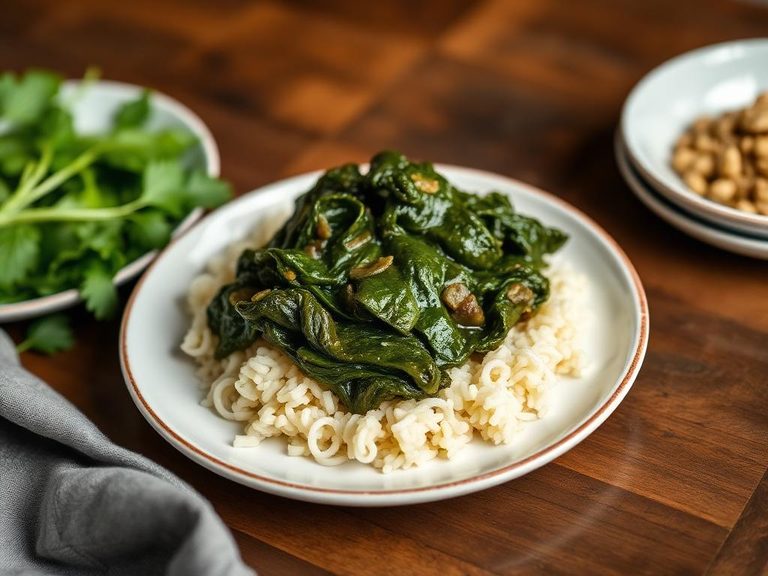
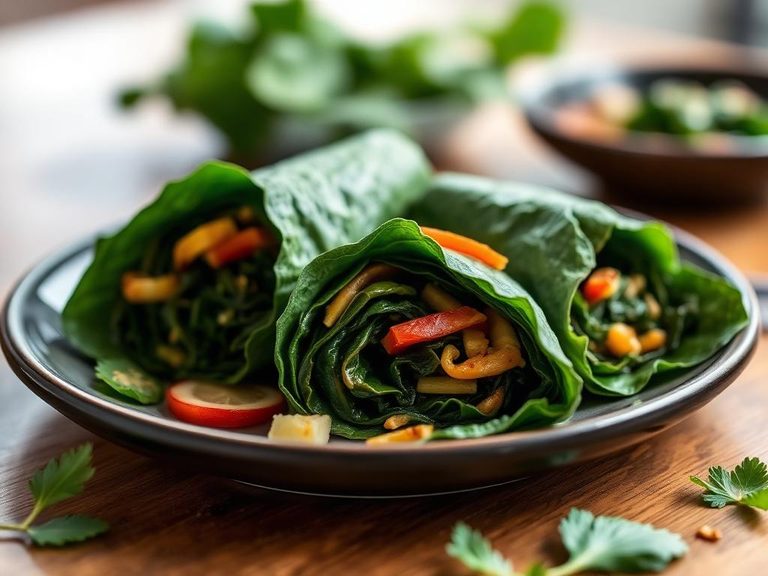
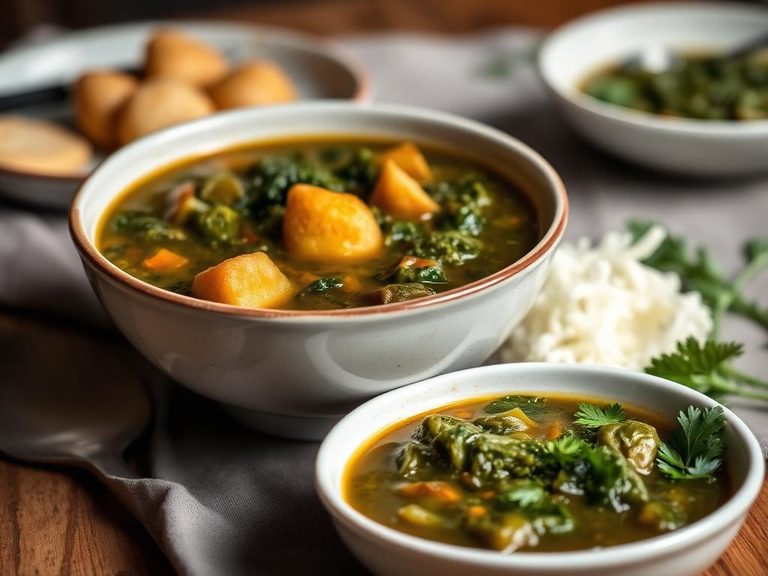
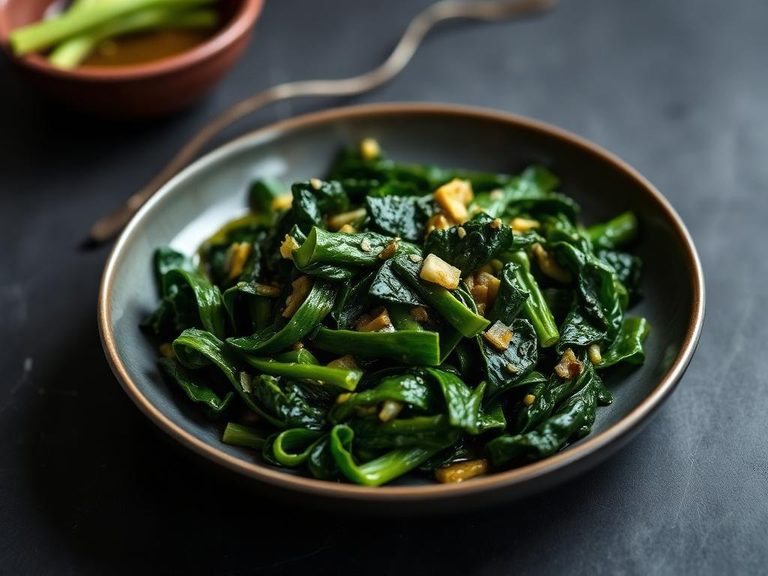
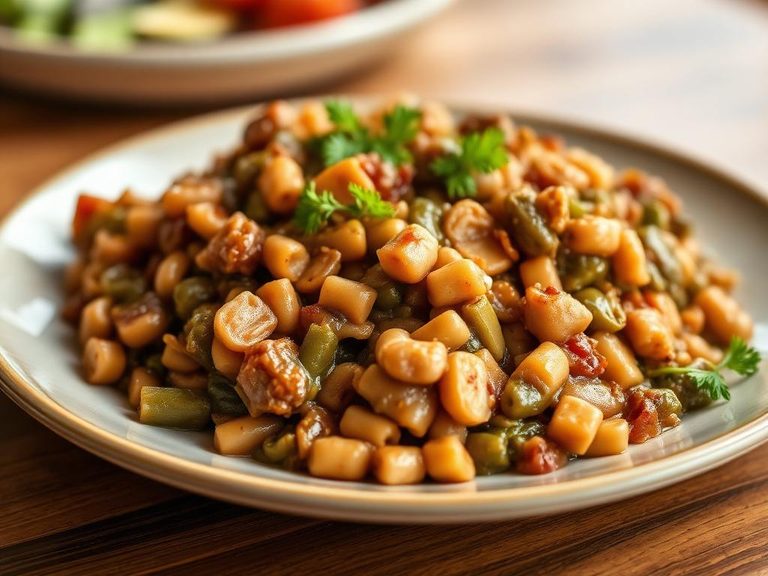
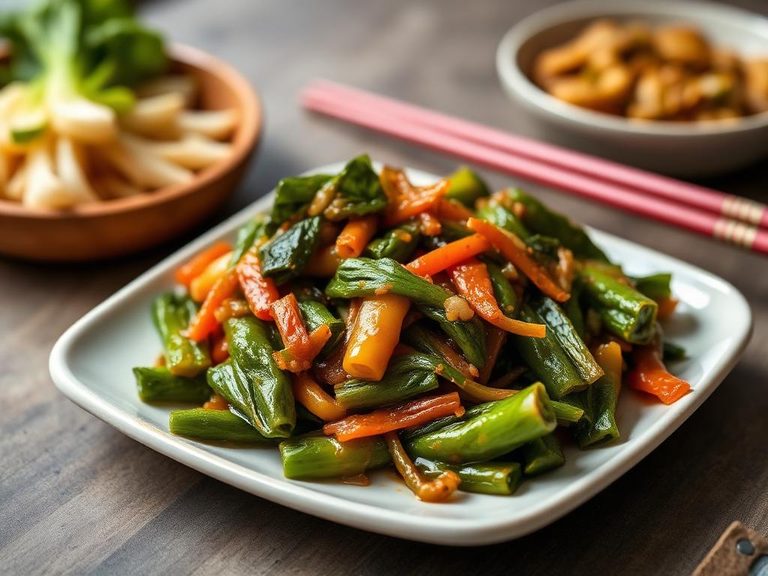
🌍 Where it's eaten
💡 Did you know?
Collard greens are one of the oldest members of the cabbage family, with evidence of their cultivation dating back to ancient Greece and Rome, long before they became a staple in the American South.
Full nutrition (USDA data · scales with serving)
| Water | 88.2 g |
| Energy | 36.0 kcal |
| Protein | 3.0 g |
| Total lipid (fat) | 0.41 g |
| Carbohydrate, by difference | 7.1 g |
| Fiber, total dietary | 2.8 g |
| Total Sugars | 0.57 g |
| Calcium, Ca | 210 mg |
| Iron, Fe | 1.1 mg |
| Magnesium, Mg | 30.0 mg |
| Phosphorus, P | 27.0 mg |
| Potassium, K | 250 mg |
| Sodium, Na | 166 mg |
| Zinc, Zn | 0.27 mg |
| Copper, Cu | 0.06 mg |
| Selenium, Se | 1.5 ug |
| Vitamin C, total ascorbic acid | 26.3 mg |
| Thiamin | 0.05 mg |
| Riboflavin | 0.12 mg |
| Niacin | 0.63 mg |
| Vitamin B-6 | 0.11 mg |
| Folate, total | 76.0 ug |
| Folic acid | 0.00 ug |
| Folate, food | 76.0 ug |
| Folate, DFE | 76.0 ug |
| Choline, total | 45.0 mg |
| Vitamin B-12 | 0.00 ug |
| Vitamin B-12, added | 0.00 ug |
| Vitamin A, RAE | 573 ug |
| Retinol | 0.00 ug |
| Carotene, beta | 6798 ug |
| Carotene, alpha | 127 ug |
| Cryptoxanthin, beta | 28.0 ug |
| Lycopene | 0.00 ug |
| Lutein + zeaxanthin | 10865 ug |
| Vitamin E (alpha-tocopherol) | 1.3 mg |
| Vitamin E, added | 0.00 mg |
| Vitamin D (D2 + D3) | 0.00 ug |
| Vitamin K (phylloquinone) | 621 ug |
| Alcohol, ethyl | 0.00 g |
| Caffeine | 0.00 mg |
| Theobromine | 0.00 mg |
Fat & fatty acid profile (per 100g)
| Fatty acids, total saturated | 0.06 g |
| SFA 4:0 | 0.00 g |
| SFA 6:0 | 0.00 g |
| SFA 8:0 | 0.00 g |
| SFA 10:0 | 0.00 g |
| SFA 12:0 | 0.00 g |
| SFA 14:0 | 0.00 g |
| SFA 16:0 | 0.05 g |
| SFA 18:0 | 0.01 g |
| Fatty acids, total monounsaturated | 0.02 g |
| MUFA 16:1 | 0.01 g |
| MUFA 18:1 | 0.01 g |
| MUFA 20:1 | 0.00 g |
| MUFA 22:1 | 0.00 g |
| Fatty acids, total polyunsaturated | 0.21 g |
| PUFA 18:2 | 0.06 g |
| PUFA 18:3 | 0.13 g |
| PUFA 18:4 | 0.00 g |
| PUFA 20:4 | 0.00 g |
| PUFA 20:5 n-3 (EPA) | 0.00 g |
| PUFA 22:5 n-3 (DPA) | 0.00 g |
| PUFA 22:6 n-3 (DHA) | 0.00 g |
| Cholesterol | 0.00 mg |
Amino acid profile (per 100g)
Estimated from Collards, cooked, boiled, drained, with salt — USDA does not publish this profile for Collards.
| Tryptophan | 0.03 g |
| Threonine | 0.07 g |
| Isoleucine | 0.09 g |
| Leucine | 0.13 g |
| Lysine | 0.10 g |
| Methionine | 0.03 g |
| Cystine | 0.02 g |
| Phenylalanine | 0.07 g |
| Tyrosine | 0.06 g |
| Valine | 0.10 g |
| Arginine | 0.11 g |
| Histidine | 0.04 g |
| Alanine | 0.09 g |
| Aspartic acid | 0.16 g |
| Glutamic acid | 0.18 g |
| Glycine | 0.08 g |
| Proline | 0.09 g |
| Serine | 0.07 g |
FAQ
Are frozen collard greens as nutritious as fresh?
Yes, frozen collard greens are often flash-frozen at peak ripeness, which helps retain their vitamins and minerals. They can be just as nutritious, if not more so, than fresh greens that have been stored for several days.
How should I cook frozen collard greens to reduce bitterness?
To reduce bitterness, simmer them in a flavorful broth with smoked meat, onion, and a splash of vinegar or lemon juice. The acid helps balance the earthy flavor, and the long cooking time tenderizes the leaves.
Can I eat collard greens raw?
While you can eat them raw in salads or smoothies, they are tough and fibrous. Cooking them makes them more digestible and brings out their savory flavor. If eating raw, slice them very thinly and massage with a bit of oil or dressing.
Nutrient density (calculated · NRF9.3)
Nutrient Rich Foods index: beneficial nutrients (protein, fiber, vitamins, minerals) minus saturated fat, added sugar & sodium, per 100 kcal.
NRF9.3 index — Fulgoni, Keast & Drewnowski, 2009. Computed from USDA nutrients.
Weight-loss friendliness (composite index)
Energy density 0.36 kcal/g · 33% calories from protein · 2.8 g fiber · 0.6 g sugar per 100 g.
Composite of energy density (Rolls et al., 1999), protein & fiber satiety, minus sugar. A calculated heuristic — ranks satiety-per-calorie, not a clinical measure.
Dietary load (calculated from USDA values)
Potential renal acid load. Positive = acid-forming, negative = alkaline-forming.
Sodium-to-potassium ratio: 0.66 (lower is better — aim for ≤ 1)
Sodium:potassium per WHO potassium guidance. Computed from USDA nutrients.