

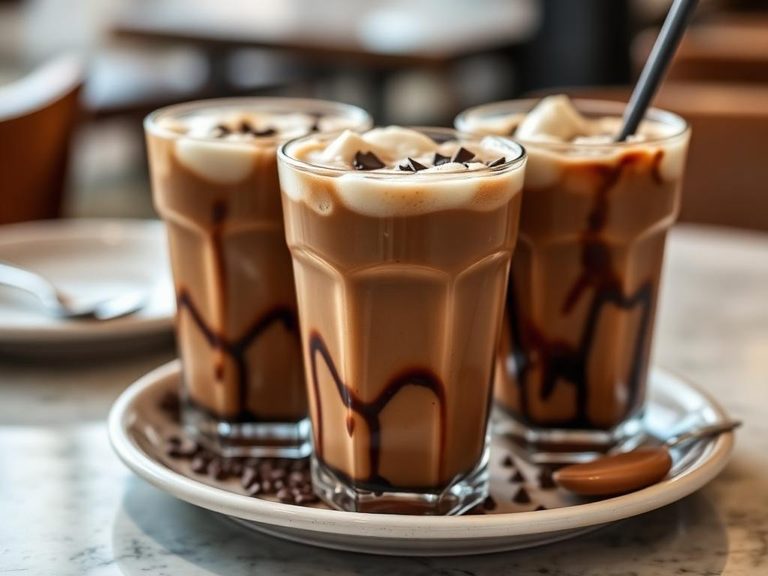
Coffee, Iced Latte, with non-dairy milk
Common food

Photo: Wikipedia
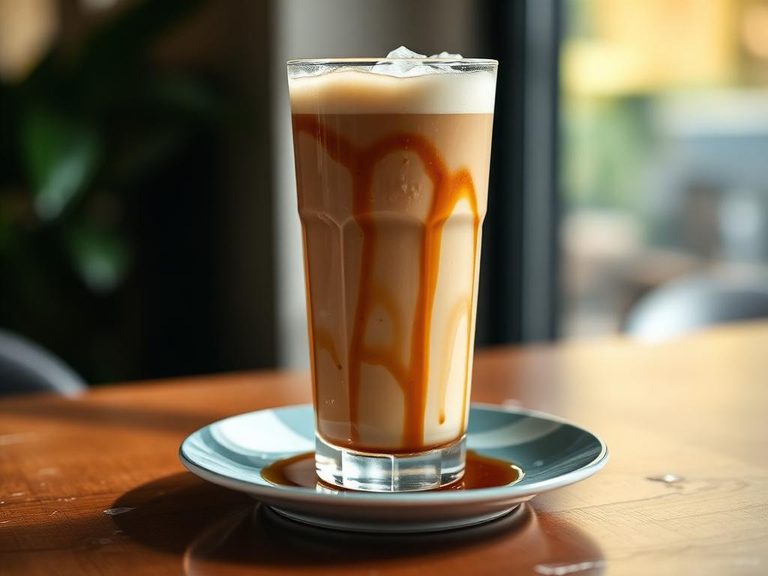
A chilled, creamy blend of espresso and non-dairy milk (like oat, almond, or soy), this iced latte delivers a smooth, subtly sweet coffee experience with a light, refreshing texture. At just 24 kcal per 100g, it's a low-calorie, plant-based pick-me-up, offering a gentle protein and carb boost without the heaviness of dairy. Its clean, milky finish makes it a perfect canvas for a splash of flavor or a standalone summer sip.
Calorie split: 23% protein · 47% carbs · 30% fat
↓ Full nutrition💚 Why it's loved
People adore it for its creamy, balanced flavor that pairs the boldness of espresso with the mild, often nutty or oat-like sweetness of non-dairy milk. It's a versatile, culturally embedded staple in café culture, from urban coffee shops to home kitchens, offering a customizable, cool alternative to hot coffee.
⚠️ Watch-outs & how to enjoy it better
The natural sugars (1.88g/100g) can cause a mild blood-sugar spike if consumed in large quantities, especially for those sensitive to glucose. To counteract this, pair it with a protein-rich snack like nuts or a small portion of Greek yogurt, or opt for a smaller serving size. Also, some non-dairy milks (e.g., almond) are high in oxalates, so individuals with kidney stone history should choose oat or soy milk and stay hydrated.
Key benefits
- Low-calorie (24 kcal/100g) for a satisfying, guilt-free treat.
- Plant-based protein (1.36g/100g) from non-dairy milk supports muscle maintenance.
- Quick energy from natural sugars (1.88g/100g) without a heavy fat load.
- Dairy-free, making it suitable for lactose-intolerant or vegan diets.
- Hydrating and refreshing, ideal for warm weather or post-workout recovery.
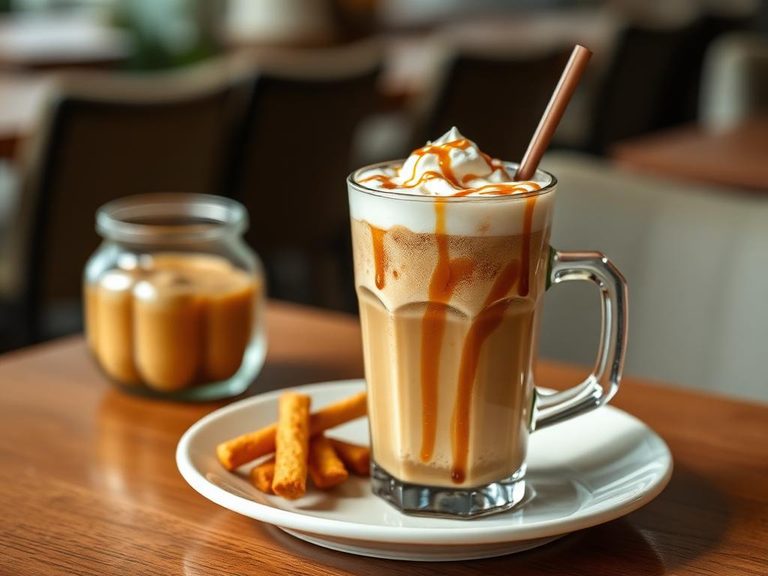
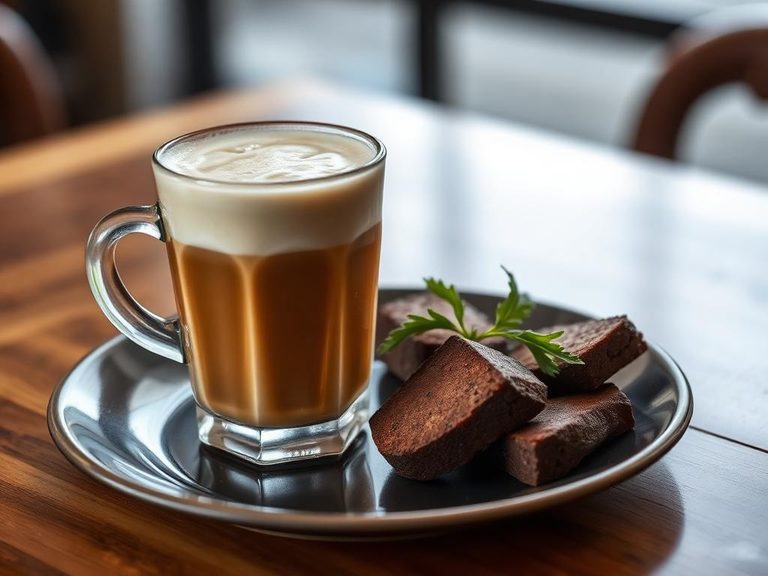
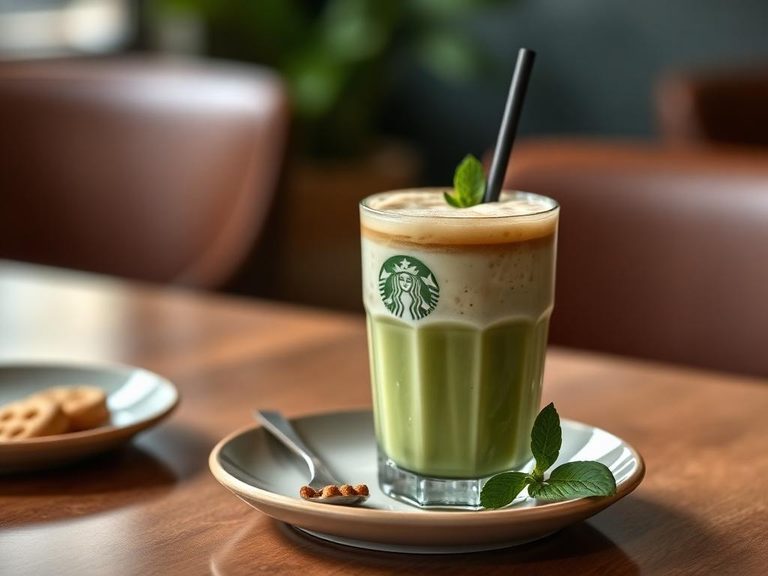
🍽️ Popular dishes
🌍 Where it's eaten
💡 Did you know?
The iced latte as we know it was popularized in the 1990s in the U.S., but its roots trace back to Italian espresso culture, where 'latte' means 'milk' in Italian—making an 'iced milk' a literal translation of the drink's name.
Full nutrition (USDA data · scales with serving)
| Water | 94.6 g |
| Energy | 24.0 kcal |
| Protein | 1.4 g |
| Total lipid (fat) | 0.79 g |
| Carbohydrate, by difference | 2.8 g |
| Fiber, total dietary | 0.10 g |
| Total Sugars | 1.9 g |
| Calcium, Ca | 65.0 mg |
| Iron, Fe | 0.24 mg |
| Magnesium, Mg | 22.0 mg |
| Phosphorus, P | 23.0 mg |
| Potassium, K | 83.0 mg |
| Sodium, Na | 28.0 mg |
| Zinc, Zn | 0.14 mg |
| Copper, Cu | 0.10 mg |
| Selenium, Se | 1.2 ug |
| Vitamin C, total ascorbic acid | 0.00 mg |
| Thiamin | 0.01 mg |
| Riboflavin | 0.13 mg |
| Niacin | 1.1 mg |
| Vitamin B-6 | 0.02 mg |
| Folate, total | 5.0 ug |
| Folic acid | 0.00 ug |
| Folate, food | 5.0 ug |
| Folate, DFE | 5.0 ug |
| Choline, total | 12.6 mg |
| Vitamin B-12 | 0.44 ug |
| Vitamin B-12, added | 0.44 ug |
| Vitamin A, RAE | 28.0 ug |
| Retinol | 28.0 ug |
| Carotene, beta | 1.0 ug |
| Carotene, alpha | 0.00 ug |
| Cryptoxanthin, beta | 0.00 ug |
| Lycopene | 0.00 ug |
| Lutein + zeaxanthin | 0.00 ug |
| Vitamin E (alpha-tocopherol) | 0.06 mg |
| Vitamin E, added | 0.00 mg |
| Vitamin D (D2 + D3) | 0.60 ug |
| Vitamin K (phylloquinone) | 1.6 ug |
| Alcohol, ethyl | 0.00 g |
| Caffeine | 37.0 mg |
| Theobromine | 0.00 mg |
Fat & fatty acid profile (per 100g)
| Fatty acids, total saturated | 0.12 g |
| SFA 4:0 | 0.00 g |
| SFA 6:0 | 0.00 g |
| SFA 8:0 | 0.00 g |
| SFA 10:0 | 0.00 g |
| SFA 12:0 | 0.00 g |
| SFA 14:0 | 0.00 g |
| SFA 16:0 | 0.09 g |
| SFA 18:0 | 0.03 g |
| Fatty acids, total monounsaturated | 0.20 g |
| MUFA 16:1 | 0.00 g |
| MUFA 18:1 | 0.16 g |
| MUFA 20:1 | 0.01 g |
| MUFA 22:1 | 0.00 g |
| Fatty acids, total polyunsaturated | 0.46 g |
| PUFA 18:2 | 0.32 g |
| PUFA 18:3 | 0.04 g |
| PUFA 18:4 | 0.00 g |
| PUFA 20:4 | 0.00 g |
| PUFA 20:5 n-3 (EPA) | 0.00 g |
| PUFA 22:5 n-3 (DPA) | 0.00 g |
| PUFA 22:6 n-3 (DHA) | 0.00 g |
| Cholesterol | 0.00 mg |
Amino acid profile (per 100g)
Estimated from Cream, fluid, light (coffee cream or table cream) — USDA does not publish this profile for Coffee.
| Tryptophan | 0.07 g |
| Threonine | 0.13 g |
| Isoleucine | 0.15 g |
| Leucine | 0.24 g |
| Lysine | 0.13 g |
| Methionine | 0.07 g |
| Cystine | 0.01 g |
| Phenylalanine | 0.14 g |
| Tyrosine | 0.14 g |
| Valine | 0.18 g |
| Arginine | 0.07 g |
| Histidine | 0.07 g |
| Alanine | 0.09 g |
| Aspartic acid | 0.22 g |
| Glutamic acid | 0.59 g |
| Glycine | 0.07 g |
| Proline | 0.31 g |
| Serine | 0.10 g |
FAQ
What is the difference between an iced latte and an iced coffee?
An iced latte uses espresso and steamed (or cold) milk, creating a creamy, balanced drink, while iced coffee is brewed coffee served over ice, often with less milk and a stronger, more bitter flavor.
Can I make this at home without an espresso machine?
Yes, use strong brewed coffee or instant espresso powder, mix with cold non-dairy milk, and add ice. For a creamier texture, shake with ice in a jar or blend briefly.
Is non-dairy milk healthier than regular milk for lattes?
It depends on the milk—oat and soy offer protein and fiber, while almond is lower in calories but less creamy. Check labels for added sugars and choose unsweetened varieties for a healthier option.
Nutrient density (calculated · NRF9.3)
Nutrient Rich Foods index: beneficial nutrients (protein, fiber, vitamins, minerals) minus saturated fat, added sugar & sodium, per 100 kcal.
NRF9.3 index — Fulgoni, Keast & Drewnowski, 2009. Computed from USDA nutrients.
Weight-loss friendliness (composite index)
Energy density 0.24 kcal/g · 23% calories from protein · 0.1 g fiber · 1.9 g sugar per 100 g.
Composite of energy density (Rolls et al., 1999), protein & fiber satiety, minus sugar. A calculated heuristic — ranks satiety-per-calorie, not a clinical measure.
Dietary load (calculated from USDA values)
Potential renal acid load. Positive = acid-forming, negative = alkaline-forming.
Sodium-to-potassium ratio: 0.34 (lower is better — aim for ≤ 1)
Sodium:potassium per WHO potassium guidance. Computed from USDA nutrients.