

Coffee, Iced Latte, with non-dairy milk, flavored
Common food

Photo: Wikipedia
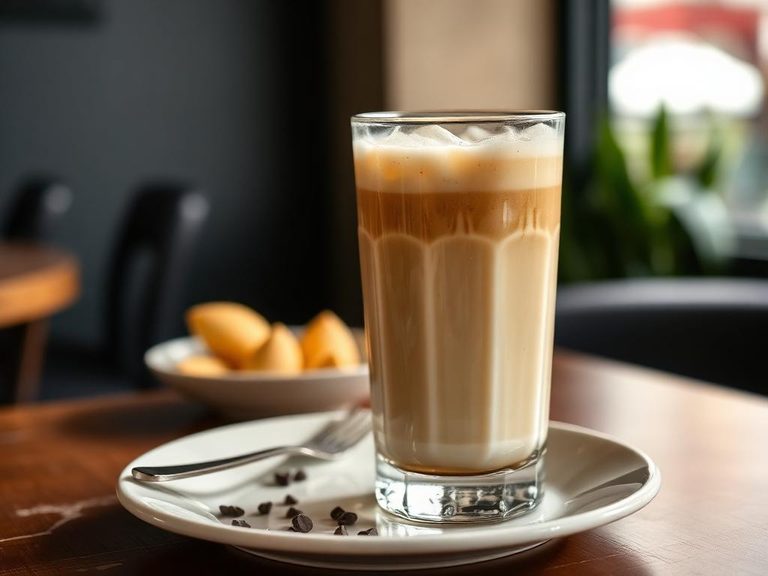
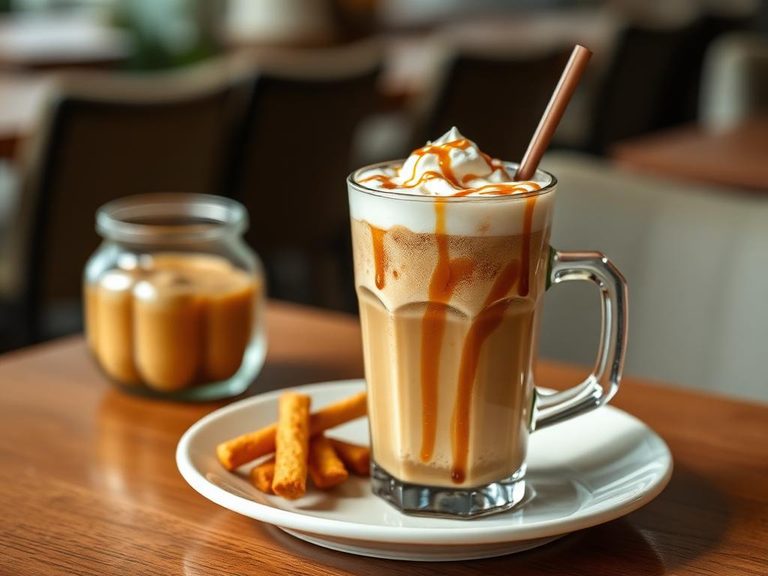
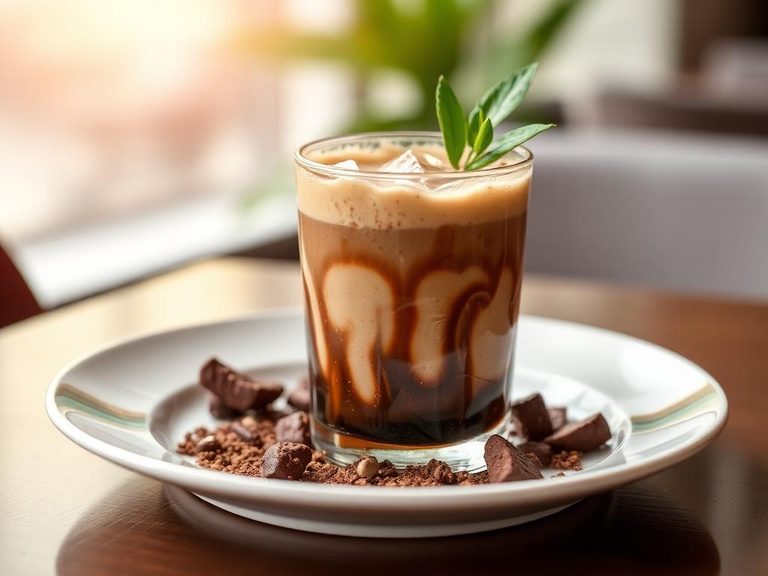
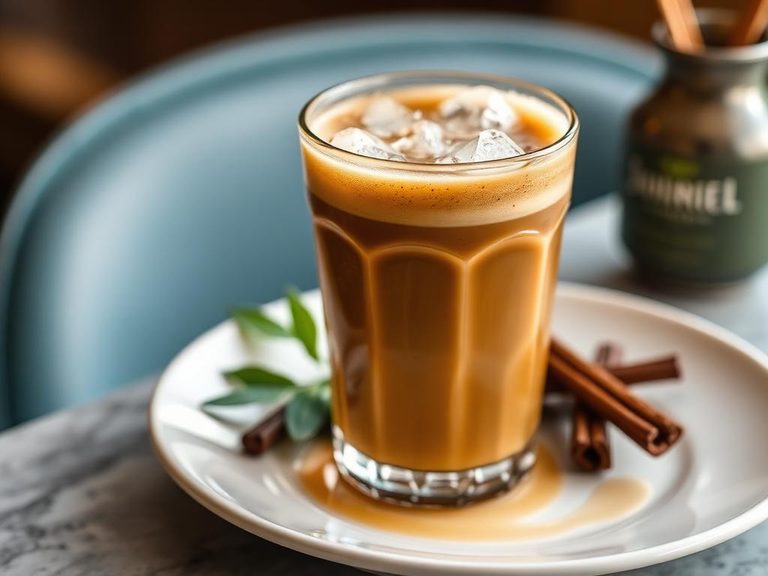
This is a chilled, creamy coffee beverage made with espresso, non-dairy milk (like oat, almond, or soy), and a sweet, flavored syrup. The taste is a smooth, balanced blend of roasted coffee bitterness, the chosen flavor (like vanilla or caramel), and the distinct, often slightly earthy or nutty profile of the plant-based milk. Nutritionally, it's a very low-calorie treat, with most of its energy coming from simple sugars.
Calorie split: 8% protein · 68% carbs · 25% fat
↓ Full nutrition💚 Why it's loved
People love it for the refreshing, indulgent taste that feels like a treat without the heaviness of dairy. It's a versatile, modern coffeehouse staple that caters to vegan, lactose-intolerant, or flavor-adventurous preferences, often enjoyed as a social or afternoon pick-me-up.
⚠️ Watch-outs & how to enjoy it better
The primary downside is the high sugar content (4.39g per 100g), which can lead to blood-sugar spikes and crashes, especially for those with insulin sensitivity or diabetes. To counteract this, choose a sugar-free syrup option, ask for half the standard pumps of flavor, or pair it with a protein-rich snack like nuts or a hard-boiled egg to slow sugar absorption.
Key benefits
- Very low calorie (31 kcal/100g)
- Contains small amount of plant-based protein
- Dairy-free and lactose-free
- Provides a quick source of energy from carbohydrates
- Customizable with various non-dairy milks and flavors
🍽️ Popular dishes

🌍 Where it's eaten
💡 Did you know?
The 'iced latte' as we know it is a relatively modern invention, popularized in the United States in the 1990s, while the concept of coffee with cold milk dates back to 19th-century Europe.
Full nutrition (USDA data · scales with serving)
| Water | 93.1 g |
| Energy | 31.0 kcal |
| Protein | 0.59 g |
| Total lipid (fat) | 0.84 g |
| Carbohydrate, by difference | 5.2 g |
| Fiber, total dietary | 0.00 g |
| Total Sugars | 4.4 g |
| Calcium, Ca | 77.0 mg |
| Iron, Fe | 0.18 mg |
| Magnesium, Mg | 19.0 mg |
| Phosphorus, P | 19.0 mg |
| Potassium, K | 46.0 mg |
| Sodium, Na | 28.0 mg |
| Zinc, Zn | 0.11 mg |
| Copper, Cu | 0.03 mg |
| Selenium, Se | 0.40 ug |
| Vitamin C, total ascorbic acid | 0.00 mg |
| Thiamin | 0.01 mg |
| Riboflavin | 0.05 mg |
| Niacin | 0.92 mg |
| Vitamin B-6 | 0.01 mg |
| Folate, total | 2.0 ug |
| Folic acid | 0.00 ug |
| Folate, food | 2.0 ug |
| Folate, DFE | 2.0 ug |
| Choline, total | 3.8 mg |
| Vitamin B-12 | 0.19 ug |
| Vitamin B-12, added | 0.19 ug |
| Vitamin A, RAE | 18.0 ug |
| Retinol | 18.0 ug |
| Carotene, beta | 0.00 ug |
| Carotene, alpha | 0.00 ug |
| Cryptoxanthin, beta | 0.00 ug |
| Lycopene | 0.00 ug |
| Lutein + zeaxanthin | 2.0 ug |
| Vitamin E (alpha-tocopherol) | 1.0 mg |
| Vitamin E, added | 0.98 mg |
| Vitamin D (D2 + D3) | 0.50 ug |
| Vitamin K (phylloquinone) | 0.50 ug |
| Alcohol, ethyl | 0.00 g |
| Caffeine | 36.0 mg |
| Theobromine | 0.00 mg |
Fat & fatty acid profile (per 100g)
| Fatty acids, total saturated | 0.10 g |
| SFA 4:0 | 0.00 g |
| SFA 6:0 | 0.00 g |
| SFA 8:0 | 0.00 g |
| SFA 10:0 | 0.00 g |
| SFA 12:0 | 0.00 g |
| SFA 14:0 | 0.00 g |
| SFA 16:0 | 0.06 g |
| SFA 18:0 | 0.02 g |
| Fatty acids, total monounsaturated | 0.39 g |
| MUFA 16:1 | 0.00 g |
| MUFA 18:1 | 0.38 g |
| MUFA 20:1 | 0.00 g |
| MUFA 22:1 | 0.00 g |
| Fatty acids, total polyunsaturated | 0.27 g |
| PUFA 18:2 | 0.24 g |
| PUFA 18:3 | 0.03 g |
| PUFA 18:4 | 0.00 g |
| PUFA 20:4 | 0.00 g |
| PUFA 20:5 n-3 (EPA) | 0.00 g |
| PUFA 22:5 n-3 (DPA) | 0.00 g |
| PUFA 22:6 n-3 (DHA) | 0.00 g |
| Cholesterol | 0.00 mg |
Amino acid profile (per 100g)
Estimated from Cream, fluid, light (coffee cream or table cream) — USDA does not publish this profile for Coffee.
| Tryptophan | 0.07 g |
| Threonine | 0.13 g |
| Isoleucine | 0.15 g |
| Leucine | 0.24 g |
| Lysine | 0.13 g |
| Methionine | 0.07 g |
| Cystine | 0.01 g |
| Phenylalanine | 0.14 g |
| Tyrosine | 0.14 g |
| Valine | 0.18 g |
| Arginine | 0.07 g |
| Histidine | 0.07 g |
| Alanine | 0.09 g |
| Aspartic acid | 0.22 g |
| Glutamic acid | 0.59 g |
| Glycine | 0.07 g |
| Proline | 0.31 g |
| Serine | 0.10 g |
FAQ
How does the nutrition change with different non-dairy milks?
The base nutrition (31 kcal, 5.16g carbs) is for the flavored drink as a whole. Using a lower-calorie milk like unsweetened almond milk will reduce calories and carbs, while a creamier milk like oat or coconut milk may increase them. Always check the specific milk's label.
Is the 'flavored' part natural or artificial?
This varies by brand and coffee shop. Many use syrups containing natural flavors (like vanilla extract) alongside sugar and preservatives. For a cleaner option, ask for a drink flavored with a dash of real spice (like cinnamon) or a pump of sugar-free syrup.
Can I make a lower-sugar version at home?
Absolutely. Brew strong coffee or espresso, chill it, and mix with your favorite unsweetened non-dairy milk. Add flavor with a pinch of vanilla powder, cocoa, or a small amount of a natural sweetener like maple syrup, giving you full control over the sugar content.
Nutrient density (calculated · NRF9.3)
Nutrient Rich Foods index: beneficial nutrients (protein, fiber, vitamins, minerals) minus saturated fat, added sugar & sodium, per 100 kcal.
NRF9.3 index — Fulgoni, Keast & Drewnowski, 2009. Computed from USDA nutrients.
Weight-loss friendliness (composite index)
Energy density 0.31 kcal/g · 8% calories from protein · 0.0 g fiber · 4.4 g sugar per 100 g.
Composite of energy density (Rolls et al., 1999), protein & fiber satiety, minus sugar. A calculated heuristic — ranks satiety-per-calorie, not a clinical measure.
Dietary load (calculated from USDA values)
Potential renal acid load. Positive = acid-forming, negative = alkaline-forming.
Sodium-to-potassium ratio: 0.61 (lower is better — aim for ≤ 1)
Sodium:potassium per WHO potassium guidance. Computed from USDA nutrients.