

Coffee, Latte, decaffeinated, with non-dairy milk, flavored
Common food

Photo: Wikipedia
A smooth, espresso-based drink where steamed non-dairy milk (like oat or almond) creates a creamy, velvety texture, often enhanced with a hint of vanilla or caramel flavor. It's a lighter, lower-calorie alternative to a traditional latte, with a mild coffee flavor softened by the milk's natural sweetness. Nutritionally, it's a low-energy beverage, providing a modest 40 kcal per 100g with minimal protein and fat.
Calorie split: 9% protein · 60% carbs · 30% fat
↓ Full nutrition💚 Why it's loved
People love it for its customizable, comforting ritual—offering the familiar warmth and ritual of a coffeehouse treat without dairy. The subtle flavor variations (like vanilla or hazelnut) make it a versatile, indulgent yet accessible daily pick-me-up.
⚠️ Watch-outs & how to enjoy it better
The added flavored syrups can contribute to a quick spike in blood sugar due to their high sugar content. Those monitoring carbohydrate intake or with diabetes should opt for sugar-free syrups or ask for flavor shots instead. A concrete tip is to pair it with a protein-rich snack (like nuts or a hard-boiled egg) to help stabilize blood sugar response.
Key benefits
- Low in calories and fat compared to dairy-based lattes.
- Provides a gentle caffeine boost without the jitters of regular coffee.
- Often fortified with vitamins like B12 and D from non-dairy milks.
- A good option for those with lactose intolerance or dairy allergies.
- Can be a lower-sugar choice when flavored syrups are used sparingly.
🍽️ Popular dishes
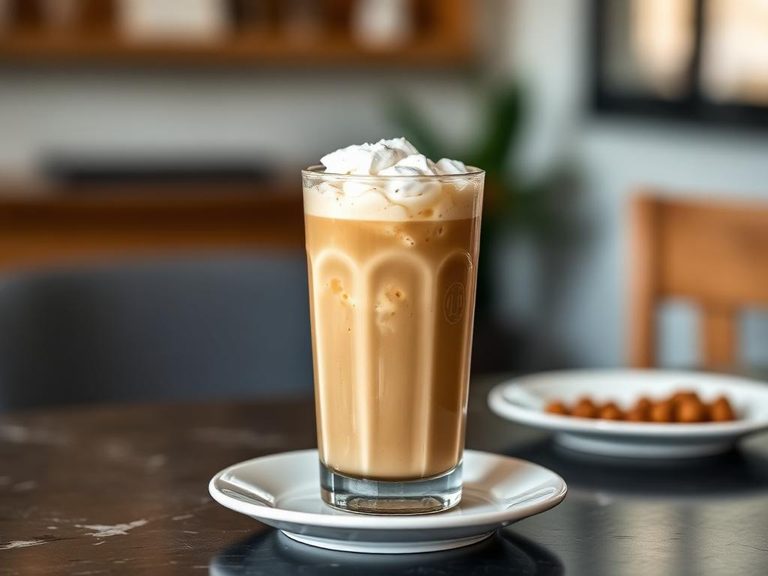
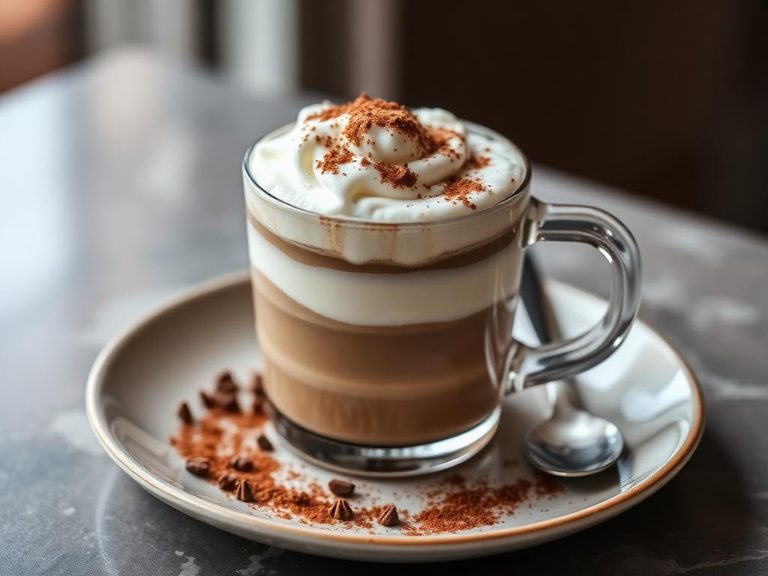
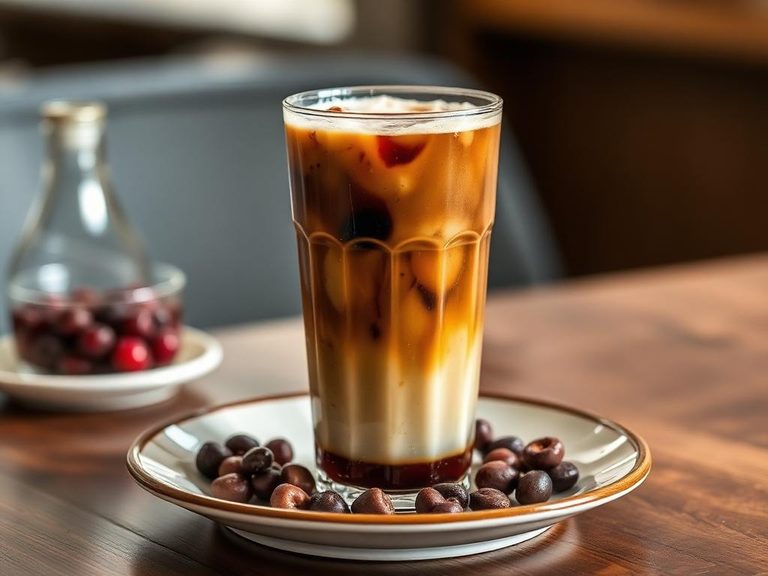
🌍 Where it's eaten
💡 Did you know?
The term 'latte' comes from the Italian 'caffè latte,' meaning 'milk coffee,' and the modern non-dairy version's rise is closely tied to the global surge in plant-based milk popularity in the 2010s.
Full nutrition (USDA data · scales with serving)
| Water | 91.3 g |
| Energy | 40.0 kcal |
| Protein | 0.94 g |
| Total lipid (fat) | 1.3 g |
| Carbohydrate, by difference | 6.0 g |
| Fiber, total dietary | 0.10 g |
| Total Sugars | 4.9 g |
| Calcium, Ca | 124 mg |
| Iron, Fe | 0.28 mg |
| Magnesium, Mg | 21.0 mg |
| Phosphorus, P | 30.0 mg |
| Potassium, K | 61.0 mg |
| Sodium, Na | 43.0 mg |
| Zinc, Zn | 0.17 mg |
| Copper, Cu | 0.04 mg |
| Selenium, Se | 0.60 ug |
| Vitamin C, total ascorbic acid | 0.00 mg |
| Thiamin | 0.01 mg |
| Riboflavin | 0.06 mg |
| Niacin | 0.91 mg |
| Vitamin B-6 | 0.01 mg |
| Folate, total | 4.0 ug |
| Folic acid | 0.00 ug |
| Folate, food | 4.0 ug |
| Folate, DFE | 4.0 ug |
| Choline, total | 5.6 mg |
| Vitamin B-12 | 0.30 ug |
| Vitamin B-12, added | 0.30 ug |
| Vitamin A, RAE | 29.0 ug |
| Retinol | 29.0 ug |
| Carotene, beta | 0.00 ug |
| Carotene, alpha | 0.00 ug |
| Cryptoxanthin, beta | 0.00 ug |
| Lycopene | 0.00 ug |
| Lutein + zeaxanthin | 3.0 ug |
| Vitamin E (alpha-tocopherol) | 1.7 mg |
| Vitamin E, added | 1.6 mg |
| Vitamin D (D2 + D3) | 0.80 ug |
| Vitamin K (phylloquinone) | 0.70 ug |
| Alcohol, ethyl | 0.00 g |
| Caffeine | 0.00 mg |
| Theobromine | 0.00 mg |
Fat & fatty acid profile (per 100g)
| Fatty acids, total saturated | 0.14 g |
| SFA 4:0 | 0.00 g |
| SFA 6:0 | 0.00 g |
| SFA 8:0 | 0.00 g |
| SFA 10:0 | 0.00 g |
| SFA 12:0 | 0.00 g |
| SFA 14:0 | 0.00 g |
| SFA 16:0 | 0.10 g |
| SFA 18:0 | 0.03 g |
| Fatty acids, total monounsaturated | 0.63 g |
| MUFA 16:1 | 0.00 g |
| MUFA 18:1 | 0.62 g |
| MUFA 20:1 | 0.01 g |
| MUFA 22:1 | 0.00 g |
| Fatty acids, total polyunsaturated | 0.43 g |
| PUFA 18:2 | 0.38 g |
| PUFA 18:3 | 0.05 g |
| PUFA 18:4 | 0.00 g |
| PUFA 20:4 | 0.00 g |
| PUFA 20:5 n-3 (EPA) | 0.00 g |
| PUFA 22:5 n-3 (DPA) | 0.00 g |
| PUFA 22:6 n-3 (DHA) | 0.00 g |
| Cholesterol | 0.00 mg |
Amino acid profile (per 100g)
Estimated from Cream, fluid, light (coffee cream or table cream) — USDA does not publish this profile for Coffee.
| Tryptophan | 0.07 g |
| Threonine | 0.13 g |
| Isoleucine | 0.15 g |
| Leucine | 0.24 g |
| Lysine | 0.13 g |
| Methionine | 0.07 g |
| Cystine | 0.01 g |
| Phenylalanine | 0.14 g |
| Tyrosine | 0.14 g |
| Valine | 0.18 g |
| Arginine | 0.07 g |
| Histidine | 0.07 g |
| Alanine | 0.09 g |
| Aspartic acid | 0.22 g |
| Glutamic acid | 0.59 g |
| Glycine | 0.07 g |
| Proline | 0.31 g |
| Serine | 0.10 g |
FAQ
Is a decaf flavored latte with non-dairy milk completely caffeine-free?
Not entirely. Decaffeination removes about 97-99% of caffeine, so a typical cup may still contain 2-15 mg, which is minimal but not zero.
Which non-dairy milk froths best for a latte?
Oat milk, particularly barista blends, is often praised for its creamy texture and ability to create stable microfoam. Soy milk is also a reliable frother.
How can I reduce the sugar in my flavored latte?
Request half the usual amount of flavored syrup, choose sugar-free syrup options, or ask for a 'flavor shot' which is unsweetened. You can also add a sprinkle of cinnamon or cocoa for flavor without sugar.
Nutrient density (calculated · NRF9.3)
Nutrient Rich Foods index: beneficial nutrients (protein, fiber, vitamins, minerals) minus saturated fat, added sugar & sodium, per 100 kcal.
NRF9.3 index — Fulgoni, Keast & Drewnowski, 2009. Computed from USDA nutrients.
Weight-loss friendliness (composite index)
Energy density 0.40 kcal/g · 9% calories from protein · 0.1 g fiber · 4.9 g sugar per 100 g.
Composite of energy density (Rolls et al., 1999), protein & fiber satiety, minus sugar. A calculated heuristic — ranks satiety-per-calorie, not a clinical measure.
Dietary load (calculated from USDA values)
Potential renal acid load. Positive = acid-forming, negative = alkaline-forming.
Sodium-to-potassium ratio: 0.70 (lower is better — aim for ≤ 1)
Sodium:potassium per WHO potassium guidance. Computed from USDA nutrients.