

Coffee, decaffeinated, pre-lightened and pre-sweetened with low calorie sweetener
Common food
This is a convenient, low-calorie coffee beverage, typically found in powdered or liquid concentrate form, designed for quick preparation. It delivers a mild, smooth coffee flavor with a creamy texture from added lighteners and a distinct sweetness from low-calorie sweeteners, all without the caffeine kick. At just 16 kcal per 100g, its nutritional profile is extremely lean, with negligible fat and protein, making it a minimal-impact drink for calorie-conscious consumers.
Calorie split: 4% protein · 58% carbs · 38% fat
↓ Full nutrition💚 Why it's loved
People love it for its effortless convenience and the ability to enjoy a sweet, creamy coffee experience without the guilt of calories or the jitters of caffeine. It's a staple for those seeking a comforting, routine beverage that fits easily into a low-calorie or controlled diet.
⚠️ Watch-outs & how to enjoy it better
The primary downside is the reliance on artificial or low-calorie sweeteners, which some find leave an aftertaste or may cause digestive discomfort in sensitive individuals. To mitigate this, consider pairing it with a small source of protein or healthy fat (like a handful of nuts) to slow absorption and enhance satiety, or gradually reduce the sweetener amount to adjust your palate.
Key benefits
- Extremely low calorie density (16 kcal/100g).
- Caffeine-free, suitable for evening consumption or caffeine-sensitive individuals.
- Convenient and portable, requiring no brewing equipment.
- Provides a sweet, creamy coffee flavor without added sugar or fat.
🍽️ Popular dishes
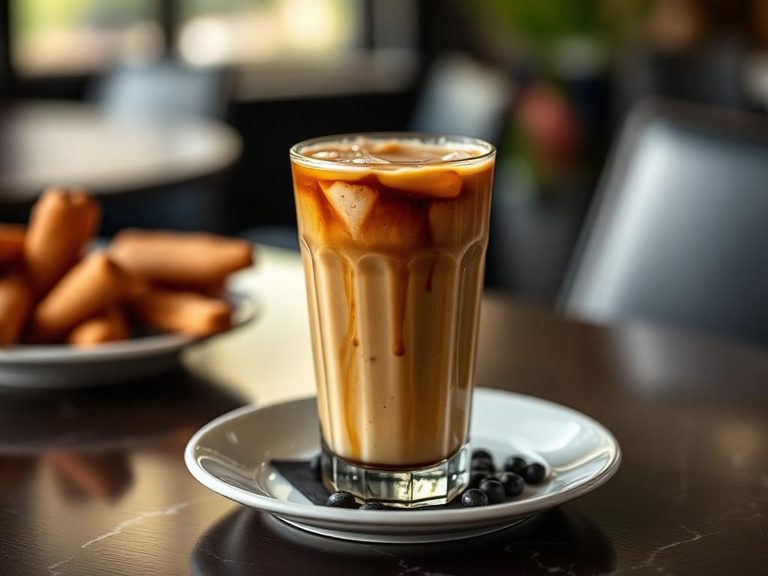
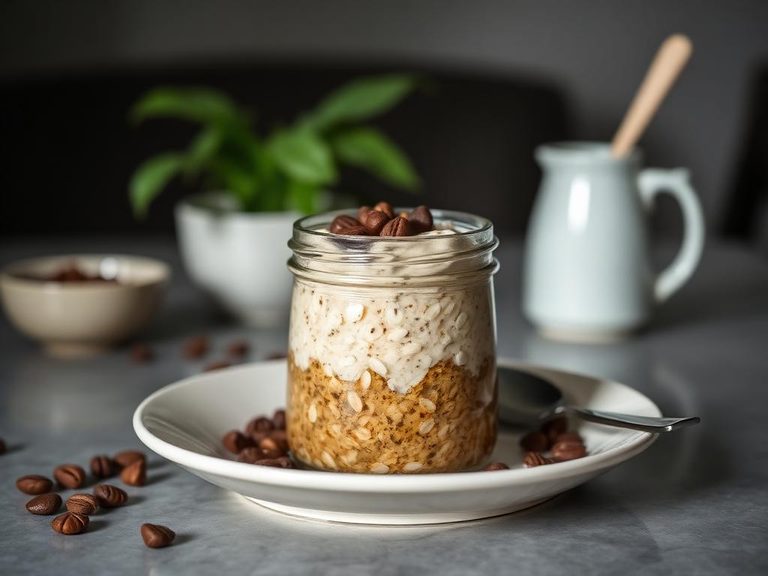
🌍 Where it's eaten
💡 Did you know?
The first commercially successful decaffeination process was discovered by accident in 1903 when a German merchant's coffee shipment was soaked in seawater during a voyage, reducing its caffeine content.
Full nutrition (USDA data · scales with serving)
| Water | 96.6 g |
| Energy | 16.0 kcal |
| Protein | 0.15 g |
| Total lipid (fat) | 0.70 g |
| Carbohydrate, by difference | 2.4 g |
| Fiber, total dietary | 0.00 g |
| Total Sugars | 0.60 g |
| Calcium, Ca | 4.0 mg |
| Iron, Fe | 0.04 mg |
| Magnesium, Mg | 4.0 mg |
| Phosphorus, P | 8.0 mg |
| Potassium, K | 43.0 mg |
| Sodium, Na | 7.0 mg |
| Zinc, Zn | 0.01 mg |
| Copper, Cu | 0.01 mg |
| Selenium, Se | 0.10 ug |
| Vitamin C, total ascorbic acid | 0.00 mg |
| Thiamin | 0.00 mg |
| Riboflavin | 0.01 mg |
| Niacin | 0.23 mg |
| Vitamin B-6 | 0.00 mg |
| Folate, total | 0.00 ug |
| Folic acid | 0.00 ug |
| Folate, food | 0.00 ug |
| Folate, DFE | 0.00 ug |
| Choline, total | 0.90 mg |
| Vitamin B-12 | 0.00 ug |
| Vitamin B-12, added | 0.00 ug |
| Vitamin A, RAE | 0.00 ug |
| Retinol | 0.00 ug |
| Carotene, beta | 0.00 ug |
| Carotene, alpha | 0.00 ug |
| Cryptoxanthin, beta | 0.00 ug |
| Lycopene | 0.00 ug |
| Lutein + zeaxanthin | 0.00 ug |
| Vitamin E (alpha-tocopherol) | 0.03 mg |
| Vitamin E, added | 0.00 mg |
| Vitamin D (D2 + D3) | 0.00 ug |
| Vitamin K (phylloquinone) | 0.10 ug |
| Alcohol, ethyl | 0.00 g |
| Caffeine | 1.0 mg |
| Theobromine | 0.00 mg |
Fat & fatty acid profile (per 100g)
| Fatty acids, total saturated | 0.41 g |
| SFA 4:0 | 0.00 g |
| SFA 6:0 | 0.00 g |
| SFA 8:0 | 0.02 g |
| SFA 10:0 | 0.02 g |
| SFA 12:0 | 0.14 g |
| SFA 14:0 | 0.06 g |
| SFA 16:0 | 0.07 g |
| SFA 18:0 | 0.09 g |
| Fatty acids, total monounsaturated | 0.21 g |
| MUFA 16:1 | 0.00 g |
| MUFA 18:1 | 0.21 g |
| MUFA 20:1 | 0.00 g |
| MUFA 22:1 | 0.00 g |
| Fatty acids, total polyunsaturated | 0.01 g |
| PUFA 18:2 | 0.01 g |
| PUFA 18:3 | 0.00 g |
| PUFA 18:4 | 0.00 g |
| PUFA 20:4 | 0.00 g |
| PUFA 20:5 n-3 (EPA) | 0.00 g |
| PUFA 22:5 n-3 (DPA) | 0.00 g |
| PUFA 22:6 n-3 (DHA) | 0.00 g |
| Cholesterol | 0.00 mg |
Amino acid profile (per 100g)
Estimated from Cream, fluid, light (coffee cream or table cream) — USDA does not publish this profile for Coffee.
| Tryptophan | 0.07 g |
| Threonine | 0.13 g |
| Isoleucine | 0.15 g |
| Leucine | 0.24 g |
| Lysine | 0.13 g |
| Methionine | 0.07 g |
| Cystine | 0.01 g |
| Phenylalanine | 0.14 g |
| Tyrosine | 0.14 g |
| Valine | 0.18 g |
| Arginine | 0.07 g |
| Histidine | 0.07 g |
| Alanine | 0.09 g |
| Aspartic acid | 0.22 g |
| Glutamic acid | 0.59 g |
| Glycine | 0.07 g |
| Proline | 0.31 g |
| Serine | 0.10 g |
FAQ
Is decaffeinated coffee completely caffeine-free?
No, decaffeinated coffee still contains a small amount of caffeine, typically 2-15 mg per cup, compared to 70-140 mg in regular coffee.
What are low-calorie sweeteners commonly used in this product?
Common low-calorie sweeteners include aspartame, sucralose, acesulfame potassium (Ace-K), and stevia-derived compounds.
Can this coffee be used in cooking or baking?
Yes, it can be used to add coffee flavor to baked goods, smoothies, or desserts, but be mindful of its added sweeteners and lighteners which may affect the final taste and texture.
Nutrient density (calculated · NRF9.3)
Nutrient Rich Foods index: beneficial nutrients (protein, fiber, vitamins, minerals) minus saturated fat, added sugar & sodium, per 100 kcal.
NRF9.3 index — Fulgoni, Keast & Drewnowski, 2009. Computed from USDA nutrients.
Weight-loss friendliness (composite index)
Energy density 0.16 kcal/g · 4% calories from protein · 0.0 g fiber · 0.6 g sugar per 100 g.
Composite of energy density (Rolls et al., 1999), protein & fiber satiety, minus sugar. A calculated heuristic — ranks satiety-per-calorie, not a clinical measure.
Dietary load (calculated from USDA values)
Potential renal acid load. Positive = acid-forming, negative = alkaline-forming.
Sodium-to-potassium ratio: 0.16 (lower is better — aim for ≤ 1)
Sodium:potassium per WHO potassium guidance. Computed from USDA nutrients.