

Coffee, instant, decaffeinated, pre-lightened and pre-sweetened with low calorie sweetener, reconstituted
Common food

Photo: Wikipedia
This is a convenient, single-serve instant coffee designed for speed and simplicity, pre-mixed with a non-dairy creamer and a low-calorie sweetener. It delivers a smooth, mild flavor with a creamy, slightly chalky texture, offering a quick caffeine boost with minimal caloric impact. At just 16 kcal per 100g, it's a near-zero-calorie beverage option for those monitoring their intake.
Calorie split: 4% protein · 58% carbs · 38% fat
↓ Full nutrition💚 Why it's loved
People love this for its sheer convenience and consistency—a reliable, sweet, and creamy coffee in seconds, perfect for busy mornings, travel, or office settings. It's a staple in many cultures where quick, sweetened coffee is a daily ritual, offering a familiar, comforting taste without the fuss of brewing.
⚠️ Watch-outs & how to enjoy it better
The primary downside is its processed nature, often containing artificial sweeteners and non-dairy creamers that some may find unpalatable or overly sweet. For those sensitive to artificial sweeteners, it can cause digestive discomfort; to mitigate this, consider using half a packet and pairing it with a small protein-rich snack like a handful of nuts to balance blood sugar response.
Key benefits
- Extremely low in calories (16 kcal per 100g)
- Provides a quick, convenient caffeine source
- Pre-sweetened with low-calorie sweetener, no added sugar
- No fiber, minimal protein, and very low fat
- Portable and requires only hot water to prepare
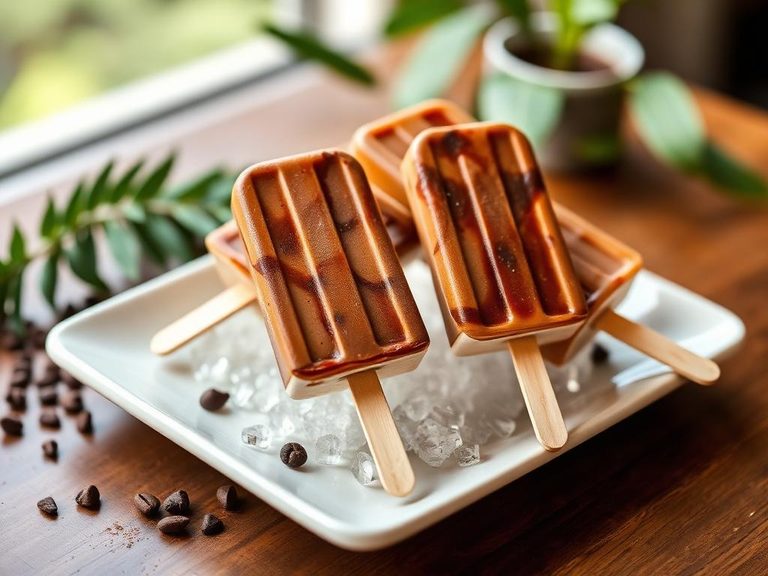
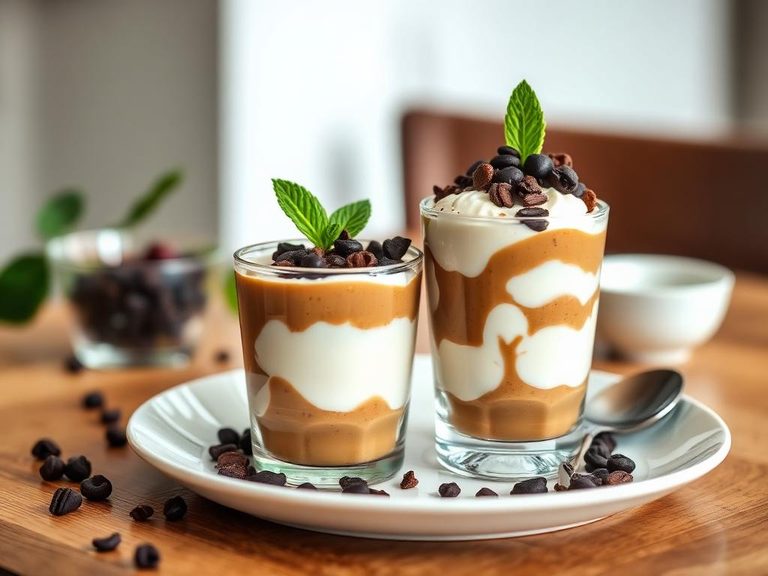
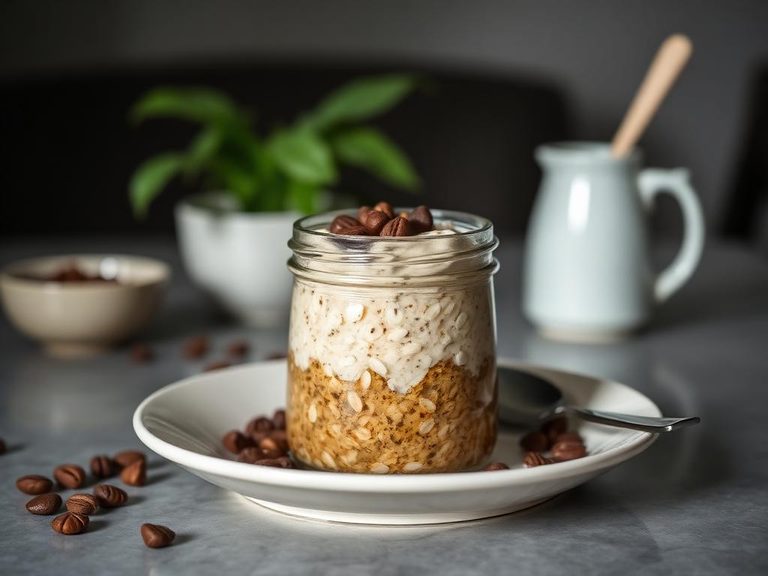
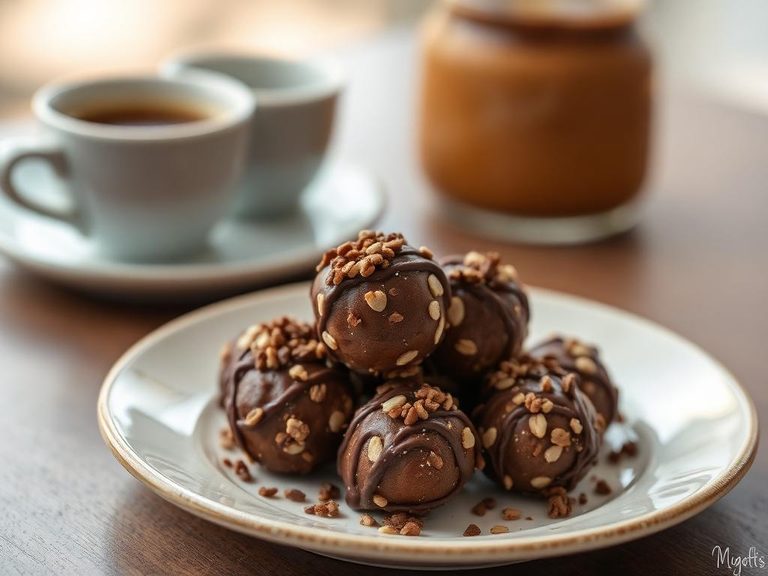
🍽️ Popular dishes


🌍 Where it's eaten
💡 Did you know?
The first commercially successful instant coffee was patented in 1901 by Japanese-American chemist Satori Kato, but it was the 1938 launch of Nescafé that truly popularized the format, making it a global pantry staple.
Full nutrition (USDA data · scales with serving)
| Water | 96.5 g |
| Energy | 16.0 kcal |
| Protein | 0.15 g |
| Total lipid (fat) | 0.70 g |
| Carbohydrate, by difference | 2.4 g |
| Fiber, total dietary | 0.00 g |
| Total Sugars | 0.60 g |
| Calcium, Ca | 4.0 mg |
| Iron, Fe | 0.04 mg |
| Magnesium, Mg | 4.0 mg |
| Phosphorus, P | 8.0 mg |
| Potassium, K | 43.0 mg |
| Sodium, Na | 7.0 mg |
| Zinc, Zn | 0.01 mg |
| Copper, Cu | 0.01 mg |
| Selenium, Se | 0.10 ug |
| Vitamin C, total ascorbic acid | 0.00 mg |
| Thiamin | 0.00 mg |
| Riboflavin | 0.01 mg |
| Niacin | 0.23 mg |
| Vitamin B-6 | 0.00 mg |
| Folate, total | 0.00 ug |
| Folic acid | 0.00 ug |
| Folate, food | 0.00 ug |
| Folate, DFE | 0.00 ug |
| Choline, total | 0.90 mg |
| Vitamin B-12 | 0.00 ug |
| Vitamin B-12, added | 0.00 ug |
| Vitamin A, RAE | 0.00 ug |
| Retinol | 0.00 ug |
| Carotene, beta | 0.00 ug |
| Carotene, alpha | 0.00 ug |
| Cryptoxanthin, beta | 0.00 ug |
| Lycopene | 0.00 ug |
| Lutein + zeaxanthin | 0.00 ug |
| Vitamin E (alpha-tocopherol) | 0.03 mg |
| Vitamin E, added | 0.00 mg |
| Vitamin D (D2 + D3) | 0.00 ug |
| Vitamin K (phylloquinone) | 0.10 ug |
| Alcohol, ethyl | 0.00 g |
| Caffeine | 1.0 mg |
| Theobromine | 0.00 mg |
Fat & fatty acid profile (per 100g)
| Fatty acids, total saturated | 0.41 g |
| SFA 4:0 | 0.00 g |
| SFA 6:0 | 0.00 g |
| SFA 8:0 | 0.02 g |
| SFA 10:0 | 0.02 g |
| SFA 12:0 | 0.14 g |
| SFA 14:0 | 0.06 g |
| SFA 16:0 | 0.07 g |
| SFA 18:0 | 0.09 g |
| Fatty acids, total monounsaturated | 0.21 g |
| MUFA 16:1 | 0.00 g |
| MUFA 18:1 | 0.21 g |
| MUFA 20:1 | 0.00 g |
| MUFA 22:1 | 0.00 g |
| Fatty acids, total polyunsaturated | 0.01 g |
| PUFA 18:2 | 0.01 g |
| PUFA 18:3 | 0.00 g |
| PUFA 18:4 | 0.00 g |
| PUFA 20:4 | 0.00 g |
| PUFA 20:5 n-3 (EPA) | 0.00 g |
| PUFA 22:5 n-3 (DPA) | 0.00 g |
| PUFA 22:6 n-3 (DHA) | 0.00 g |
| Cholesterol | 0.00 mg |
Amino acid profile (per 100g)
Estimated from Cream, fluid, light (coffee cream or table cream) — USDA does not publish this profile for Coffee.
| Tryptophan | 0.07 g |
| Threonine | 0.13 g |
| Isoleucine | 0.15 g |
| Leucine | 0.24 g |
| Lysine | 0.13 g |
| Methionine | 0.07 g |
| Cystine | 0.01 g |
| Phenylalanine | 0.14 g |
| Tyrosine | 0.14 g |
| Valine | 0.18 g |
| Arginine | 0.07 g |
| Histidine | 0.07 g |
| Alanine | 0.09 g |
| Aspartic acid | 0.22 g |
| Glutamic acid | 0.59 g |
| Glycine | 0.07 g |
| Proline | 0.31 g |
| Serine | 0.10 g |
FAQ
Is this coffee suitable for a keto diet?
Yes, it is very low in carbs (2.38g per 100g) and calories, making it a suitable beverage for a ketogenic diet, especially when prepared with water or unsweetened almond milk.
Does it contain sugar?
It contains 0.6g of sugar per 100g, which is minimal and comes from the pre-sweetened low-calorie sweetener, not added sugar.
Can I use it in baking?
Yes, it can be dissolved in a small amount of water and added to cakes, cookies, or frostings for a coffee flavor, though its mild taste may require a larger quantity than regular coffee.
Nutrient density (calculated · NRF9.3)
Nutrient Rich Foods index: beneficial nutrients (protein, fiber, vitamins, minerals) minus saturated fat, added sugar & sodium, per 100 kcal.
NRF9.3 index — Fulgoni, Keast & Drewnowski, 2009. Computed from USDA nutrients.
Weight-loss friendliness (composite index)
Energy density 0.16 kcal/g · 4% calories from protein · 0.0 g fiber · 0.6 g sugar per 100 g.
Composite of energy density (Rolls et al., 1999), protein & fiber satiety, minus sugar. A calculated heuristic — ranks satiety-per-calorie, not a clinical measure.
Dietary load (calculated from USDA values)
Potential renal acid load. Positive = acid-forming, negative = alkaline-forming.
Sodium-to-potassium ratio: 0.16 (lower is better — aim for ≤ 1)
Sodium:potassium per WHO potassium guidance. Computed from USDA nutrients.