

Coffee, Cappuccino, decaffeinated, nonfat
Common food

Photo: Wikipedia
This is a light, airy espresso drink made with steamed nonfat milk and a layer of delicate foam, offering a creamy texture without the fat. Its flavor is a balanced blend of rich coffee and mild, slightly sweet milk. Nutritionally, it's a very low-calorie option, providing a modest protein boost with minimal fat and sugar.
Calorie split: 37% protein · 59% carbs · 3% fat
↓ Full nutrition💚 Why it's loved
People love it for the comforting ritual of a creamy coffeehouse drink without the calorie load. It's a versatile choice that fits into a calorie-conscious lifestyle while still delivering a satisfying coffee experience.
⚠️ Watch-outs & how to enjoy it better
The nonfat milk can taste less rich and the foam less stable than whole-milk versions. For those sensitive to lactose, the milk content may cause digestive discomfort; consider a lactose-free milk alternative or taking a lactase enzyme supplement beforehand.
Key benefits
- Very low in calories and fat
- Provides a source of protein from milk
- Offers a caffeine boost without excess calories
- Can be a lighter alternative to whole-milk espresso drinks
- Simple ingredient list with no added sugars beyond milk lactose
🍽️ Popular dishes
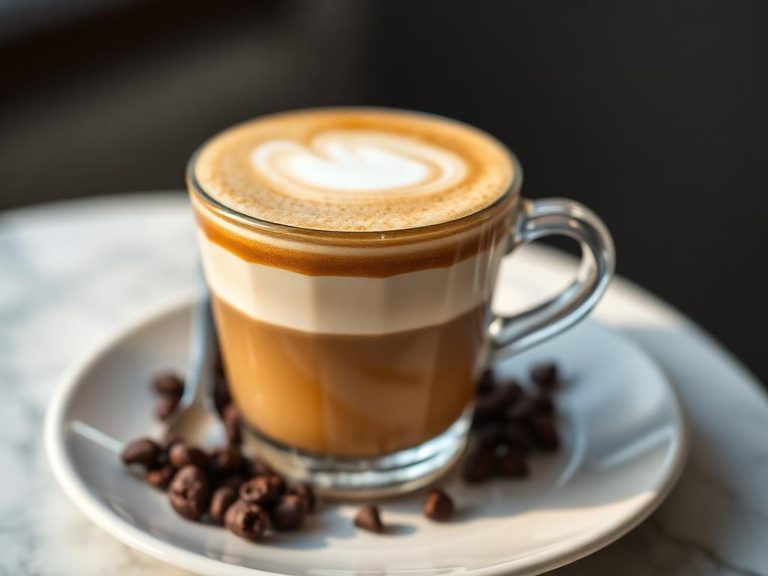

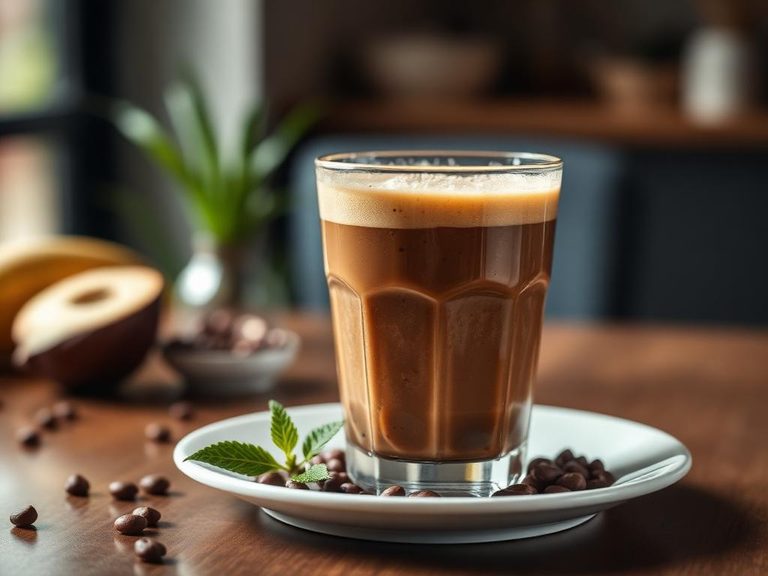
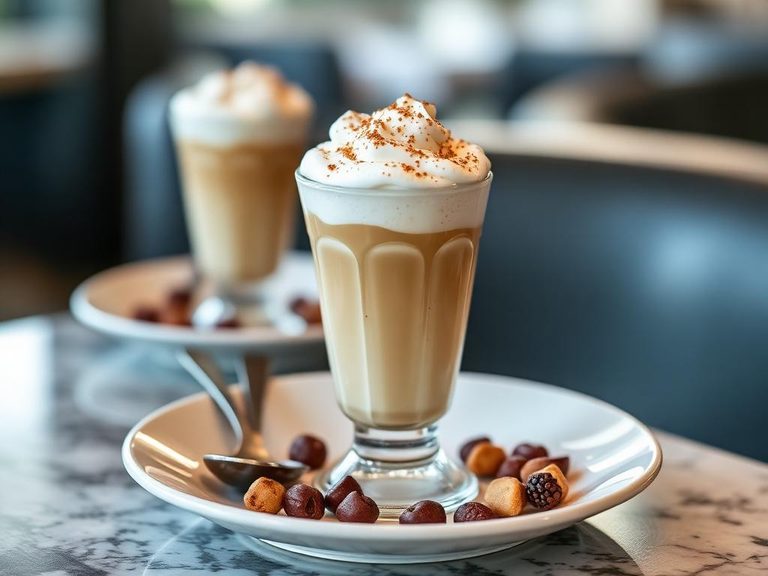
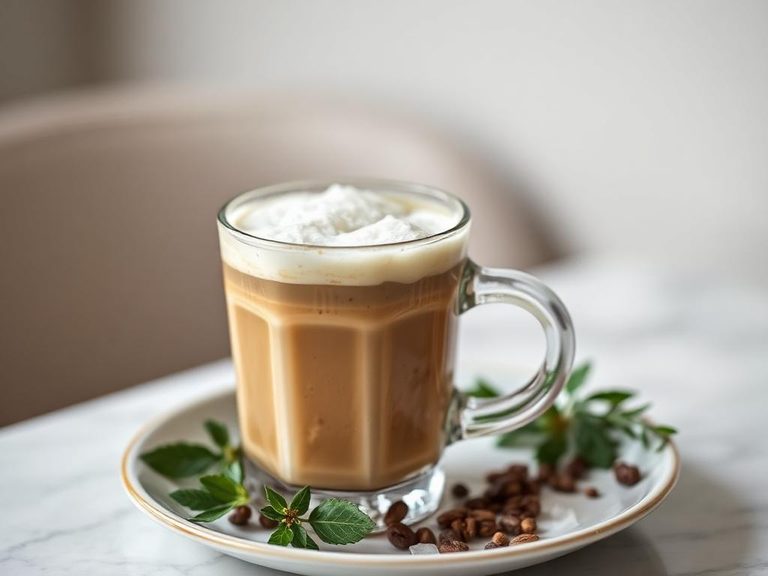
🌍 Where it's eaten
💡 Did you know?
The classic Italian cappuccino is named after the Capuchin friars, whose brown robes resemble the color of the drink when espresso is mixed with steamed milk.
Full nutrition (USDA data · scales with serving)
| Water | 94.9 g |
| Energy | 19.0 kcal |
| Protein | 1.8 g |
| Total lipid (fat) | 0.07 g |
| Carbohydrate, by difference | 2.8 g |
| Fiber, total dietary | 0.00 g |
| Total Sugars | 2.6 g |
| Calcium, Ca | 68.0 mg |
| Iron, Fe | 0.02 mg |
| Magnesium, Mg | 20.0 mg |
| Phosphorus, P | 55.0 mg |
| Potassium, K | 104 mg |
| Sodium, Na | 24.0 mg |
| Zinc, Zn | 0.24 mg |
| Copper, Cu | 0.01 mg |
| Selenium, Se | 1.0 ug |
| Vitamin C, total ascorbic acid | 0.00 mg |
| Thiamin | 0.03 mg |
| Riboflavin | 0.10 mg |
| Niacin | 0.92 mg |
| Vitamin B-6 | 0.03 mg |
| Folate, total | 1.0 ug |
| Folic acid | 0.00 ug |
| Folate, food | 1.0 ug |
| Folate, DFE | 1.0 ug |
| Choline, total | 8.5 mg |
| Vitamin B-12 | 0.24 ug |
| Vitamin B-12, added | 0.00 ug |
| Vitamin A, RAE | 32.0 ug |
| Retinol | 32.0 ug |
| Carotene, beta | 1.0 ug |
| Carotene, alpha | 0.00 ug |
| Cryptoxanthin, beta | 0.00 ug |
| Lycopene | 0.00 ug |
| Lutein + zeaxanthin | 0.00 ug |
| Vitamin E (alpha-tocopherol) | 0.00 mg |
| Vitamin E, added | 0.00 mg |
| Vitamin D (D2 + D3) | 0.60 ug |
| Vitamin K (phylloquinone) | 0.00 ug |
| Alcohol, ethyl | 0.00 g |
| Caffeine | 0.00 mg |
| Theobromine | 0.00 mg |
Fat & fatty acid profile (per 100g)
| Fatty acids, total saturated | 0.04 g |
| SFA 4:0 | 0.00 g |
| SFA 6:0 | 0.00 g |
| SFA 8:0 | 0.00 g |
| SFA 10:0 | 0.00 g |
| SFA 12:0 | 0.00 g |
| SFA 14:0 | 0.00 g |
| SFA 16:0 | 0.02 g |
| SFA 18:0 | 0.01 g |
| Fatty acids, total monounsaturated | 0.01 g |
| MUFA 16:1 | 0.00 g |
| MUFA 18:1 | 0.01 g |
| MUFA 20:1 | 0.00 g |
| MUFA 22:1 | 0.00 g |
| Fatty acids, total polyunsaturated | 0.02 g |
| PUFA 18:2 | 0.02 g |
| PUFA 18:3 | 0.00 g |
| PUFA 18:4 | 0.00 g |
| PUFA 20:4 | 0.00 g |
| PUFA 20:5 n-3 (EPA) | 0.00 g |
| PUFA 22:5 n-3 (DPA) | 0.00 g |
| PUFA 22:6 n-3 (DHA) | 0.00 g |
| Cholesterol | 2.0 mg |
Amino acid profile (per 100g)
Estimated from Cream, fluid, light (coffee cream or table cream) — USDA does not publish this profile for Coffee.
| Tryptophan | 0.07 g |
| Threonine | 0.13 g |
| Isoleucine | 0.15 g |
| Leucine | 0.24 g |
| Lysine | 0.13 g |
| Methionine | 0.07 g |
| Cystine | 0.01 g |
| Phenylalanine | 0.14 g |
| Tyrosine | 0.14 g |
| Valine | 0.18 g |
| Arginine | 0.07 g |
| Histidine | 0.07 g |
| Alanine | 0.09 g |
| Aspartic acid | 0.22 g |
| Glutamic acid | 0.59 g |
| Glycine | 0.07 g |
| Proline | 0.31 g |
| Serine | 0.10 g |
FAQ
Is decaf cappuccino completely caffeine-free?
No. Decaffeination removes most, but not all, caffeine. A typical decaf espresso shot retains about 2-15 mg of caffeine, compared to 63 mg in regular.
Why does the foam on nonfat milk cappuccino collapse faster?
Milk fat and proteins help stabilize foam. Nonfat milk lacks the fat, so its foam is airier and dissipates more quickly, especially as the drink cools.
Can I make this at home without an espresso machine?
Yes. Use strong brewed coffee or instant espresso powder as the base. Froth heated nonfat milk with a whisk, frother, or by shaking vigorously in a jar.
Nutrient density (calculated · NRF9.3)
Nutrient Rich Foods index: beneficial nutrients (protein, fiber, vitamins, minerals) minus saturated fat, added sugar & sodium, per 100 kcal.
NRF9.3 index — Fulgoni, Keast & Drewnowski, 2009. Computed from USDA nutrients.
Weight-loss friendliness (composite index)
Energy density 0.19 kcal/g · 37% calories from protein · 0.0 g fiber · 2.6 g sugar per 100 g.
Composite of energy density (Rolls et al., 1999), protein & fiber satiety, minus sugar. A calculated heuristic — ranks satiety-per-calorie, not a clinical measure.
Dietary load (calculated from USDA values)
Potential renal acid load. Positive = acid-forming, negative = alkaline-forming.
Sodium-to-potassium ratio: 0.23 (lower is better — aim for ≤ 1)
Sodium:potassium per WHO potassium guidance. Computed from USDA nutrients.