

Chicken, NS as to part, rotisserie, skin eaten
Common food
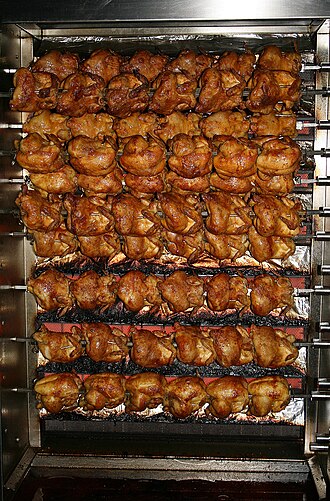
Photo: Wikipedia
This is rotisserie chicken with the skin left on, offering a succulent, juicy bite with a crisp, savory exterior. The meat is tender and flavorful, while the skin adds a rich, fatty mouthfeel and a boost of calories and fat. It's a protein powerhouse, delivering over 25 grams of protein per 100 grams, making it a highly satiating food.
Calorie split: 51% protein · 0% carbs · 49% fat
↓ Full nutrition💚 Why it's loved
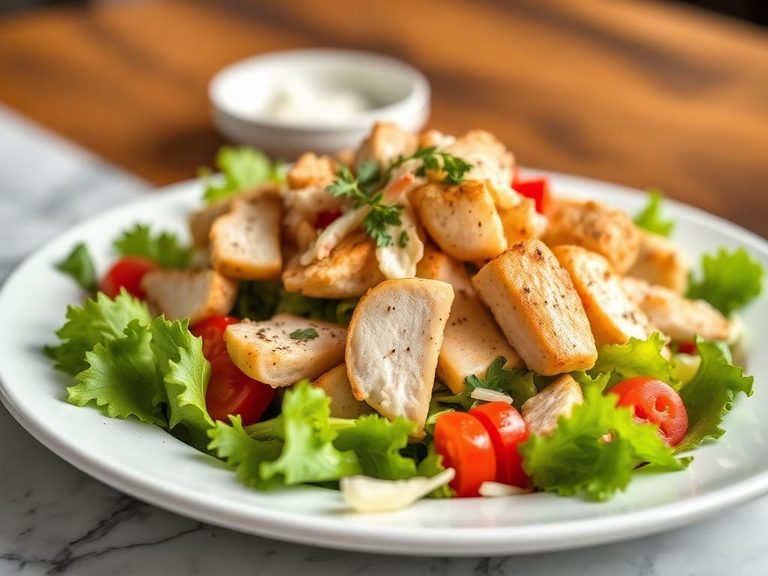
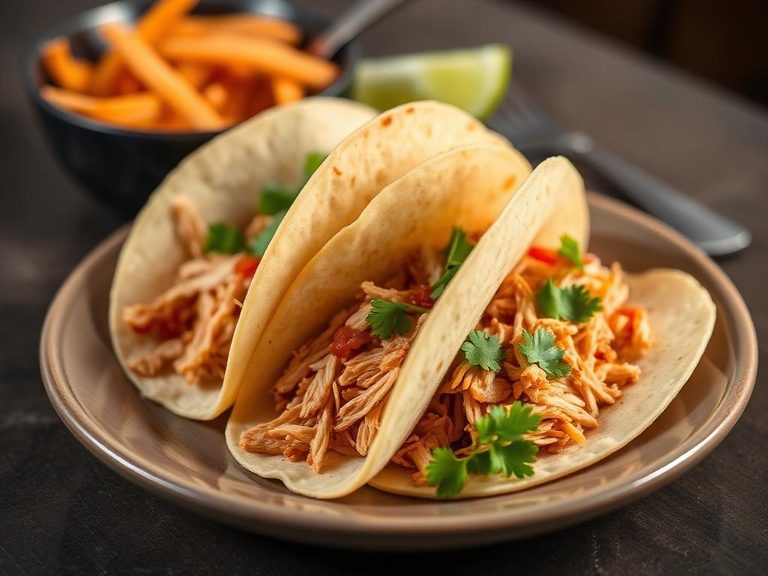
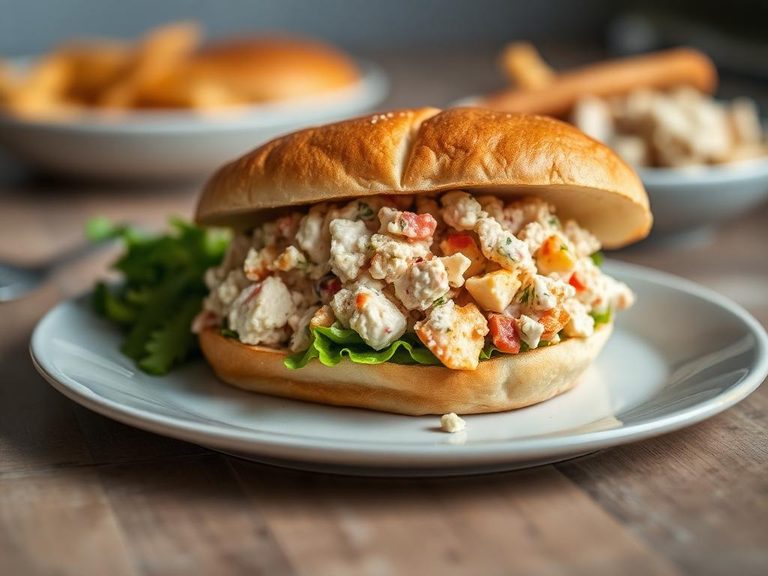
People adore rotisserie chicken for its deep, savory flavor and incredibly juicy texture, a result of slow cooking in its own fats. It's a beloved cultural staple for its incredible versatility—perfect for a quick dinner, salads, sandwiches, or tacos.
⚠️ Watch-outs & how to enjoy it better
The skin is high in saturated fat and calories, which may be a concern for those monitoring heart health or caloric intake. Additionally, rotisserie chickens can be high in sodium from seasoning blends. To mitigate this, you can remove the skin before eating to cut fat and calories, and pair the chicken with low-sodium sides like steamed vegetables or a fresh salad.
Key benefits
- Excellent source of high-quality protein for muscle maintenance.
- Provides essential B vitamins like niacin (B3) and B6 for energy metabolism.
- Contains minerals such as selenium and phosphorus.
- The skin adds flavorful fat, which can enhance satiety.
- A convenient, ready-to-eat meal component.
🍽️ Popular dishes
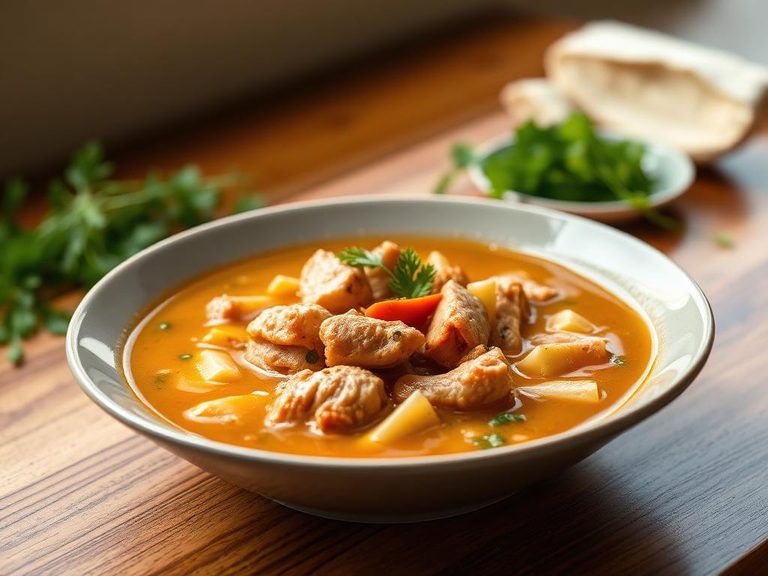
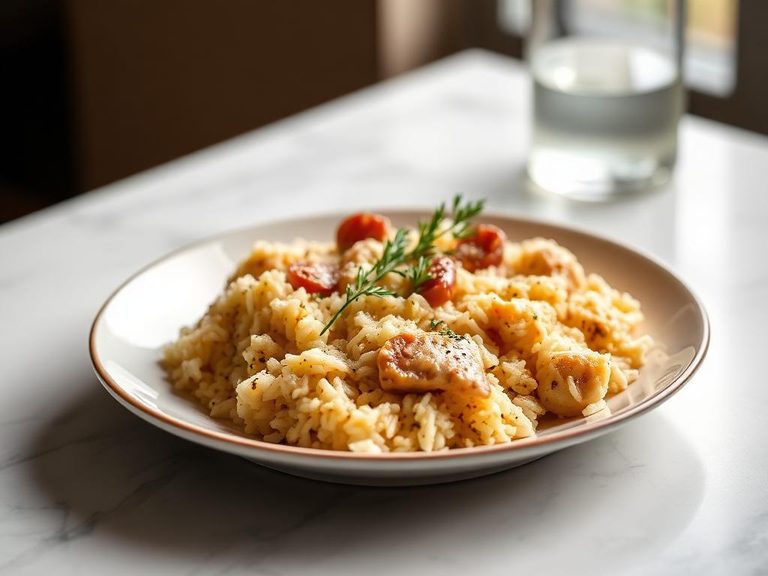
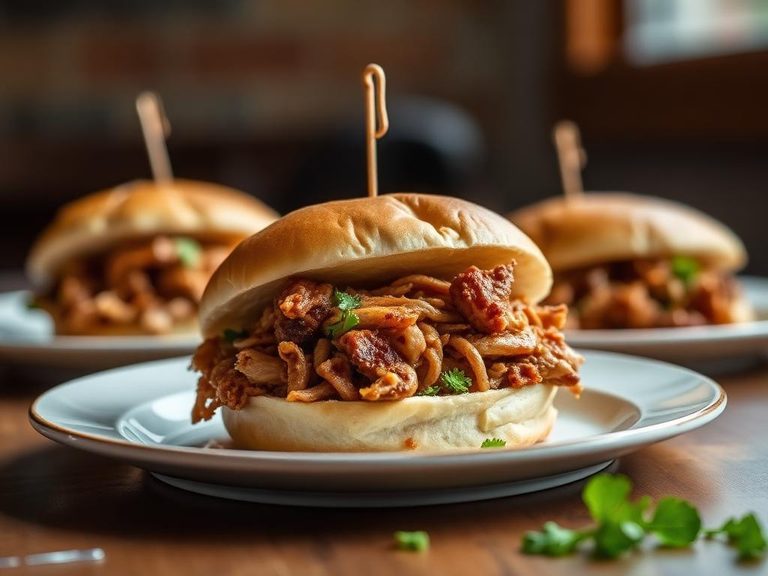
🌍 Where it's eaten
💡 Did you know?
The term 'rotisserie' comes from the French word for a spit, and early rotisserie cooking involved skewering whole birds on a long rod and turning them manually over an open fire.
Full nutrition (USDA data · scales with serving)
| Water | 63.3 g |
| Energy | 196 kcal |
| Protein | 25.1 g |
| Total lipid (fat) | 10.7 g |
| Carbohydrate, by difference | 0.10 g |
| Fiber, total dietary | 0.00 g |
| Total Sugars | 0.10 g |
| Calcium, Ca | 17.0 mg |
| Iron, Fe | 0.74 mg |
| Magnesium, Mg | 23.0 mg |
| Phosphorus, P | 236 mg |
| Potassium, K | 270 mg |
| Sodium, Na | 343 mg |
| Zinc, Zn | 1.5 mg |
| Copper, Cu | 0.06 mg |
| Selenium, Se | 22.9 ug |
| Vitamin C, total ascorbic acid | 0.00 mg |
| Thiamin | 0.07 mg |
| Riboflavin | 0.18 mg |
| Niacin | 7.6 mg |
| Vitamin B-6 | 0.25 mg |
| Folate, total | 10.0 ug |
| Folic acid | 0.00 ug |
| Folate, food | 8.0 ug |
| Folate, DFE | 8.0 ug |
| Choline, total | 62.1 mg |
| Vitamin B-12 | 0.39 ug |
| Vitamin B-12, added | 0.00 ug |
| Vitamin A, RAE | 15.0 ug |
| Retinol | 15.0 ug |
| Carotene, beta | 0.00 ug |
| Carotene, alpha | 0.00 ug |
| Cryptoxanthin, beta | 0.00 ug |
| Lycopene | 0.00 ug |
| Lutein + zeaxanthin | 0.00 ug |
| Vitamin E (alpha-tocopherol) | 0.40 mg |
| Vitamin E, added | 0.00 mg |
| Vitamin D (D2 + D3) | 0.00 ug |
| Vitamin K (phylloquinone) | 0.00 ug |
| Alcohol, ethyl | 0.00 g |
| Caffeine | 0.00 mg |
| Theobromine | 0.00 mg |
Fat & fatty acid profile (per 100g)
| Fatty acids, total saturated | 2.7 g |
| SFA 4:0 | 0.00 g |
| SFA 6:0 | 0.00 g |
| SFA 8:0 | 0.00 g |
| SFA 10:0 | 0.00 g |
| SFA 12:0 | 0.00 g |
| SFA 14:0 | 0.06 g |
| SFA 16:0 | 2.2 g |
| SFA 18:0 | 0.48 g |
| Fatty acids, total monounsaturated | 4.4 g |
| MUFA 16:1 | 0.73 g |
| MUFA 18:1 | 3.7 g |
| MUFA 20:1 | 0.03 g |
| MUFA 22:1 | 0.00 g |
| Fatty acids, total polyunsaturated | 1.4 g |
| PUFA 18:2 | 1.3 g |
| PUFA 18:3 | 0.07 g |
| PUFA 18:4 | 0.00 g |
| PUFA 20:4 | 0.02 g |
| PUFA 20:5 n-3 (EPA) | 0.00 g |
| PUFA 22:5 n-3 (DPA) | 0.00 g |
| PUFA 22:6 n-3 (DHA) | 0.00 g |
| Cholesterol | 113 mg |
Amino acid profile (per 100g)
Estimated from Restaurant, Latino, chicken and rice, entree, prepared — USDA does not publish this profile for Chicken.
| Tryptophan | 0.16 g |
| Threonine | 0.50 g |
| Isoleucine | 0.55 g |
| Leucine | 0.93 g |
| Lysine | 0.93 g |
| Methionine | 0.31 g |
| Cystine | 0.15 g |
| Phenylalanine | 0.51 g |
| Tyrosine | 0.35 g |
| Valine | 0.62 g |
| Arginine | 0.80 g |
| Histidine | 0.40 g |
| Alanine | 0.68 g |
| Aspartic acid | 1.1 g |
| Glutamic acid | 1.9 g |
| Glycine | 0.58 g |
| Proline | 0.51 g |
| Serine | 0.47 g |
FAQ
Is rotisserie chicken healthy?
It can be a healthy part of a balanced diet. It's an excellent source of lean protein if you remove the skin. The main considerations are the sodium content from the seasoning and the added fat from the skin.
How should I store leftover rotisserie chicken?
Remove the meat from the bones within two hours of cooking. Store it in an airtight container in the refrigerator for up to 4 days, or freeze it for up to 4 months for best quality.
Can I use the carcass for anything?
Absolutely! The bones and carcass are perfect for making a rich, flavorful homemade chicken stock or bone broth, which is a nutritious base for soups and sauces.
Nutrient density (calculated · NRF9.3)
Nutrient Rich Foods index: beneficial nutrients (protein, fiber, vitamins, minerals) minus saturated fat, added sugar & sodium, per 100 kcal.
NRF9.3 index — Fulgoni, Keast & Drewnowski, 2009. Computed from USDA nutrients.
Weight-loss friendliness (composite index)
Energy density 1.96 kcal/g · 51% calories from protein · 0.0 g fiber · 0.1 g sugar per 100 g.
Composite of energy density (Rolls et al., 1999), protein & fiber satiety, minus sugar. A calculated heuristic — ranks satiety-per-calorie, not a clinical measure.
Dietary load (calculated from USDA values)
Potential renal acid load. Positive = acid-forming, negative = alkaline-forming.
Sodium-to-potassium ratio: 1.27 (lower is better — aim for ≤ 1)
Sodium:potassium per WHO potassium guidance. Computed from USDA nutrients.