

Chicken, NS as to part, baked, broiled, or roasted, skin eaten
Common food
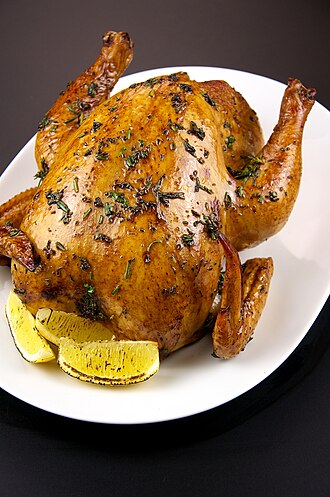
Photo: Wikipedia
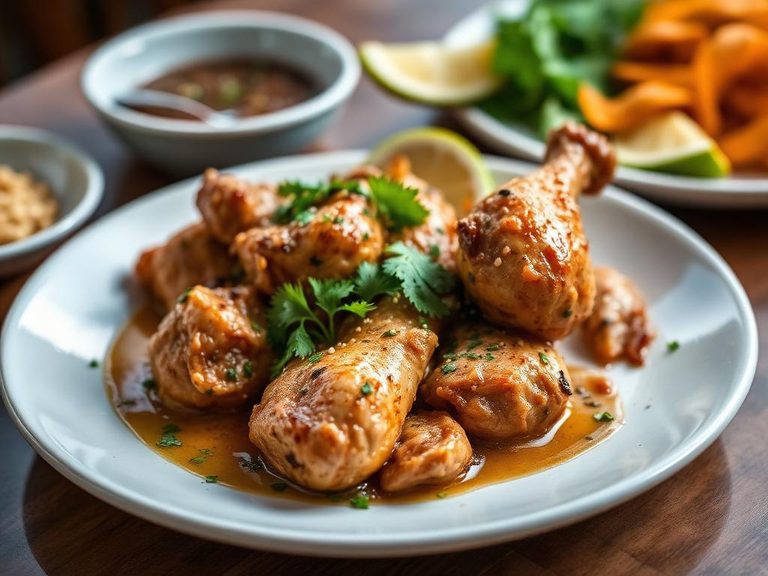
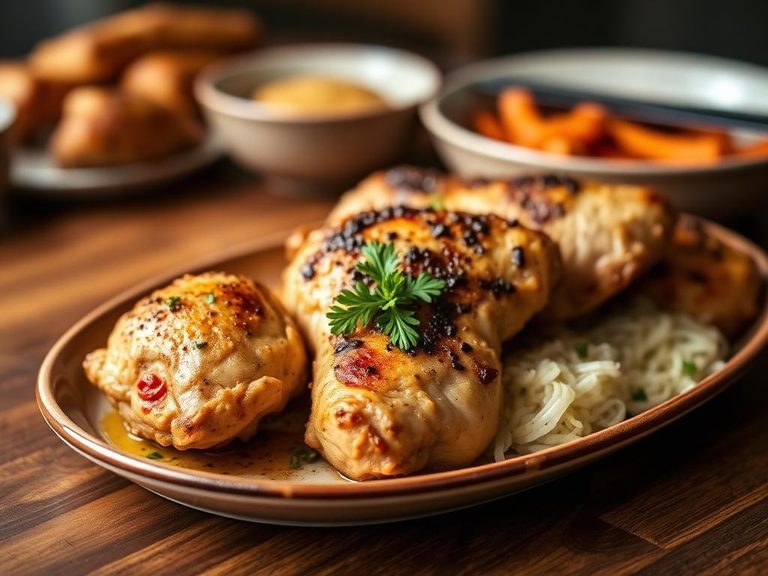
This is chicken cooked with its skin on, baked, broiled, or roasted, delivering a savory, juicy bite with a satisfyingly crisp, fatty layer. The skin caramelizes into a golden-brown crust, while the meat underneath remains tender and moist. It's a protein powerhouse, packing 24.7 grams per 100g, with the skin contributing most of the 10.8 grams of fat.
Calorie split: 50% protein · 0% carbs · 50% fat
↓ Full nutrition💚 Why it's loved
People adore it for the irresistible contrast between the crispy, flavorful skin and the succulent meat beneath. Its versatility makes it a universal comfort food, adaptable to countless seasonings and global cuisines, from simple weeknight dinners to celebratory feasts.
⚠️ Watch-outs & how to enjoy it better
The skin significantly increases the saturated fat and calorie content, which may concern those managing heart health or weight. To enjoy it mindfully, practice portion control by saving the skin as a flavorful garnish rather than eating it all, or pair it with fiber-rich vegetables to balance the meal.
Key benefits
- Excellent source of complete protein for muscle maintenance.
- Rich in B vitamins like niacin and B6 for energy metabolism.
- Contains minerals like selenium and phosphorus.
- Skin provides dietary fat for satiety and nutrient absorption.
- Simple, whole-food preparation with minimal added ingredients.
🍽️ Popular dishes
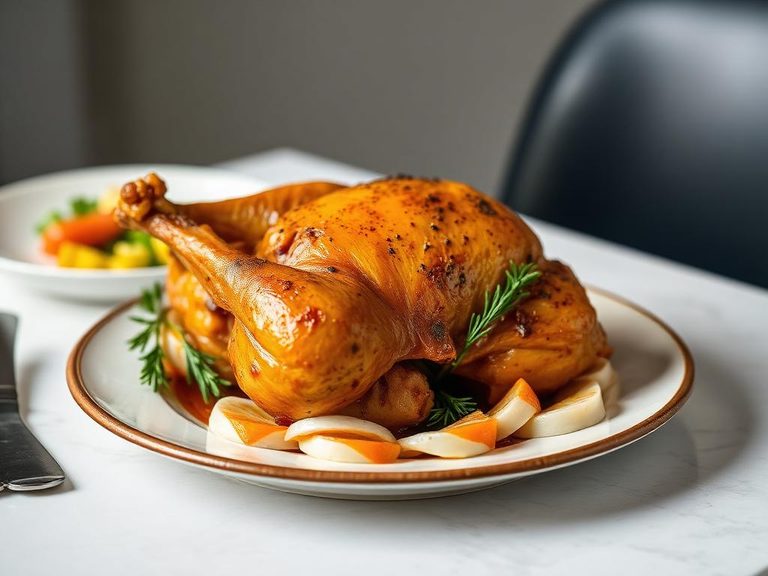
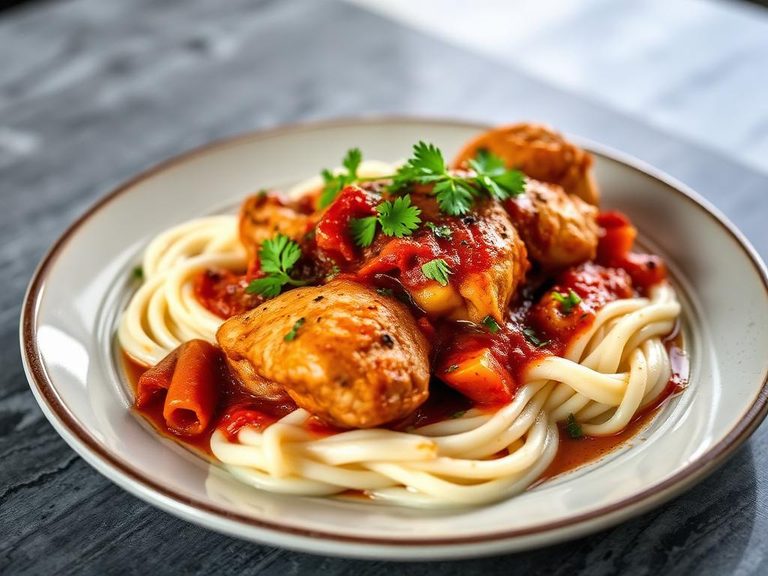
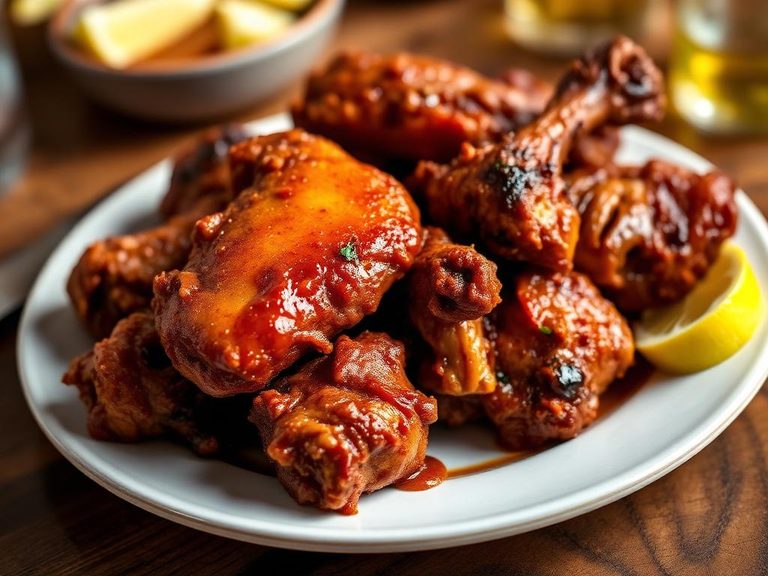
🌍 Where it's eaten
💡 Did you know?
The skin acts as a natural self-baster during cooking, melting fat that continuously moistens the meat underneath, which is a key reason skin-on chicken often turns out juicier than skinless.
Full nutrition (USDA data · scales with serving)
| Water | 63.3 g |
| Energy | 203 kcal |
| Protein | 24.7 g |
| Total lipid (fat) | 10.8 g |
| Carbohydrate, by difference | 0.00 g |
| Fiber, total dietary | 0.00 g |
| Total Sugars | 0.00 g |
| Calcium, Ca | 9.0 mg |
| Iron, Fe | 0.81 mg |
| Magnesium, Mg | 23.0 mg |
| Phosphorus, P | 201 mg |
| Potassium, K | 273 mg |
| Sodium, Na | 338 mg |
| Zinc, Zn | 1.4 mg |
| Copper, Cu | 0.06 mg |
| Selenium, Se | 26.1 ug |
| Vitamin C, total ascorbic acid | 0.00 mg |
| Thiamin | 0.08 mg |
| Riboflavin | 0.19 mg |
| Niacin | 7.2 mg |
| Vitamin B-6 | 0.55 mg |
| Folate, total | 5.0 ug |
| Folic acid | 0.00 ug |
| Folate, food | 5.0 ug |
| Folate, DFE | 5.0 ug |
| Choline, total | 65.9 mg |
| Vitamin B-12 | 0.30 ug |
| Vitamin B-12, added | 0.00 ug |
| Vitamin A, RAE | 16.0 ug |
| Retinol | 16.0 ug |
| Carotene, beta | 0.00 ug |
| Carotene, alpha | 0.00 ug |
| Cryptoxanthin, beta | 0.00 ug |
| Lycopene | 0.00 ug |
| Lutein + zeaxanthin | 7.0 ug |
| Vitamin E (alpha-tocopherol) | 0.39 mg |
| Vitamin E, added | 0.00 mg |
| Vitamin D (D2 + D3) | 0.10 ug |
| Vitamin K (phylloquinone) | 1.9 ug |
| Alcohol, ethyl | 0.00 g |
| Caffeine | 0.00 mg |
| Theobromine | 0.00 mg |
Fat & fatty acid profile (per 100g)
| Fatty acids, total saturated | 2.9 g |
| SFA 4:0 | 0.00 g |
| SFA 6:0 | 0.00 g |
| SFA 8:0 | 0.00 g |
| SFA 10:0 | 0.01 g |
| SFA 12:0 | 0.01 g |
| SFA 14:0 | 0.07 g |
| SFA 16:0 | 2.2 g |
| SFA 18:0 | 0.56 g |
| Fatty acids, total monounsaturated | 4.3 g |
| MUFA 16:1 | 0.62 g |
| MUFA 18:1 | 3.6 g |
| MUFA 20:1 | 0.08 g |
| MUFA 22:1 | 0.00 g |
| Fatty acids, total polyunsaturated | 2.2 g |
| PUFA 18:2 | 1.9 g |
| PUFA 18:3 | 0.09 g |
| PUFA 18:4 | 0.00 g |
| PUFA 20:4 | 0.08 g |
| PUFA 20:5 n-3 (EPA) | 0.01 g |
| PUFA 22:5 n-3 (DPA) | 0.01 g |
| PUFA 22:6 n-3 (DHA) | 0.01 g |
| Cholesterol | 114 mg |
Amino acid profile (per 100g)
Estimated from Restaurant, Latino, chicken and rice, entree, prepared — USDA does not publish this profile for Chicken.
| Tryptophan | 0.16 g |
| Threonine | 0.50 g |
| Isoleucine | 0.55 g |
| Leucine | 0.93 g |
| Lysine | 0.93 g |
| Methionine | 0.31 g |
| Cystine | 0.15 g |
| Phenylalanine | 0.51 g |
| Tyrosine | 0.35 g |
| Valine | 0.62 g |
| Arginine | 0.80 g |
| Histidine | 0.40 g |
| Alanine | 0.68 g |
| Aspartic acid | 1.1 g |
| Glutamic acid | 1.9 g |
| Glycine | 0.58 g |
| Proline | 0.51 g |
| Serine | 0.47 g |
FAQ
Is the skin the main source of fat and calories?
Yes, the skin contains the majority of the fat. A skinless portion has significantly less fat and fewer calories. The 10.8g of fat per 100g for skin-on chicken is substantially higher than for skinless.
How can I make the skin crispy when baking or roasting?
Pat the chicken completely dry with paper towels before cooking, season generously, and use high heat (around 400°F/200°C or higher). Starting on a rack allows air to circulate underneath for even crisping.
Is this a good option for a low-carb diet?
Absolutely. With 0g of carbohydrates, it's a perfect fit for low-carb, keto, and other carbohydrate-restricted eating patterns.
Nutrient density (calculated · NRF9.3)
Nutrient Rich Foods index: beneficial nutrients (protein, fiber, vitamins, minerals) minus saturated fat, added sugar & sodium, per 100 kcal.
NRF9.3 index — Fulgoni, Keast & Drewnowski, 2009. Computed from USDA nutrients.
Weight-loss friendliness (composite index)
Energy density 2.03 kcal/g · 49% calories from protein · 0.0 g fiber · 0.0 g sugar per 100 g.
Composite of energy density (Rolls et al., 1999), protein & fiber satiety, minus sugar. A calculated heuristic — ranks satiety-per-calorie, not a clinical measure.
Dietary load (calculated from USDA values)
Potential renal acid load. Positive = acid-forming, negative = alkaline-forming.
Sodium-to-potassium ratio: 1.24 (lower is better — aim for ≤ 1)
Sodium:potassium per WHO potassium guidance. Computed from USDA nutrients.