

Chicken, NS as to part and cooking method, NS as to skin eaten
Common food
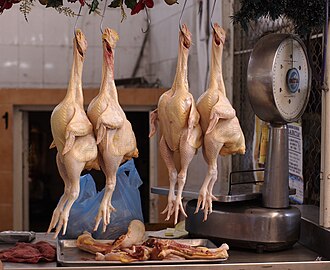
Photo: Wikipedia
This is a versatile cut of chicken, unspecified as to part (breast, thigh, etc.) or cooking method (roasted, grilled, etc.), with the skin potentially eaten. Its taste and texture vary widely—from lean and mild to rich and succulent—depending on the cut and preparation. Nutritionally, it's a powerhouse of high-quality protein with a moderate amount of fat and virtually no carbohydrates.
Calorie split: 65% protein · 0% carbs · 35% fat
↓ Full nutrition💚 Why it's loved
People love chicken for its incredible culinary chameleon nature; it can absorb almost any spice, marinade, or sauce, making it a beloved canvas for global flavors. Its familiar, comforting taste and satisfying texture make it a reliable staple for quick weeknight meals or celebratory feasts alike.
⚠️ Watch-outs & how to enjoy it better
The unspecified nature means fat content (and thus calories) can vary dramatically; choosing a skin-on thigh versus a skinless breast changes the nutritional profile significantly. To counteract this, be mindful of the cut and cooking method—opt for skinless, leaner cuts like breast if watching fat intake, and choose grilling or baking over frying to avoid added fats. As a common allergen, those with a poultry allergy must avoid it entirely.
Key benefits
- Excellent source of complete, high-quality protein for muscle maintenance and repair.
- Naturally low in carbohydrates, making it suitable for low-carb and ketogenic diets.
- Provides essential nutrients like niacin, vitamin B6, and selenium.
- Highly adaptable to countless cooking methods and flavor profiles.
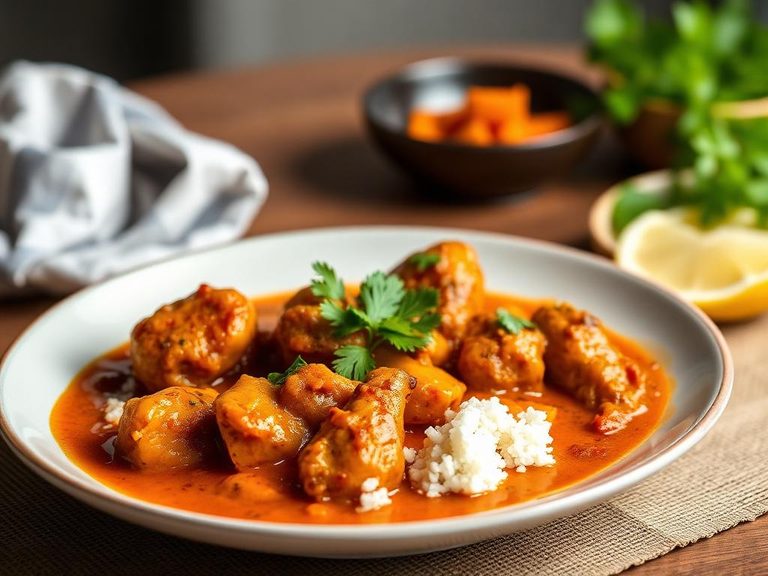
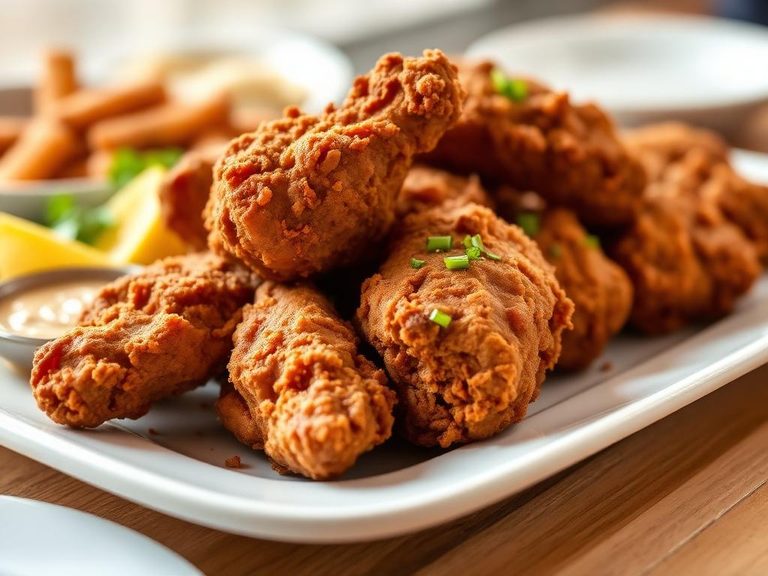
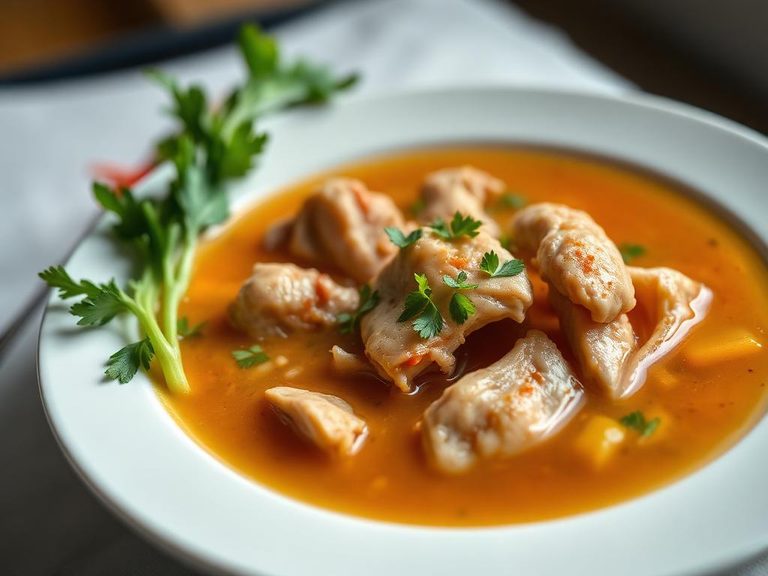
🍽️ Popular dishes
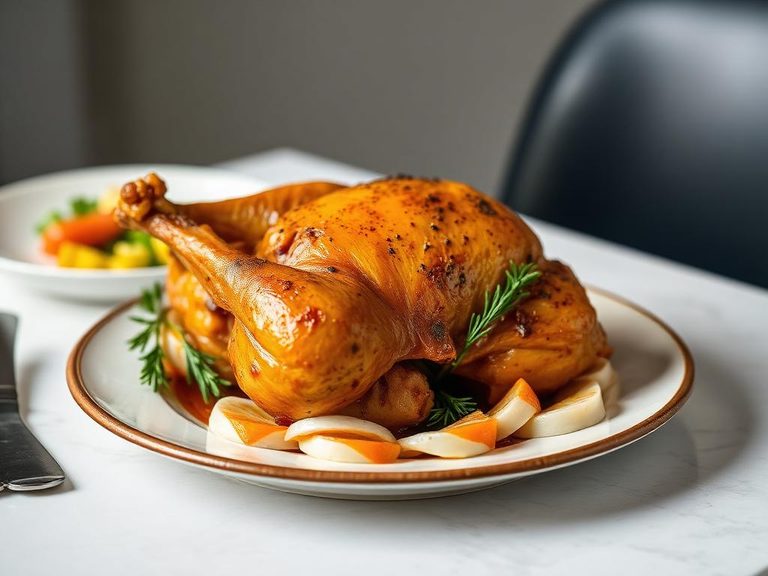
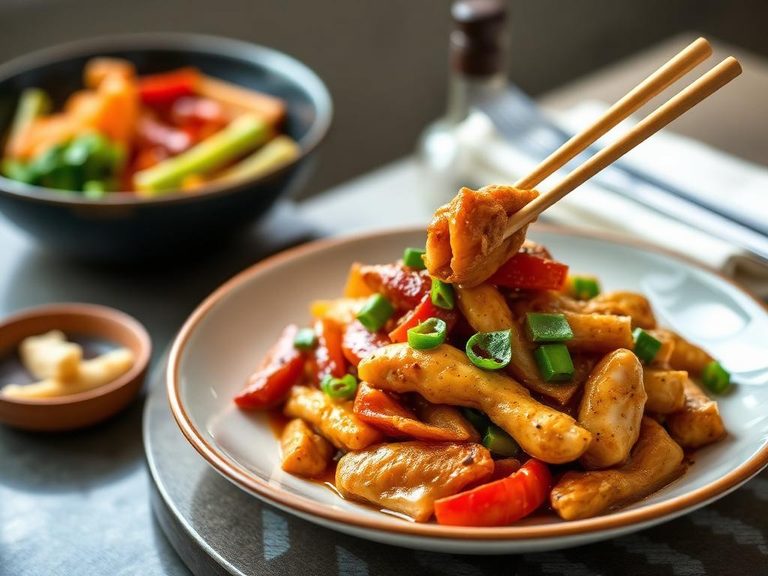
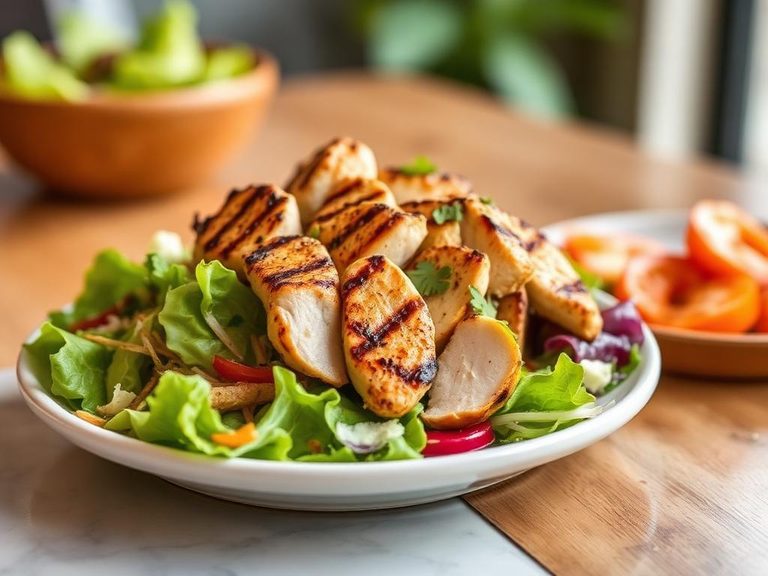
🌍 Where it's eaten
💡 Did you know?
Chicken is the most widely consumed type of poultry in the world, with global production exceeding that of pigs, cattle, or sheep.
Full nutrition (USDA data · scales with serving)
| Water | 66.0 g |
| Energy | 164 kcal |
| Protein | 26.8 g |
| Total lipid (fat) | 6.4 g |
| Carbohydrate, by difference | 0.00 g |
| Fiber, total dietary | 0.00 g |
| Total Sugars | 0.00 g |
| Calcium, Ca | 14.0 mg |
| Iron, Fe | 0.73 mg |
| Magnesium, Mg | 23.0 mg |
| Phosphorus, P | 237 mg |
| Potassium, K | 279 mg |
| Sodium, Na | 345 mg |
| Zinc, Zn | 1.6 mg |
| Copper, Cu | 0.06 mg |
| Selenium, Se | 24.0 ug |
| Vitamin C, total ascorbic acid | 0.00 mg |
| Thiamin | 0.07 mg |
| Riboflavin | 0.18 mg |
| Niacin | 7.6 mg |
| Vitamin B-6 | 0.25 mg |
| Folate, total | 10.0 ug |
| Folic acid | 0.00 ug |
| Folate, food | 8.0 ug |
| Folate, DFE | 8.0 ug |
| Choline, total | 66.3 mg |
| Vitamin B-12 | 0.36 ug |
| Vitamin B-12, added | 0.00 ug |
| Vitamin A, RAE | 8.0 ug |
| Retinol | 8.0 ug |
| Carotene, beta | 0.00 ug |
| Carotene, alpha | 0.00 ug |
| Cryptoxanthin, beta | 0.00 ug |
| Lycopene | 0.00 ug |
| Lutein + zeaxanthin | 0.00 ug |
| Vitamin E (alpha-tocopherol) | 0.41 mg |
| Vitamin E, added | 0.00 mg |
| Vitamin D (D2 + D3) | 0.00 ug |
| Vitamin K (phylloquinone) | 0.00 ug |
| Alcohol, ethyl | 0.00 g |
| Caffeine | 0.00 mg |
| Theobromine | 0.00 mg |
Fat & fatty acid profile (per 100g)
| Fatty acids, total saturated | 1.6 g |
| SFA 4:0 | 0.00 g |
| SFA 6:0 | 0.00 g |
| SFA 8:0 | 0.00 g |
| SFA 10:0 | 0.00 g |
| SFA 12:0 | 0.00 g |
| SFA 14:0 | 0.03 g |
| SFA 16:0 | 1.3 g |
| SFA 18:0 | 0.28 g |
| Fatty acids, total monounsaturated | 2.7 g |
| MUFA 16:1 | 0.46 g |
| MUFA 18:1 | 2.2 g |
| MUFA 20:1 | 0.02 g |
| MUFA 22:1 | 0.00 g |
| Fatty acids, total polyunsaturated | 0.94 g |
| PUFA 18:2 | 0.86 g |
| PUFA 18:3 | 0.05 g |
| PUFA 18:4 | 0.00 g |
| PUFA 20:4 | 0.02 g |
| PUFA 20:5 n-3 (EPA) | 0.00 g |
| PUFA 22:5 n-3 (DPA) | 0.00 g |
| PUFA 22:6 n-3 (DHA) | 0.00 g |
| Cholesterol | 112 mg |
Amino acid profile (per 100g)
Estimated from Restaurant, Latino, chicken and rice, entree, prepared — USDA does not publish this profile for Chicken.
| Tryptophan | 0.16 g |
| Threonine | 0.50 g |
| Isoleucine | 0.55 g |
| Leucine | 0.93 g |
| Lysine | 0.93 g |
| Methionine | 0.31 g |
| Cystine | 0.15 g |
| Phenylalanine | 0.51 g |
| Tyrosine | 0.35 g |
| Valine | 0.62 g |
| Arginine | 0.80 g |
| Histidine | 0.40 g |
| Alanine | 0.68 g |
| Aspartic acid | 1.1 g |
| Glutamic acid | 1.9 g |
| Glycine | 0.58 g |
| Proline | 0.51 g |
| Serine | 0.47 g |
FAQ
What does 'NS as to part' mean?
It stands for 'Not Specified as to part,' meaning the nutritional data is an average for chicken meat in general, without specifying if it's breast, thigh, wing, or a mix.
Why is the carb count 0g?
Pure, unprocessed meat like chicken contains no carbohydrates. Any carbs in a chicken dish come from added ingredients like breading, sauces, or marinades.
How does the cooking method affect the nutrition?
It has a major impact. Frying adds fat and calories, while grilling, baking, or poaching adds little to none. The skin is also a significant source of fat; eating it increases the fat and calorie content compared to eating skinless meat.
Nutrient density (calculated · NRF9.3)
Nutrient Rich Foods index: beneficial nutrients (protein, fiber, vitamins, minerals) minus saturated fat, added sugar & sodium, per 100 kcal.
NRF9.3 index — Fulgoni, Keast & Drewnowski, 2009. Computed from USDA nutrients.
Weight-loss friendliness (composite index)
Energy density 1.64 kcal/g · 65% calories from protein · 0.0 g fiber · 0.0 g sugar per 100 g.
Composite of energy density (Rolls et al., 1999), protein & fiber satiety, minus sugar. A calculated heuristic — ranks satiety-per-calorie, not a clinical measure.
Dietary load (calculated from USDA values)
Potential renal acid load. Positive = acid-forming, negative = alkaline-forming.
Sodium-to-potassium ratio: 1.24 (lower is better — aim for ≤ 1)
Sodium:potassium per WHO potassium guidance. Computed from USDA nutrients.