

Chicken, NS as to part and cooking method, skin not eaten
Common food
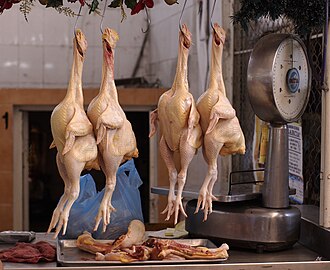
Photo: Wikipedia
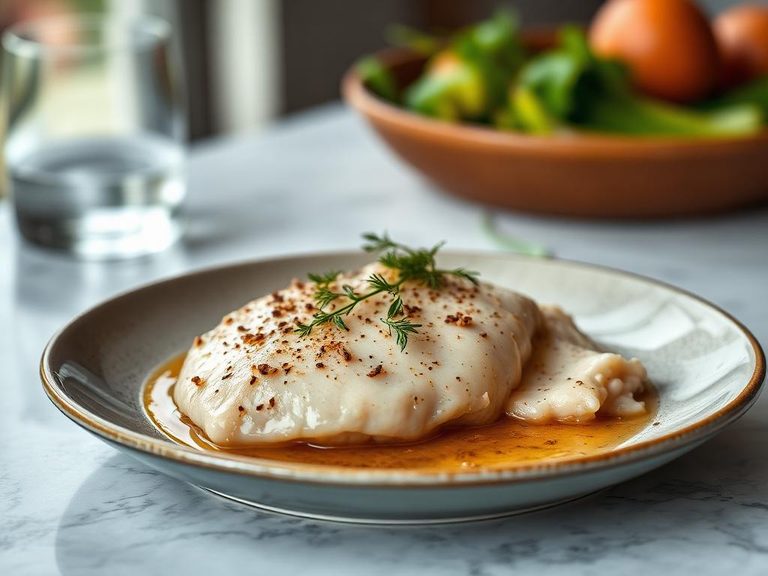
This is the lean, skinless muscle meat of a chicken, a global kitchen staple prized for its mild, savory flavor and firm, dense texture. Nutritionally, it's a powerhouse of high-quality protein with virtually no carbohydrates or sugar, making it a foundational food for muscle maintenance and satiety. Its neutral profile acts as a perfect canvas for a vast array of seasonings and cooking techniques.
Calorie split: 65% protein · 0% carbs · 35% fat
↓ Full nutrition💚 Why it's loved
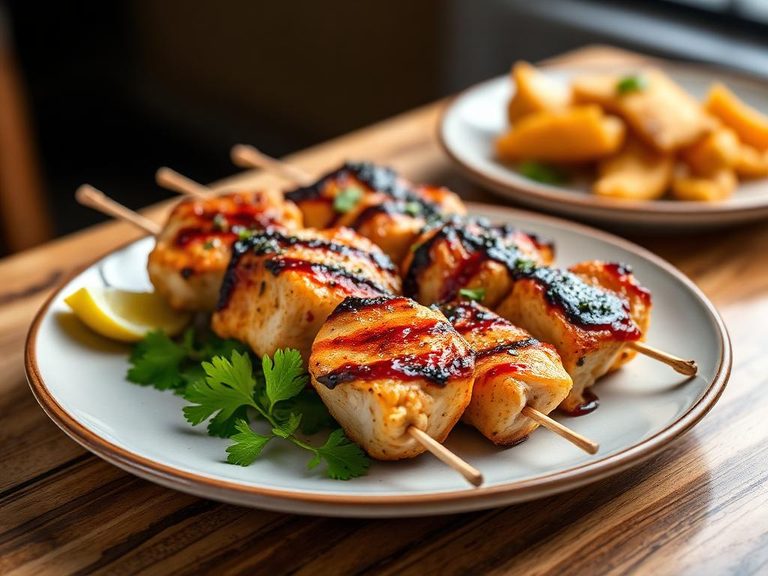
People love it for its incredible versatility—it can be grilled, baked, poached, or stir-fried to suit any cuisine, from a simple weeknight dinner to a festive centerpiece. Its mild taste makes it a crowd-pleaser, especially for children and those wary of stronger-flavored meats.
⚠️ Watch-outs & how to enjoy it better
Without skin or added fats, it can become dry and bland if overcooked, which is a common complaint. To counteract this, use moist-heat methods like braising or marinate it beforehand. Also, while low in fat, it's not iron-rich; pair it with vitamin C-rich vegetables (like bell peppers or broccoli) to enhance non-heme iron absorption from plant foods in the same meal.
Key benefits
- Excellent source of complete protein for muscle repair and growth
- Very low in carbohydrates and sugar, ideal for low-carb diets
- Naturally lean and low in saturated fat when skin is removed
- Highly versatile and absorbs flavors from marinades and spices
- Generally affordable and widely available worldwide
🍽️ Popular dishes

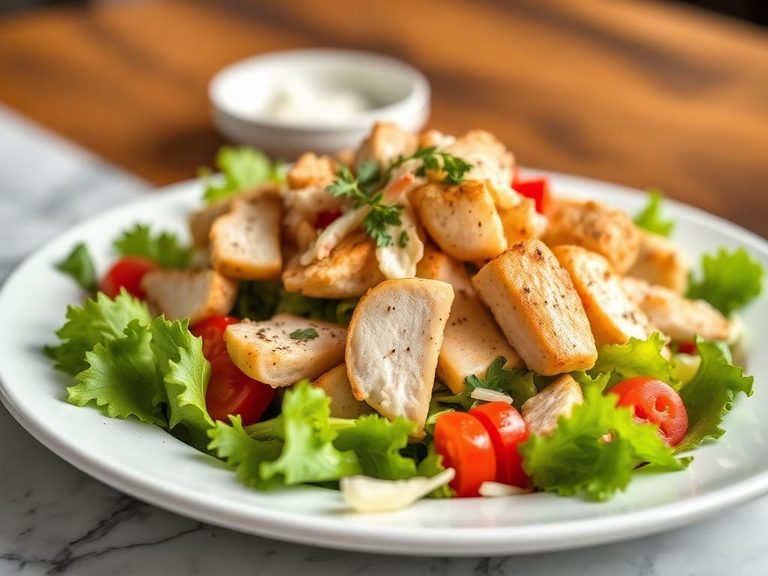
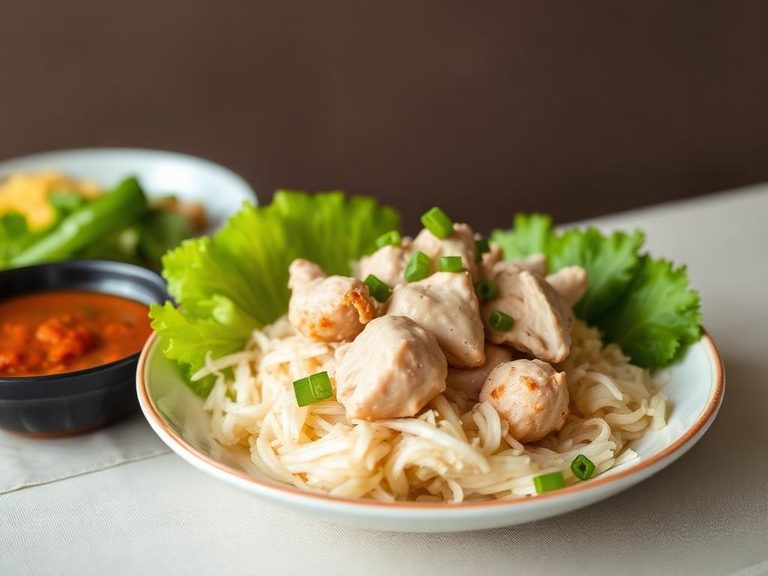
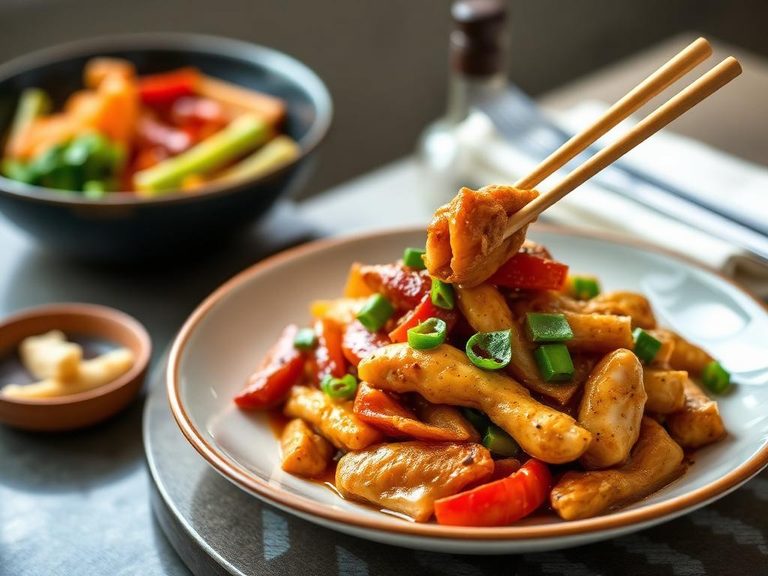
🌍 Where it's eaten
💡 Did you know?
The global chicken population is estimated to be over 33 billion—more than four chickens for every human on Earth.
Full nutrition (USDA data · scales with serving)
| Water | 66.0 g |
| Energy | 164 kcal |
| Protein | 26.8 g |
| Total lipid (fat) | 6.4 g |
| Carbohydrate, by difference | 0.00 g |
| Fiber, total dietary | 0.00 g |
| Total Sugars | 0.00 g |
| Calcium, Ca | 14.0 mg |
| Iron, Fe | 0.73 mg |
| Magnesium, Mg | 23.0 mg |
| Phosphorus, P | 237 mg |
| Potassium, K | 279 mg |
| Sodium, Na | 345 mg |
| Zinc, Zn | 1.6 mg |
| Copper, Cu | 0.06 mg |
| Selenium, Se | 24.0 ug |
| Vitamin C, total ascorbic acid | 0.00 mg |
| Thiamin | 0.07 mg |
| Riboflavin | 0.18 mg |
| Niacin | 7.6 mg |
| Vitamin B-6 | 0.25 mg |
| Folate, total | 10.0 ug |
| Folic acid | 0.00 ug |
| Folate, food | 8.0 ug |
| Folate, DFE | 8.0 ug |
| Choline, total | 66.3 mg |
| Vitamin B-12 | 0.36 ug |
| Vitamin B-12, added | 0.00 ug |
| Vitamin A, RAE | 8.0 ug |
| Retinol | 8.0 ug |
| Carotene, beta | 0.00 ug |
| Carotene, alpha | 0.00 ug |
| Cryptoxanthin, beta | 0.00 ug |
| Lycopene | 0.00 ug |
| Lutein + zeaxanthin | 0.00 ug |
| Vitamin E (alpha-tocopherol) | 0.41 mg |
| Vitamin E, added | 0.00 mg |
| Vitamin D (D2 + D3) | 0.00 ug |
| Vitamin K (phylloquinone) | 0.00 ug |
| Alcohol, ethyl | 0.00 g |
| Caffeine | 0.00 mg |
| Theobromine | 0.00 mg |
Fat & fatty acid profile (per 100g)
| Fatty acids, total saturated | 1.6 g |
| SFA 4:0 | 0.00 g |
| SFA 6:0 | 0.00 g |
| SFA 8:0 | 0.00 g |
| SFA 10:0 | 0.00 g |
| SFA 12:0 | 0.00 g |
| SFA 14:0 | 0.03 g |
| SFA 16:0 | 1.3 g |
| SFA 18:0 | 0.28 g |
| Fatty acids, total monounsaturated | 2.7 g |
| MUFA 16:1 | 0.46 g |
| MUFA 18:1 | 2.2 g |
| MUFA 20:1 | 0.02 g |
| MUFA 22:1 | 0.00 g |
| Fatty acids, total polyunsaturated | 0.94 g |
| PUFA 18:2 | 0.86 g |
| PUFA 18:3 | 0.05 g |
| PUFA 18:4 | 0.00 g |
| PUFA 20:4 | 0.02 g |
| PUFA 20:5 n-3 (EPA) | 0.00 g |
| PUFA 22:5 n-3 (DPA) | 0.00 g |
| PUFA 22:6 n-3 (DHA) | 0.00 g |
| Cholesterol | 112 mg |
Amino acid profile (per 100g)
Estimated from Restaurant, Latino, chicken and rice, entree, prepared — USDA does not publish this profile for Chicken.
| Tryptophan | 0.16 g |
| Threonine | 0.50 g |
| Isoleucine | 0.55 g |
| Leucine | 0.93 g |
| Lysine | 0.93 g |
| Methionine | 0.31 g |
| Cystine | 0.15 g |
| Phenylalanine | 0.51 g |
| Tyrosine | 0.35 g |
| Valine | 0.62 g |
| Arginine | 0.80 g |
| Histidine | 0.40 g |
| Alanine | 0.68 g |
| Aspartic acid | 1.1 g |
| Glutamic acid | 1.9 g |
| Glycine | 0.58 g |
| Proline | 0.51 g |
| Serine | 0.47 g |
FAQ
Why is my chicken breast always dry?
Chicken breast is very lean and cooks quickly. Overcooking is the main culprit. Use a meat thermometer (target 165°F/74°C), brine it in saltwater for 30 minutes before cooking, or try pounding it to an even thickness for more uniform cooking.
Is it safe to eat chicken every day?
For most people, yes, as part of a balanced diet. It's a healthy protein source. However, dietary variety is key for obtaining a full spectrum of nutrients, so alternating with fish, legumes, and other proteins is recommended.
What's the best way to store raw chicken?
Store it in its original packaging on the bottom shelf of the refrigerator (to prevent drips) and use within 1-2 days. For longer storage, freeze it in airtight packaging for up to 9 months for best quality.
Nutrient density (calculated · NRF9.3)
Nutrient Rich Foods index: beneficial nutrients (protein, fiber, vitamins, minerals) minus saturated fat, added sugar & sodium, per 100 kcal.
NRF9.3 index — Fulgoni, Keast & Drewnowski, 2009. Computed from USDA nutrients.
Weight-loss friendliness (composite index)
Energy density 1.64 kcal/g · 65% calories from protein · 0.0 g fiber · 0.0 g sugar per 100 g.
Composite of energy density (Rolls et al., 1999), protein & fiber satiety, minus sugar. A calculated heuristic — ranks satiety-per-calorie, not a clinical measure.
Dietary load (calculated from USDA values)
Potential renal acid load. Positive = acid-forming, negative = alkaline-forming.
Sodium-to-potassium ratio: 1.24 (lower is better — aim for ≤ 1)
Sodium:potassium per WHO potassium guidance. Computed from USDA nutrients.