

Chicken breast, baked, coated, skin / coating not eaten
Common food

Photo: Wikipedia
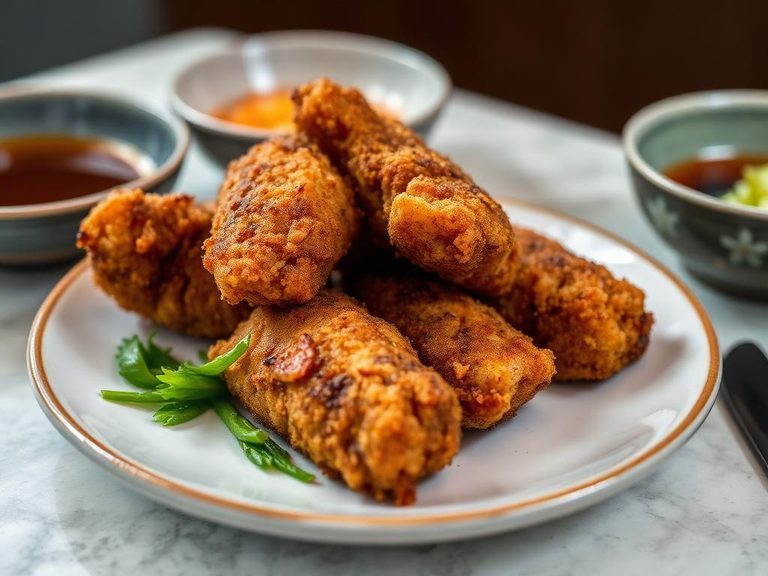
A lean, high-protein cut of chicken breast that has been coated (often in breadcrumbs or batter) and baked until the exterior is crisp and golden while the interior remains juicy and tender. It delivers a satisfying crunch with a mild, savory flavor and a dense, fibrous texture. Nutritionally, it's a powerhouse of protein with virtually no carbohydrates or sugar.
Calorie split: 71% protein · 0% carbs · 29% fat
↓ Full nutrition💚 Why it's loved
People adore it for the textural contrast—a shatteringly crisp coating giving way to moist, lean meat—and its role as a comforting, crowd-pleasing staple. Its mild flavor makes it a perfect canvas for everything from spicy buffalo sauce to herbed yogurt marinades.
⚠️ Watch-outs & how to enjoy it better
The coating can sometimes absorb excess oil if not baked properly, and the lean breast meat can dry out if overcooked. Those monitoring sodium should be aware that pre-made coatings or marinades can be high in salt. To counteract dryness, marinate before coating or use a meat thermometer to pull it out at 165°F (74°C). For sodium control, use homemade coatings with herbs and spices.
Key benefits
- Excellent source of complete protein for muscle maintenance and satiety.
- Very low in carbohydrates and sugar, suitable for low-carb diets.
- Baking reduces added fats compared to frying.
- Provides essential B vitamins like niacin and B6.
- A versatile base for many flavor profiles and cuisines.
🍽️ Popular dishes
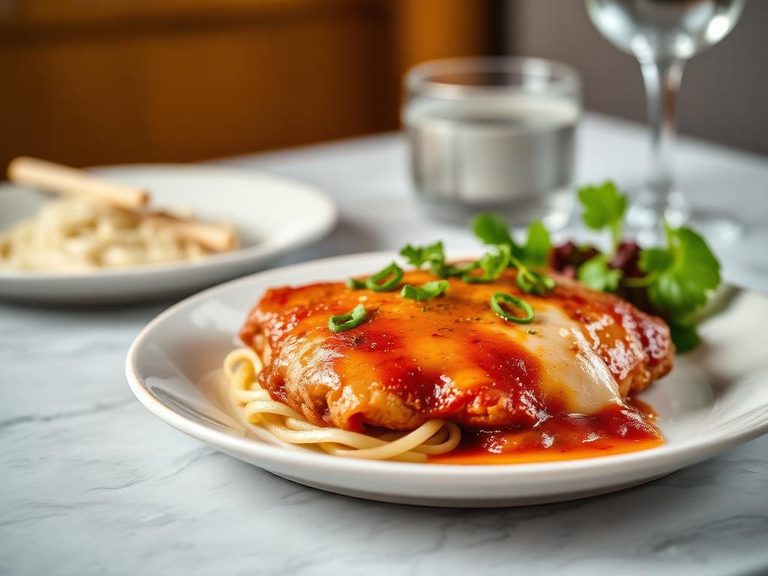
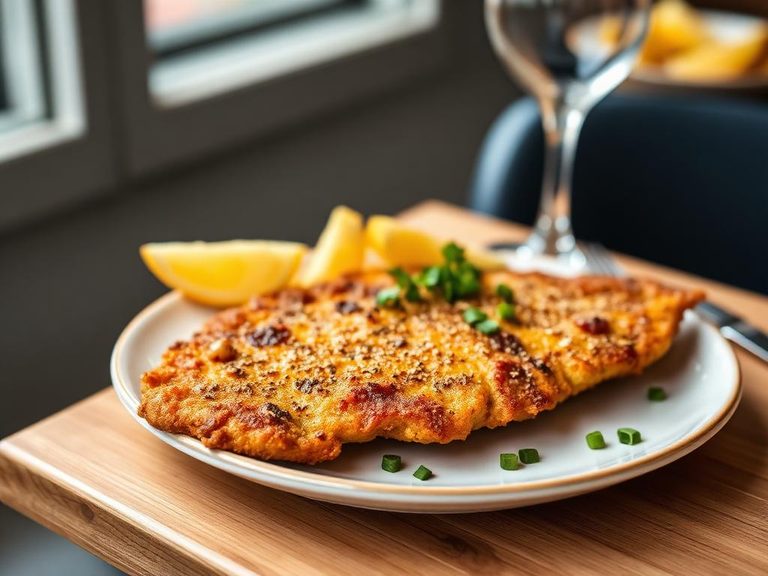
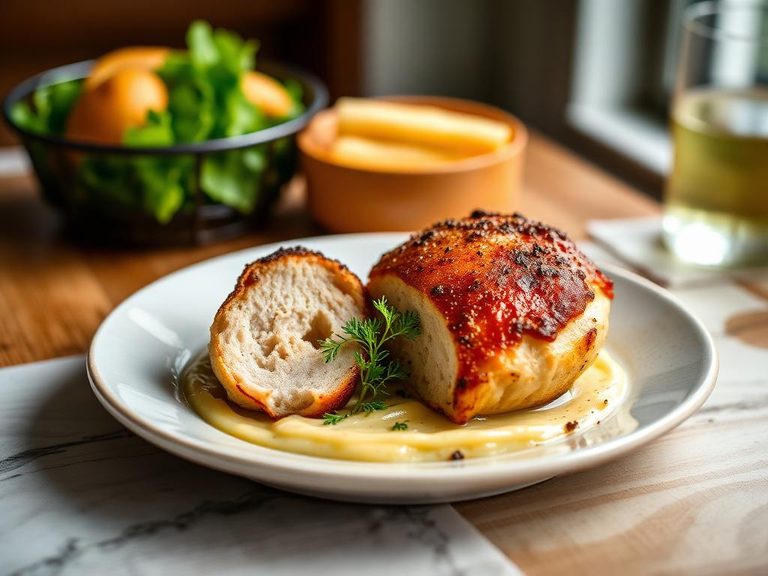
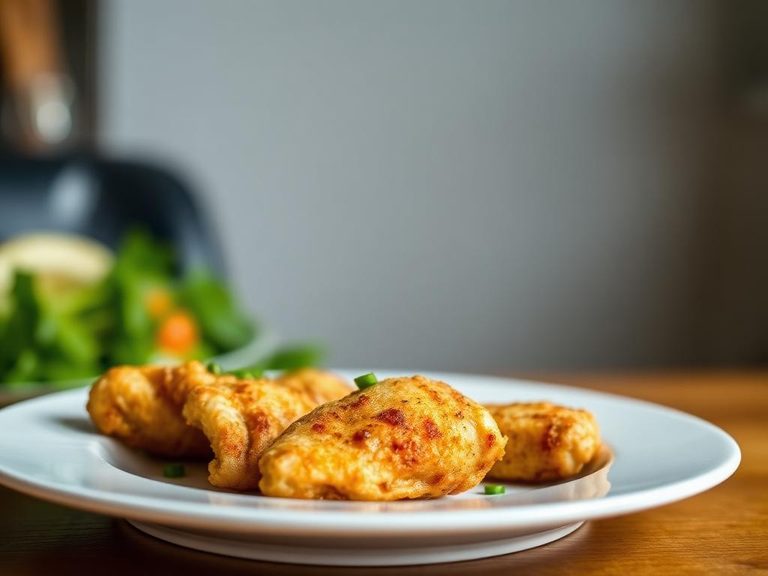
🌍 Where it's eaten
💡 Did you know?
The 'standard breading procedure' (flour, egg, breadcrumb) creates a barrier that helps seal in moisture, but the coating itself doesn't actually 'lock in juices' as commonly believed—it primarily provides texture and flavor.
Full nutrition (USDA data · scales with serving)
| Water | 62.9 g |
| Energy | 176 kcal |
| Protein | 29.6 g |
| Total lipid (fat) | 5.5 g |
| Carbohydrate, by difference | 0.00 g |
| Fiber, total dietary | 0.00 g |
| Total Sugars | 0.00 g |
| Calcium, Ca | 7.0 mg |
| Iron, Fe | 0.44 mg |
| Magnesium, Mg | 28.0 mg |
| Phosphorus, P | 224 mg |
| Potassium, K | 352 mg |
| Sodium, Na | 353 mg |
| Zinc, Zn | 0.90 mg |
| Copper, Cu | 0.05 mg |
| Selenium, Se | 30.0 ug |
| Vitamin C, total ascorbic acid | 0.00 mg |
| Thiamin | 0.09 mg |
| Riboflavin | 0.21 mg |
| Niacin | 10.1 mg |
| Vitamin B-6 | 0.85 mg |
| Folate, total | 7.0 ug |
| Folic acid | 0.00 ug |
| Folate, food | 7.0 ug |
| Folate, DFE | 7.0 ug |
| Choline, total | 75.7 mg |
| Vitamin B-12 | 0.18 ug |
| Vitamin B-12, added | 0.00 ug |
| Vitamin A, RAE | 9.0 ug |
| Retinol | 9.0 ug |
| Carotene, beta | 0.00 ug |
| Carotene, alpha | 0.00 ug |
| Cryptoxanthin, beta | 0.00 ug |
| Lycopene | 0.00 ug |
| Lutein + zeaxanthin | 0.00 ug |
| Vitamin E (alpha-tocopherol) | 1.1 mg |
| Vitamin E, added | 0.00 mg |
| Vitamin D (D2 + D3) | 0.00 ug |
| Vitamin K (phylloquinone) | 2.0 ug |
| Alcohol, ethyl | 0.00 g |
| Caffeine | 0.00 mg |
| Theobromine | 0.00 mg |
Fat & fatty acid profile (per 100g)
| Fatty acids, total saturated | 1.0 g |
| SFA 4:0 | 0.00 g |
| SFA 6:0 | 0.00 g |
| SFA 8:0 | 0.00 g |
| SFA 10:0 | 0.02 g |
| SFA 12:0 | 0.01 g |
| SFA 14:0 | 0.02 g |
| SFA 16:0 | 0.71 g |
| SFA 18:0 | 0.23 g |
| Fatty acids, total monounsaturated | 1.8 g |
| MUFA 16:1 | 0.12 g |
| MUFA 18:1 | 1.6 g |
| MUFA 20:1 | 0.03 g |
| MUFA 22:1 | 0.00 g |
| Fatty acids, total polyunsaturated | 1.3 g |
| PUFA 18:2 | 1.1 g |
| PUFA 18:3 | 0.10 g |
| PUFA 18:4 | 0.00 g |
| PUFA 20:4 | 0.06 g |
| PUFA 20:5 n-3 (EPA) | 0.00 g |
| PUFA 22:5 n-3 (DPA) | 0.01 g |
| PUFA 22:6 n-3 (DHA) | 0.01 g |
| Cholesterol | 96.0 mg |
Amino acid profile (per 100g)
Estimated from Chicken, broiler or fryers, breast, skinless, boneless, meat only, cooked, grilled — USDA does not publish this profile for Chicken breast.
| Tryptophan | 0.39 g |
| Threonine | 1.4 g |
| Isoleucine | 1.5 g |
| Leucine | 2.5 g |
| Lysine | 2.9 g |
| Methionine | 0.79 g |
| Cystine | 0.32 g |
| Phenylalanine | 1.2 g |
| Tyrosine | 1.1 g |
| Valine | 1.6 g |
| Arginine | 2.1 g |
| Histidine | 1.1 g |
| Alanine | 1.8 g |
| Aspartic acid | 2.9 g |
| Glutamic acid | 4.5 g |
| Glycine | 1.4 g |
| Proline | 0.97 g |
| Serine | 1.2 g |
FAQ
How do I keep the coating from getting soggy?
Ensure the chicken is patted dry before coating, use a wire rack on the baking sheet for air circulation, and avoid covering it while hot. Letting it rest for a minute after baking helps the crust set.
Is the nutritional info for the coating included?
Yes, the values (176 kcal, 29.62g protein) are for the final baked product with a standard breadcrumb coating, but the coating is not eaten per the description. If you eat the coating, calories and carbs will be higher.
Can I use this for meal prep?
Absolutely. It reheats well in an oven or air fryer to maintain crispness. Avoid microwaving, which can make the coating chewy. Store cooked pieces in a single layer in the fridge for up to 4 days.
Nutrient density (calculated · NRF9.3)
Nutrient Rich Foods index: beneficial nutrients (protein, fiber, vitamins, minerals) minus saturated fat, added sugar & sodium, per 100 kcal.
NRF9.3 index — Fulgoni, Keast & Drewnowski, 2009. Computed from USDA nutrients.
Weight-loss friendliness (composite index)
Energy density 1.76 kcal/g · 67% calories from protein · 0.0 g fiber · 0.0 g sugar per 100 g.
Composite of energy density (Rolls et al., 1999), protein & fiber satiety, minus sugar. A calculated heuristic — ranks satiety-per-calorie, not a clinical measure.
Dietary load (calculated from USDA values)
Potential renal acid load. Positive = acid-forming, negative = alkaline-forming.
Sodium-to-potassium ratio: 1.00 (lower is better — aim for ≤ 1)
Sodium:potassium per WHO potassium guidance. Computed from USDA nutrients.