

Chicken breast, fried, coated, skin / coating not eaten, from pre-cooked
Common food

Photo: Wikipedia
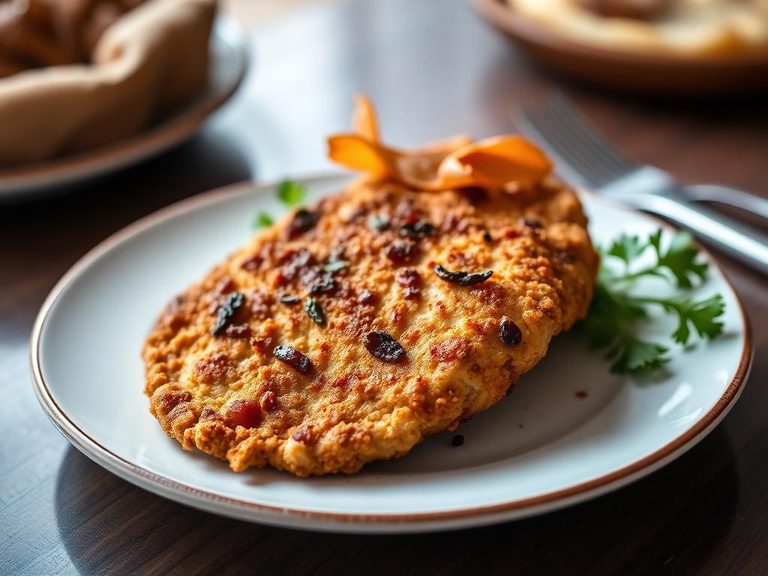
This is a lean, protein-packed cut of chicken breast that's been breaded or battered and fried until golden and crisp, then served without its skin or coating. The interior is famously tender and juicy, while the exterior offers a satisfying crunch. It delivers a high-protein, low-carb punch, making it a popular choice for those tracking macros.
Calorie split: 71% protein · 0% carbs · 29% fat
↓ Full nutrition💚 Why it's loved
People adore the universal appeal of its crispy, savory coating and the lean, satisfying protein inside. Its versatility makes it a staple in everything from quick weeknight dinners to gourmet sandwiches and salads across countless cuisines.
⚠️ Watch-outs & how to enjoy it better
The frying process can significantly increase sodium and fat content compared to grilled chicken, and the coating may be a concern for those monitoring refined carbs or gluten. To mitigate, pair it with fiber-rich vegetables, choose smaller portions, and look for versions air-fried or baked with whole-grain coatings.
Key benefits
- Excellent source of complete protein for muscle maintenance
- Very low in carbohydrates and sugars
- Provides a convenient, portable meal option
- Can be part of a balanced diet when prepared with minimal added fat
🍽️ Popular dishes
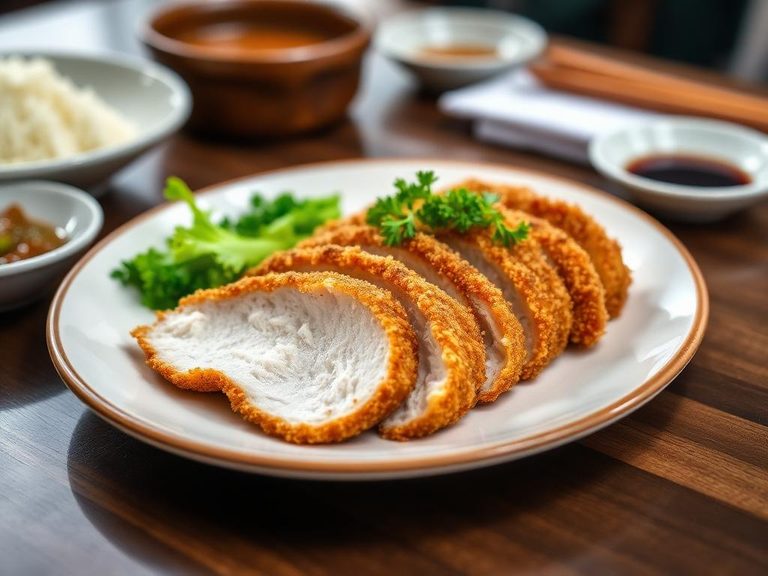
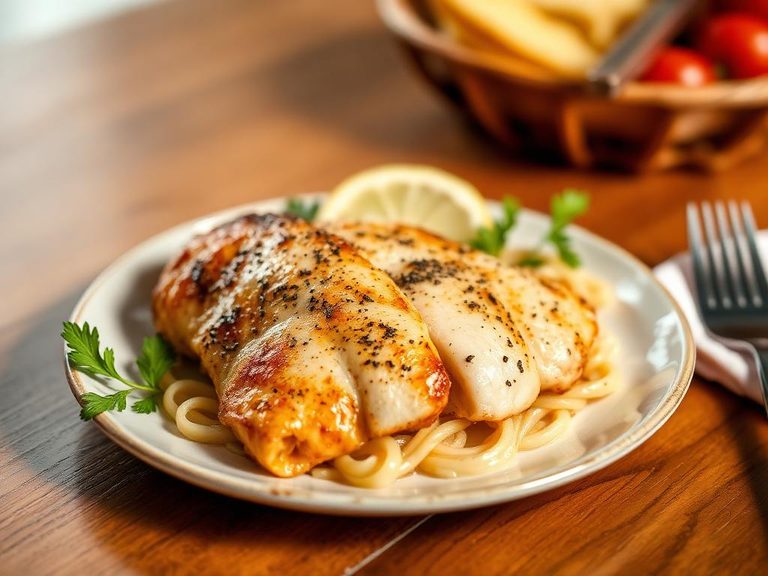
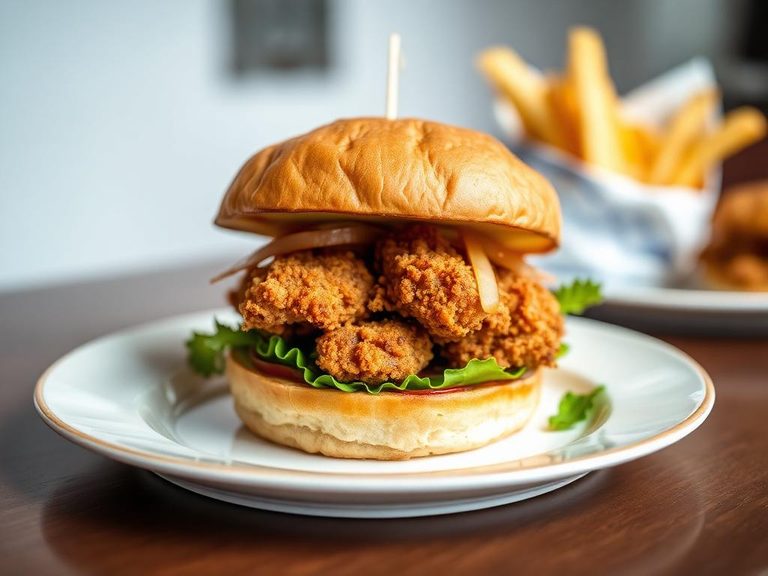
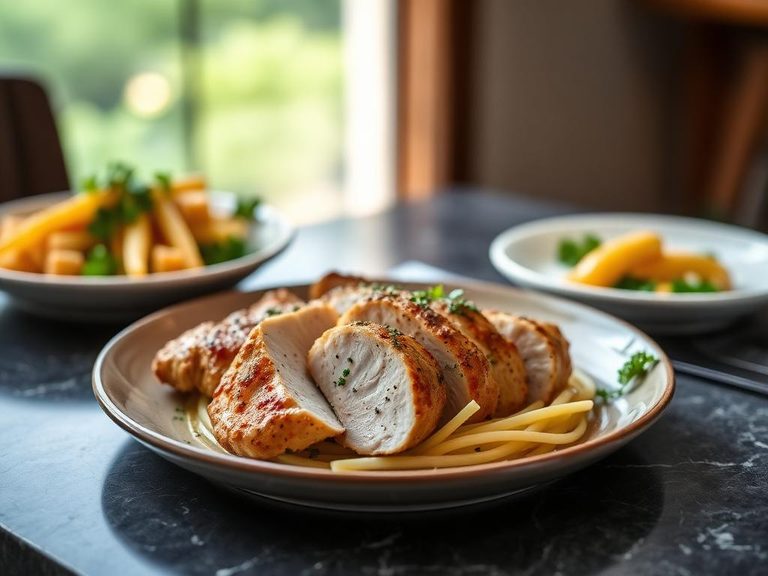
🌍 Where it's eaten
💡 Did you know?
The technique of pounding meat thin before frying, as seen in schnitzel and katsu, was historically a method to tenderize tougher cuts and ensure quick, even cooking over open flames.
Full nutrition (USDA data · scales with serving)
| Water | 62.9 g |
| Energy | 176 kcal |
| Protein | 29.6 g |
| Total lipid (fat) | 5.5 g |
| Carbohydrate, by difference | 0.00 g |
| Fiber, total dietary | 0.00 g |
| Total Sugars | 0.00 g |
| Calcium, Ca | 7.0 mg |
| Iron, Fe | 0.44 mg |
| Magnesium, Mg | 28.0 mg |
| Phosphorus, P | 224 mg |
| Potassium, K | 352 mg |
| Sodium, Na | 353 mg |
| Zinc, Zn | 0.90 mg |
| Copper, Cu | 0.05 mg |
| Selenium, Se | 30.0 ug |
| Vitamin C, total ascorbic acid | 0.00 mg |
| Thiamin | 0.09 mg |
| Riboflavin | 0.21 mg |
| Niacin | 10.1 mg |
| Vitamin B-6 | 0.85 mg |
| Folate, total | 7.0 ug |
| Folic acid | 0.00 ug |
| Folate, food | 7.0 ug |
| Folate, DFE | 7.0 ug |
| Choline, total | 75.7 mg |
| Vitamin B-12 | 0.18 ug |
| Vitamin B-12, added | 0.00 ug |
| Vitamin A, RAE | 9.0 ug |
| Retinol | 9.0 ug |
| Carotene, beta | 0.00 ug |
| Carotene, alpha | 0.00 ug |
| Cryptoxanthin, beta | 0.00 ug |
| Lycopene | 0.00 ug |
| Lutein + zeaxanthin | 0.00 ug |
| Vitamin E (alpha-tocopherol) | 1.1 mg |
| Vitamin E, added | 0.00 mg |
| Vitamin D (D2 + D3) | 0.00 ug |
| Vitamin K (phylloquinone) | 2.0 ug |
| Alcohol, ethyl | 0.00 g |
| Caffeine | 0.00 mg |
| Theobromine | 0.00 mg |
Fat & fatty acid profile (per 100g)
| Fatty acids, total saturated | 1.0 g |
| SFA 4:0 | 0.00 g |
| SFA 6:0 | 0.00 g |
| SFA 8:0 | 0.00 g |
| SFA 10:0 | 0.02 g |
| SFA 12:0 | 0.01 g |
| SFA 14:0 | 0.02 g |
| SFA 16:0 | 0.71 g |
| SFA 18:0 | 0.23 g |
| Fatty acids, total monounsaturated | 1.8 g |
| MUFA 16:1 | 0.12 g |
| MUFA 18:1 | 1.6 g |
| MUFA 20:1 | 0.03 g |
| MUFA 22:1 | 0.00 g |
| Fatty acids, total polyunsaturated | 1.3 g |
| PUFA 18:2 | 1.1 g |
| PUFA 18:3 | 0.10 g |
| PUFA 18:4 | 0.00 g |
| PUFA 20:4 | 0.06 g |
| PUFA 20:5 n-3 (EPA) | 0.00 g |
| PUFA 22:5 n-3 (DPA) | 0.01 g |
| PUFA 22:6 n-3 (DHA) | 0.01 g |
| Cholesterol | 96.0 mg |
Amino acid profile (per 100g)
Estimated from Chicken, broiler or fryers, breast, skinless, boneless, meat only, cooked, grilled — USDA does not publish this profile for Chicken breast.
| Tryptophan | 0.39 g |
| Threonine | 1.4 g |
| Isoleucine | 1.5 g |
| Leucine | 2.5 g |
| Lysine | 2.9 g |
| Methionine | 0.79 g |
| Cystine | 0.32 g |
| Phenylalanine | 1.2 g |
| Tyrosine | 1.1 g |
| Valine | 1.6 g |
| Arginine | 2.1 g |
| Histidine | 1.1 g |
| Alanine | 1.8 g |
| Aspartic acid | 2.9 g |
| Glutamic acid | 4.5 g |
| Glycine | 1.4 g |
| Proline | 0.97 g |
| Serine | 1.2 g |
FAQ
Is the nutritional info for the chicken only or the whole fried piece?
The data is for the edible portion after cooking, which includes the meat and any absorbed oil from the coating, but excludes any inedible skin or large pieces of coating that fall off.
Why is there 0g of carbs if it's coated?
The coating is often light and much of it may not adhere after cooking or frying. The nutritional analysis is for the final edible product, where the carb contribution from a thin coating can be minimal per 100g serving.
How can I make a healthier version at home?
Use an air fryer or oven with a light spray of oil, opt for a whole-grain breadcrumb or panko coating, and season with herbs and spices instead of salt.
Nutrient density (calculated · NRF9.3)
Nutrient Rich Foods index: beneficial nutrients (protein, fiber, vitamins, minerals) minus saturated fat, added sugar & sodium, per 100 kcal.
NRF9.3 index — Fulgoni, Keast & Drewnowski, 2009. Computed from USDA nutrients.
Weight-loss friendliness (composite index)
Energy density 1.76 kcal/g · 67% calories from protein · 0.0 g fiber · 0.0 g sugar per 100 g.
Composite of energy density (Rolls et al., 1999), protein & fiber satiety, minus sugar. A calculated heuristic — ranks satiety-per-calorie, not a clinical measure.
Dietary load (calculated from USDA values)
Potential renal acid load. Positive = acid-forming, negative = alkaline-forming.
Sodium-to-potassium ratio: 1.00 (lower is better — aim for ≤ 1)
Sodium:potassium per WHO potassium guidance. Computed from USDA nutrients.