

Cherries, raw
Common food
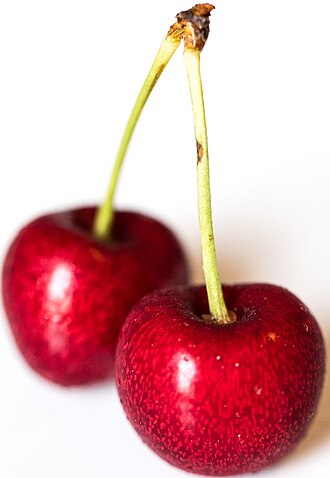
Photo: Wikipedia
Raw cherries are small, stone fruits with a glossy, deep-red skin and a juicy, tender flesh that offers a sweet-tart flavor profile. Their vibrant color and firm texture make them a quintessential summer snack, packed with natural sugars and a surprising amount of dietary fiber. Nutritionally, they are a low-fat, calorie-light source of quick energy, with a notable sugar content that contributes to their characteristic sweetness.
Calorie split: 6% protein · 92% carbs · 2% fat
↓ Full nutrition💚 Why it's loved
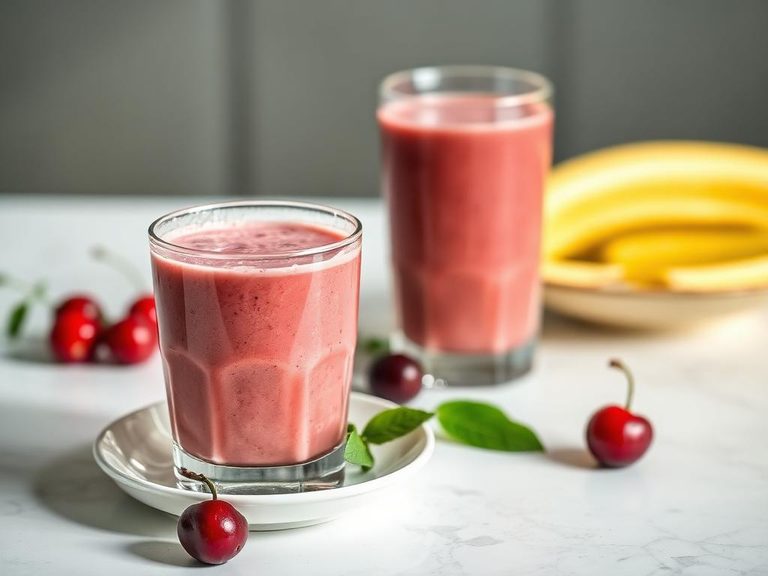
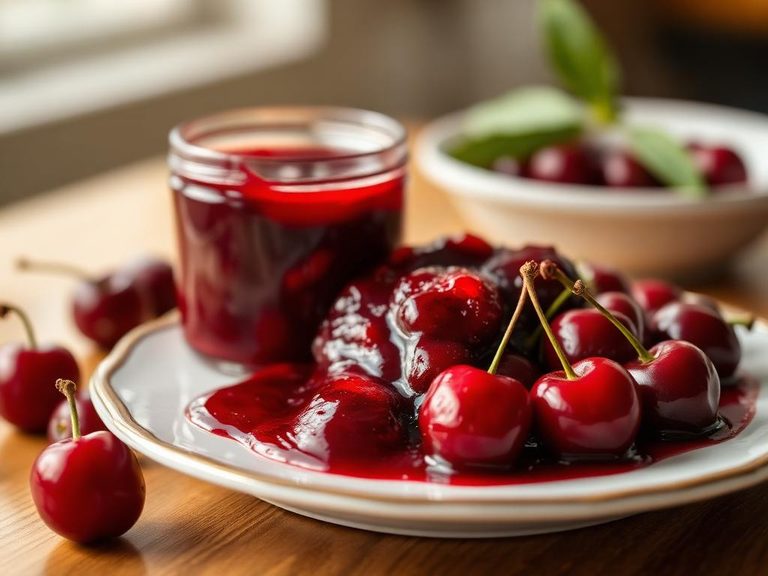
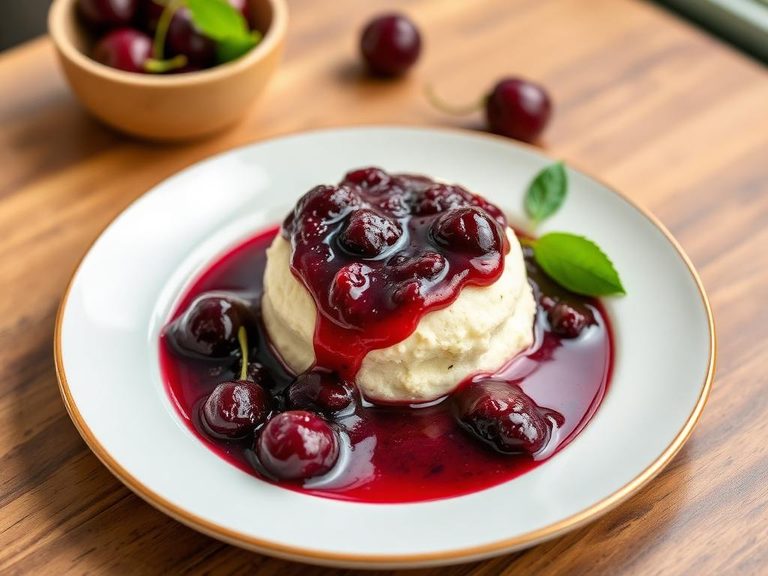
People adore cherries for their intense, balanced sweet-tart flavor and satisfying juicy crunch, making them a beloved seasonal treat. Their versatility shines in everything from fresh snacking to baking, cocktails, and savory sauces, deeply embedded in summer traditions and cultural festivals.
⚠️ Watch-outs & how to enjoy it better
The high natural sugar content (13.87g per 100g) can cause blood-sugar spikes if consumed in large quantities, especially for those with insulin sensitivity. To counteract this, pair cherries with a source of protein or healthy fat, like a handful of almonds or a dollop of Greek yogurt, and practice portion control by sticking to a single cup serving.
Key benefits
- High in dietary fiber (2.1g per 100g) for digestive health.
- Rich in antioxidants like anthocyanins, which give them their red color.
- Low in fat (0.19g per 100g) and a good source of quick energy from natural sugars.
- Contains vitamin C and potassium, supporting immune function and heart health.
🍽️ Popular dishes



🌍 Where it's eaten
💡 Did you know?
The sweet cherry (Prunus avium) is believed to have originated in the region between the Black and Caspian Seas, and its cultivation spread along ancient trade routes, including the Silk Road.
Full nutrition (USDA data · scales with serving)
| Water | 82.2 g |
| Energy | 71.0 kcal |
| Protein | 1.0 g |
| Total lipid (fat) | 0.19 g |
| Carbohydrate, by difference | 16.2 g |
| Fiber, total dietary | 2.1 g |
| Total Sugars | 13.9 g |
| Calcium, Ca | 12.0 mg |
| Iron, Fe | 0.11 mg |
| Magnesium, Mg | 12.0 mg |
| Phosphorus, P | 23.0 mg |
| Potassium, K | 230 mg |
| Sodium, Na | 0.00 mg |
| Zinc, Zn | 0.06 mg |
| Copper, Cu | 0.07 mg |
| Selenium, Se | 0.00 ug |
| Vitamin C, total ascorbic acid | 10.4 mg |
| Thiamin | 0.03 mg |
| Riboflavin | 0.03 mg |
| Niacin | 0.15 mg |
| Vitamin B-6 | 0.05 mg |
| Folate, total | 4.0 ug |
| Folic acid | 0.00 ug |
| Folate, food | 4.0 ug |
| Folate, DFE | 4.0 ug |
| Choline, total | 6.1 mg |
| Vitamin B-12 | 0.00 ug |
| Vitamin B-12, added | 0.00 ug |
| Vitamin A, RAE | 3.0 ug |
| Retinol | 0.00 ug |
| Carotene, beta | 38.0 ug |
| Carotene, alpha | 0.00 ug |
| Cryptoxanthin, beta | 0.00 ug |
| Lycopene | 0.00 ug |
| Lutein + zeaxanthin | 85.0 ug |
| Vitamin E (alpha-tocopherol) | 0.07 mg |
| Vitamin E, added | 0.00 mg |
| Vitamin D (D2 + D3) | 0.00 ug |
| Vitamin K (phylloquinone) | 2.1 ug |
| Alcohol, ethyl | 0.00 g |
| Caffeine | 0.00 mg |
| Theobromine | 0.00 mg |
Fat & fatty acid profile (per 100g)
| Fatty acids, total saturated | 0.04 g |
| SFA 4:0 | 0.00 g |
| SFA 6:0 | 0.00 g |
| SFA 8:0 | 0.00 g |
| SFA 10:0 | 0.00 g |
| SFA 12:0 | 0.00 g |
| SFA 14:0 | 0.00 g |
| SFA 16:0 | 0.03 g |
| SFA 18:0 | 0.01 g |
| Fatty acids, total monounsaturated | 0.05 g |
| MUFA 16:1 | 0.00 g |
| MUFA 18:1 | 0.05 g |
| MUFA 20:1 | 0.00 g |
| MUFA 22:1 | 0.00 g |
| Fatty acids, total polyunsaturated | 0.05 g |
| PUFA 18:2 | 0.03 g |
| PUFA 18:3 | 0.03 g |
| PUFA 18:4 | 0.00 g |
| PUFA 20:4 | 0.00 g |
| PUFA 20:5 n-3 (EPA) | 0.00 g |
| PUFA 22:5 n-3 (DPA) | 0.00 g |
| PUFA 22:6 n-3 (DHA) | 0.00 g |
| Cholesterol | 0.00 mg |
Amino acid profile (per 100g)
Estimated from Cherries, sweet, raw — USDA does not publish this profile for Cherries.
| Tryptophan | 0.01 g |
| Threonine | 0.02 g |
| Isoleucine | 0.02 g |
| Leucine | 0.03 g |
| Lysine | 0.03 g |
| Methionine | 0.01 g |
| Cystine | 0.01 g |
| Phenylalanine | 0.02 g |
| Tyrosine | 0.01 g |
| Valine | 0.02 g |
| Arginine | 0.02 g |
| Histidine | 0.01 g |
| Alanine | 0.03 g |
| Aspartic acid | 0.57 g |
| Glutamic acid | 0.08 g |
| Glycine | 0.02 g |
| Proline | 0.04 g |
| Serine | 0.03 g |
FAQ
Are cherries good for sleep?
Yes, cherries, particularly tart varieties, are a natural source of melatonin and may help regulate sleep cycles when consumed regularly.
Can I eat cherries if I have diabetes?
Cherries have a moderate glycemic index and are high in fiber, which can help manage blood sugar, but portion control is key due to their sugar content.
How should I store fresh cherries?
Keep them unwashed in a breathable container in the refrigerator for up to a week; wash just before eating to prevent mold.
Nutrient density (calculated · NRF9.3)
Nutrient Rich Foods index: beneficial nutrients (protein, fiber, vitamins, minerals) minus saturated fat, added sugar & sodium, per 100 kcal.
NRF9.3 index — Fulgoni, Keast & Drewnowski, 2009. Computed from USDA nutrients.
Weight-loss friendliness (composite index)
Energy density 0.71 kcal/g · 6% calories from protein · 2.1 g fiber · 13.9 g sugar per 100 g.
Composite of energy density (Rolls et al., 1999), protein & fiber satiety, minus sugar. A calculated heuristic — ranks satiety-per-calorie, not a clinical measure.
Dietary load (calculated from USDA values)
Potential renal acid load. Positive = acid-forming, negative = alkaline-forming.
Sodium-to-potassium ratio: 0.00 (lower is better — aim for ≤ 1)
Sodium:potassium per WHO potassium guidance. Computed from USDA nutrients.