

Cherries, sweet, dark red, raw
Whole food · Fruits and Fruit Juices
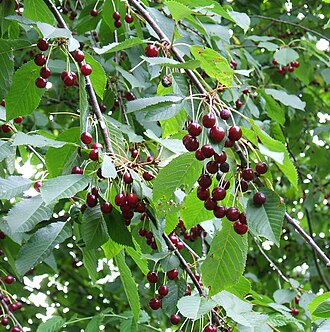
Photo: Wikipedia
The dark red sweet cherry is a jewel-toned stone fruit with a taut, glossy skin that gives way to juicy, dense flesh and a subtle almond-like note near the pit. Nutritionally, it's a low-calorie, hydrating snack offering a quick source of natural carbohydrates for energy. Its deep color signals a wealth of plant compounds, though the provided data highlights its role as a light, refreshing fruit.
Calorie split: 6% protein · 92% carbs · 2% fat
↓ Full nutrition💚 Why it's loved
People love them for their perfect balance of sweetness and slight tartness, along with the satisfying pop of the skin and burst of juice. They are a beloved seasonal treat, often evoking summer traditions and featured in both sweet and savory culinary applications.
⚠️ Watch-outs & how to enjoy it better
Due to their natural sugar content, they can cause a rapid rise in blood sugar if eaten in large quantities, which is a consideration for those managing diabetes. To mitigate this, pair a small handful (about 15-20 cherries) with a source of protein or healthy fat like a handful of almonds or a dollop of Greek yogurt to slow digestion.
Key benefits
- Provides quick, natural energy from carbohydrates
- Very low in fat and a good source of hydration
- Contains plant compounds associated with the dark red pigment
- Offers a satisfying, sweet flavor without added sugars
- A convenient, portable, no-prep snack
🍽️ Popular dishes



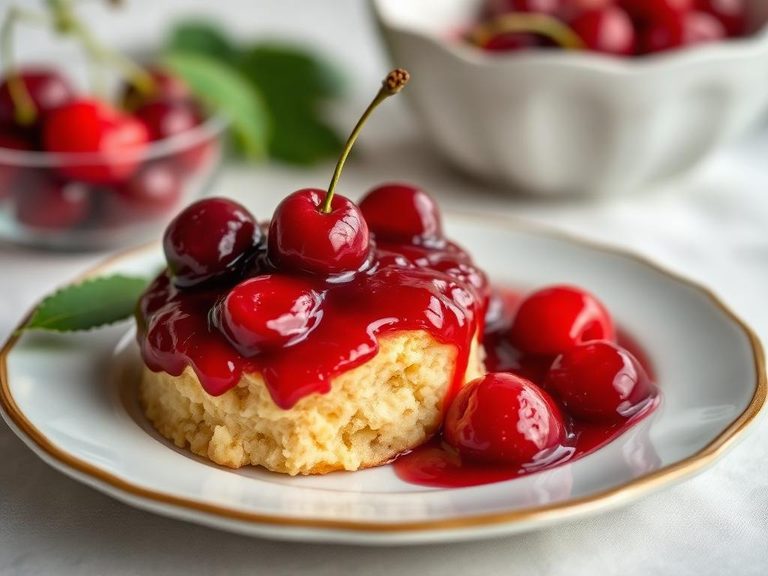
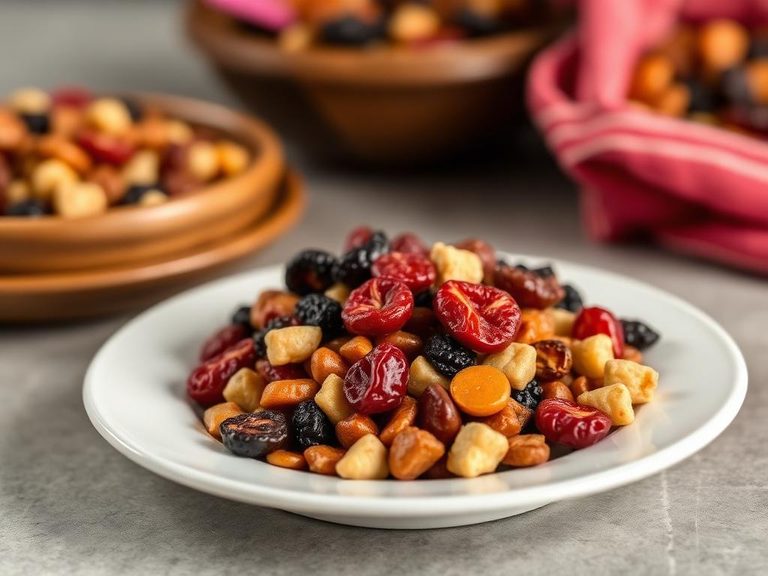
🌍 Where it's eaten
💡 Did you know?
The pigment that gives dark red cherries their color, anthocyanin, is concentrated in the skin, so eating them whole maximizes your intake of these compounds.
Full nutrition (USDA data · scales with serving)
| Water | 82.2 g |
| Energy (Atwater General Factors) | 70.5 kcal |
| Energy (Atwater Specific Factors) | 63.3 kcal |
| Nitrogen | 0.17 g |
| Protein | 1.0 g |
| Total lipid (fat) | 0.19 g |
| Ash | 0.42 g |
| Carbohydrate, by difference | 16.2 g |
| Sugars, Total | 13.9 g |
| Sucrose | 0.00 g |
| Glucose | 8.4 g |
| Fructose | 5.5 g |
| Lactose | 0.00 g |
| Maltose | 0.00 g |
| Citric acid | 0.00 mg |
| Malic acid | 762 mg |
| Oxalic acid | 0.00 mg |
| Pyruvic acid | 0.00 mg |
| Quinic acid | 0.00 mg |
| Calcium, Ca | 12.3 mg |
| Iron, Fe | 0.11 mg |
| Magnesium, Mg | 12.1 mg |
| Phosphorus, P | 23.3 mg |
| Potassium, K | 230 mg |
| Sodium, Na | 0.00 mg |
| Zinc, Zn | 0.06 mg |
| Copper, Cu | 0.07 mg |
| Manganese, Mn | 0.07 mg |
| Molybdenum, Mo | 0.97 ug |
| Vitamin C, total ascorbic acid | 10.4 mg |
| Vitamin B-6 | 0.05 mg |
Fat & fatty acid profile (per 100g)
Estimated from Cherries, sweet, raw — USDA does not publish this profile for Cherries.
| Fatty acids, total saturated | 0.04 g |
| SFA 4:0 | 0.00 g |
| SFA 6:0 | 0.00 g |
| SFA 8:0 | 0.00 g |
| SFA 10:0 | 0.00 g |
| SFA 12:0 | 0.00 g |
| SFA 14:0 | 0.00 g |
| SFA 16:0 | 0.03 g |
| SFA 18:0 | 0.01 g |
| Fatty acids, total monounsaturated | 0.05 g |
| MUFA 16:1 | 0.00 g |
| MUFA 18:1 | 0.05 g |
| MUFA 20:1 | 0.00 g |
| MUFA 22:1 | 0.00 g |
| Fatty acids, total polyunsaturated | 0.05 g |
| PUFA 18:2 | 0.03 g |
| PUFA 18:3 | 0.03 g |
| PUFA 18:4 | 0.00 g |
| PUFA 20:4 | 0.00 g |
| PUFA 20:5 n-3 (EPA) | 0.00 g |
| PUFA 22:5 n-3 (DPA) | 0.00 g |
| PUFA 22:6 n-3 (DHA) | 0.00 g |
| Fatty acids, total trans | 0.00 g |
| Cholesterol | 0.00 mg |
| Phytosterols | 12.0 mg |
Amino acid profile (per 100g)
Estimated from Cherries, sweet, raw — USDA does not publish this profile for Cherries.
| Tryptophan | 0.01 g |
| Threonine | 0.02 g |
| Isoleucine | 0.02 g |
| Leucine | 0.03 g |
| Lysine | 0.03 g |
| Methionine | 0.01 g |
| Cystine | 0.01 g |
| Phenylalanine | 0.02 g |
| Tyrosine | 0.01 g |
| Valine | 0.02 g |
| Arginine | 0.02 g |
| Histidine | 0.01 g |
| Alanine | 0.03 g |
| Aspartic acid | 0.57 g |
| Glutamic acid | 0.08 g |
| Glycine | 0.02 g |
| Proline | 0.04 g |
| Serine | 0.03 g |
FAQ
How do I choose the best cherries?
Look for cherries that are plump, firm, and have a deep, uniform color with glossy skin. The stems should be green and flexible, not brown or brittle, which indicates freshness.
What's the best way to store them?
Keep them unwashed in a breathable container or bag in the refrigerator's crisper drawer. They are highly perishable and are best enjoyed within a few days of purchase.
Are canned or frozen cherries as nutritious?
Frozen cherries retain most of their nutrients and are a great year-round option. Canned cherries, especially those in syrup, often have added sugars and a softer texture, so check labels carefully.
Nutrient density (calculated · NRF9.3)
Nutrient Rich Foods index: beneficial nutrients (protein, fiber, vitamins, minerals) minus saturated fat, added sugar & sodium, per 100 kcal.
NRF9.3 index — Fulgoni, Keast & Drewnowski, 2009. Computed from USDA nutrients.
Weight-loss friendliness (composite index)
Energy density 0.71 kcal/g · 6% calories from protein · 0.0 g fiber · 0.0 g sugar per 100 g.
Composite of energy density (Rolls et al., 1999), protein & fiber satiety, minus sugar. A calculated heuristic — ranks satiety-per-calorie, not a clinical measure.
Dietary load (calculated from USDA values)
Potential renal acid load. Positive = acid-forming, negative = alkaline-forming.
Sodium-to-potassium ratio: 0.00 (lower is better — aim for ≤ 1)
Sodium:potassium per WHO potassium guidance. Computed from USDA nutrients.