

Cheese, Swiss, reduced sodium
Common food
This is a firm, pale-yellow cheese known for its signature 'eyes' (holes) and a smooth, slightly springy texture. It offers a sweet, nutty flavor with a mild, clean finish that becomes more pronounced with age. Nutritionally, it's a powerhouse of high-quality protein with significantly less sodium than its traditional counterpart.
Calorie split: 30% protein · 4% carbs · 66% fat
↓ Full nutrition💚 Why it's loved
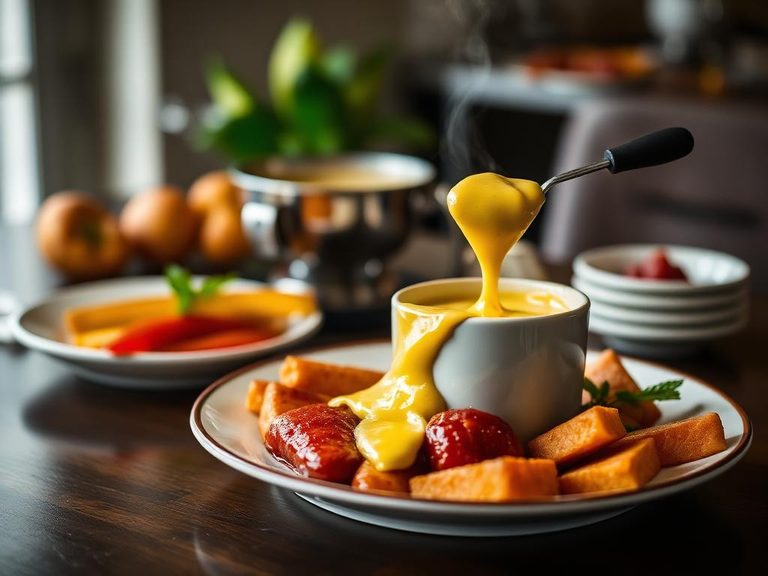
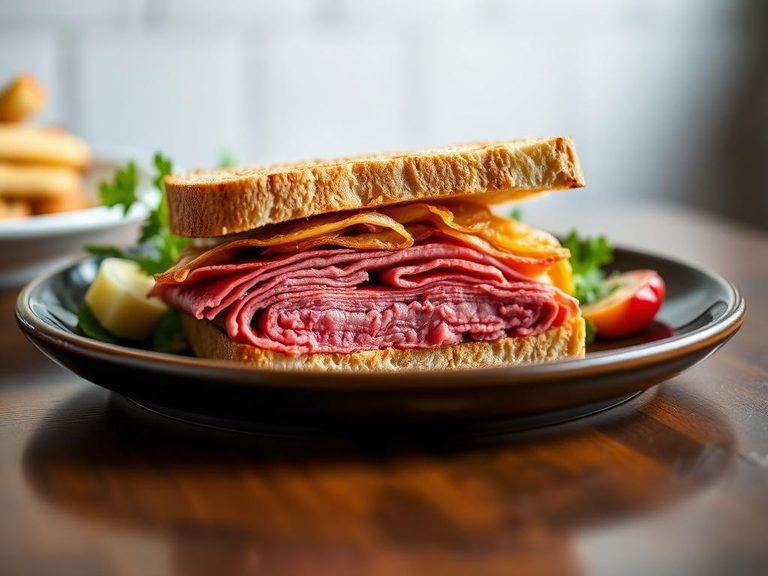
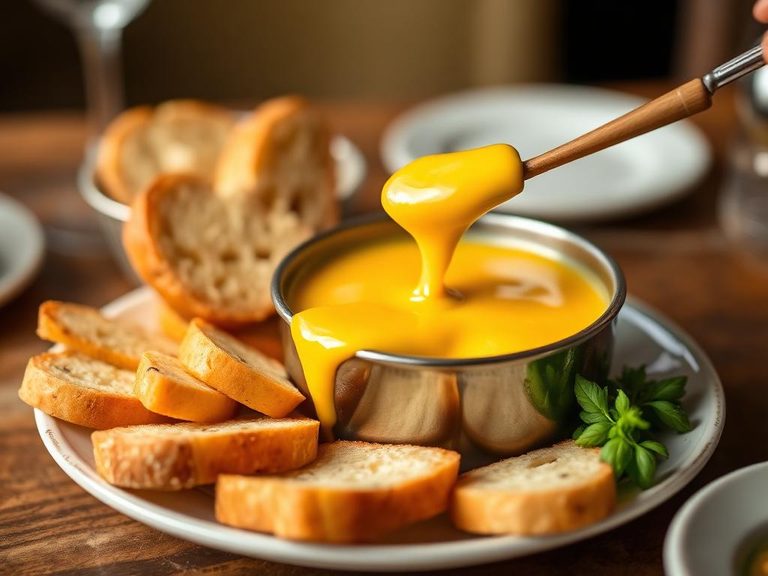
People love it for its versatile, approachable flavor that melts beautifully without being overly oily. It's a cultural staple, famously associated with Swiss fondue and the classic Reuben sandwich.
⚠️ Watch-outs & how to enjoy it better
As a dairy product, it's a common allergen for those with lactose intolerance or milk protein allergies. Its reduced sodium is a benefit, but it's still a high-fat, calorie-dense food, so portion control is key. Tip: Pair it with fiber-rich vegetables or whole-grain bread to create a more balanced meal.
Key benefits
- Excellent source of complete protein for muscle maintenance.
- Naturally low in carbohydrates, making it keto-friendly.
- Good source of calcium for bone health.
- Reduced sodium content supports heart-healthy diets.
- Provides vitamin B12 and phosphorus.
🍽️ Popular dishes

🌍 Where it's eaten
💡 Did you know?
The holes in Swiss cheese are formed by bacteria that release carbon dioxide during aging, which gets trapped and creates bubbles; the reduced sodium version maintains this process.
Full nutrition (USDA data · scales with serving)
| Water | 37.8 g |
| Energy | 374 kcal |
| Protein | 28.4 g |
| Total lipid (fat) | 27.4 g |
| Carbohydrate, by difference | 3.4 g |
| Fiber, total dietary | 0.00 g |
| Total Sugars | 1.3 g |
| Calcium, Ca | 961 mg |
| Iron, Fe | 0.17 mg |
| Magnesium, Mg | 36.0 mg |
| Phosphorus, P | 605 mg |
| Potassium, K | 111 mg |
| Sodium, Na | 14.0 mg |
| Zinc, Zn | 3.9 mg |
| Copper, Cu | 0.03 mg |
| Selenium, Se | 12.5 ug |
| Vitamin C, total ascorbic acid | 0.00 mg |
| Thiamin | 0.02 mg |
| Riboflavin | 0.37 mg |
| Niacin | 0.09 mg |
| Vitamin B-6 | 0.08 mg |
| Folate, total | 6.0 ug |
| Folic acid | 0.00 ug |
| Folate, food | 6.0 ug |
| Folate, DFE | 6.0 ug |
| Choline, total | 15.4 mg |
| Vitamin B-12 | 1.7 ug |
| Vitamin B-12, added | 0.00 ug |
| Vitamin A, RAE | 216 ug |
| Retinol | 211 ug |
| Carotene, beta | 69.0 ug |
| Carotene, alpha | 0.00 ug |
| Cryptoxanthin, beta | 0.00 ug |
| Lycopene | 0.00 ug |
| Lutein + zeaxanthin | 0.00 ug |
| Vitamin E (alpha-tocopherol) | 0.37 mg |
| Vitamin E, added | 0.00 mg |
| Vitamin D (D2 + D3) | 0.50 ug |
| Vitamin K (phylloquinone) | 2.4 ug |
| Alcohol, ethyl | 0.00 g |
| Caffeine | 0.00 mg |
| Theobromine | 0.00 mg |
Fat & fatty acid profile (per 100g)
| Fatty acids, total saturated | 17.7 g |
| SFA 4:0 | 1.1 g |
| SFA 6:0 | 0.49 g |
| SFA 8:0 | 0.29 g |
| SFA 10:0 | 0.62 g |
| SFA 12:0 | 0.52 g |
| SFA 14:0 | 3.1 g |
| SFA 16:0 | 7.8 g |
| SFA 18:0 | 3.2 g |
| Fatty acids, total monounsaturated | 7.3 g |
| MUFA 16:1 | 0.88 g |
| MUFA 18:1 | 6.0 g |
| MUFA 20:1 | 0.00 g |
| MUFA 22:1 | 0.00 g |
| Fatty acids, total polyunsaturated | 0.97 g |
| PUFA 18:2 | 0.62 g |
| PUFA 18:3 | 0.35 g |
| PUFA 18:4 | 0.00 g |
| PUFA 20:4 | 0.00 g |
| PUFA 20:5 n-3 (EPA) | 0.00 g |
| PUFA 22:5 n-3 (DPA) | 0.00 g |
| PUFA 22:6 n-3 (DHA) | 0.00 g |
| Cholesterol | 92.0 mg |
Amino acid profile (per 100g)
Estimated from Crackers, cheese, sandwich-type with cheese filling — USDA does not publish this profile for Cheese.
| Tryptophan | 0.11 g |
| Threonine | 0.33 g |
| Isoleucine | 0.36 g |
| Leucine | 0.64 g |
| Lysine | 0.39 g |
| Methionine | 0.15 g |
| Cystine | 0.15 g |
| Phenylalanine | 0.35 g |
| Tyrosine | 0.25 g |
| Valine | 0.38 g |
| Arginine | 0.29 g |
| Histidine | 0.17 g |
| Alanine | 0.30 g |
| Aspartic acid | 0.52 g |
| Glutamic acid | 2.2 g |
| Glycine | 0.24 g |
| Proline | 0.77 g |
| Serine | 0.40 g |
FAQ
How does reduced sodium Swiss cheese taste compared to regular?
It tastes very similar but slightly milder and less salty, allowing the characteristic sweet, nutty flavors to come through more clearly.
Can I use it for fondue?
Yes, it works well, though you might want to add a pinch of salt to the fondue mixture to compensate for the lower sodium content.
Is it lactose-free?
Most aged Swiss cheeses are very low in lactose, but not completely free. Those with severe lactose intolerance should check the label or consult a doctor.
Nutrient density (calculated · NRF9.3)
Nutrient Rich Foods index: beneficial nutrients (protein, fiber, vitamins, minerals) minus saturated fat, added sugar & sodium, per 100 kcal.
NRF9.3 index — Fulgoni, Keast & Drewnowski, 2009. Computed from USDA nutrients.
Weight-loss friendliness (composite index)
Energy density 3.74 kcal/g · 30% calories from protein · 0.0 g fiber · 1.3 g sugar per 100 g.
Composite of energy density (Rolls et al., 1999), protein & fiber satiety, minus sugar. A calculated heuristic — ranks satiety-per-calorie, not a clinical measure.
Dietary load (calculated from USDA values)
Potential renal acid load. Positive = acid-forming, negative = alkaline-forming.
Sodium-to-potassium ratio: 0.13 (lower is better — aim for ≤ 1)
Sodium:potassium per WHO potassium guidance. Computed from USDA nutrients.