

Cheese, processed, with vegetables
Common food

Photo: Wikipedia
This is a smooth, melty processed cheese product, often sold in slices or blocks, that has been blended with finely chopped vegetables like peppers, pimentos, or jalapeños. It offers a creamy, salty, and savory base with a mild, fresh vegetable note and a soft, pliable texture designed for easy melting. Nutritionally, it's a dense source of fat and protein, providing a substantial calorie boost from a relatively small serving.
Calorie split: 16% protein · 4% carbs · 80% fat
↓ Full nutrition💚 Why it's loved
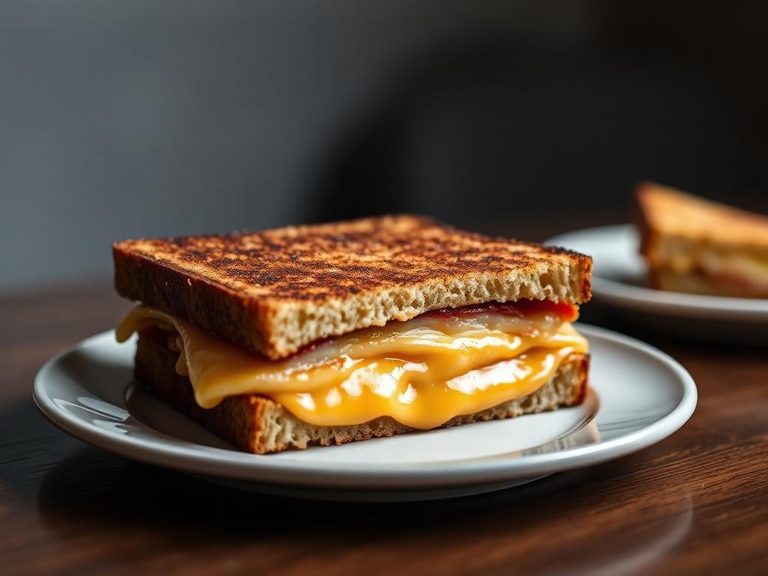
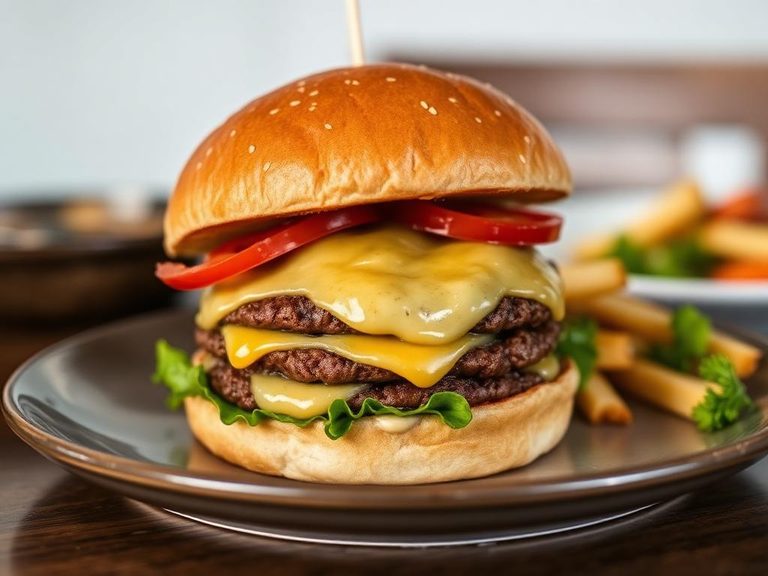
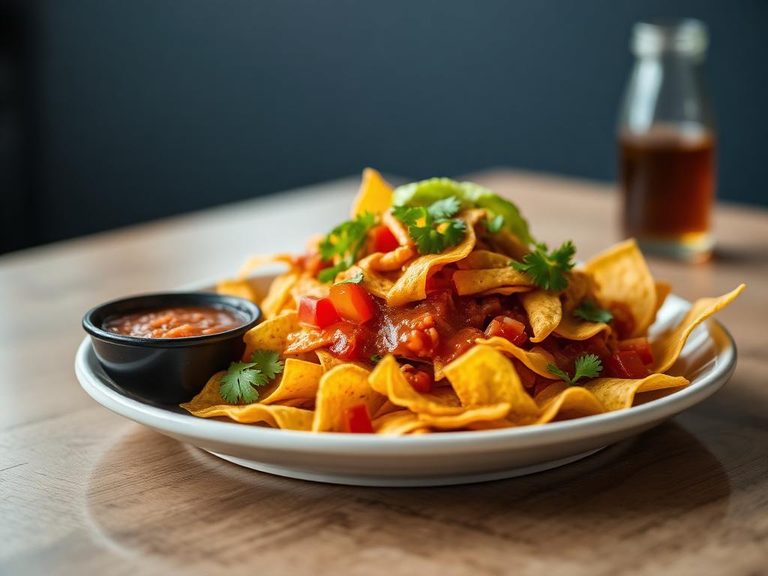
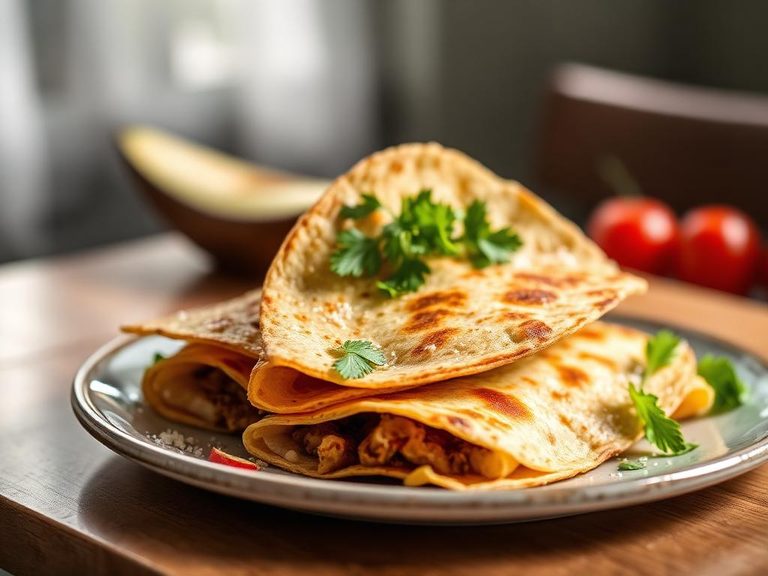
People love it for its unparalleled convenience and reliable meltability, making it a go-to for quick sandwiches, burgers, and nachos. Its mild, savory flavor with a hint of vegetable freshness is a comforting and familiar taste in many casual meals.
⚠️ Watch-outs & how to enjoy it better
It is typically high in sodium and saturated fat, which should be considered by those monitoring heart health or blood pressure. The processing can also reduce the natural complexity of cheese flavor. To counteract this, use it as a flavor accent rather than the main ingredient, pair it with fiber-rich whole grains or fresh vegetables, and be mindful of portion size.
Key benefits
- Excellent source of calcium for bone health
- Provides a significant amount of high-quality protein
- Convenient, shelf-stable, and quick to prepare
- Offers a consistent, mild flavor profile that's widely palatable
- The added vegetables contribute minor amounts of vitamins and color
🍽️ Popular dishes


🌍 Where it's eaten
💡 Did you know?
The process for making modern processed cheese was invented in Switzerland in 1916 by Walter Gerber, who wanted to create a cheese with a longer shelf life that wouldn't separate when heated.
Full nutrition (USDA data · scales with serving)
| Water | 47.0 g |
| Energy | 356 kcal |
| Protein | 14.1 g |
| Total lipid (fat) | 31.7 g |
| Carbohydrate, by difference | 3.5 g |
| Fiber, total dietary | 0.10 g |
| Total Sugars | 2.0 g |
| Calcium, Ca | 393 mg |
| Iron, Fe | 0.16 mg |
| Magnesium, Mg | 18.0 mg |
| Phosphorus, P | 275 mg |
| Potassium, K | 101 mg |
| Sodium, Na | 946 mg |
| Zinc, Zn | 2.1 mg |
| Copper, Cu | 0.02 mg |
| Selenium, Se | 17.8 ug |
| Vitamin C, total ascorbic acid | 4.2 mg |
| Thiamin | 0.03 mg |
| Riboflavin | 0.32 mg |
| Niacin | 0.10 mg |
| Vitamin B-6 | 0.06 mg |
| Folate, total | 15.0 ug |
| Folic acid | 0.00 ug |
| Folate, food | 15.0 ug |
| Folate, DFE | 15.0 ug |
| Choline, total | 20.4 mg |
| Vitamin B-12 | 0.52 ug |
| Vitamin B-12, added | 0.00 ug |
| Vitamin A, RAE | 285 ug |
| Retinol | 278 ug |
| Carotene, beta | 73.0 ug |
| Carotene, alpha | 12.0 ug |
| Cryptoxanthin, beta | 0.00 ug |
| Lycopene | 0.00 ug |
| Lutein + zeaxanthin | 21.0 ug |
| Vitamin E (alpha-tocopherol) | 0.79 mg |
| Vitamin E, added | 0.00 mg |
| Vitamin D (D2 + D3) | 0.30 ug |
| Vitamin K (phylloquinone) | 2.5 ug |
| Alcohol, ethyl | 0.00 g |
| Caffeine | 0.00 mg |
| Theobromine | 0.00 mg |
Fat & fatty acid profile (per 100g)
| Fatty acids, total saturated | 18.2 g |
| SFA 4:0 | 0.64 g |
| SFA 6:0 | 0.53 g |
| SFA 8:0 | 0.34 g |
| SFA 10:0 | 0.80 g |
| SFA 12:0 | 0.93 g |
| SFA 14:0 | 3.0 g |
| SFA 16:0 | 8.4 g |
| SFA 18:0 | 3.0 g |
| Fatty acids, total monounsaturated | 6.8 g |
| MUFA 16:1 | 0.55 g |
| MUFA 18:1 | 7.1 g |
| MUFA 20:1 | 0.06 g |
| MUFA 22:1 | 0.00 g |
| Fatty acids, total polyunsaturated | 1.3 g |
| PUFA 18:2 | 0.90 g |
| PUFA 18:3 | 0.12 g |
| PUFA 18:4 | 0.00 g |
| PUFA 20:4 | 0.05 g |
| PUFA 20:5 n-3 (EPA) | 0.01 g |
| PUFA 22:5 n-3 (DPA) | 0.02 g |
| PUFA 22:6 n-3 (DHA) | 0.00 g |
| Cholesterol | 94.0 mg |
Amino acid profile (per 100g)
Estimated from Crackers, cheese, sandwich-type with cheese filling — USDA does not publish this profile for Cheese.
| Tryptophan | 0.11 g |
| Threonine | 0.33 g |
| Isoleucine | 0.36 g |
| Leucine | 0.64 g |
| Lysine | 0.39 g |
| Methionine | 0.15 g |
| Cystine | 0.15 g |
| Phenylalanine | 0.35 g |
| Tyrosine | 0.25 g |
| Valine | 0.38 g |
| Arginine | 0.29 g |
| Histidine | 0.17 g |
| Alanine | 0.30 g |
| Aspartic acid | 0.52 g |
| Glutamic acid | 2.2 g |
| Glycine | 0.24 g |
| Proline | 0.77 g |
| Serine | 0.40 g |
FAQ
How is this different from natural cheese?
Processed cheese is made by blending natural cheeses with emulsifying salts, milk, and other ingredients to create a smooth, uniform product that melts evenly without separating. Natural cheese is made directly from milk and cultures.
Can I freeze it?
Yes, processed cheese freezes well. The texture may become slightly crumbly upon thawing, making it best suited for cooking and melting rather than eating cold.
Why does it melt so perfectly?
The emulsifying salts (like sodium citrate) bind to the calcium in the cheese proteins, preventing them from clumping together when heated. This allows the fat and water to stay evenly mixed, resulting in a smooth, creamy melt.
Nutrient density (calculated · NRF9.3)
Nutrient Rich Foods index: beneficial nutrients (protein, fiber, vitamins, minerals) minus saturated fat, added sugar & sodium, per 100 kcal.
NRF9.3 index — Fulgoni, Keast & Drewnowski, 2009. Computed from USDA nutrients.
Weight-loss friendliness (composite index)
Energy density 3.56 kcal/g · 16% calories from protein · 0.1 g fiber · 2.0 g sugar per 100 g.
Composite of energy density (Rolls et al., 1999), protein & fiber satiety, minus sugar. A calculated heuristic — ranks satiety-per-calorie, not a clinical measure.
Dietary load (calculated from USDA values)
Potential renal acid load. Positive = acid-forming, negative = alkaline-forming.
Sodium-to-potassium ratio: 9.37 (lower is better — aim for ≤ 1)
Sodium:potassium per WHO potassium guidance. Computed from USDA nutrients.