

Cheese, processed cheese food
Common food
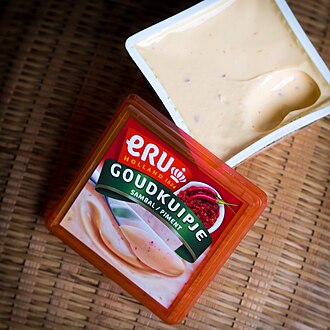
Photo: Wikipedia
Processed cheese food is a smooth, meltable product made by blending natural cheeses with emulsifying salts and other ingredients. Its texture is creamy and uniform, with a mild, salty flavor that melts without separating. Nutritionally, it provides a significant source of protein and fat, with a notable calorie density of 307 kcal per 100g.
Calorie split: 21% protein · 12% carbs · 68% fat
↓ Full nutrition💚 Why it's loved
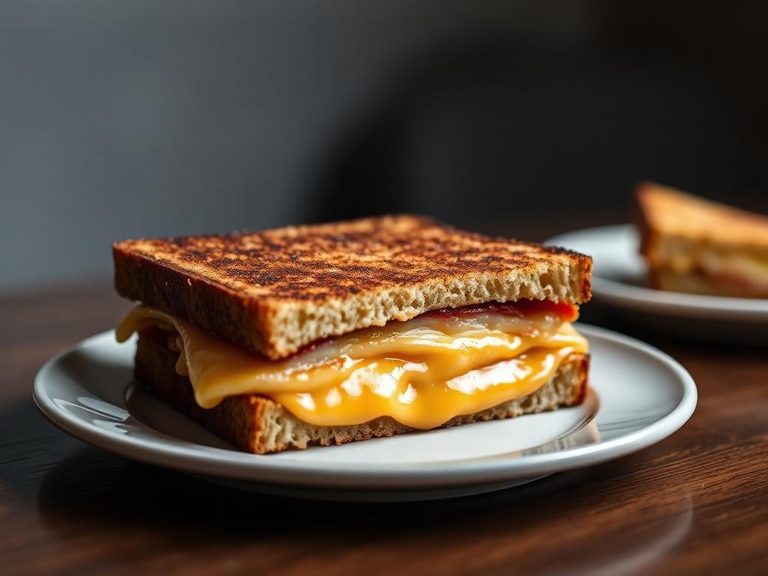
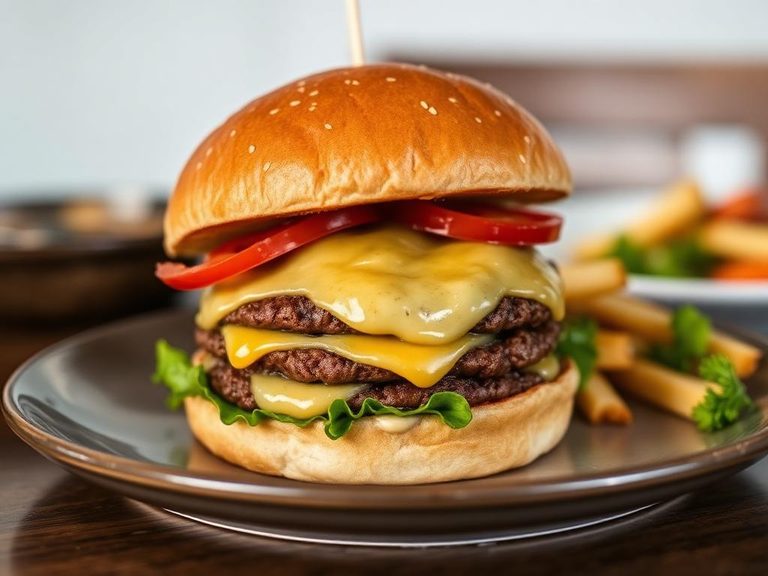
People love its unmatched meltability and consistent, mild flavor that enhances dishes like grilled cheese sandwiches and burgers. Its convenience and reliability in cooking make it a staple in both home kitchens and fast-food chains.
⚠️ Watch-outs & how to enjoy it better
It is often high in sodium and may contain additives, which can be a concern for those monitoring salt intake or preferring minimally processed foods. To counteract this, pair it with potassium-rich vegetables like spinach or broccoli, and practice portion control by using it as a flavor enhancer rather than a main ingredient.
Key benefits
- Excellent source of complete protein (16.09g per 100g)
- High in calcium and phosphorus for bone health
- Melts smoothly and consistently, ideal for cooking
- Long shelf life and convenient for food service
- Provides a quick source of energy from fats and carbs
🍽️ Popular dishes

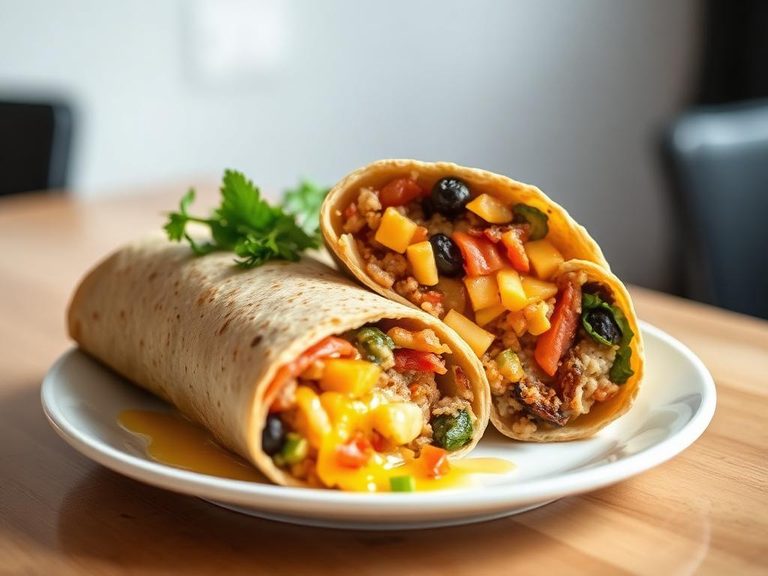
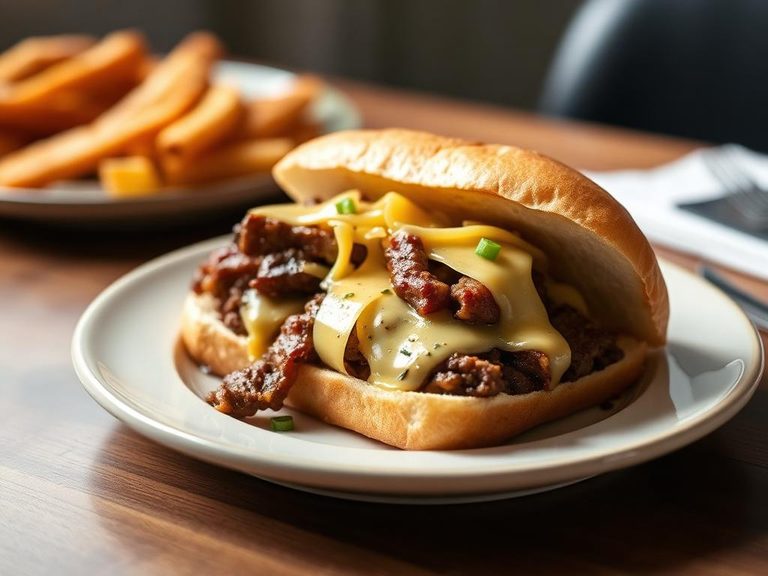
🌍 Where it's eaten
💡 Did you know?
Processed cheese was invented in 1916 by Canadian-American entrepreneur James L. Kraft, who patented the process of making it shelf-stable and sliceable, revolutionizing the cheese industry.
Full nutrition (USDA data · scales with serving)
| Water | 45.1 g |
| Energy | 307 kcal |
| Protein | 16.1 g |
| Total lipid (fat) | 23.1 g |
| Carbohydrate, by difference | 8.8 g |
| Fiber, total dietary | 0.00 g |
| Total Sugars | 6.2 g |
| Calcium, Ca | 1375 mg |
| Iron, Fe | 0.95 mg |
| Magnesium, Mg | 34.0 mg |
| Phosphorus, P | 768 mg |
| Potassium, K | 295 mg |
| Sodium, Na | 1279 mg |
| Zinc, Zn | 2.2 mg |
| Copper, Cu | 0.03 mg |
| Selenium, Se | 16.2 ug |
| Vitamin C, total ascorbic acid | 0.00 mg |
| Thiamin | 0.04 mg |
| Riboflavin | 0.42 mg |
| Niacin | 0.17 mg |
| Vitamin B-6 | 0.12 mg |
| Folate, total | 18.0 ug |
| Folic acid | 0.00 ug |
| Folate, food | 18.0 ug |
| Folate, DFE | 18.0 ug |
| Choline, total | 35.8 mg |
| Vitamin B-12 | 1.5 ug |
| Vitamin B-12, added | 0.00 ug |
| Vitamin A, RAE | 270 ug |
| Retinol | 248 ug |
| Carotene, beta | 248 ug |
| Carotene, alpha | 1.0 ug |
| Cryptoxanthin, beta | 23.0 ug |
| Lycopene | 0.00 ug |
| Lutein + zeaxanthin | 60.0 ug |
| Vitamin E (alpha-tocopherol) | 0.84 mg |
| Vitamin E, added | 0.00 mg |
| Vitamin D (D2 + D3) | 6.5 ug |
| Vitamin K (phylloquinone) | 3.1 ug |
| Alcohol, ethyl | 0.00 g |
| Caffeine | 0.00 mg |
| Theobromine | 0.00 mg |
Fat & fatty acid profile (per 100g)
| Fatty acids, total saturated | 12.9 g |
| SFA 4:0 | 0.44 g |
| SFA 6:0 | 0.37 g |
| SFA 8:0 | 0.24 g |
| SFA 10:0 | 0.57 g |
| SFA 12:0 | 0.68 g |
| SFA 14:0 | 2.1 g |
| SFA 16:0 | 5.9 g |
| SFA 18:0 | 2.2 g |
| Fatty acids, total monounsaturated | 5.7 g |
| MUFA 16:1 | 0.38 g |
| MUFA 18:1 | 5.0 g |
| MUFA 20:1 | 0.04 g |
| MUFA 22:1 | 0.00 g |
| Fatty acids, total polyunsaturated | 0.99 g |
| PUFA 18:2 | 0.80 g |
| PUFA 18:3 | 0.10 g |
| PUFA 18:4 | 0.01 g |
| PUFA 20:4 | 0.03 g |
| PUFA 20:5 n-3 (EPA) | 0.01 g |
| PUFA 22:5 n-3 (DPA) | 0.01 g |
| PUFA 22:6 n-3 (DHA) | 0.00 g |
| Cholesterol | 78.0 mg |
Amino acid profile (per 100g)
Estimated from Crackers, cheese, sandwich-type with cheese filling — USDA does not publish this profile for Cheese.
| Tryptophan | 0.11 g |
| Threonine | 0.33 g |
| Isoleucine | 0.36 g |
| Leucine | 0.64 g |
| Lysine | 0.39 g |
| Methionine | 0.15 g |
| Cystine | 0.15 g |
| Phenylalanine | 0.35 g |
| Tyrosine | 0.25 g |
| Valine | 0.38 g |
| Arginine | 0.29 g |
| Histidine | 0.17 g |
| Alanine | 0.30 g |
| Aspartic acid | 0.52 g |
| Glutamic acid | 2.2 g |
| Glycine | 0.24 g |
| Proline | 0.77 g |
| Serine | 0.40 g |
FAQ
Is processed cheese food the same as American cheese?
Yes, processed cheese food is commonly known as American cheese, though it can include other varieties like Swiss or cheddar blends.
Why does processed cheese melt so well?
It contains emulsifying salts like sodium citrate that prevent the proteins and fats from separating, resulting in a smooth, creamy melt.
Can processed cheese food be part of a healthy diet?
In moderation, it can provide protein and calcium, but it's best to balance it with whole foods and watch sodium intake.
Nutrient density (calculated · NRF9.3)
Nutrient Rich Foods index: beneficial nutrients (protein, fiber, vitamins, minerals) minus saturated fat, added sugar & sodium, per 100 kcal.
NRF9.3 index — Fulgoni, Keast & Drewnowski, 2009. Computed from USDA nutrients.
Weight-loss friendliness (composite index)
Energy density 3.07 kcal/g · 21% calories from protein · 0.0 g fiber · 6.2 g sugar per 100 g.
Composite of energy density (Rolls et al., 1999), protein & fiber satiety, minus sugar. A calculated heuristic — ranks satiety-per-calorie, not a clinical measure.
Dietary load (calculated from USDA values)
Potential renal acid load. Positive = acid-forming, negative = alkaline-forming.
Sodium-to-potassium ratio: 4.34 (lower is better — aim for ≤ 1)
Sodium:potassium per WHO potassium guidance. Computed from USDA nutrients.