

Cheese, Port du Salut
Common food

Photo: Wikipedia
Port du Salut is a semi-soft, washed-rind cheese from the Pays de la Loire region of France, known for its smooth, pale-yellow interior and thin, orange-tinged edible rind. It has a mild, creamy, and slightly salty flavor with a supple, melt-in-your-mouth texture that becomes firmer as it ages. Nutritionally, it is a dense source of protein and fat, providing nearly 28 grams of fat and 25 grams of protein per 100 grams.
Calorie split: 28% protein · 2% carbs · 69% fat
↓ Full nutrition💚 Why it's loved
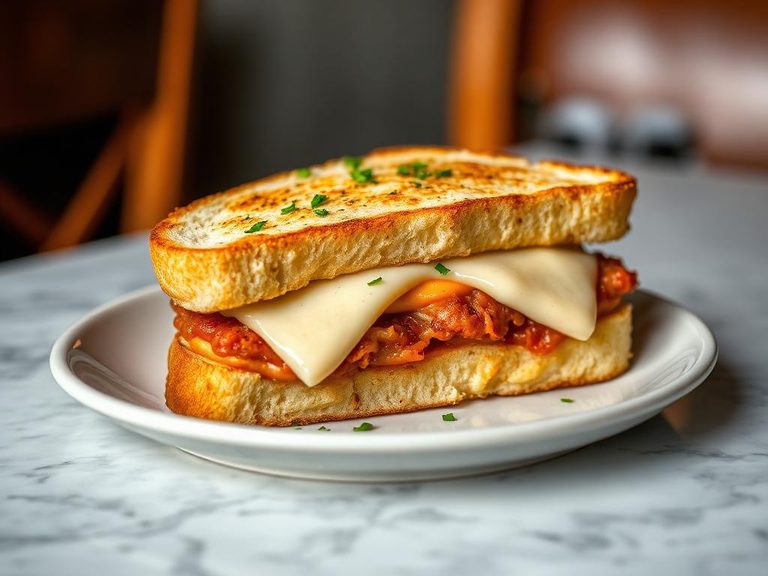
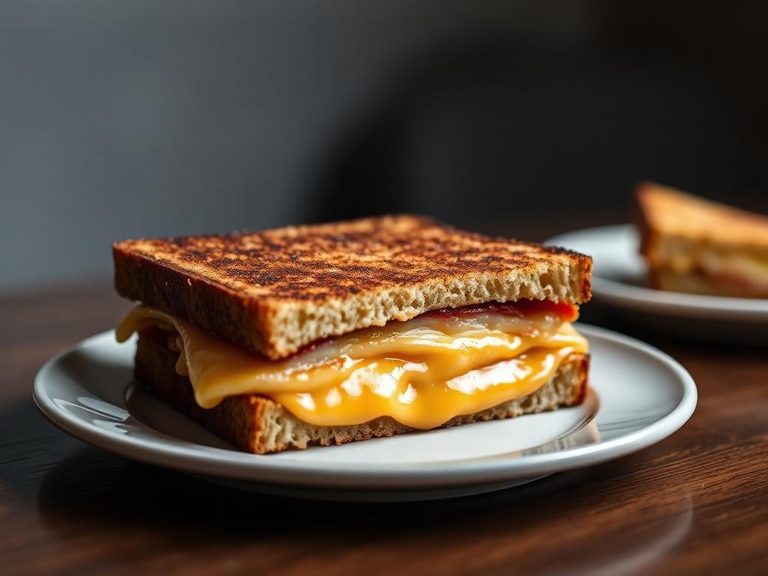
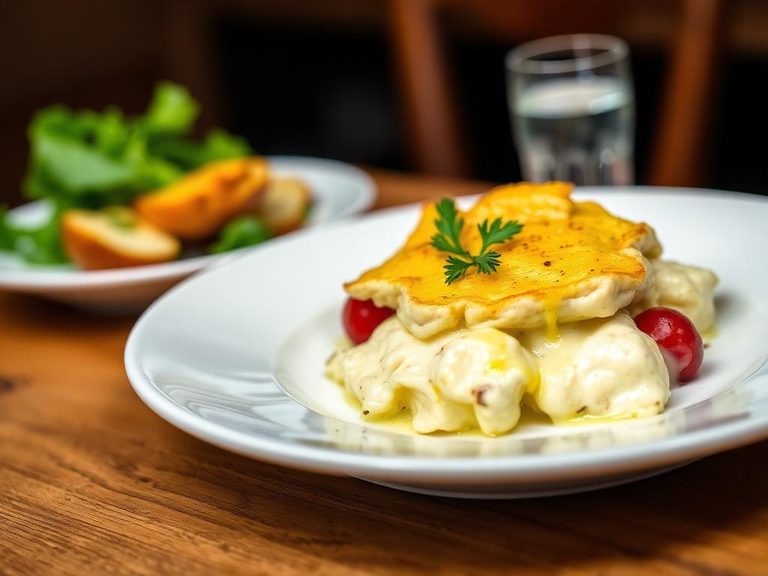
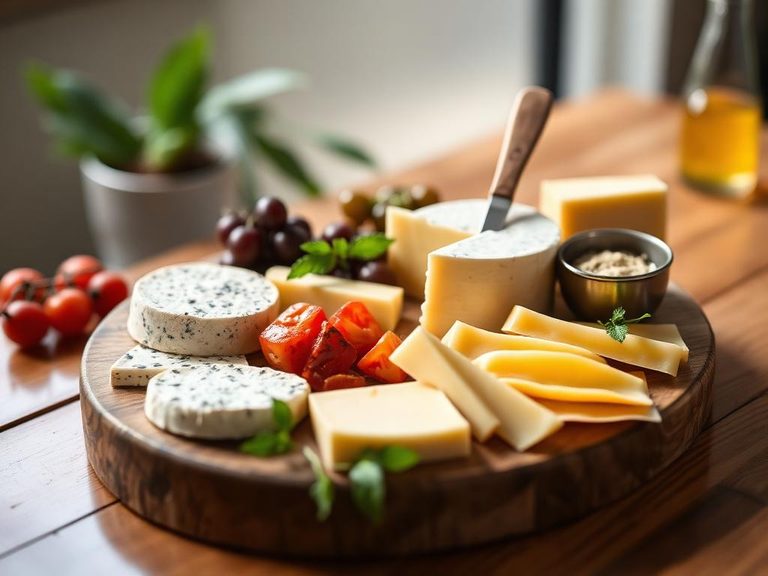
People adore Port du Salut for its perfectly balanced, approachable flavor—it's rich and buttery without being overwhelming, making it a crowd-pleaser for both cheese connoisseurs and casual eaters. Its exceptional melting quality and versatility make it a staple in everything from elegant cheese boards to comforting, gooey grilled sandwiches.
⚠️ Watch-outs & how to enjoy it better
Its high saturated fat and calorie density require mindful portioning, especially for those monitoring heart health or calorie intake. As a dairy product, it contains lactose and milk proteins, making it unsuitable for those with lactose intolerance or a dairy allergy. To counteract, pair small portions with high-fiber foods like whole-grain crackers or fruit to promote satiety, and opt for lactase supplements if you have mild intolerance.
Key benefits
- Excellent source of complete protein for muscle maintenance.
- Rich in calcium and phosphorus for bone health.
- Provides fat-soluble vitamins like Vitamin A and B12.
- Contains conjugated linoleic acid (CLA) from grass-fed sources.
- Offers probiotics from its washed-rind aging process.
🍽️ Popular dishes
🌍 Where it's eaten
💡 Did you know?
The cheese is named after the Port-du-Salut Abbey, but its original Trappist monks' recipe was actually developed in a monastery in Entrammes, France.
Full nutrition (USDA data · scales with serving)
| Water | 41.5 g |
| Energy | 356 kcal |
| Protein | 24.9 g |
| Total lipid (fat) | 27.4 g |
| Carbohydrate, by difference | 2.2 g |
| Fiber, total dietary | 0.00 g |
| Total Sugars | 2.2 g |
| Calcium, Ca | 700 mg |
| Iron, Fe | 0.24 mg |
| Magnesium, Mg | 29.0 mg |
| Phosphorus, P | 546 mg |
| Potassium, K | 121 mg |
| Sodium, Na | 819 mg |
| Zinc, Zn | 3.9 mg |
| Copper, Cu | 0.04 mg |
| Selenium, Se | 14.5 ug |
| Vitamin C, total ascorbic acid | 0.00 mg |
| Thiamin | 0.03 mg |
| Riboflavin | 0.33 mg |
| Niacin | 0.06 mg |
| Vitamin B-6 | 0.08 mg |
| Folate, total | 21.0 ug |
| Folic acid | 0.00 ug |
| Folate, food | 21.0 ug |
| Folate, DFE | 21.0 ug |
| Choline, total | 15.4 mg |
| Vitamin B-12 | 1.5 ug |
| Vitamin B-12, added | 0.00 ug |
| Vitamin A, RAE | 165 ug |
| Retinol | 164 ug |
| Carotene, beta | 10.0 ug |
| Carotene, alpha | 0.00 ug |
| Cryptoxanthin, beta | 0.00 ug |
| Lycopene | 0.00 ug |
| Lutein + zeaxanthin | 0.00 ug |
| Vitamin E (alpha-tocopherol) | 0.24 mg |
| Vitamin E, added | 0.00 mg |
| Vitamin D (D2 + D3) | 0.50 ug |
| Vitamin K (phylloquinone) | 2.3 ug |
| Alcohol, ethyl | 0.00 g |
| Caffeine | 0.00 mg |
| Theobromine | 0.00 mg |
Fat & fatty acid profile (per 100g)
| Fatty acids, total saturated | 17.6 g |
| SFA 4:0 | 1.00 g |
| SFA 6:0 | 0.64 g |
| SFA 8:0 | 0.43 g |
| SFA 10:0 | 0.92 g |
| SFA 12:0 | 1.2 g |
| SFA 14:0 | 3.0 g |
| SFA 16:0 | 6.9 g |
| SFA 18:0 | 2.9 g |
| Fatty acids, total monounsaturated | 7.7 g |
| MUFA 16:1 | 0.89 g |
| MUFA 18:1 | 6.4 g |
| MUFA 20:1 | 0.00 g |
| MUFA 22:1 | 0.00 g |
| Fatty acids, total polyunsaturated | 0.66 g |
| PUFA 18:2 | 0.26 g |
| PUFA 18:3 | 0.39 g |
| PUFA 18:4 | 0.00 g |
| PUFA 20:4 | 0.00 g |
| PUFA 20:5 n-3 (EPA) | 0.00 g |
| PUFA 22:5 n-3 (DPA) | 0.00 g |
| PUFA 22:6 n-3 (DHA) | 0.00 g |
| Cholesterol | 114 mg |
Amino acid profile (per 100g)
Estimated from Crackers, cheese, sandwich-type with cheese filling — USDA does not publish this profile for Cheese.
| Tryptophan | 0.11 g |
| Threonine | 0.33 g |
| Isoleucine | 0.36 g |
| Leucine | 0.64 g |
| Lysine | 0.39 g |
| Methionine | 0.15 g |
| Cystine | 0.15 g |
| Phenylalanine | 0.35 g |
| Tyrosine | 0.25 g |
| Valine | 0.38 g |
| Arginine | 0.29 g |
| Histidine | 0.17 g |
| Alanine | 0.30 g |
| Aspartic acid | 0.52 g |
| Glutamic acid | 2.2 g |
| Glycine | 0.24 g |
| Proline | 0.77 g |
| Serine | 0.40 g |
FAQ
What is the difference between Port du Salut and similar cheeses like Havarti or Edam?
Port du Salut is a French washed-rind cheese, giving it a distinctive savory, slightly meaty rind and a creamier interior compared to the milder, often waxed Danish Havarti or Dutch Edam.
How should I store and serve Port du Salut?
Store it wrapped in its original wax paper or parchment inside a loose plastic bag in the refrigerator. For the best flavor, let it come to room temperature for about 30-60 minutes before serving.
Is the rind edible?
Yes, the thin, orange-pink rind is edible and adds a slightly more pungent, savory flavor to the cheese. However, it can be trimmed off if you prefer a milder taste.
Nutrient density (calculated · NRF9.3)
Nutrient Rich Foods index: beneficial nutrients (protein, fiber, vitamins, minerals) minus saturated fat, added sugar & sodium, per 100 kcal.
NRF9.3 index — Fulgoni, Keast & Drewnowski, 2009. Computed from USDA nutrients.
Weight-loss friendliness (composite index)
Energy density 3.56 kcal/g · 28% calories from protein · 0.0 g fiber · 2.2 g sugar per 100 g.
Composite of energy density (Rolls et al., 1999), protein & fiber satiety, minus sugar. A calculated heuristic — ranks satiety-per-calorie, not a clinical measure.
Dietary load (calculated from USDA values)
Potential renal acid load. Positive = acid-forming, negative = alkaline-forming.
Sodium-to-potassium ratio: 6.77 (lower is better — aim for ≤ 1)
Sodium:potassium per WHO potassium guidance. Computed from USDA nutrients.