

Cheese, Muenster, reduced fat
Common food

Photo: Wikipedia
Reduced-fat Muenster is a semi-soft, orange-rinded cheese with a mild, buttery flavor and a smooth, creamy texture that melts beautifully. It's a lighter take on the classic, offering a satisfying 24.7g of protein per 100g while significantly cutting fat and calories. The signature annatto-colored rind gives it a distinctive, appetizing look.
Calorie split: 36% protein · 5% carbs · 58% fat
↓ Full nutrition💚 Why it's loved
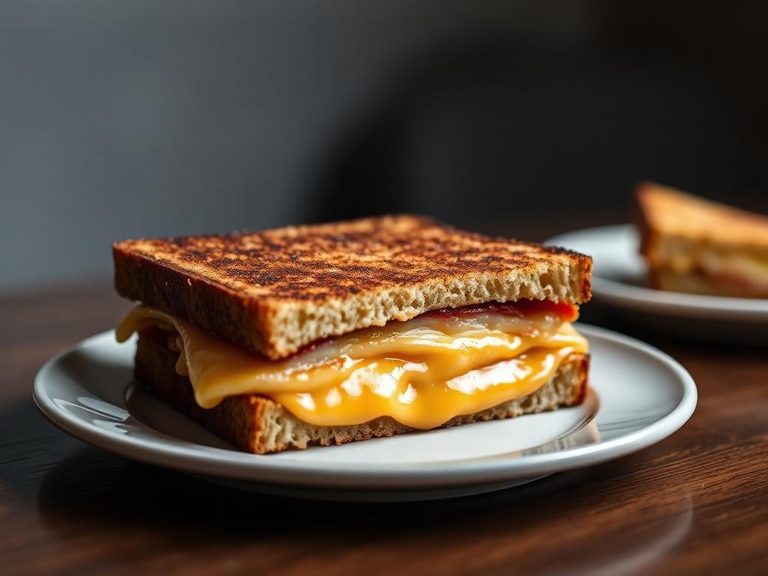
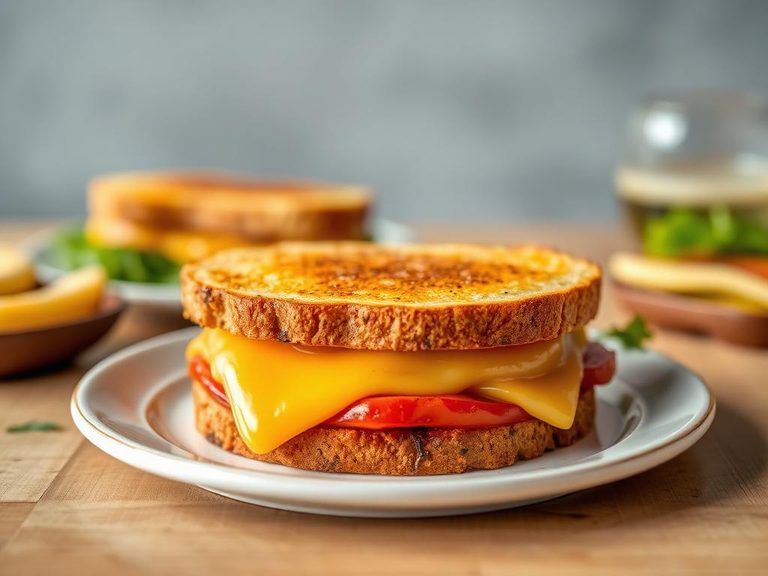
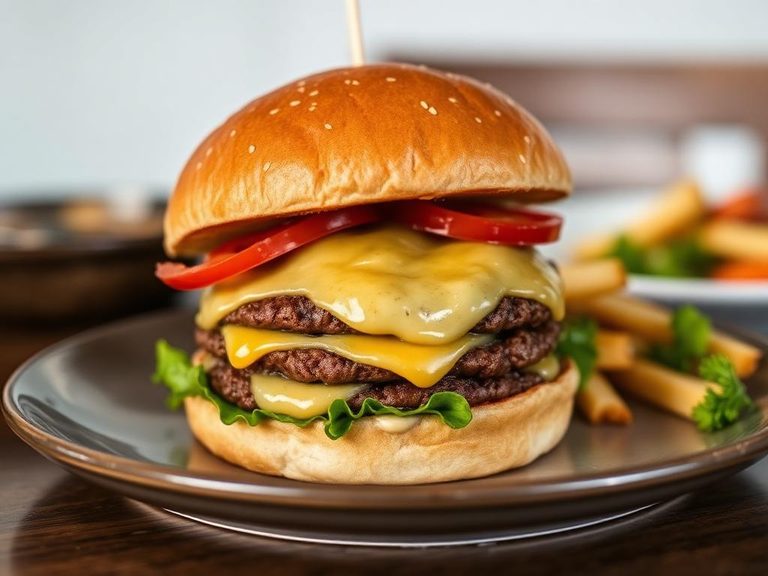
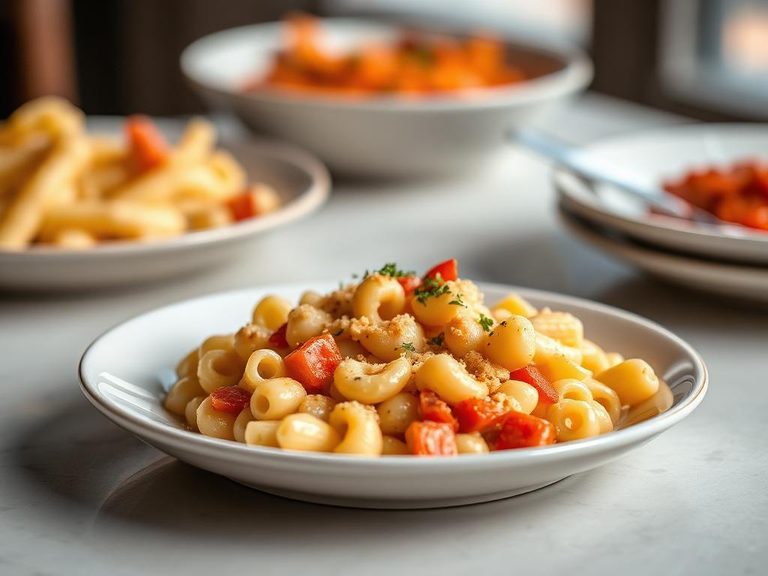
People adore it for its supremely mild, approachable flavor and unparalleled meltability, making it a versatile staple for everything from grilled sandwiches to casseroles. Its smooth texture and iconic orange rind also make it a visually appealing and kid-friendly choice.
⚠️ Watch-outs & how to enjoy it better
As a dairy product, it's a common allergen and contains lactose, though reduced levels may be tolerated by some. The sodium content, while typical for cheese, can be a concern for those monitoring intake. To counteract, pair it with potassium-rich vegetables like spinach or broccoli, and use it as a flavorful accent rather than the main ingredient to control portions.
Key benefits
- High-quality protein source for muscle maintenance
- Significantly lower in fat and calories than full-fat Muenster
- Excellent melting properties for cooking and baking
- Good source of calcium for bone health
- Contains beneficial probiotics from the cheesemaking process
🍽️ Popular dishes


🌍 Where it's eaten
💡 Did you know?
The bright orange rind on Muenster cheese isn't the cheese itself—it's a food-safe dye called annatto, applied to the exterior during the cheesemaking process.
Full nutrition (USDA data · scales with serving)
| Water | 50.5 g |
| Energy | 271 kcal |
| Protein | 24.7 g |
| Total lipid (fat) | 17.6 g |
| Carbohydrate, by difference | 3.5 g |
| Fiber, total dietary | 0.00 g |
| Total Sugars | 3.5 g |
| Calcium, Ca | 529 mg |
| Iron, Fe | 0.41 mg |
| Magnesium, Mg | 27.0 mg |
| Phosphorus, P | 468 mg |
| Potassium, K | 134 mg |
| Sodium, Na | 600 mg |
| Zinc, Zn | 2.8 mg |
| Copper, Cu | 0.03 mg |
| Selenium, Se | 14.5 ug |
| Vitamin C, total ascorbic acid | 0.00 mg |
| Thiamin | 0.01 mg |
| Riboflavin | 0.36 mg |
| Niacin | 0.10 mg |
| Vitamin B-6 | 0.06 mg |
| Folate, total | 12.0 ug |
| Folic acid | 0.00 ug |
| Folate, food | 12.0 ug |
| Folate, DFE | 12.0 ug |
| Choline, total | 15.4 mg |
| Vitamin B-12 | 1.5 ug |
| Vitamin B-12, added | 0.00 ug |
| Vitamin A, RAE | 175 ug |
| Retinol | 174 ug |
| Carotene, beta | 8.0 ug |
| Carotene, alpha | 0.00 ug |
| Cryptoxanthin, beta | 0.00 ug |
| Lycopene | 0.00 ug |
| Lutein + zeaxanthin | 0.00 ug |
| Vitamin E (alpha-tocopherol) | 0.15 mg |
| Vitamin E, added | 0.00 mg |
| Vitamin D (D2 + D3) | 0.30 ug |
| Vitamin K (phylloquinone) | 1.5 ug |
| Alcohol, ethyl | 0.00 g |
| Caffeine | 0.00 mg |
| Theobromine | 0.00 mg |
Fat & fatty acid profile (per 100g)
| Fatty acids, total saturated | 10.9 g |
| SFA 4:0 | 0.57 g |
| SFA 6:0 | 0.34 g |
| SFA 8:0 | 0.20 g |
| SFA 10:0 | 0.44 g |
| SFA 12:0 | 0.49 g |
| SFA 14:0 | 1.8 g |
| SFA 16:0 | 4.6 g |
| SFA 18:0 | 2.1 g |
| Fatty acids, total monounsaturated | 5.1 g |
| MUFA 16:1 | 0.39 g |
| MUFA 18:1 | 4.4 g |
| MUFA 20:1 | 0.27 g |
| MUFA 22:1 | 0.00 g |
| Fatty acids, total polyunsaturated | 0.65 g |
| PUFA 18:2 | 0.40 g |
| PUFA 18:3 | 0.26 g |
| PUFA 18:4 | 0.00 g |
| PUFA 20:4 | 0.00 g |
| PUFA 20:5 n-3 (EPA) | 0.00 g |
| PUFA 22:5 n-3 (DPA) | 0.00 g |
| PUFA 22:6 n-3 (DHA) | 0.00 g |
| Cholesterol | 63.0 mg |
Amino acid profile (per 100g)
Estimated from Crackers, cheese, sandwich-type with cheese filling — USDA does not publish this profile for Cheese.
| Tryptophan | 0.11 g |
| Threonine | 0.33 g |
| Isoleucine | 0.36 g |
| Leucine | 0.64 g |
| Lysine | 0.39 g |
| Methionine | 0.15 g |
| Cystine | 0.15 g |
| Phenylalanine | 0.35 g |
| Tyrosine | 0.25 g |
| Valine | 0.38 g |
| Arginine | 0.29 g |
| Histidine | 0.17 g |
| Alanine | 0.30 g |
| Aspartic acid | 0.52 g |
| Glutamic acid | 2.2 g |
| Glycine | 0.24 g |
| Proline | 0.77 g |
| Serine | 0.40 g |
FAQ
Is reduced-fat Muenster as good for melting as the full-fat version?
It still melts very well, but the texture may be slightly less creamy and can become a touch oily if overheated. For best results, use medium heat and melt it into other ingredients rather than on its own.
How does the taste differ from regular Muenster?
The flavor is very similar—mild, buttery, and slightly tangy—but the reduced fat content can make it taste a bit lighter and less rich. The texture is also slightly firmer when cold.
What's the best way to store it?
Keep it tightly wrapped in its original packaging or rewrap it in wax paper and then plastic wrap. Store it in the refrigerator's cheese drawer or a sealed container to prevent it from drying out or absorbing other odors.
Nutrient density (calculated · NRF9.3)
Nutrient Rich Foods index: beneficial nutrients (protein, fiber, vitamins, minerals) minus saturated fat, added sugar & sodium, per 100 kcal.
NRF9.3 index — Fulgoni, Keast & Drewnowski, 2009. Computed from USDA nutrients.
Weight-loss friendliness (composite index)
Energy density 2.71 kcal/g · 36% calories from protein · 0.0 g fiber · 3.5 g sugar per 100 g.
Composite of energy density (Rolls et al., 1999), protein & fiber satiety, minus sugar. A calculated heuristic — ranks satiety-per-calorie, not a clinical measure.
Dietary load (calculated from USDA values)
Potential renal acid load. Positive = acid-forming, negative = alkaline-forming.
Sodium-to-potassium ratio: 4.48 (lower is better — aim for ≤ 1)
Sodium:potassium per WHO potassium guidance. Computed from USDA nutrients.