

Cake, pudding-type, chocolate, dry mix
Whole food · Baked Products

Photo: Wikipedia
This is a shelf-stable, powdered mix designed to create a dense, moist, and intensely chocolatey pudding with a smooth, spoonable texture. Nutritionally, it's a high-carbohydrate, energy-dense product, with a significant portion of its calories coming from added sugars.
Calorie split: 4% protein · 78% carbs · 18% fat
↓ Full nutrition💚 Why it's loved
People adore it for its nostalgic, comforting chocolate flavor and the simple, satisfying ritual of cooking it on the stovetop. Its versatility allows it to be enjoyed warm, chilled, or as a filling in cakes and pies.
⚠️ Watch-outs & how to enjoy it better
The primary downside is its high sugar content (nearly 40g per 100g dry), which can cause rapid blood-sugar spikes. To counteract this, pair a modest portion with a source of protein or healthy fat (like a handful of nuts or a dollop of Greek yogurt) to slow sugar absorption, and consider using a lower-sugar milk alternative for preparation.
Key benefits
- Provides quick energy from carbohydrates.
- Convenient and long-lasting pantry staple.
- Offers a consistent, reliable chocolate flavor.
- Can be prepared with various milks for added nutrients.
- Serves as a base for many no-bake desserts.
🍽️ Popular dishes
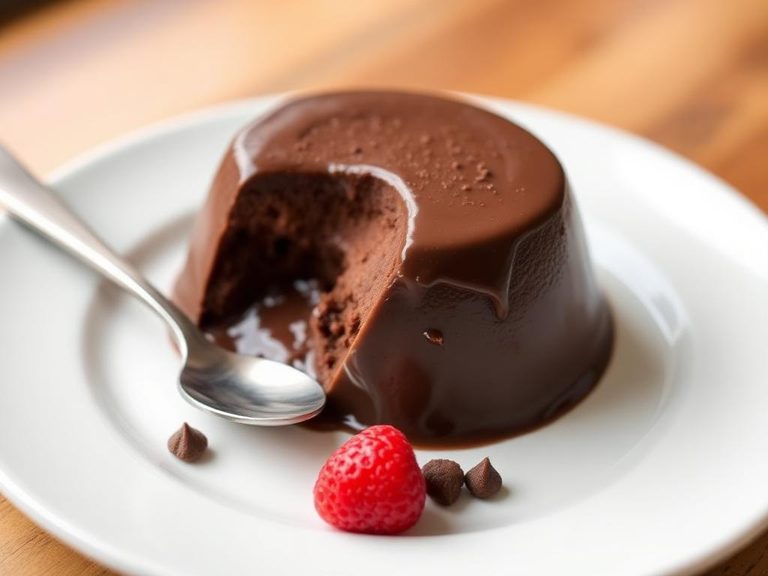
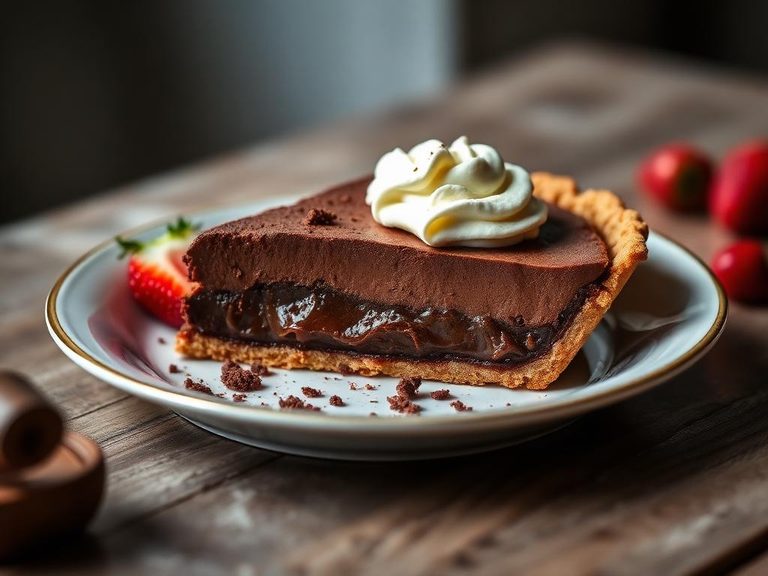

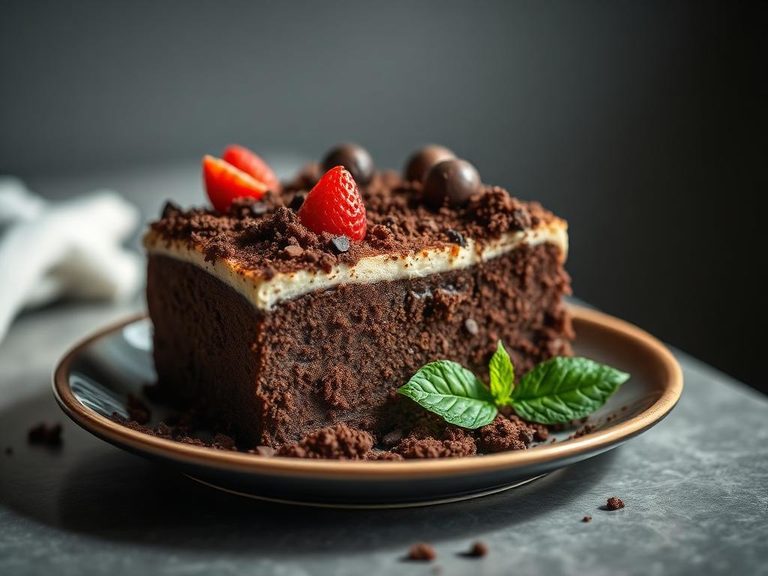

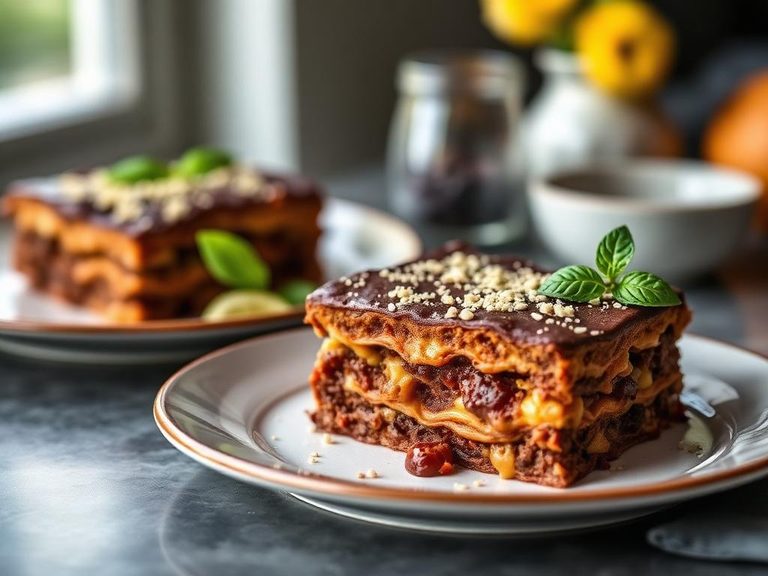
🌍 Where it's eaten
💡 Did you know?
Instant pudding mixes rely on modified starches that thicken without boiling, a technology that became widely popular in the U.S. after General Foods introduced 'Jell-O Pudding' in the 1950s.
Full nutrition (USDA data · scales with serving)
| Water | 3.9 g |
| Energy | 391 kcal |
| Energy | 1634 kj |
| Protein | 4.6 g |
| Total lipid (fat) | 8.1 g |
| Ash | 3.2 g |
| Carbohydrate, by difference | 80.2 g |
| Fiber, total dietary | 2.3 g |
| Total Sugars | 39.5 g |
| Calcium, Ca | 133 mg |
| Iron, Fe | 2.9 mg |
| Magnesium, Mg | 41.0 mg |
| Phosphorus, P | 286 mg |
| Potassium, K | 337 mg |
| Sodium, Na | 866 mg |
| Zinc, Zn | 0.78 mg |
| Copper, Cu | 0.27 mg |
| Manganese, Mn | 0.21 mg |
| Selenium, Se | 3.3 ug |
| Vitamin C, total ascorbic acid | 0.10 mg |
| Thiamin | 0.21 mg |
| Riboflavin | 0.17 mg |
| Niacin | 2.4 mg |
| Pantothenic acid | 0.21 mg |
| Vitamin B-6 | 0.03 mg |
| Folate, total | 54.0 ug |
| Folic acid | 44.0 ug |
| Folate, food | 10.0 ug |
| Folate, DFE | 85.0 ug |
| Choline, total | 3.3 mg |
| Vitamin B-12 | 0.50 ug |
| Vitamin B-12, added | 0.00 ug |
| Vitamin A, RAE | 1.0 ug |
| Retinol | 1.0 ug |
| Carotene, beta | 0.00 ug |
| Carotene, alpha | 0.00 ug |
| Cryptoxanthin, beta | 0.00 ug |
| Vitamin A, IU | 2.0 iu |
| Lycopene | 0.00 ug |
| Lutein + zeaxanthin | 4.0 ug |
| Vitamin E (alpha-tocopherol) | 0.65 mg |
| Vitamin E, added | 0.00 mg |
| Vitamin D (D2 + D3), International Units | 0.00 iu |
| Vitamin D (D2 + D3) | 0.00 ug |
| Vitamin K (phylloquinone) | 2.2 ug |
| Alcohol, ethyl | 0.00 g |
| Caffeine | 6.0 mg |
| Theobromine | 207 mg |
Fat & fatty acid profile (per 100g)
| Fatty acids, total saturated | 3.5 g |
| SFA 4:0 | 0.00 g |
| SFA 6:0 | 0.00 g |
| SFA 8:0 | 0.00 g |
| SFA 10:0 | 0.00 g |
| SFA 12:0 | 0.00 g |
| SFA 14:0 | 0.01 g |
| SFA 16:0 | 1.1 g |
| SFA 18:0 | 0.78 g |
| Fatty acids, total monounsaturated | 3.7 g |
| MUFA 16:1 | 0.03 g |
| MUFA 18:1 | 3.6 g |
| MUFA 20:1 | 0.00 g |
| MUFA 22:1 | 0.00 g |
| Fatty acids, total polyunsaturated | 3.0 g |
| PUFA 18:2 | 2.8 g |
| PUFA 18:3 | 0.20 g |
| PUFA 18:4 | 0.00 g |
| PUFA 20:4 | 0.00 g |
| PUFA 20:5 n-3 (EPA) | 0.00 g |
| PUFA 22:5 n-3 (DPA) | 0.00 g |
| PUFA 22:6 n-3 (DHA) | 0.00 g |
| Cholesterol | 0.00 mg |
Amino acid profile (per 100g)
| Tryptophan | 0.07 g |
| Threonine | 0.16 g |
| Isoleucine | 0.19 g |
| Leucine | 0.32 g |
| Lysine | 0.21 g |
| Methionine | 0.07 g |
| Cystine | 0.08 g |
| Phenylalanine | 0.22 g |
| Tyrosine | 0.16 g |
| Valine | 0.24 g |
| Arginine | 0.20 g |
| Histidine | 0.09 g |
| Alanine | 0.17 g |
| Aspartic acid | 0.30 g |
| Glutamic acid | 1.2 g |
| Glycine | 0.17 g |
| Proline | 0.39 g |
| Serine | 0.23 g |
FAQ
How is pudding-type mix different from cake mix?
Pudding-type mix is a starch-thickened dessert meant to be cooked into a soft, spoonable consistency, while cake mix contains leavening agents and is baked into a solid, spongy structure.
Can I make this with water instead of milk?
Yes, but the result will be less creamy, thinner, and have a significantly blander flavor. Using milk (dairy or plant-based) is strongly recommended for proper texture and taste.
Why is it called a 'dry mix'?
It refers to the powdered, shelf-stable form of the product before any liquid is added. This allows for long-term storage and consistent results each time it's prepared.
Nutrient density (calculated · NRF9.3)
Nutrient Rich Foods index: beneficial nutrients (protein, fiber, vitamins, minerals) minus saturated fat, added sugar & sodium, per 100 kcal.
NRF9.3 index — Fulgoni, Keast & Drewnowski, 2009. Computed from USDA nutrients.
Weight-loss friendliness (composite index)
Energy density 3.91 kcal/g · 5% calories from protein · 2.3 g fiber · 39.5 g sugar per 100 g.
Composite of energy density (Rolls et al., 1999), protein & fiber satiety, minus sugar. A calculated heuristic — ranks satiety-per-calorie, not a clinical measure.
Dietary load (calculated from USDA values)
Potential renal acid load. Positive = acid-forming, negative = alkaline-forming.
Sodium-to-potassium ratio: 2.57 (lower is better — aim for ≤ 1)
Sodium:potassium per WHO potassium guidance. Computed from USDA nutrients.