

Cake, fruitcake, commercially prepared
Whole food · Baked Products

Photo: Wikipedia
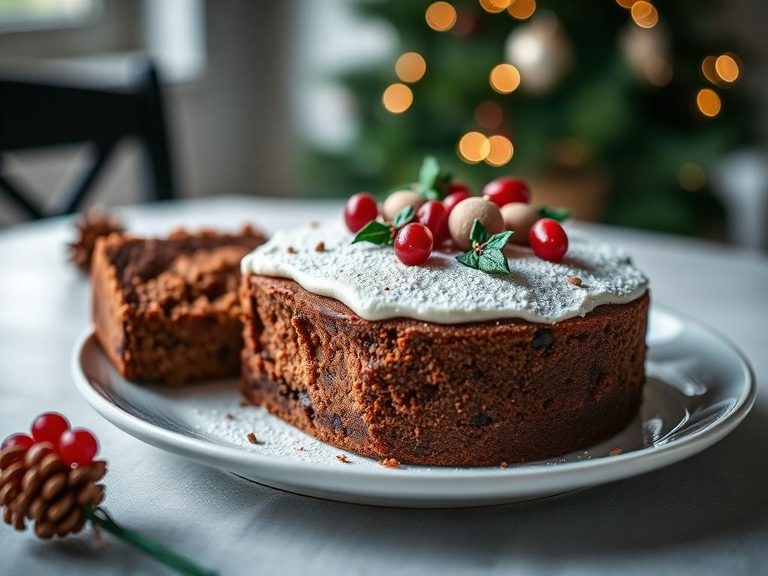
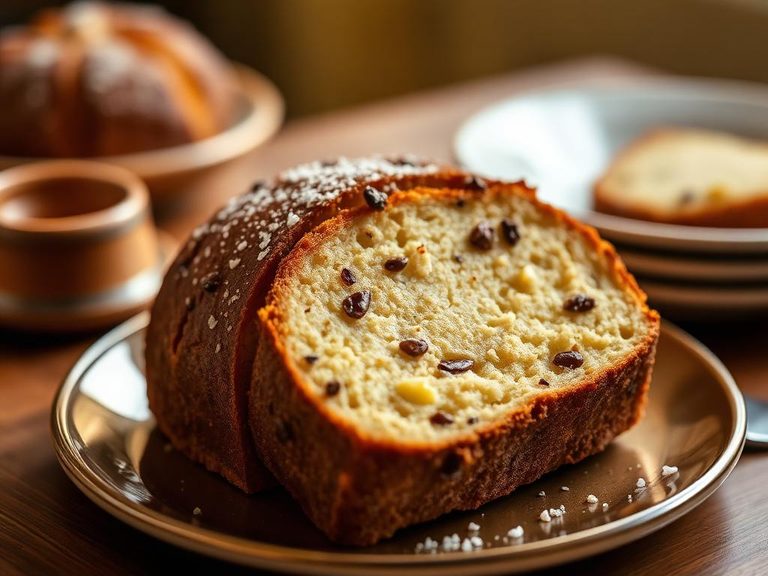
A dense, moist cake packed with candied fruits, nuts, and spices, offering a sweet, rich flavor with a chewy texture. Nutritionally, it's a calorie-dense treat with a significant carbohydrate and sugar content, providing quick energy but little protein.
Calorie split: 3% protein · 72% carbs · 24% fat
↓ Full nutrition💚 Why it's loved
People love it for its complex, spiced sweetness and the festive, nostalgic connection to holidays like Christmas and weddings. Its dense texture and variety of embedded fruits and nuts make it a satisfying, celebratory centerpiece.
⚠️ Watch-outs & how to enjoy it better
Its high sugar and calorie content can cause blood-sugar spikes, making it unsuitable for those managing diabetes or watching their weight. To mitigate this, enjoy a small portion (about 1 inch thick) alongside a source of protein or fat, like a handful of nuts or a slice of cheese, to slow sugar absorption.
Key benefits
- Provides quick energy from carbohydrates
- Contains dietary fiber from dried fruits and nuts
- Offers some micronutrients like iron and potassium from dried fruits
- Long shelf life due to high sugar and alcohol content
- A traditional celebratory food for holidays and festivals
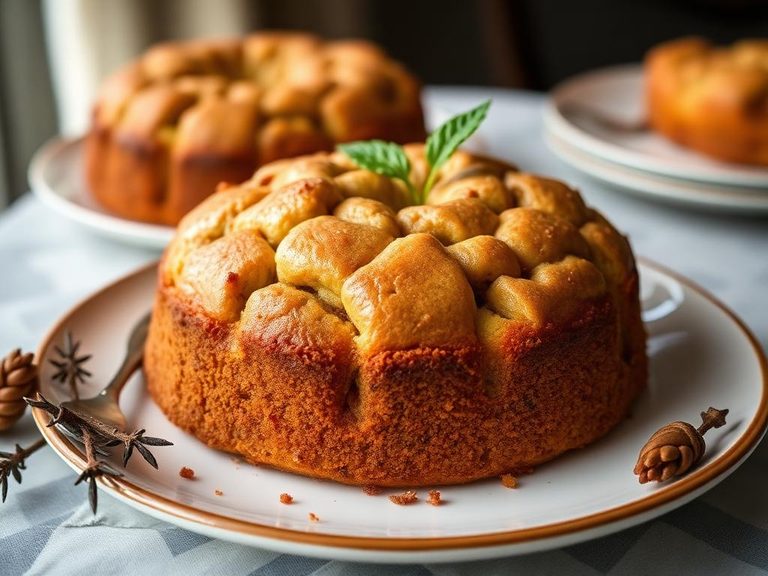
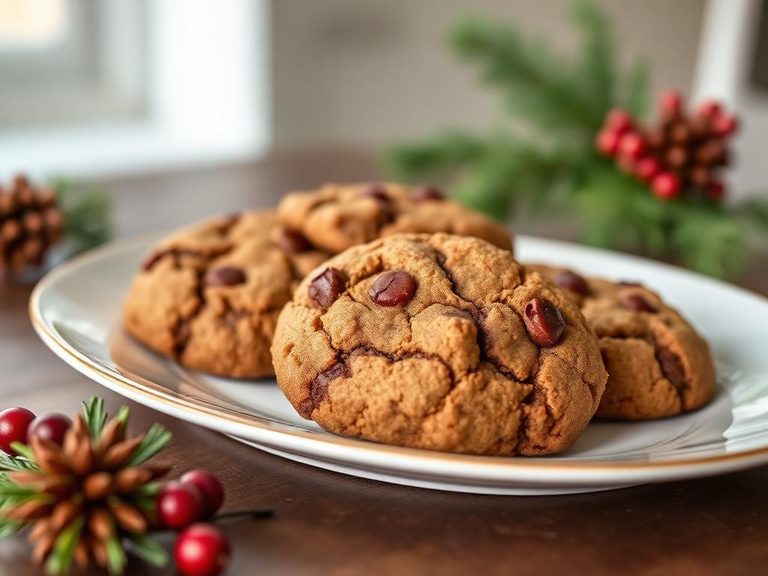
🍽️ Popular dishes
🌍 Where it's eaten
💡 Did you know?
In the UK, it's tradition to 'feed' a Christmas cake with brandy or rum over several weeks before serving, which both preserves it and deepens its flavor.
Full nutrition (USDA data · scales with serving)
| Water | 25.3 g |
| Energy | 324 kcal |
| Energy | 1356 kj |
| Protein | 2.9 g |
| Total lipid (fat) | 9.1 g |
| Ash | 1.0 g |
| Carbohydrate, by difference | 61.6 g |
| Fiber, total dietary | 3.7 g |
| Total Sugars | 27.4 g |
| Calcium, Ca | 33.0 mg |
| Iron, Fe | 2.1 mg |
| Magnesium, Mg | 16.0 mg |
| Phosphorus, P | 52.0 mg |
| Potassium, K | 153 mg |
| Sodium, Na | 101 mg |
| Zinc, Zn | 0.27 mg |
| Copper, Cu | 0.05 mg |
| Manganese, Mn | 0.22 mg |
| Selenium, Se | 2.0 ug |
| Vitamin C, total ascorbic acid | 0.50 mg |
| Thiamin | 0.05 mg |
| Riboflavin | 0.10 mg |
| Niacin | 0.79 mg |
| Pantothenic acid | 0.23 mg |
| Vitamin B-6 | 0.05 mg |
| Folate, total | 20.0 ug |
| Folic acid | 17.0 ug |
| Folate, food | 3.0 ug |
| Folate, DFE | 32.0 ug |
| Choline, total | 8.9 mg |
| Vitamin B-12 | 0.01 ug |
| Vitamin B-12, added | 0.00 ug |
| Vitamin A, RAE | 7.0 ug |
| Retinol | 7.0 ug |
| Carotene, beta | 3.0 ug |
| Carotene, alpha | 1.0 ug |
| Cryptoxanthin, beta | 1.0 ug |
| Vitamin A, IU | 22.0 iu |
| Lycopene | 0.00 ug |
| Lutein + zeaxanthin | 21.0 ug |
| Vitamin E (alpha-tocopherol) | 0.90 mg |
| Vitamin E, added | 0.00 mg |
| Vitamin D (D2 + D3), International Units | 0.00 iu |
| Vitamin D (D2 + D3) | 0.00 ug |
| Vitamin K (phylloquinone) | 1.5 ug |
| Alcohol, ethyl | 0.00 g |
| Caffeine | 0.00 mg |
| Theobromine | 0.00 mg |
Fat & fatty acid profile (per 100g)
| Fatty acids, total saturated | 1.0 g |
| SFA 4:0 | 0.00 g |
| SFA 6:0 | 0.00 g |
| SFA 8:0 | 0.00 g |
| SFA 10:0 | 0.00 g |
| SFA 12:0 | 0.00 g |
| SFA 14:0 | 0.02 g |
| SFA 16:0 | 0.74 g |
| SFA 18:0 | 0.27 g |
| Fatty acids, total monounsaturated | 4.2 g |
| MUFA 16:1 | 0.04 g |
| MUFA 18:1 | 4.1 g |
| MUFA 20:1 | 0.03 g |
| MUFA 22:1 | 0.00 g |
| Fatty acids, total polyunsaturated | 3.3 g |
| PUFA 18:2 | 3.0 g |
| PUFA 18:3 | 0.34 g |
| PUFA 18:4 | 0.00 g |
| PUFA 20:4 | 0.00 g |
| PUFA 20:5 n-3 (EPA) | 0.00 g |
| PUFA 22:5 n-3 (DPA) | 0.00 g |
| PUFA 22:6 n-3 (DHA) | 0.00 g |
| Cholesterol | 5.0 mg |
Amino acid profile (per 100g)
| Tryptophan | 0.04 g |
| Threonine | 0.10 g |
| Isoleucine | 0.12 g |
| Leucine | 0.21 g |
| Lysine | 0.12 g |
| Methionine | 0.06 g |
| Cystine | 0.06 g |
| Phenylalanine | 0.14 g |
| Tyrosine | 0.10 g |
| Valine | 0.14 g |
| Arginine | 0.26 g |
| Histidine | 0.07 g |
| Alanine | 0.13 g |
| Aspartic acid | 0.27 g |
| Glutamic acid | 0.64 g |
| Glycine | 0.12 g |
| Proline | 0.17 g |
| Serine | 0.16 g |
FAQ
Why is fruitcake so dense?
It's made with a high ratio of dried fruits and nuts to batter, and the batter itself is often rich with butter or oil and eggs, creating a heavy, moist texture rather than a light, airy crumb.
How long does fruitcake last?
When properly wrapped and stored in a cool, dark place, a traditional alcohol-fed fruitcake can last for months, even years. Non-alcoholic versions have a shorter shelf life of several weeks.
Can fruitcake be made without alcohol?
Yes, absolutely. Many recipes use fruit juices, tea, or simple syrups to soak the fruits, or omit the soaking step entirely. The alcohol primarily acts as a preservative and flavor enhancer.
Nutrient density (calculated · NRF9.3)
Nutrient Rich Foods index: beneficial nutrients (protein, fiber, vitamins, minerals) minus saturated fat, added sugar & sodium, per 100 kcal.
NRF9.3 index — Fulgoni, Keast & Drewnowski, 2009. Computed from USDA nutrients.
Weight-loss friendliness (composite index)
Energy density 3.24 kcal/g · 4% calories from protein · 3.7 g fiber · 27.4 g sugar per 100 g.
Composite of energy density (Rolls et al., 1999), protein & fiber satiety, minus sugar. A calculated heuristic — ranks satiety-per-calorie, not a clinical measure.
Dietary load (calculated from USDA values)
Potential renal acid load. Positive = acid-forming, negative = alkaline-forming.
Sodium-to-potassium ratio: 0.66 (lower is better — aim for ≤ 1)
Sodium:potassium per WHO potassium guidance. Computed from USDA nutrients.