Christmas Cake
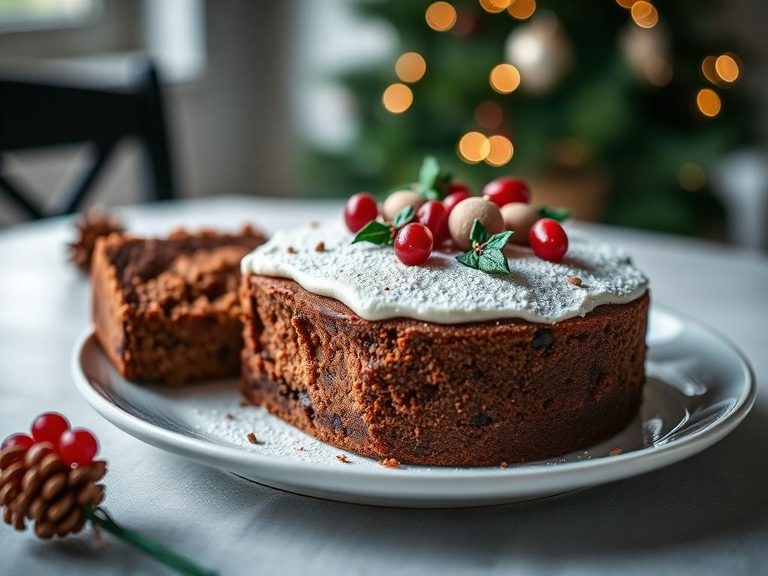
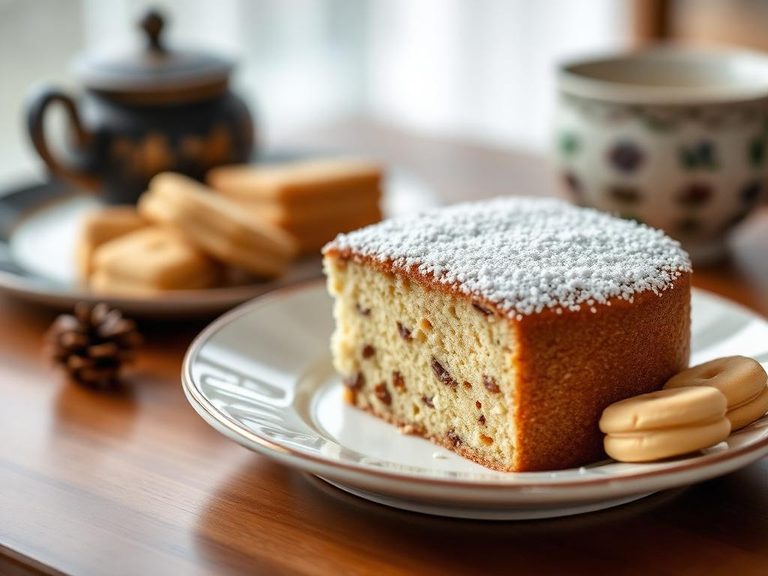
Christmas Cake is a rich, dense fruit cake traditionally enjoyed during the holiday season, particularly in the UK, Ireland, and Commonwealth countries. It is typically packed with dried fruits, nuts, and warm spices, often soaked in brandy or rum, and covered with a layer of marzipan and royal icing. Its origins trace back to medieval England, evolving from a plum porridge into the celebratory cake we know today.
🍽️ Nutrition at a glance
This is a very energy-dense food, high in carbohydrates and fat due to its sugar, butter, and dried fruit content, with minimal protein. A single, modest slice can provide around 300-400 calories, along with some iron and antioxidants from the dried fruits.
Nutrition breakdown
| Calories | 350 kcal |
| Protein | 4.5 g |
| Carbs | 50 g |
| Fat | 16 g |
| Fiber | 1.5 g |
| Sugar | 35 g |
| Sodium | 200 mg |
| Potassium | 150 mg |
| Iron | 1.5 mg |
| Calcium | 40 mg |
| Magnesium | 20 mg |
| Phosphorus | 60 mg |
| Vitamin A | 80 µg |
| Vitamin C | 2 mg |
| Niacin (B3) | 1.2 mg |
Per 1 slice (100 g) · estimated, varies by recipe
💡 What's interesting
Culturally, it's a symbol of celebration and tradition, often made weeks in advance to allow the flavors to mature, with the act of 'feeding' the cake with alcohol being a cherished ritual. Nutritionally, while indulgent, the dried fruits do offer a concentrated source of fiber and minerals.