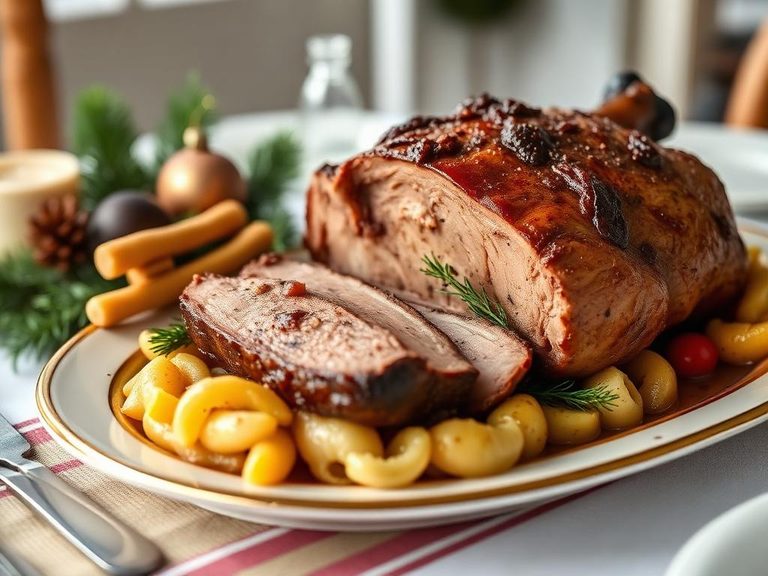
Christmas Turkey
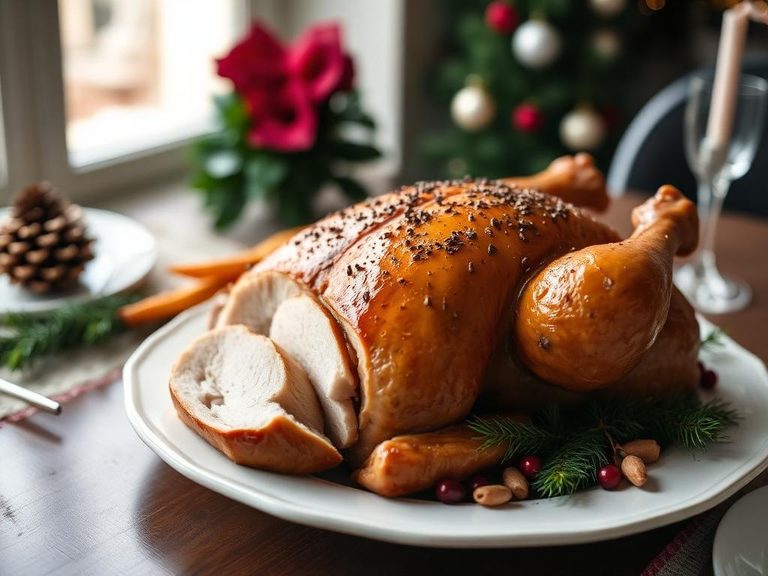
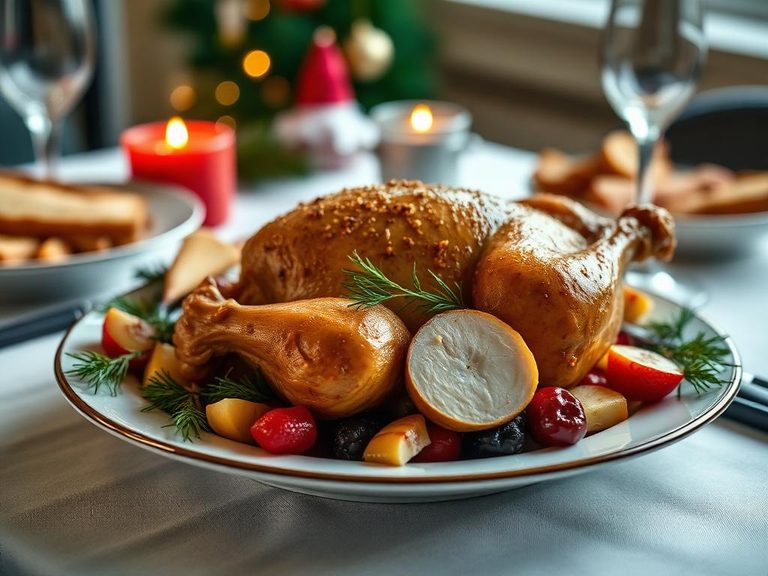
Christmas Turkey is a traditional centerpiece dish for holiday meals, especially in Western cultures, featuring a whole roasted turkey typically seasoned with herbs like sage, thyme, and rosemary, and often stuffed with bread-based or vegetable fillings. It originates from North American and European culinary traditions, symbolizing festive gatherings and abundance.
🍽️ Nutrition at a glance
Christmas Turkey is a high-protein dish with moderate fat content, especially from the skin and dark meat, and is relatively low in carbohydrates unless served with stuffing or gravy. A typical serving (about 3-4 ounces of meat) provides around 150-200 calories, along with essential nutrients like B vitamins, selenium, and zinc.
Nutrition breakdown
| Calories | 220 kcal |
| Protein | 42 g |
| Carbs | 0 g |
| Fat | 5 g |
| Fiber | 0 g |
| Sugar | 0 g |
| Sodium | 70 mg |
| Potassium | 350 mg |
| Phosphorus | 250 mg |
| Niacin (B3) | 12 mg |
| Vitamin B6 | 0.8 mg |
| Vitamin B12 | 0.6 mcg |
| Selenium | 40 mcg |
| Zinc | 3 mg |
| Iron | 1.5 mg |
Per 1 serving (150 g) roasted turkey breast, skinless · estimated, varies by recipe
💡 What's interesting
Culturally, the Christmas Turkey is a symbol of celebration and togetherness, often associated with family traditions and historical roots in harvest festivals. Nutritionally, it's unique for offering lean protein options when choosing white meat, making it a versatile choice for balanced holiday feasts.