

Plum, black, with skin, raw
Whole food · Fruits and Fruit Juices
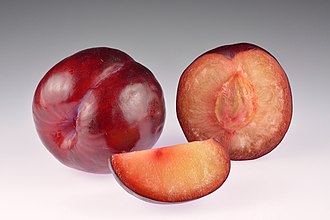
Photo: Wikipedia
The raw black plum, with its deep purple skin and amber flesh, offers a sweet-tart flavor and juicy, slightly crisp texture. At only 59 calories per 100g, it's a light, hydrating snack that provides a modest 1.3g of fiber. Its vibrant color comes from anthocyanins, powerful antioxidants that contribute to its nutritional appeal.
Calorie split: 4% protein · 92% carbs · 4% fat
↓ Full nutrition💚 Why it's loved
People love black plums for their intense, complex sweetness balanced with a pleasant tartness, especially when perfectly ripe and juicy. They are cherished in both fresh snacking and as a versatile ingredient in jams, desserts, and savory dishes across many cultures.
⚠️ Watch-outs & how to enjoy it better
While delicious, black plums contain natural sugars that can cause blood sugar spikes if consumed in large quantities. To counteract this, pair them with a source of protein or healthy fat (like nuts or yogurt) and practice portion control. The skin can also be astringent for some; if sensitive, peeling or cooking the plums can soften the texture.
Key benefits
- Rich in antioxidants like anthocyanins from its dark skin.
- Low in calories and fat, making it a light snack option.
- Provides dietary fiber to support digestive health.
- Contains vitamins like vitamin C and vitamin K.
🍽️ Popular dishes
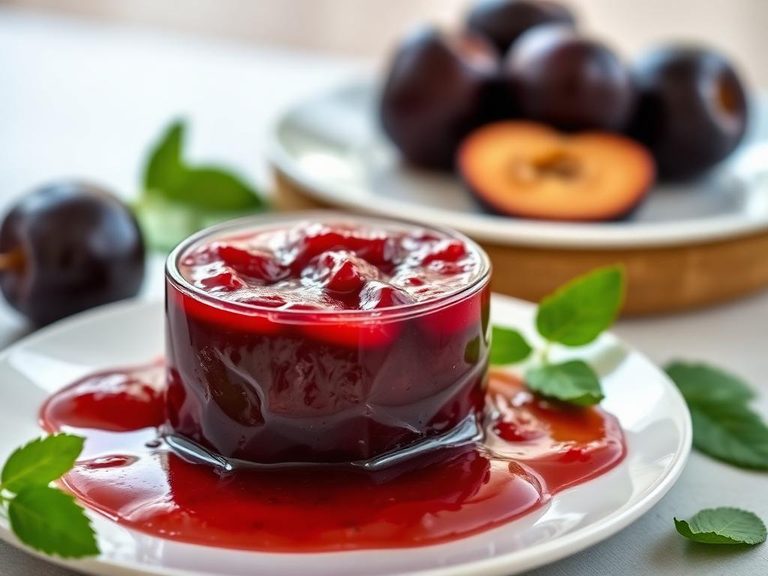

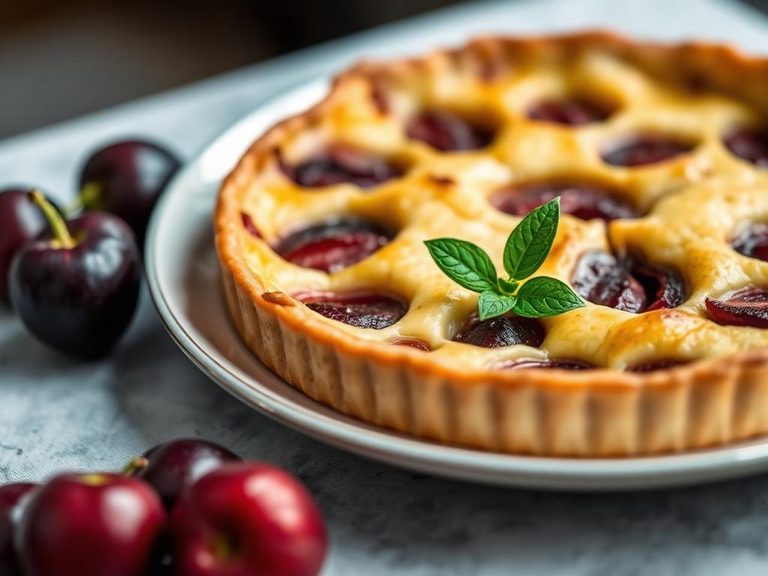
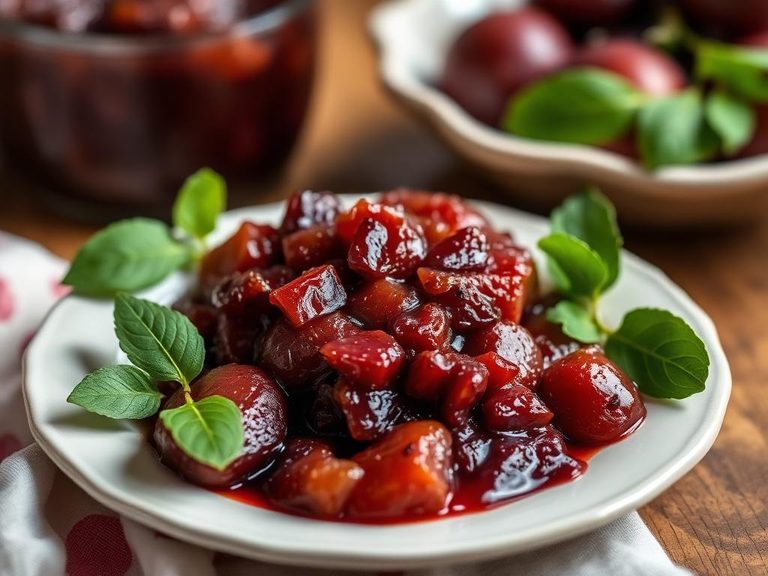
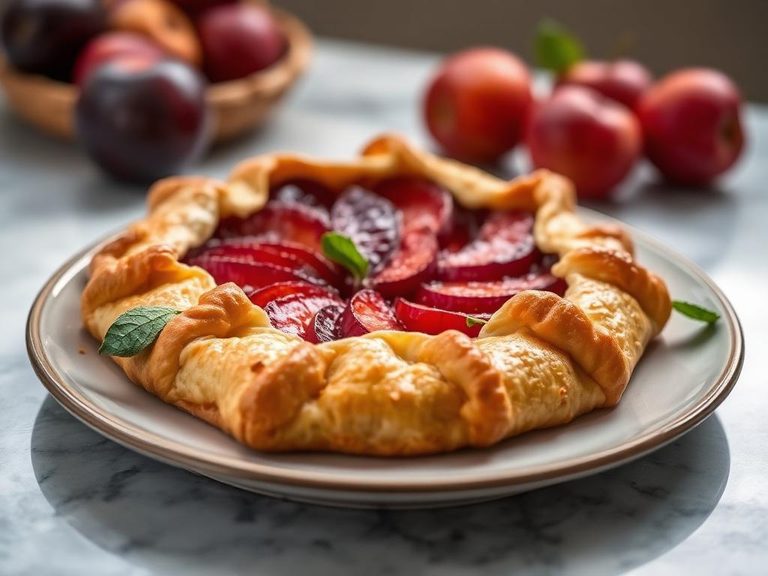
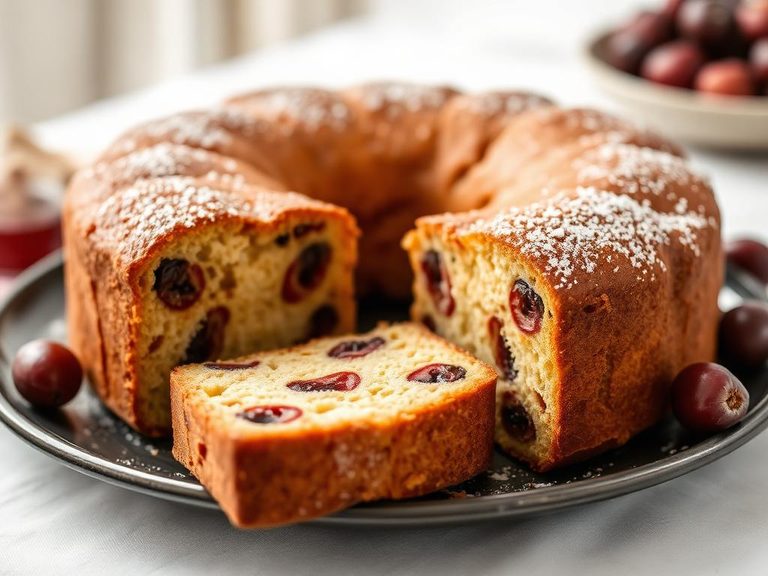
🌍 Where it's eaten
💡 Did you know?
The term 'prune' refers specifically to dried plums, and the French word for plum is 'prune,' which can cause confusion in English-speaking kitchens.
Full nutrition (USDA data · scales with serving)
| Water | 84.9 g |
| Energy (Atwater General Factors) | 58.7 kcal |
| Energy (Atwater Specific Factors) | 52.7 kcal |
| Nitrogen | 0.09 g |
| Protein | 0.58 g |
| Total lipid (fat) | 0.28 g |
| Ash | 0.74 g |
| Carbohydrate, by difference | 13.5 g |
| Fiber, total dietary | 1.3 g |
| Sugars, Total | 8.0 g |
| Sucrose | 4.5 g |
| Glucose | 0.00 g |
| Fructose | 3.5 g |
| Lactose | 0.00 g |
| Maltose | 0.00 g |
| Calcium, Ca | 4.0 mg |
| Iron, Fe | 0.00 mg |
| Magnesium, Mg | 6.6 mg |
| Phosphorus, P | 18.6 mg |
| Potassium, K | 186 mg |
| Sodium, Na | 0.00 mg |
| Zinc, Zn | 0.05 mg |
| Copper, Cu | 0.05 mg |
| Manganese, Mn | 0.04 mg |
| Vitamin C, total ascorbic acid | 1.8 mg |
| Biotin | 0.00 ug |
Fat & fatty acid profile (per 100g)
Estimated from Plums, canned, purple, light syrup pack, solids and liquids — USDA does not publish this profile for Plum.
| Fatty acids, total saturated | 0.01 g |
| SFA 4:0 | 0.00 g |
| SFA 6:0 | 0.00 g |
| SFA 8:0 | 0.00 g |
| SFA 10:0 | 0.00 g |
| SFA 12:0 | 0.00 g |
| SFA 14:0 | 0.00 g |
| SFA 16:0 | 0.01 g |
| SFA 18:0 | 0.00 g |
| Fatty acids, total monounsaturated | 0.07 g |
| MUFA 16:1 | 0.00 g |
| MUFA 18:1 | 0.07 g |
| MUFA 20:1 | 0.00 g |
| MUFA 22:1 | 0.00 g |
| Fatty acids, total polyunsaturated | 0.02 g |
| PUFA 18:2 | 0.02 g |
| PUFA 18:3 | 0.00 g |
| PUFA 18:4 | 0.00 g |
| PUFA 20:4 | 0.00 g |
| PUFA 20:5 n-3 (EPA) | 0.00 g |
| PUFA 22:5 n-3 (DPA) | 0.00 g |
| PUFA 22:6 n-3 (DHA) | 0.00 g |
| Fatty acids, total trans | 0.00 g |
| Cholesterol | 0.00 mg |
Amino acid profile (per 100g)
Estimated from Plums, canned, purple, light syrup pack, solids and liquids — USDA does not publish this profile for Plum.
| Threonine | 0.01 g |
| Isoleucine | 0.01 g |
| Leucine | 0.01 g |
| Lysine | 0.01 g |
| Methionine | 0.00 g |
| Cystine | 0.00 g |
| Phenylalanine | 0.01 g |
| Tyrosine | 0.00 g |
| Valine | 0.01 g |
| Arginine | 0.01 g |
| Histidine | 0.01 g |
| Alanine | 0.01 g |
| Aspartic acid | 0.12 g |
| Glutamic acid | 0.02 g |
| Glycine | 0.01 g |
| Proline | 0.02 g |
| Serine | 0.01 g |
FAQ
What's the difference between a black plum and a prune?
A black plum is the fresh fruit, while a prune is a dried plum. Prunes have a more concentrated sweetness and chewy texture.
Are black plums good for weight loss?
Yes, they are low in calories and high in water and fiber, which can help promote fullness and support a healthy diet.
How do I know if a black plum is ripe?
Look for a deep purple color, give slightly to gentle pressure, and check for a sweet, fragrant aroma at the stem end.
Nutrient density (calculated · NRF9.3)
Nutrient Rich Foods index: beneficial nutrients (protein, fiber, vitamins, minerals) minus saturated fat, added sugar & sodium, per 100 kcal.
NRF9.3 index — Fulgoni, Keast & Drewnowski, 2009. Computed from USDA nutrients.
Weight-loss friendliness (composite index)
Energy density 0.59 kcal/g · 4% calories from protein · 1.3 g fiber · 0.0 g sugar per 100 g.
Composite of energy density (Rolls et al., 1999), protein & fiber satiety, minus sugar. A calculated heuristic — ranks satiety-per-calorie, not a clinical measure.
Dietary load (calculated from USDA values)
Potential renal acid load. Positive = acid-forming, negative = alkaline-forming.
Sodium-to-potassium ratio: 0.00 (lower is better — aim for ≤ 1)
Sodium:potassium per WHO potassium guidance. Computed from USDA nutrients.