

Broccoli, cauliflower and carrots, cooked, no added fat
Common food
A vibrant, tender-crisp medley of broccoli florets, cauliflower pearls, and carrot coins, steamed or boiled to a sweet, earthy perfection. Each bite offers a satisfying contrast: the slight bite of broccoli, the creamy crumble of cauliflower, and the gentle sweetness of carrot. With only 28 calories per 100g, it's a nutrient-dense powerhouse delivering fiber, vitamins, and a spectrum of antioxidants without any added fat.
Calorie split: 22% protein · 69% carbs · 9% fat
↓ Full nutrition💚 Why it's loved
People love this classic trio for its comforting, familiar flavors and incredible versatility—it’s a perfect side for roast chicken, a hearty addition to soups, or a colorful base for grain bowls. Its natural sweetness and satisfying textures make healthy eating effortless and enjoyable.
⚠️ Watch-outs & how to enjoy it better
For some, the cruciferous vegetables (broccoli, cauliflower) can cause temporary gas or bloating due to their high fiber and raffinose content. To minimize this, cook them thoroughly and introduce them gradually into your diet. Those managing blood sugar should note the carrots' natural sugars, but pairing this mix with a protein or healthy fat (like a sprinkle of cheese or a side of fish) helps blunt any glycemic response.
Key benefits
- Excellent source of fiber for digestive health and satiety.
- Rich in vitamin C from broccoli and cauliflower for immune support.
- Provides beta-carotene from carrots, a precursor to vitamin A.
- Very low in calories and fat, ideal for weight management.
- Contains sulforaphane and other compounds linked to cellular health.
🍽️ Popular dishes
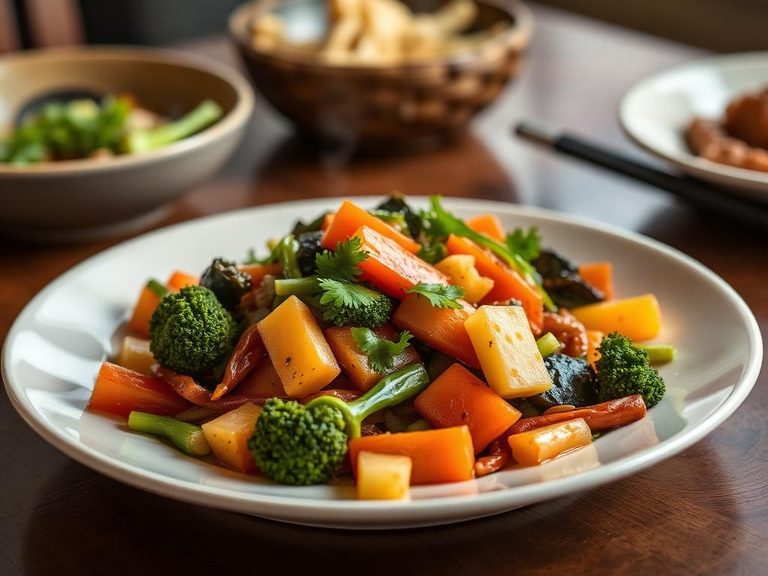
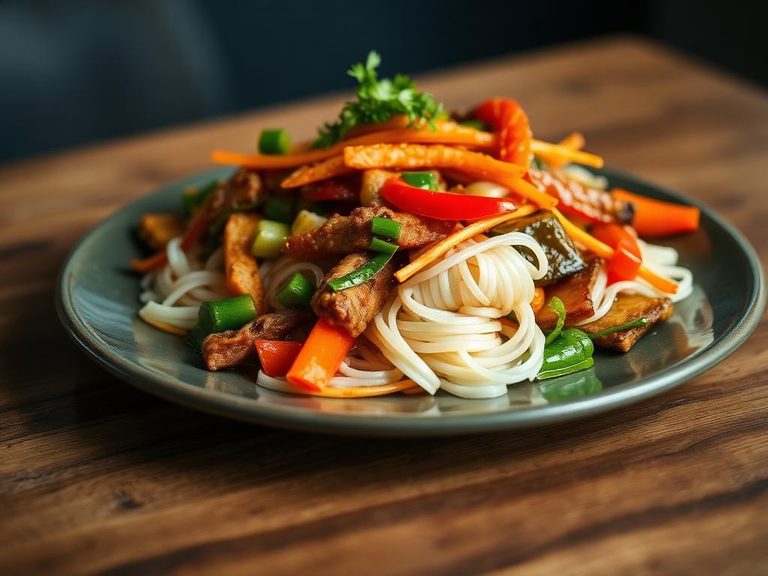
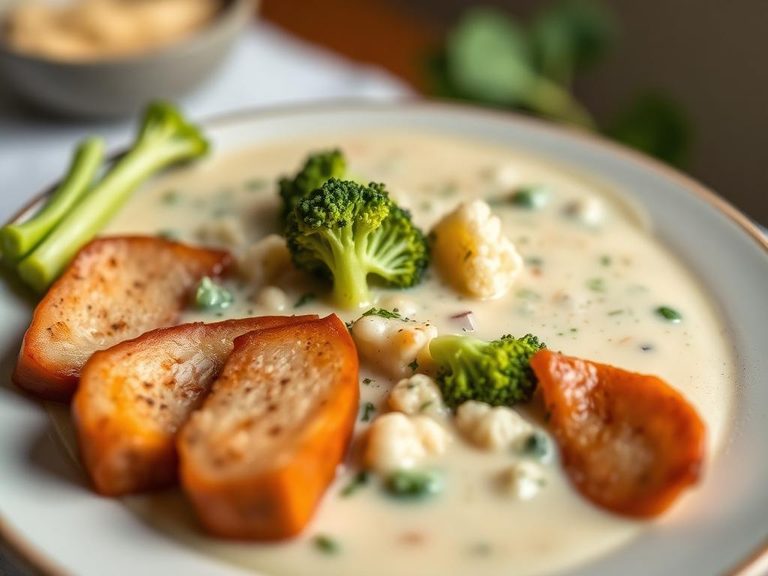
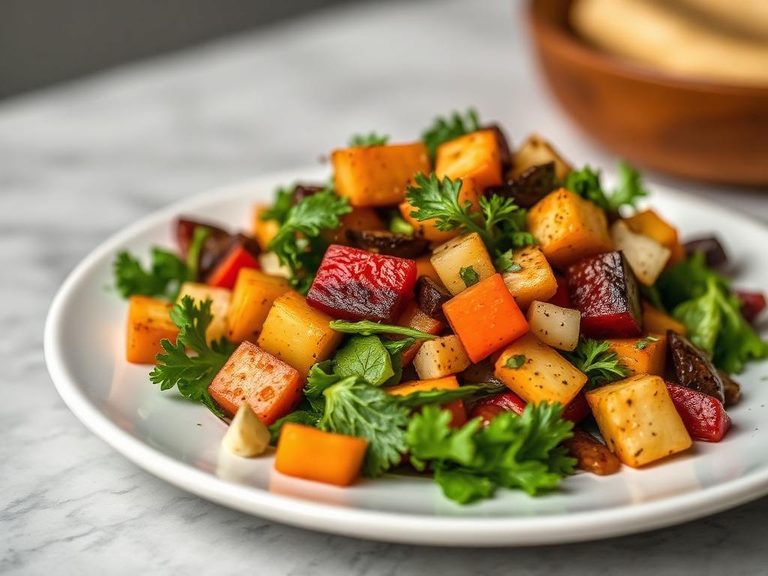
🌍 Where it's eaten
💡 Did you know?
The trio's colors aren't just pretty—they signal different phytonutrients: green (broccoli) is rich in chlorophyll and sulforaphane, white (cauliflower) contains anthoxanthins, and orange (carrots) is packed with beta-carotene.
Full nutrition (USDA data · scales with serving)
| Water | 91.4 g |
| Energy | 28.0 kcal |
| Protein | 1.8 g |
| Total lipid (fat) | 0.34 g |
| Carbohydrate, by difference | 5.6 g |
| Fiber, total dietary | 3.0 g |
| Total Sugars | 2.2 g |
| Calcium, Ca | 28.0 mg |
| Iron, Fe | 0.52 mg |
| Magnesium, Mg | 11.0 mg |
| Phosphorus, P | 35.0 mg |
| Potassium, K | 157 mg |
| Sodium, Na | 146 mg |
| Zinc, Zn | 0.25 mg |
| Copper, Cu | 0.05 mg |
| Selenium, Se | 0.60 ug |
| Vitamin C, total ascorbic acid | 24.5 mg |
| Thiamin | 0.04 mg |
| Riboflavin | 0.06 mg |
| Niacin | 0.39 mg |
| Vitamin B-6 | 0.10 mg |
| Folate, total | 36.0 ug |
| Folic acid | 0.00 ug |
| Folate, food | 36.0 ug |
| Folate, DFE | 36.0 ug |
| Choline, total | 19.4 mg |
| Vitamin B-12 | 0.00 ug |
| Vitamin B-12, added | 0.00 ug |
| Vitamin A, RAE | 298 ug |
| Retinol | 0.00 ug |
| Carotene, beta | 2925 ug |
| Carotene, alpha | 1241 ug |
| Cryptoxanthin, beta | 0.00 ug |
| Lycopene | 0.00 ug |
| Lutein + zeaxanthin | 597 ug |
| Vitamin E (alpha-tocopherol) | 0.79 mg |
| Vitamin E, added | 0.00 mg |
| Vitamin D (D2 + D3) | 0.00 ug |
| Vitamin K (phylloquinone) | 37.8 ug |
| Alcohol, ethyl | 0.00 g |
| Caffeine | 0.00 mg |
| Theobromine | 0.00 mg |
Fat & fatty acid profile (per 100g)
| Fatty acids, total saturated | 0.06 g |
| SFA 4:0 | 0.00 g |
| SFA 6:0 | 0.00 g |
| SFA 8:0 | 0.00 g |
| SFA 10:0 | 0.00 g |
| SFA 12:0 | 0.00 g |
| SFA 14:0 | 0.00 g |
| SFA 16:0 | 0.05 g |
| SFA 18:0 | 0.00 g |
| Fatty acids, total monounsaturated | 0.02 g |
| MUFA 16:1 | 0.00 g |
| MUFA 18:1 | 0.02 g |
| MUFA 20:1 | 0.00 g |
| MUFA 22:1 | 0.00 g |
| Fatty acids, total polyunsaturated | 0.16 g |
| PUFA 18:2 | 0.11 g |
| PUFA 18:3 | 0.06 g |
| PUFA 18:4 | 0.00 g |
| PUFA 20:4 | 0.00 g |
| PUFA 20:5 n-3 (EPA) | 0.00 g |
| PUFA 22:5 n-3 (DPA) | 0.00 g |
| PUFA 22:6 n-3 (DHA) | 0.00 g |
| Cholesterol | 0.00 mg |
Amino acid profile (per 100g)
Estimated from Broccoli, cooked, boiled, drained, with salt — USDA does not publish this profile for Broccoli.
| Tryptophan | 0.03 g |
| Threonine | 0.10 g |
| Isoleucine | 0.09 g |
| Leucine | 0.15 g |
| Lysine | 0.15 g |
| Methionine | 0.04 g |
| Cystine | 0.03 g |
| Phenylalanine | 0.12 g |
| Tyrosine | 0.06 g |
| Valine | 0.14 g |
| Arginine | 0.20 g |
| Histidine | 0.06 g |
| Alanine | 0.11 g |
| Aspartic acid | 0.33 g |
| Glutamic acid | 0.55 g |
| Glycine | 0.10 g |
| Proline | 0.11 g |
| Serine | 0.13 g |
FAQ
Is this mix healthy for weight loss?
Absolutely. At just 28 calories per 100g with 3g of fiber, it's very filling for very few calories, making it an excellent choice for creating a calorie deficit while staying nourished.
Can I eat this if I have IBS?
It can be tricky. Broccoli and cauliflower are high in FODMAPs (fermentable carbs) which may trigger symptoms in sensitive individuals. Starting with a small portion of just the carrots, or using the low-FODMAP serving size (about 75g total), is recommended.
What's the best way to cook it to preserve nutrients?
Steaming or microwaving for a short time (3-5 minutes) until just tender-crisp preserves the most water-soluble vitamins like vitamin C and B vitamins compared to boiling.
Nutrient density (calculated · NRF9.3)
Nutrient Rich Foods index: beneficial nutrients (protein, fiber, vitamins, minerals) minus saturated fat, added sugar & sodium, per 100 kcal.
NRF9.3 index — Fulgoni, Keast & Drewnowski, 2009. Computed from USDA nutrients.
Weight-loss friendliness (composite index)
Energy density 0.28 kcal/g · 25% calories from protein · 3.0 g fiber · 2.2 g sugar per 100 g.
Composite of energy density (Rolls et al., 1999), protein & fiber satiety, minus sugar. A calculated heuristic — ranks satiety-per-calorie, not a clinical measure.
Dietary load (calculated from USDA values)
Potential renal acid load. Positive = acid-forming, negative = alkaline-forming.
Sodium-to-potassium ratio: 0.93 (lower is better — aim for ≤ 1)
Sodium:potassium per WHO potassium guidance. Computed from USDA nutrients.