

Broccoli, cauliflower and carrots, cooked, fat added
Common food
This is a vibrant medley of tender-crisp broccoli florets, creamy cauliflower, and sweet carrot coins, lightly sautéed or roasted with a touch of fat. The texture is a satisfying contrast between the slight crunch of the vegetables and the smooth, buttery coating. Nutritionally, it's a low-calorie powerhouse, delivering fiber and vitamins with minimal caloric impact.
Calorie split: 13% protein · 40% carbs · 48% fat
↓ Full nutrition💚 Why it's loved
People love this combination for its perfect balance of earthy, sweet, and savory flavors, with the added fat creating a luxurious mouthfeel. It's a versatile side dish that complements everything from grilled meats to pasta, and is a staple in health-conscious and home-style cooking worldwide.
⚠️ Watch-outs & how to enjoy it better
The cruciferous vegetables (broccoli, cauliflower) contain compounds that may cause gas or bloating in sensitive individuals. The added fat, while enhancing flavor, increases calorie density, so portion control is key for strict calorie tracking. To counteract digestive discomfort, ensure vegetables are cooked until tender-crisp (not mushy) and chew thoroughly; pairing with a digestive enzyme supplement like ginger can also help.
Key benefits
- Excellent source of dietary fiber for digestive health.
- Rich in vitamin C, vitamin K, and beta-carotene.
- Low-calorie volume food that aids in satiety.
- Provides a mix of antioxidants like sulforaphane and lutein.
- Naturally low in sodium and cholesterol.
🍽️ Popular dishes
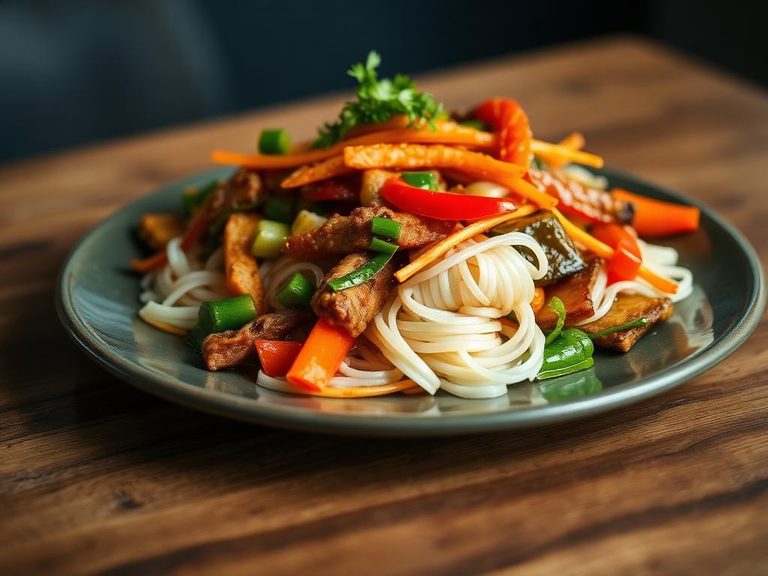
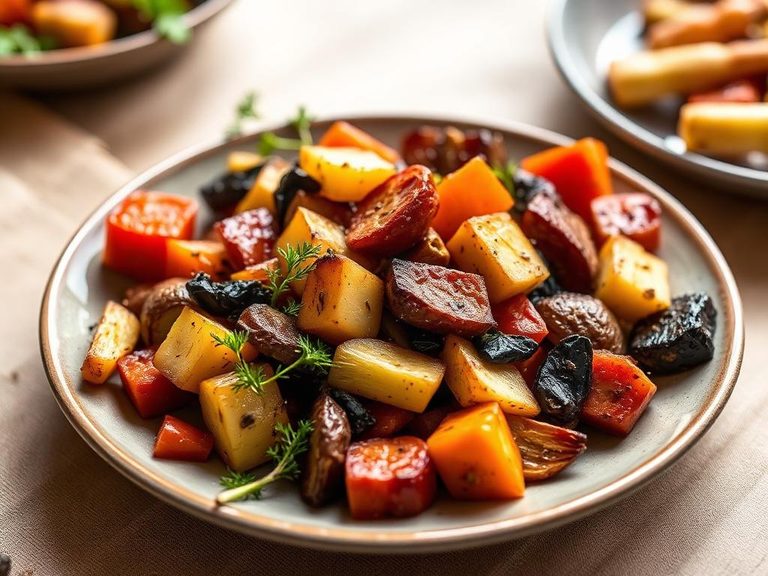
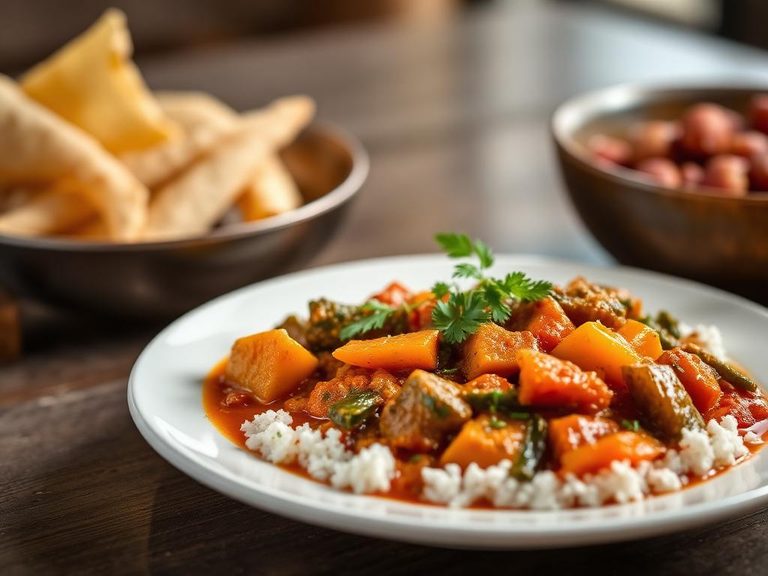
🌍 Where it's eaten
💡 Did you know?
The combination is so nutritionally complete that some survival and military ration guides have historically used a mix of these three vegetables as a benchmark for a balanced, vitamin-rich side dish.
Full nutrition (USDA data · scales with serving)
| Water | 89.0 g |
| Energy | 50.0 kcal |
| Protein | 1.7 g |
| Total lipid (fat) | 2.9 g |
| Carbohydrate, by difference | 5.4 g |
| Fiber, total dietary | 2.9 g |
| Total Sugars | 2.1 g |
| Calcium, Ca | 28.0 mg |
| Iron, Fe | 0.50 mg |
| Magnesium, Mg | 11.0 mg |
| Phosphorus, P | 34.0 mg |
| Potassium, K | 153 mg |
| Sodium, Na | 151 mg |
| Zinc, Zn | 0.25 mg |
| Copper, Cu | 0.04 mg |
| Selenium, Se | 0.60 ug |
| Vitamin C, total ascorbic acid | 23.8 mg |
| Thiamin | 0.04 mg |
| Riboflavin | 0.06 mg |
| Niacin | 0.38 mg |
| Vitamin B-6 | 0.11 mg |
| Folate, total | 35.0 ug |
| Folic acid | 0.00 ug |
| Folate, food | 35.0 ug |
| Folate, DFE | 35.0 ug |
| Choline, total | 19.0 mg |
| Vitamin B-12 | 0.00 ug |
| Vitamin B-12, added | 0.00 ug |
| Vitamin A, RAE | 301 ug |
| Retinol | 11.0 ug |
| Carotene, beta | 2844 ug |
| Carotene, alpha | 1205 ug |
| Cryptoxanthin, beta | 0.00 ug |
| Lycopene | 0.00 ug |
| Lutein + zeaxanthin | 579 ug |
| Vitamin E (alpha-tocopherol) | 1.2 mg |
| Vitamin E, added | 0.00 mg |
| Vitamin D (D2 + D3) | 0.00 ug |
| Vitamin K (phylloquinone) | 38.8 ug |
| Alcohol, ethyl | 0.00 g |
| Caffeine | 0.00 mg |
| Theobromine | 0.00 mg |
Fat & fatty acid profile (per 100g)
| Fatty acids, total saturated | 0.73 g |
| SFA 4:0 | 0.02 g |
| SFA 6:0 | 0.01 g |
| SFA 8:0 | 0.01 g |
| SFA 10:0 | 0.02 g |
| SFA 12:0 | 0.02 g |
| SFA 14:0 | 0.07 g |
| SFA 16:0 | 0.41 g |
| SFA 18:0 | 0.14 g |
| Fatty acids, total monounsaturated | 0.93 g |
| MUFA 16:1 | 0.02 g |
| MUFA 18:1 | 0.89 g |
| MUFA 20:1 | 0.01 g |
| MUFA 22:1 | 0.00 g |
| Fatty acids, total polyunsaturated | 0.90 g |
| PUFA 18:2 | 0.76 g |
| PUFA 18:3 | 0.14 g |
| PUFA 18:4 | 0.00 g |
| PUFA 20:4 | 0.00 g |
| PUFA 20:5 n-3 (EPA) | 0.00 g |
| PUFA 22:5 n-3 (DPA) | 0.00 g |
| PUFA 22:6 n-3 (DHA) | 0.00 g |
| Cholesterol | 2.0 mg |
Amino acid profile (per 100g)
Estimated from Broccoli, cooked, boiled, drained, with salt — USDA does not publish this profile for Broccoli.
| Tryptophan | 0.03 g |
| Threonine | 0.10 g |
| Isoleucine | 0.09 g |
| Leucine | 0.15 g |
| Lysine | 0.15 g |
| Methionine | 0.04 g |
| Cystine | 0.03 g |
| Phenylalanine | 0.12 g |
| Tyrosine | 0.06 g |
| Valine | 0.14 g |
| Arginine | 0.20 g |
| Histidine | 0.06 g |
| Alanine | 0.11 g |
| Aspartic acid | 0.33 g |
| Glutamic acid | 0.55 g |
| Glycine | 0.10 g |
| Proline | 0.11 g |
| Serine | 0.13 g |
FAQ
Is this dish suitable for a low-carb diet?
Yes, it's relatively low in carbohydrates, with about 5.4g per 100g. The net carbs (carbs minus fiber) are even lower, making it a good fit for most low-carb and ketogenic diets.
How does the 'fat added' affect the nutrition?
The added fat (like oil or butter) increases the calorie and fat content significantly compared to steamed vegetables. It also helps your body absorb the fat-soluble vitamins (A, D, E, K) present in the vegetables, especially vitamin A from the carrots.
Can I make this without adding fat?
Absolutely. Steaming or boiling the vegetables without fat will drastically reduce the calories and fat content. You can then season with herbs, spices, lemon juice, or a small amount of low-sodium broth for flavor.
Nutrient density (calculated · NRF9.3)
Nutrient Rich Foods index: beneficial nutrients (protein, fiber, vitamins, minerals) minus saturated fat, added sugar & sodium, per 100 kcal.
NRF9.3 index — Fulgoni, Keast & Drewnowski, 2009. Computed from USDA nutrients.
Weight-loss friendliness (composite index)
Energy density 0.50 kcal/g · 14% calories from protein · 2.9 g fiber · 2.1 g sugar per 100 g.
Composite of energy density (Rolls et al., 1999), protein & fiber satiety, minus sugar. A calculated heuristic — ranks satiety-per-calorie, not a clinical measure.
Dietary load (calculated from USDA values)
Potential renal acid load. Positive = acid-forming, negative = alkaline-forming.
Sodium-to-potassium ratio: 0.99 (lower is better — aim for ≤ 1)
Sodium:potassium per WHO potassium guidance. Computed from USDA nutrients.