

Broccoli and cauliflower, cooked, fat added
Common food
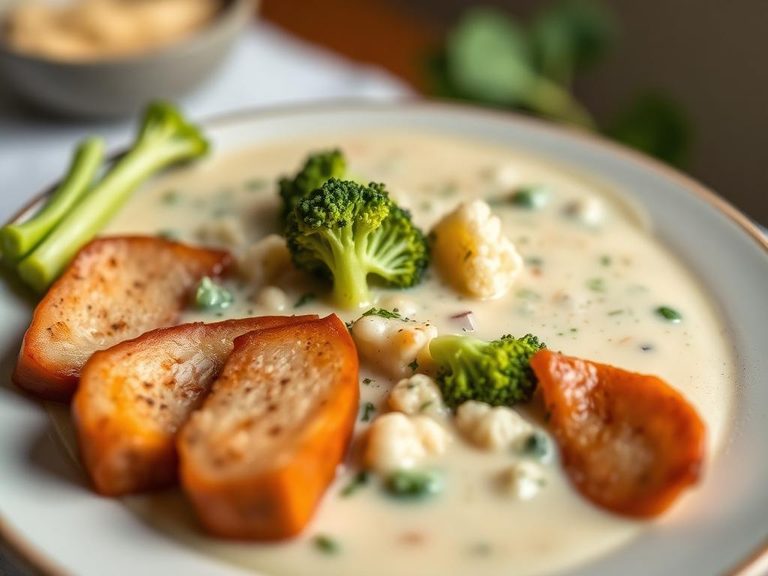
This is a vibrant medley of tender-crisp broccoli florets and creamy cauliflower, often sautéed or roasted with a touch of fat to enhance their natural sweetness. The broccoli brings a deep, earthy flavor and a slightly fibrous bite, while the cauliflower offers a milder, nutty sweetness and a softer, more yielding texture. Despite the added fat, it remains a low-calorie, high-fiber side dish that delivers a satisfying mix of vitamins and minerals.
Calorie split: 18% protein · 34% carbs · 48% fat
↓ Full nutrition💚 Why it's loved
People love this combination for its perfect balance of flavors and textures—the robust, grassy notes of broccoli paired with the subtle, buttery sweetness of cauliflower. It's a versatile canvas that absorbs seasonings beautifully, making it a beloved side in everything from simple weeknight dinners to elegant holiday feasts.
⚠️ Watch-outs & how to enjoy it better
Some may find the cruciferous vegetables cause digestive gas or bloating due to their fiber and raffinose content. To minimize this, introduce them gradually into your diet, ensure they are cooked until tender (but not mushy), and consider chewing thoroughly. Those monitoring blood sugar should note the added fat doesn't significantly impact the low glycemic load, but pairing with a lean protein can further balance the meal.
Key benefits
- Excellent source of dietary fiber (2.8g per 100g) for digestive health.
- Rich in vitamin C and vitamin K from both cruciferous vegetables.
- Contains sulforaphane and glucosinolates, compounds studied for their antioxidant properties.
- Low in calories (46 kcal/100g) while being nutrient-dense.
- Provides plant-based protein (2.29g/100g) for a vegetable side.
🍽️ Popular dishes
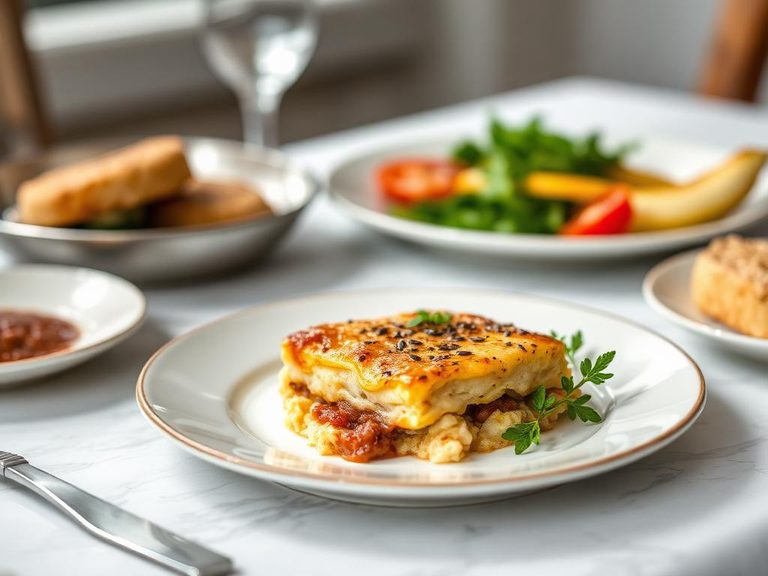
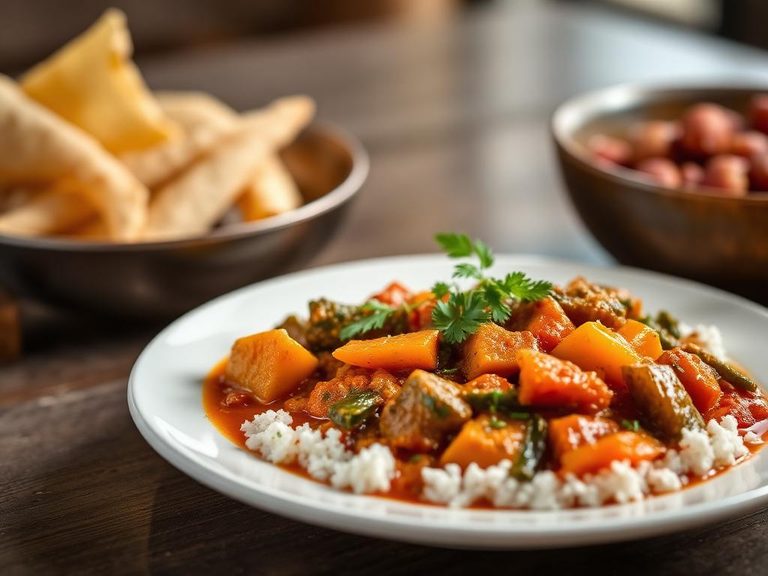
🌍 Where it's eaten
💡 Did you know?
Both broccoli and cauliflower are cultivars of the same species, *Brassica oleracea*, meaning they are genetically siblings alongside cabbage, kale, and Brussels sprouts, each selectively bred for different edible parts.
Full nutrition (USDA data · scales with serving)
| Water | 89.7 g |
| Energy | 46.0 kcal |
| Protein | 2.3 g |
| Total lipid (fat) | 2.7 g |
| Carbohydrate, by difference | 4.4 g |
| Fiber, total dietary | 2.8 g |
| Total Sugars | 1.2 g |
| Calcium, Ca | 25.0 mg |
| Iron, Fe | 0.50 mg |
| Magnesium, Mg | 11.0 mg |
| Phosphorus, P | 36.0 mg |
| Potassium, K | 136 mg |
| Sodium, Na | 135 mg |
| Zinc, Zn | 0.20 mg |
| Copper, Cu | 0.03 mg |
| Selenium, Se | 0.60 ug |
| Vitamin C, total ascorbic acid | 34.6 mg |
| Thiamin | 0.04 mg |
| Riboflavin | 0.07 mg |
| Niacin | 0.37 mg |
| Vitamin B-6 | 0.12 mg |
| Folate, total | 47.0 ug |
| Folic acid | 0.00 ug |
| Folate, food | 47.0 ug |
| Folate, DFE | 47.0 ug |
| Choline, total | 24.3 mg |
| Vitamin B-12 | 0.00 ug |
| Vitamin B-12, added | 0.00 ug |
| Vitamin A, RAE | 36.0 ug |
| Retinol | 11.0 ug |
| Carotene, beta | 297 ug |
| Carotene, alpha | 9.0 ug |
| Cryptoxanthin, beta | 1.0 ug |
| Lycopene | 0.00 ug |
| Lutein + zeaxanthin | 542 ug |
| Vitamin E (alpha-tocopherol) | 1.1 mg |
| Vitamin E, added | 0.00 mg |
| Vitamin D (D2 + D3) | 0.00 ug |
| Vitamin K (phylloquinone) | 50.5 ug |
| Alcohol, ethyl | 0.00 g |
| Caffeine | 0.00 mg |
| Theobromine | 0.00 mg |
Fat & fatty acid profile (per 100g)
| Fatty acids, total saturated | 0.69 g |
| SFA 4:0 | 0.02 g |
| SFA 6:0 | 0.01 g |
| SFA 8:0 | 0.01 g |
| SFA 10:0 | 0.02 g |
| SFA 12:0 | 0.02 g |
| SFA 14:0 | 0.06 g |
| SFA 16:0 | 0.39 g |
| SFA 18:0 | 0.14 g |
| Fatty acids, total monounsaturated | 0.92 g |
| MUFA 16:1 | 0.01 g |
| MUFA 18:1 | 0.88 g |
| MUFA 20:1 | 0.01 g |
| MUFA 22:1 | 0.00 g |
| Fatty acids, total polyunsaturated | 0.81 g |
| PUFA 18:2 | 0.67 g |
| PUFA 18:3 | 0.14 g |
| PUFA 18:4 | 0.00 g |
| PUFA 20:4 | 0.00 g |
| PUFA 20:5 n-3 (EPA) | 0.00 g |
| PUFA 22:5 n-3 (DPA) | 0.00 g |
| PUFA 22:6 n-3 (DHA) | 0.00 g |
| Cholesterol | 2.0 mg |
FAQ
Is this dish still healthy with the added fat?
Yes, the fat (often olive oil or butter) is typically used in moderation for cooking and flavor. It helps your body absorb fat-soluble vitamins like A, K, and E from the vegetables, making the nutrients more bioavailable.
How can I prevent the vegetables from becoming mushy?
Use high-heat cooking methods like roasting or sautéing. Cut florets to a uniform size, don't overcrowd the pan, and cook just until they are tender-crisp (bright in color and offering slight resistance when pierced with a fork).
Can I eat this if I'm on a low-FODMAP diet?
Cauliflower can be high in FODMAPs (specifically fructans), which may trigger symptoms in sensitive individuals. A typical serving size (about 1/2 cup or 75g) is often considered low-FODMAP. Broccoli is also moderate in FODMAPs. Portion control and thorough cooking are key.
Nutrient density (calculated · NRF9.3)
Nutrient Rich Foods index: beneficial nutrients (protein, fiber, vitamins, minerals) minus saturated fat, added sugar & sodium, per 100 kcal.
NRF9.3 index — Fulgoni, Keast & Drewnowski, 2009. Computed from USDA nutrients.
Weight-loss friendliness (composite index)
Energy density 0.46 kcal/g · 20% calories from protein · 2.8 g fiber · 1.2 g sugar per 100 g.
Composite of energy density (Rolls et al., 1999), protein & fiber satiety, minus sugar. A calculated heuristic — ranks satiety-per-calorie, not a clinical measure.
Dietary load (calculated from USDA values)
Potential renal acid load. Positive = acid-forming, negative = alkaline-forming.
Sodium-to-potassium ratio: 0.99 (lower is better — aim for ≤ 1)
Sodium:potassium per WHO potassium guidance. Computed from USDA nutrients.