

Bread, pumpernickel
Common food

Photo: Wikipedia
Pumpernickel is a dense, dark German rye bread with a distinctive sweet-sour flavor and a moist, cake-like texture. It's made from coarsely ground rye flour and often sweetened with molasses, giving it a deep, earthy color. Its nutrition profile is notable for its high fiber and relatively high protein content for a bread.
Calorie split: 14% protein · 75% carbs · 11% fat
↓ Full nutrition💚 Why it's loved
People love pumpernickel for its robust, complex flavor that pairs perfectly with strong cheeses, smoked fish, and cured meats. Its dense texture holds up well to toppings and toasting, making it a versatile base for hearty open-faced sandwiches.
⚠️ Watch-outs & how to enjoy it better
Its dense, chewy texture can be challenging for some, and the strong, sour flavor isn't for everyone. Those monitoring blood sugar should be mindful of portion sizes, as it's still a carbohydrate source. To counteract, pair it with protein-rich foods like eggs or fish and healthy fats like avocado to slow digestion.
Key benefits
- High in dietary fiber (6.5g per 100g)
- Good source of plant-based protein (8.7g per 100g)
- Low in sugar (0.53g per 100g)
- Provides sustained energy due to complex carbs and fiber
- Contains minerals like magnesium and iron from whole rye
🍽️ Popular dishes
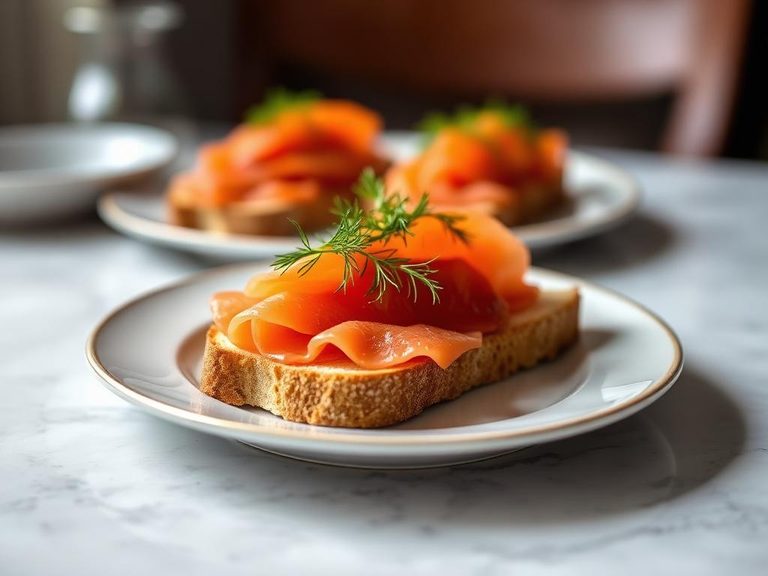
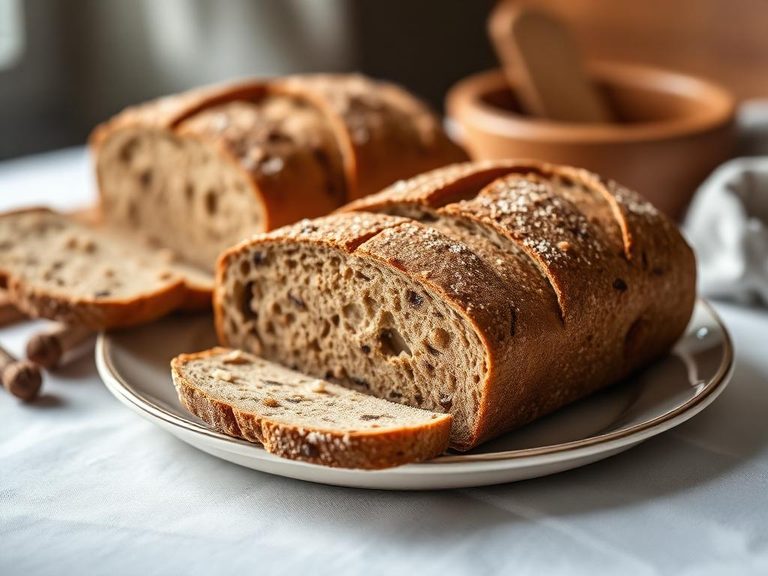
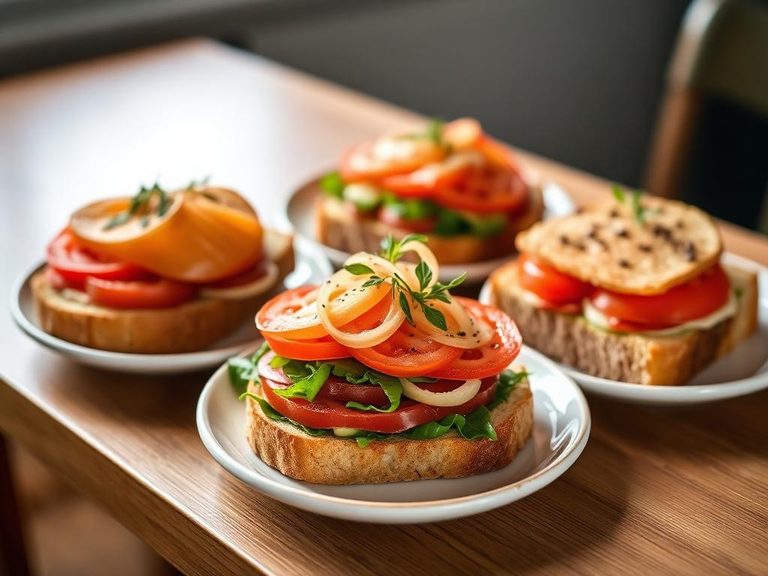
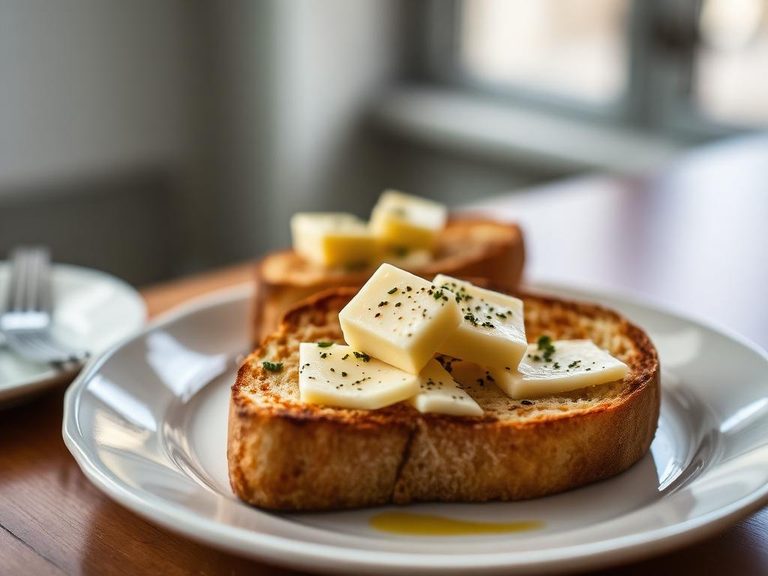
🌍 Where it's eaten
💡 Did you know?
Traditional Westphalian pumpernickel is baked in a sealed tin for up to 24 hours at a low temperature, a process that caramelizes the bread's natural sugars and gives it its signature dark color and moist texture without any added molasses.
Full nutrition (USDA data · scales with serving)
| Water | 37.9 g |
| Energy | 250 kcal |
| Protein | 8.7 g |
| Total lipid (fat) | 3.1 g |
| Carbohydrate, by difference | 47.5 g |
| Fiber, total dietary | 6.5 g |
| Total Sugars | 0.53 g |
| Calcium, Ca | 68.0 mg |
| Iron, Fe | 2.9 mg |
| Magnesium, Mg | 54.0 mg |
| Phosphorus, P | 178 mg |
| Potassium, K | 208 mg |
| Sodium, Na | 596 mg |
| Zinc, Zn | 1.5 mg |
| Copper, Cu | 0.29 mg |
| Selenium, Se | 24.5 ug |
| Vitamin C, total ascorbic acid | 0.00 mg |
| Thiamin | 0.33 mg |
| Riboflavin | 0.30 mg |
| Niacin | 3.1 mg |
| Vitamin B-6 | 0.13 mg |
| Folate, total | 93.0 ug |
| Folic acid | 59.0 ug |
| Folate, food | 34.0 ug |
| Folate, DFE | 134 ug |
| Choline, total | 14.6 mg |
| Vitamin B-12 | 0.00 ug |
| Vitamin B-12, added | 0.00 ug |
| Vitamin A, RAE | 0.00 ug |
| Retinol | 0.00 ug |
| Carotene, beta | 0.00 ug |
| Carotene, alpha | 0.00 ug |
| Cryptoxanthin, beta | 0.00 ug |
| Lycopene | 0.00 ug |
| Lutein + zeaxanthin | 46.0 ug |
| Vitamin E (alpha-tocopherol) | 0.42 mg |
| Vitamin E, added | 0.00 mg |
| Vitamin D (D2 + D3) | 0.00 ug |
| Vitamin K (phylloquinone) | 0.80 ug |
| Alcohol, ethyl | 0.00 g |
| Caffeine | 0.00 mg |
| Theobromine | 0.00 mg |
Fat & fatty acid profile (per 100g)
| Fatty acids, total saturated | 0.44 g |
| SFA 4:0 | 0.00 g |
| SFA 6:0 | 0.00 g |
| SFA 8:0 | 0.00 g |
| SFA 10:0 | 0.00 g |
| SFA 12:0 | 0.00 g |
| SFA 14:0 | 0.00 g |
| SFA 16:0 | 0.33 g |
| SFA 18:0 | 0.10 g |
| Fatty acids, total monounsaturated | 0.93 g |
| MUFA 16:1 | 0.02 g |
| MUFA 18:1 | 0.91 g |
| MUFA 20:1 | 0.00 g |
| MUFA 22:1 | 0.00 g |
| Fatty acids, total polyunsaturated | 1.2 g |
| PUFA 18:2 | 1.1 g |
| PUFA 18:3 | 0.09 g |
| PUFA 18:4 | 0.00 g |
| PUFA 20:4 | 0.00 g |
| PUFA 20:5 n-3 (EPA) | 0.00 g |
| PUFA 22:5 n-3 (DPA) | 0.00 g |
| PUFA 22:6 n-3 (DHA) | 0.00 g |
| Cholesterol | 0.00 mg |
Amino acid profile (per 100g)
Estimated from Bread, salvadoran sweet cheese (quesadilla salvadorena) — USDA does not publish this profile for Bread.
| Tryptophan | 0.07 g |
| Threonine | 0.21 g |
| Isoleucine | 0.30 g |
| Leucine | 0.65 g |
| Lysine | 0.50 g |
| Methionine | 0.28 g |
| Cystine | 0.06 g |
| Phenylalanine | 0.37 g |
| Tyrosine | 0.23 g |
| Valine | 0.43 g |
| Arginine | 0.25 g |
| Histidine | 0.15 g |
| Alanine | 0.36 g |
| Aspartic acid | 0.59 g |
| Glutamic acid | 1.3 g |
| Glycine | 0.20 g |
| Proline | 0.83 g |
| Serine | 0.45 g |
| Hydroxyproline | 0.00 g |
FAQ
Is pumpernickel the same as black bread?
Not exactly. While 'black bread' is a general term for dark rye breads, authentic pumpernickel is a specific type made from coarsely ground rye berries and baked for a very long time, giving it a unique, non-bitter flavor.
Why is it so dense and moist?
The density comes from using whole rye berries and a very long, slow baking process. This breaks down the starches and creates a moist, cake-like crumb without needing much fat or sugar.
Does it contain gluten?
Yes. Pumpernickel is made from rye, which contains gluten (though less than wheat). It is not suitable for people with celiac disease or gluten intolerance.
Nutrient density (calculated · NRF9.3)
Nutrient Rich Foods index: beneficial nutrients (protein, fiber, vitamins, minerals) minus saturated fat, added sugar & sodium, per 100 kcal.
NRF9.3 index — Fulgoni, Keast & Drewnowski, 2009. Computed from USDA nutrients.
Weight-loss friendliness (composite index)
Energy density 2.50 kcal/g · 14% calories from protein · 6.5 g fiber · 0.5 g sugar per 100 g.
Composite of energy density (Rolls et al., 1999), protein & fiber satiety, minus sugar. A calculated heuristic — ranks satiety-per-calorie, not a clinical measure.
Dietary load (calculated from USDA values)
Potential renal acid load. Positive = acid-forming, negative = alkaline-forming.
Sodium-to-potassium ratio: 2.87 (lower is better — aim for ≤ 1)
Sodium:potassium per WHO potassium guidance. Computed from USDA nutrients.