

Bread, marble rye and pumpernickel, toasted
Common food

Photo: Wikipedia
Marble rye and pumpernickel is a striking, dual-toned bread where the earthy, sour tang of rye dough is swirled with the deep, malty sweetness of pumpernickel. When toasted, the crust develops a satisfying crunch while the interior remains dense and chewy, releasing a rich, complex aroma. It's a nutritionally robust choice, offering a notable 6.4 grams of dietary fiber per 100 grams to support digestion.
Calorie split: 13% protein · 75% carbs · 12% fat
↓ Full nutrition💚 Why it's loved
People adore its dramatic visual appeal and the sophisticated flavor interplay between the sour and sweet doughs. It's a versatile canvas for both savory and sweet toppings, making it a staple for iconic sandwiches and a symbol of hearty, traditional baking.
⚠️ Watch-outs & how to enjoy it better
The dense texture and strong flavors can be polarizing, and its high fiber content may cause digestive discomfort if eaten in large amounts. Those monitoring blood sugar should be mindful of its carbohydrate count, and individuals with celiac disease must avoid it due to gluten. To mitigate, pair it with protein and healthy fats (like smoked salmon and cream cheese) to slow digestion and balance the meal.
Key benefits
- High in dietary fiber for digestive health
- Provides plant-based protein from whole grains
- Lower glycemic index than many white breads
- Contains minerals like iron and magnesium from rye
- Complex carbohydrates for sustained energy
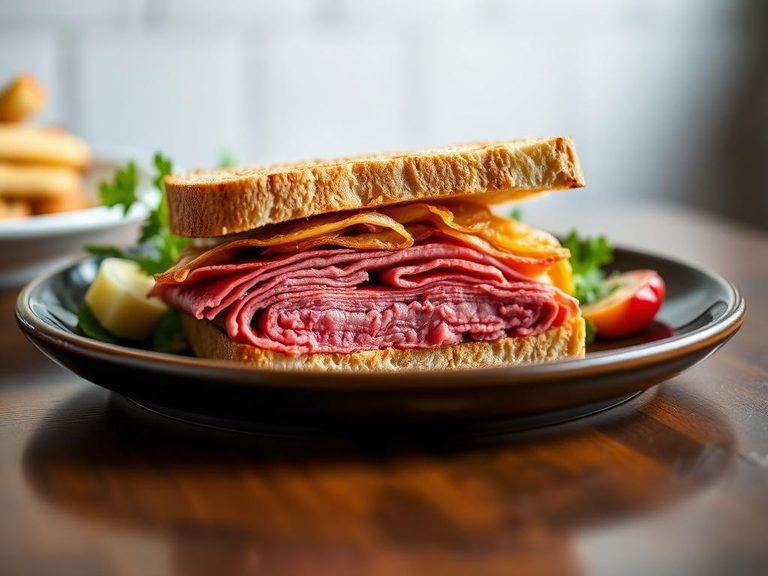
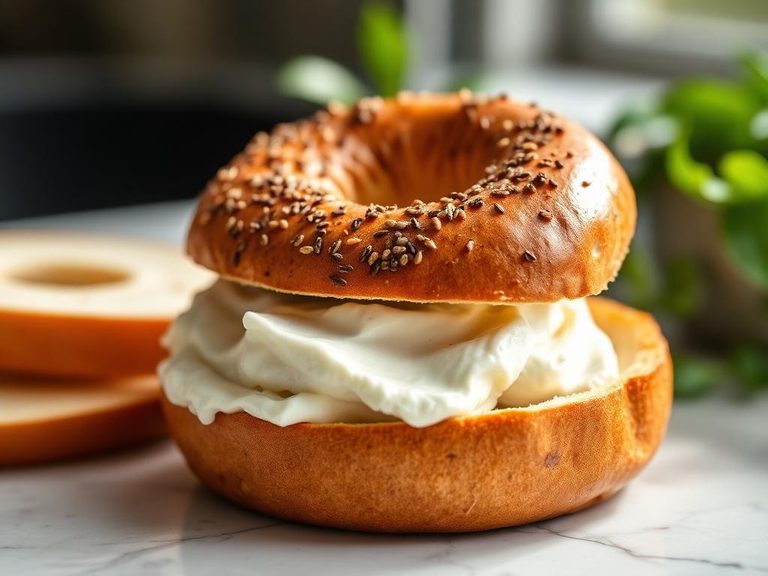
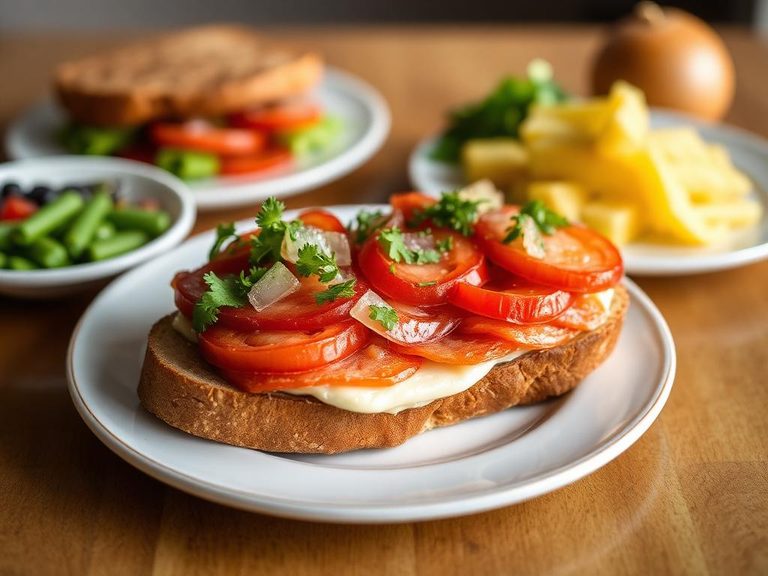
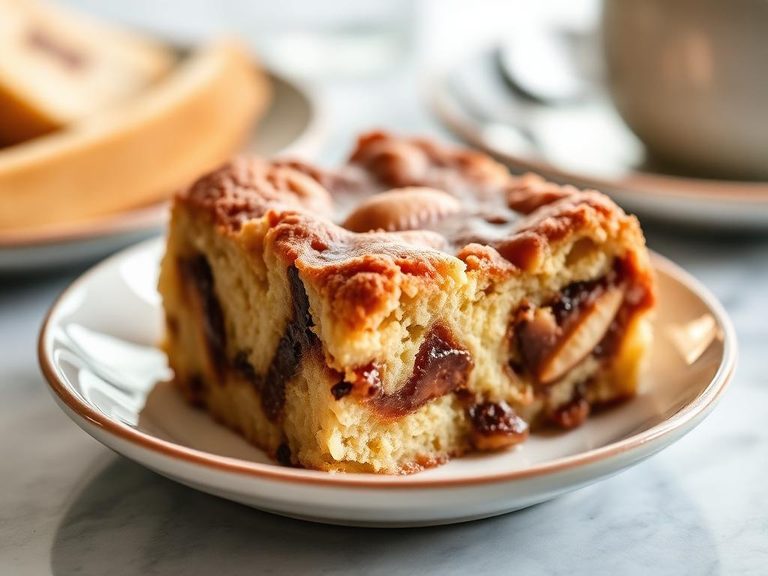
🍽️ Popular dishes
🌍 Where it's eaten
💡 Did you know?
The distinctive dark color of pumpernickel comes from a long, slow baking process (up to 24 hours) that caramelizes the bread's natural sugars, not from added molasses or food coloring.
Full nutrition (USDA data · scales with serving)
| Water | 31.1 g |
| Energy | 285 kcal |
| Protein | 9.3 g |
| Total lipid (fat) | 3.6 g |
| Carbohydrate, by difference | 53.1 g |
| Fiber, total dietary | 6.4 g |
| Total Sugars | 4.2 g |
| Calcium, Ca | 80.0 mg |
| Iron, Fe | 3.1 mg |
| Magnesium, Mg | 44.0 mg |
| Phosphorus, P | 137 mg |
| Potassium, K | 182 mg |
| Sodium, Na | 626 mg |
| Zinc, Zn | 1.3 mg |
| Copper, Cu | 0.20 mg |
| Selenium, Se | 34.0 ug |
| Vitamin C, total ascorbic acid | 0.40 mg |
| Thiamin | 0.38 mg |
| Riboflavin | 0.37 mg |
| Niacin | 4.2 mg |
| Vitamin B-6 | 0.08 mg |
| Folate, total | 103 ug |
| Folic acid | 55.0 ug |
| Folate, food | 48.0 ug |
| Folate, DFE | 141 ug |
| Choline, total | 16.0 mg |
| Vitamin B-12 | 0.00 ug |
| Vitamin B-12, added | 0.00 ug |
| Vitamin A, RAE | 0.00 ug |
| Retinol | 0.00 ug |
| Carotene, beta | 4.0 ug |
| Carotene, alpha | 0.00 ug |
| Cryptoxanthin, beta | 1.0 ug |
| Lycopene | 0.00 ug |
| Lutein + zeaxanthin | 56.0 ug |
| Vitamin E (alpha-tocopherol) | 0.36 mg |
| Vitamin E, added | 0.00 mg |
| Vitamin D (D2 + D3) | 0.00 ug |
| Vitamin K (phylloquinone) | 1.3 ug |
| Alcohol, ethyl | 0.00 g |
| Caffeine | 0.00 mg |
| Theobromine | 0.00 mg |
Fat & fatty acid profile (per 100g)
| Fatty acids, total saturated | 0.69 g |
| SFA 4:0 | 0.00 g |
| SFA 6:0 | 0.00 g |
| SFA 8:0 | 0.00 g |
| SFA 10:0 | 0.00 g |
| SFA 12:0 | 0.00 g |
| SFA 14:0 | 0.01 g |
| SFA 16:0 | 0.42 g |
| SFA 18:0 | 0.25 g |
| Fatty acids, total monounsaturated | 1.4 g |
| MUFA 16:1 | 0.01 g |
| MUFA 18:1 | 1.4 g |
| MUFA 20:1 | 0.00 g |
| MUFA 22:1 | 0.00 g |
| Fatty acids, total polyunsaturated | 0.88 g |
| PUFA 18:2 | 0.81 g |
| PUFA 18:3 | 0.07 g |
| PUFA 18:4 | 0.00 g |
| PUFA 20:4 | 0.00 g |
| PUFA 20:5 n-3 (EPA) | 0.00 g |
| PUFA 22:5 n-3 (DPA) | 0.00 g |
| PUFA 22:6 n-3 (DHA) | 0.00 g |
| Cholesterol | 0.00 mg |
Amino acid profile (per 100g)
Estimated from Bread, salvadoran sweet cheese (quesadilla salvadorena) — USDA does not publish this profile for Bread.
| Tryptophan | 0.07 g |
| Threonine | 0.21 g |
| Isoleucine | 0.30 g |
| Leucine | 0.65 g |
| Lysine | 0.50 g |
| Methionine | 0.28 g |
| Cystine | 0.06 g |
| Phenylalanine | 0.37 g |
| Tyrosine | 0.23 g |
| Valine | 0.43 g |
| Arginine | 0.25 g |
| Histidine | 0.15 g |
| Alanine | 0.36 g |
| Aspartic acid | 0.59 g |
| Glutamic acid | 1.3 g |
| Glycine | 0.20 g |
| Proline | 0.83 g |
| Serine | 0.45 g |
| Hydroxyproline | 0.00 g |
FAQ
What's the difference between marble rye and regular rye bread?
Marble rye is a combination of two doughs—typically a light rye and a dark pumpernickel—swirled together before baking. Regular rye bread is made from a single dough, usually with varying amounts of rye flour.
Is marble rye bread healthy?
It can be a healthy part of a balanced diet. It's a good source of fiber and whole grains, but like any bread, it's calorie-dense. Its healthiness depends on the brand (some have added sugars) and how you eat it—toppings matter greatly.
Why does my marble rye get hard so quickly after toasting?
This is due to starch retrogradation, where the starch molecules recrystallize as they cool. To keep it softer longer, you can cover it immediately after toasting or store the loaf in the freezer, which slows this process.
Nutrient density (calculated · NRF9.3)
Nutrient Rich Foods index: beneficial nutrients (protein, fiber, vitamins, minerals) minus saturated fat, added sugar & sodium, per 100 kcal.
NRF9.3 index — Fulgoni, Keast & Drewnowski, 2009. Computed from USDA nutrients.
Weight-loss friendliness (composite index)
Energy density 2.85 kcal/g · 13% calories from protein · 6.4 g fiber · 4.2 g sugar per 100 g.
Composite of energy density (Rolls et al., 1999), protein & fiber satiety, minus sugar. A calculated heuristic — ranks satiety-per-calorie, not a clinical measure.
Dietary load (calculated from USDA values)
Potential renal acid load. Positive = acid-forming, negative = alkaline-forming.
Sodium-to-potassium ratio: 3.44 (lower is better — aim for ≤ 1)
Sodium:potassium per WHO potassium guidance. Computed from USDA nutrients.