

Westphalian Pumpernickel
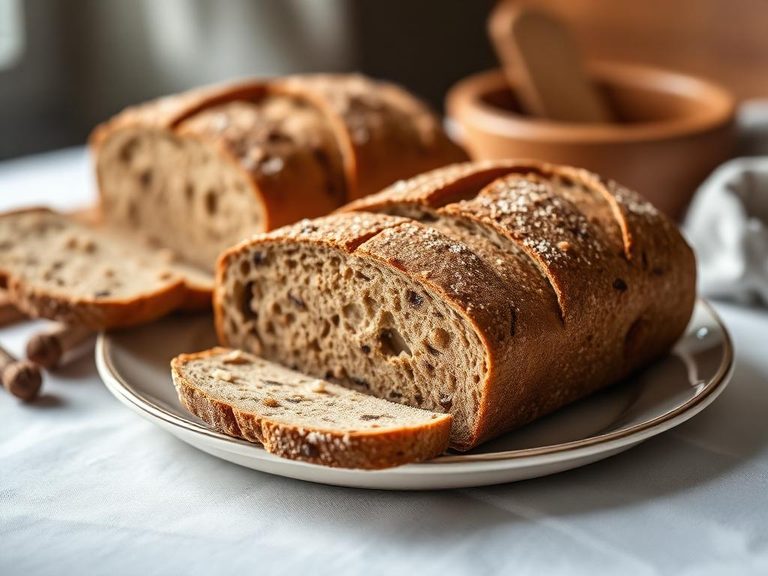
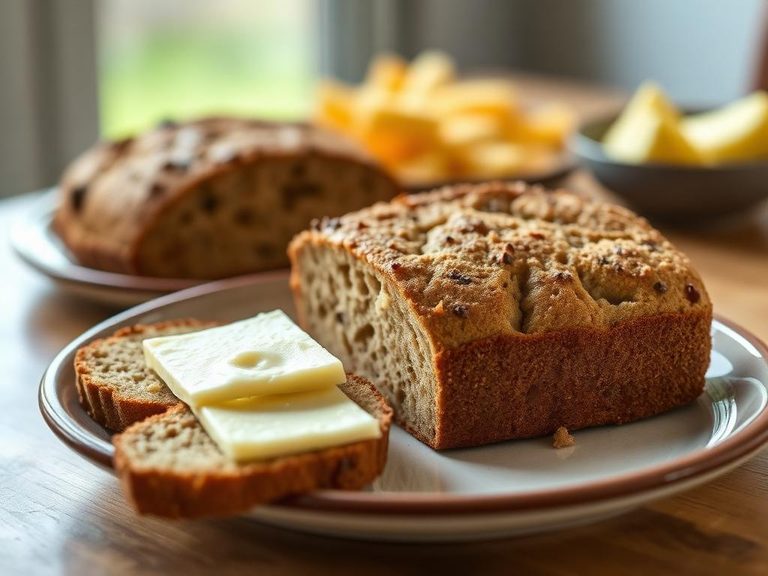
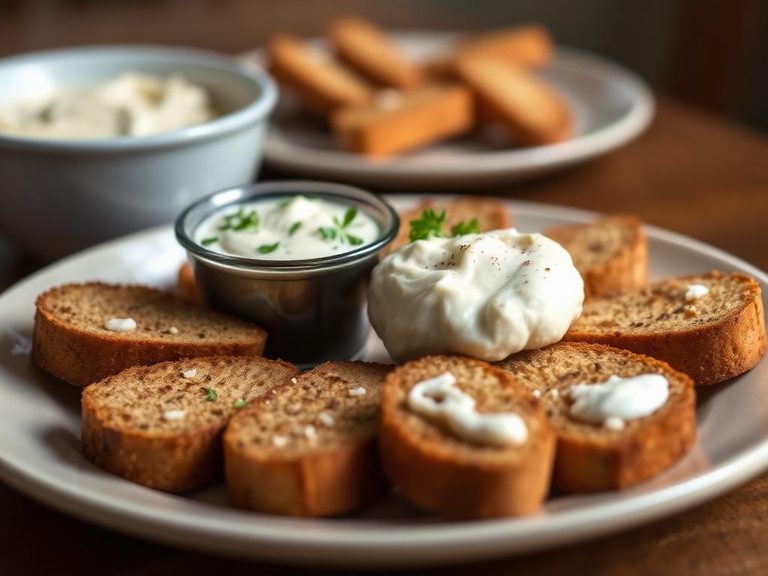
Westphalian Pumpernickel is a traditional German rye bread from the Westphalia region, known for its dense, dark, and slightly sweet character. It is made primarily from coarsely ground rye meal, water, salt, and a natural leavening like sourdough, then slow-baked at a low temperature for up to 24 hours.
🍽️ Nutrition at a glance
It is a high-carbohydrate food with a notable amount of dietary fiber and some plant-based protein, while being very low in fat. A typical serving (around 50g) provides roughly 100-120 calories.
Nutrition breakdown
| Calories | 120 kcal |
| Protein | 4.5 g |
| Carbs | 22 g |
| Fat | 1.5 g |
| Fiber | 4.5 g |
| Sugar | 1.5 g |
| Sodium | 350 mg |
| Iron | 2.5 mg |
| Magnesium | 50 mg |
| Phosphorus | 80 mg |
| Potassium | 150 mg |
| Selenium | 15 mcg |
| Thiamin (B1) | 0.2 mg |
| Niacin (B3) | 2.5 mg |
| Folate | 30 mcg |
Per 1 slice (approx. 50 g) · estimated, varies by recipe
💡 What's interesting
Its unique, deep flavor and dark color come entirely from a long, slow baking process that caramelizes the natural sugars in the rye, without any added sweeteners or artificial coloring. Nutritionally, its high fiber and low glycemic index make it a particularly sustained source of energy.
🍽️ Related dishes
AI estimate may be inaccurate · Terms