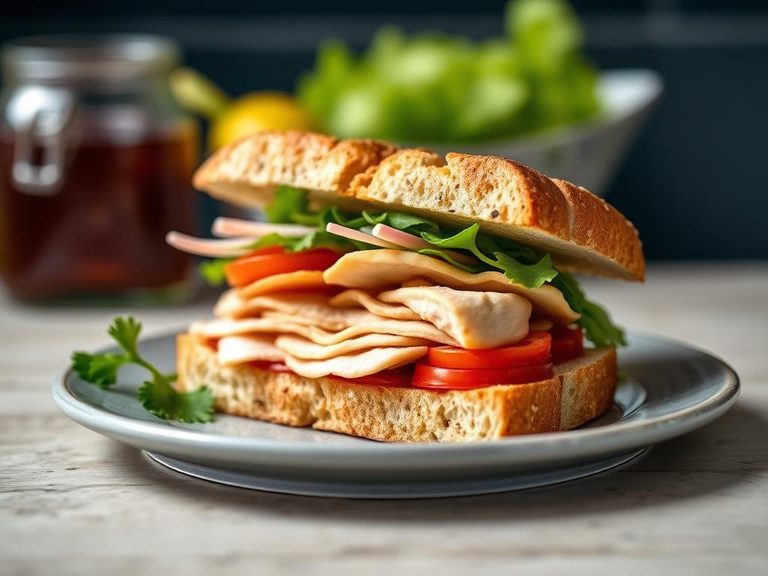
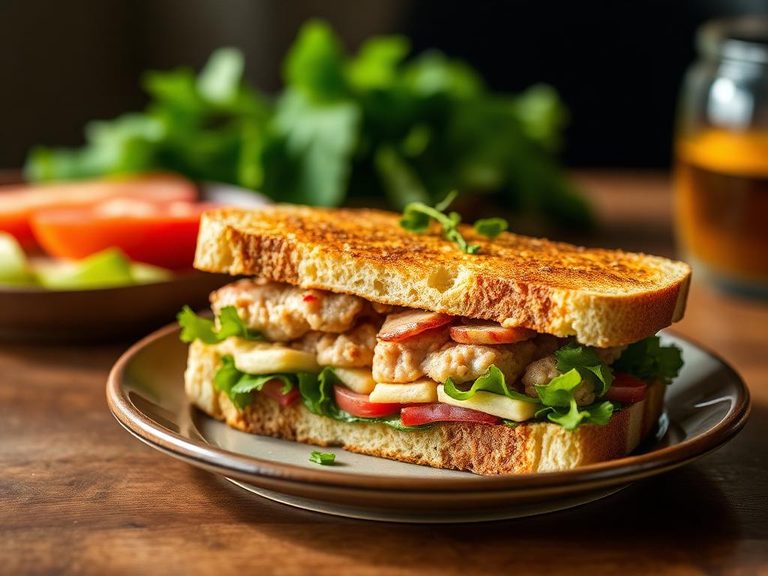
Open-faced sandwiches

Smørrebrød is a traditional Danish open-faced sandwich built on a foundation of dense, dark rye bread (rugbrød) and topped with a variety of ingredients like pickled herring, roast beef, or cheese. It is a staple of Danish cuisine, often enjoyed for lunch and celebrated for its elegant presentation and balance of flavors.
🍽️ Nutrition at a glance
Depending on the toppings, smørrebrød can be a balanced meal, with the rye bread providing complex carbohydrates and fiber, while toppings like fish or meat add protein and healthy fats. A typical serving ranges from 300 to 500 calories, making it a satisfying yet moderate lunch option.
Nutrition breakdown
| Calories | 300 kcal |
| Protein | 15 g |
| Carbs | 25 g |
| Fat | 16 g |
| Fiber | 3 g |
| Sugar | 4 g |
| Sodium | 600 mg |
| Iron | 2.5 mg |
| Calcium | 100 mg |
| Vitamin A | 150 µg RAE |
| Vitamin C | 10 mg |
| Vitamin D | 2 µg |
| Vitamin B12 | 1.5 µg |
| Potassium | 350 mg |
| Phosphorus | 200 mg |
Per 1 open-faced sandwich (approx. 150 g) · estimated, varies by recipe
💡 What's interesting
Culturally, smørrebrød is a centerpiece of Danish 'hygge' (cozy contentment) and social dining, often served at festive occasions. Nutritionally, the use of whole-grain rye bread and nutrient-dense toppings like fatty fish makes it a heart-healthy choice rich in omega-3s and fiber.