

Bread, naan
Common food

Photo: Wikipedia
Naan is a leavened, oven-baked flatbread with a soft, pillowy interior and a beautifully charred, slightly chewy crust. Its signature teardrop shape and blistered surface come from being slapped against the scorching walls of a tandoor clay oven. A single 100g piece provides a substantial 11g of protein and over 5g of dietary fiber, making it a more filling bread option.
Calorie split: 14% protein · 65% carbs · 21% fat
↓ Full nutrition💚 Why it's loved
People adore naan for its irresistible combination of a soft, fluffy crumb and a smoky, slightly charred flavor from the tandoor. It's the ultimate edible utensil, perfect for scooping up rich curries, dals, and kebabs, making it a centerpiece of communal meals.
⚠️ Watch-outs & how to enjoy it better
Its high glycemic index can cause rapid blood sugar spikes, making portion control important for those managing diabetes. The refined white flour version is low in nutrients, and traditional recipes contain common allergens like wheat (gluten) and dairy (yogurt). To counteract, opt for whole wheat naan, pair it with protein-rich dishes like chicken tikka or lentil dal to slow digestion, and be mindful of serving size.
Key benefits
- Good source of plant-based protein from wheat flour.
- Provides dietary fiber which aids in digestion.
- Contains iron, essential for oxygen transport in the blood.
- A versatile carbohydrate source for energy.
- Often enriched with B vitamins like folate.
🍽️ Popular dishes

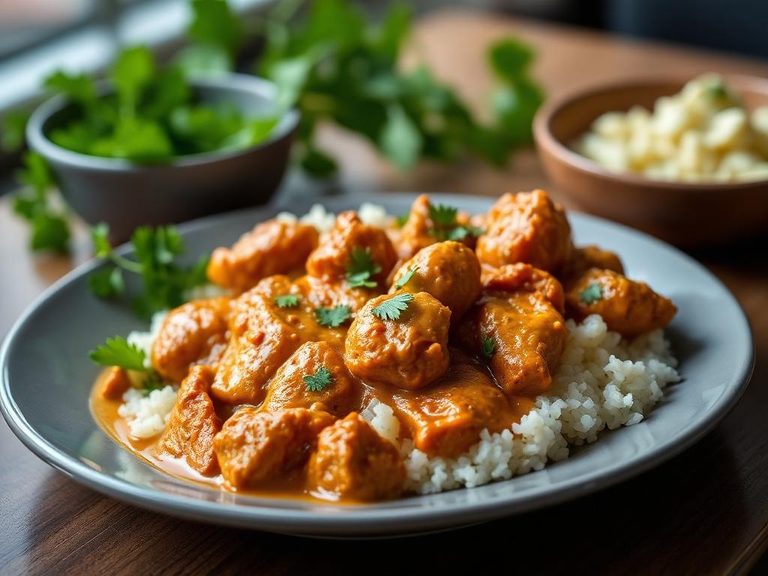
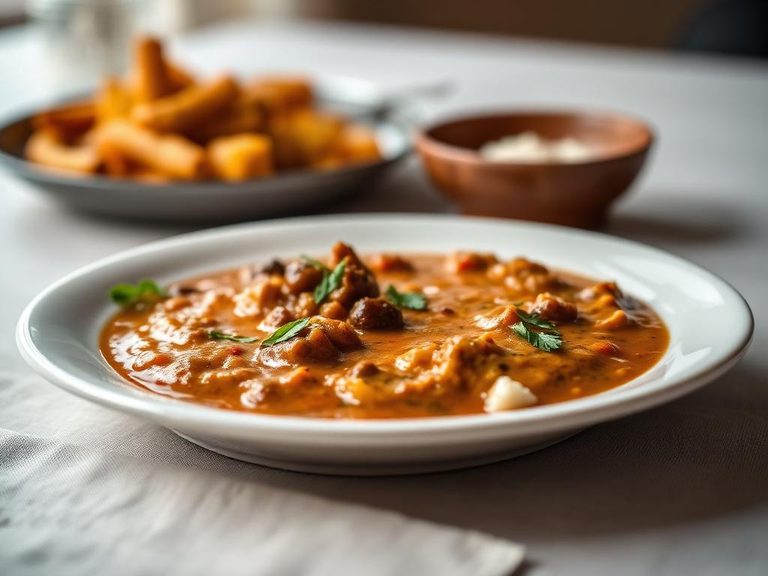
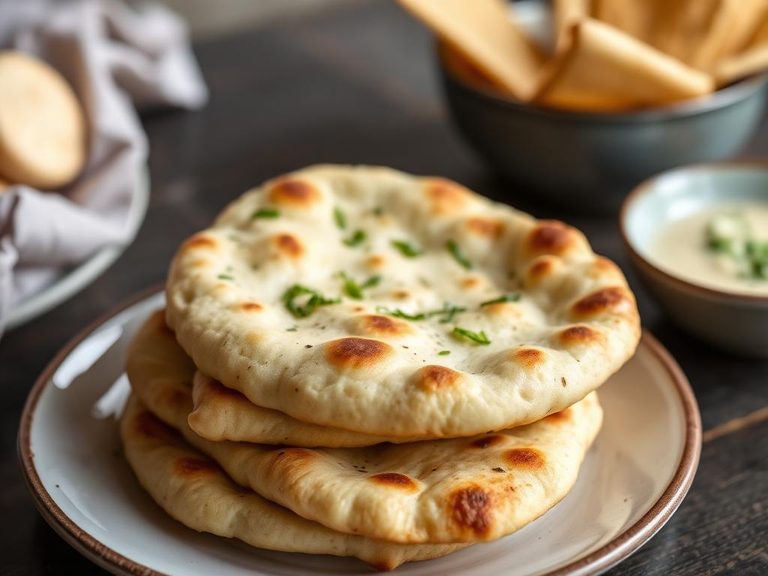
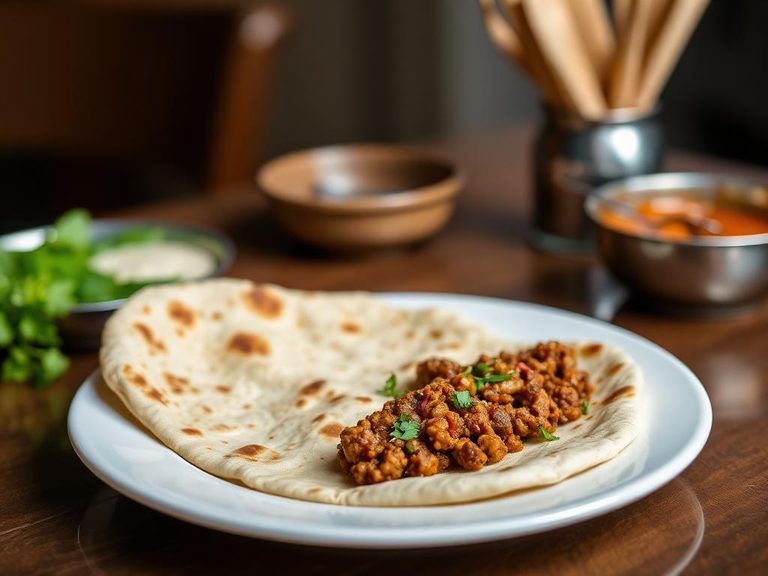

🌍 Where it's eaten
💡 Did you know?
The word 'naan' comes from the Persian word for 'bread,' and its history can be traced back to the 1300s in the notes of the Indo-Persian poet Amir Khusrau.
Full nutrition (USDA data · scales with serving)
| Water | 29.2 g |
| Energy | 311 kcal |
| Protein | 11.1 g |
| Total lipid (fat) | 7.3 g |
| Carbohydrate, by difference | 50.2 g |
| Fiber, total dietary | 5.2 g |
| Total Sugars | 3.7 g |
| Calcium, Ca | 64.0 mg |
| Iron, Fe | 1.9 mg |
| Magnesium, Mg | 74.0 mg |
| Phosphorus, P | 204 mg |
| Potassium, K | 201 mg |
| Sodium, Na | 508 mg |
| Zinc, Zn | 1.4 mg |
| Copper, Cu | 0.17 mg |
| Selenium, Se | 12.4 ug |
| Vitamin C, total ascorbic acid | 0.00 mg |
| Thiamin | 0.15 mg |
| Riboflavin | 0.20 mg |
| Niacin | 3.9 mg |
| Vitamin B-6 | 0.14 mg |
| Folate, total | 15.0 ug |
| Folic acid | 0.00 ug |
| Folate, food | 15.0 ug |
| Folate, DFE | 15.0 ug |
| Choline, total | 11.0 mg |
| Vitamin B-12 | 0.00 ug |
| Vitamin B-12, added | 0.00 ug |
| Vitamin A, RAE | 2.0 ug |
| Retinol | 2.0 ug |
| Carotene, beta | 0.00 ug |
| Carotene, alpha | 0.00 ug |
| Cryptoxanthin, beta | 0.00 ug |
| Lycopene | 0.00 ug |
| Lutein + zeaxanthin | 11.0 ug |
| Vitamin E (alpha-tocopherol) | 1.4 mg |
| Vitamin E, added | 0.00 mg |
| Vitamin D (D2 + D3) | 0.00 ug |
| Vitamin K (phylloquinone) | 3.6 ug |
| Alcohol, ethyl | 0.00 g |
| Caffeine | 0.00 mg |
| Theobromine | 0.00 mg |
Fat & fatty acid profile (per 100g)
| Fatty acids, total saturated | 3.2 g |
| SFA 4:0 | 0.00 g |
| SFA 6:0 | 0.00 g |
| SFA 8:0 | 0.00 g |
| SFA 10:0 | 0.01 g |
| SFA 12:0 | 0.03 g |
| SFA 14:0 | 0.06 g |
| SFA 16:0 | 2.7 g |
| SFA 18:0 | 0.35 g |
| Fatty acids, total monounsaturated | 2.1 g |
| MUFA 16:1 | 0.01 g |
| MUFA 18:1 | 2.1 g |
| MUFA 20:1 | 0.01 g |
| MUFA 22:1 | 0.00 g |
| Fatty acids, total polyunsaturated | 1.4 g |
| PUFA 18:2 | 1.3 g |
| PUFA 18:3 | 0.04 g |
| PUFA 18:4 | 0.00 g |
| PUFA 20:4 | 0.00 g |
| PUFA 20:5 n-3 (EPA) | 0.00 g |
| PUFA 22:5 n-3 (DPA) | 0.00 g |
| PUFA 22:6 n-3 (DHA) | 0.00 g |
| Cholesterol | 1.0 mg |
Amino acid profile (per 100g)
Estimated from Bread, salvadoran sweet cheese (quesadilla salvadorena) — USDA does not publish this profile for Bread.
| Tryptophan | 0.07 g |
| Threonine | 0.21 g |
| Isoleucine | 0.30 g |
| Leucine | 0.65 g |
| Lysine | 0.50 g |
| Methionine | 0.28 g |
| Cystine | 0.06 g |
| Phenylalanine | 0.37 g |
| Tyrosine | 0.23 g |
| Valine | 0.43 g |
| Arginine | 0.25 g |
| Histidine | 0.15 g |
| Alanine | 0.36 g |
| Aspartic acid | 0.59 g |
| Glutamic acid | 1.3 g |
| Glycine | 0.20 g |
| Proline | 0.83 g |
| Serine | 0.45 g |
| Hydroxyproline | 0.00 g |
FAQ
What's the difference between naan and pita?
Naan is leavened with yeast and yogurt, giving it a softer, chewier texture, and is traditionally baked in a tandoor. Pita is also leavened but bakes quickly at high heat to form a pocket, and has a drier, more bread-like crumb.
Can naan be made gluten-free?
Traditional naan relies on wheat gluten for its structure. While gluten-free versions exist using alternative flours (like rice or almond flour), they will have a significantly different texture and cannot replicate the classic chewy pull.
Why is my homemade naan not puffing up?
Common reasons include inactive yeast, dough not resting long enough to rise, or the oven (or skillet) not being hot enough. Ensure your yeast is bubbly, let the dough double in size, and preheat your cooking surface thoroughly.
Nutrient density (calculated · NRF9.3)
Nutrient Rich Foods index: beneficial nutrients (protein, fiber, vitamins, minerals) minus saturated fat, added sugar & sodium, per 100 kcal.
NRF9.3 index — Fulgoni, Keast & Drewnowski, 2009. Computed from USDA nutrients.
Weight-loss friendliness (composite index)
Energy density 3.11 kcal/g · 14% calories from protein · 5.2 g fiber · 3.7 g sugar per 100 g.
Composite of energy density (Rolls et al., 1999), protein & fiber satiety, minus sugar. A calculated heuristic — ranks satiety-per-calorie, not a clinical measure.
Dietary load (calculated from USDA values)
Potential renal acid load. Positive = acid-forming, negative = alkaline-forming.
Sodium-to-potassium ratio: 2.53 (lower is better — aim for ≤ 1)
Sodium:potassium per WHO potassium guidance. Computed from USDA nutrients.