

Bread, egg, Challah
Common food

Photo: Wikipedia
Challah is a rich, braided egg bread with a deep golden crust and a soft, pillowy interior that pulls apart in satisfying strands. Its flavor is subtly sweet and buttery, with a tender, slightly chewy texture that makes it ideal for both savory and sweet preparations. Nutritionally, it offers a solid protein boost (9.5g per 100g) alongside its carbohydrate base, making it more sustaining than many white breads.
Calorie split: 13% protein · 68% carbs · 19% fat
↓ Full nutrition💚 Why it's loved
People adore challah for its luxurious, egg-enriched crumb and the way its slightly sweet flavor complements everything from honey to smoked salmon. Its cultural significance in Jewish celebrations and the artistry of its braided form make it a centerpiece of tradition and comfort.
⚠️ Watch-outs & how to enjoy it better
Its relatively high carbohydrate content (47.8g/100g) and low fiber can lead to blood sugar spikes, especially when eaten plain. Those monitoring blood sugar or following low-carb diets should pair it with protein (like eggs) or healthy fats (like avocado) and practice portion control. It also contains common allergens: wheat (gluten) and eggs.
Key benefits
- Good source of plant-based protein for a bread
- Provides quick energy from complex carbohydrates
- Contains dietary fiber (2.3g/100g) for digestive health
- Versatile base for both sweet and savory meals
- Often enriched with B-vitamins from egg yolks
🍽️ Popular dishes
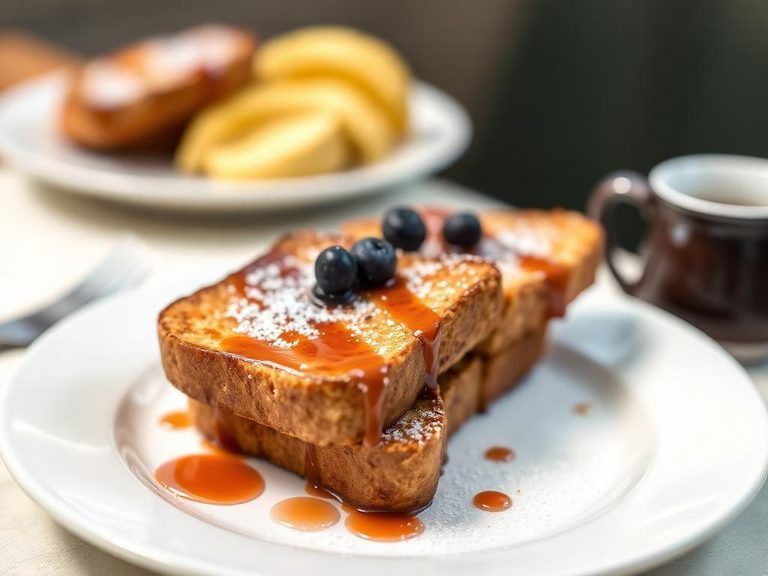
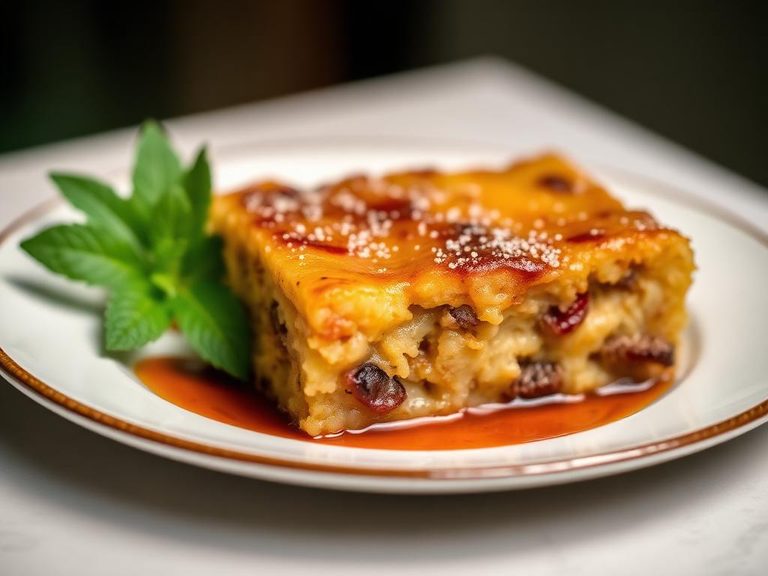
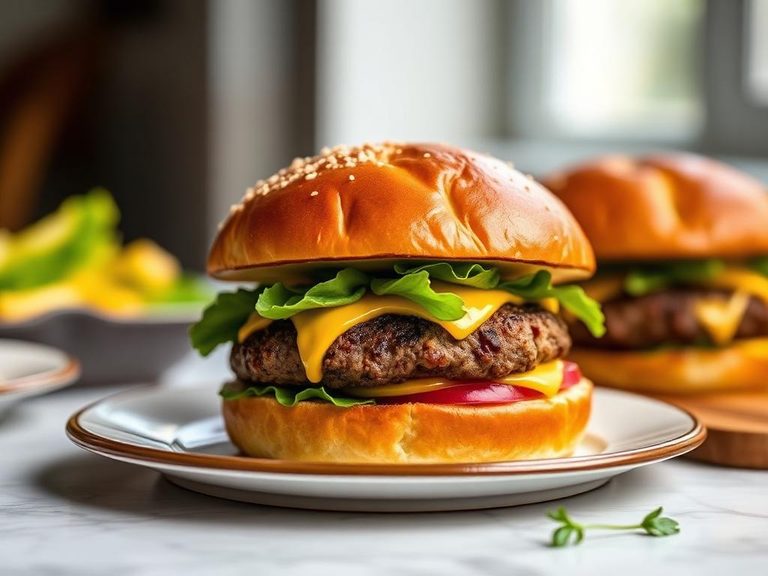
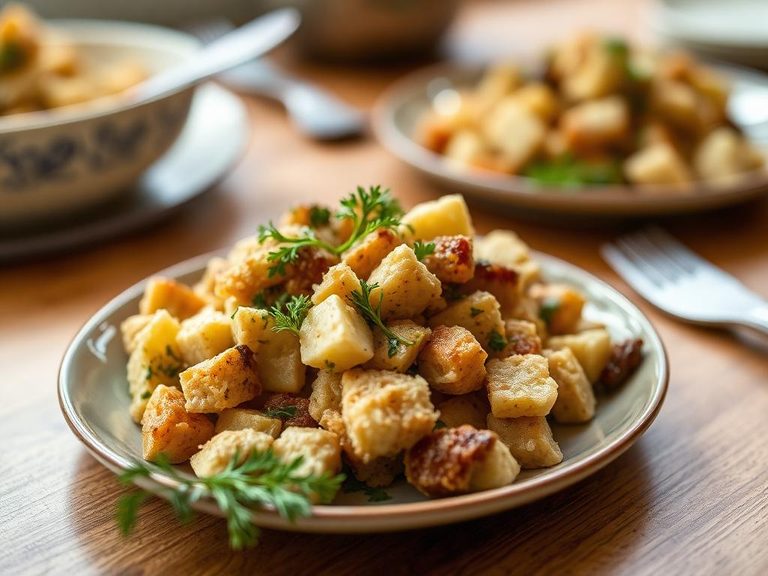

🌍 Where it's eaten
💡 Did you know?
The traditional number of strands in a challah braid has symbolic meaning: three strands represent truth, peace, and justice, while twelve strands symbolize the twelve tribes of Israel.
Full nutrition (USDA data · scales with serving)
| Water | 34.7 g |
| Energy | 287 kcal |
| Protein | 9.5 g |
| Total lipid (fat) | 6.0 g |
| Carbohydrate, by difference | 47.8 g |
| Fiber, total dietary | 2.3 g |
| Total Sugars | 1.8 g |
| Calcium, Ca | 93.0 mg |
| Iron, Fe | 3.0 mg |
| Magnesium, Mg | 19.0 mg |
| Phosphorus, P | 106 mg |
| Potassium, K | 115 mg |
| Sodium, Na | 380 mg |
| Zinc, Zn | 0.79 mg |
| Copper, Cu | 0.16 mg |
| Selenium, Se | 30.1 ug |
| Vitamin C, total ascorbic acid | 0.00 mg |
| Thiamin | 0.44 mg |
| Riboflavin | 0.44 mg |
| Niacin | 4.8 mg |
| Vitamin B-6 | 0.06 mg |
| Folate, total | 105 ug |
| Folic acid | 35.0 ug |
| Folate, food | 70.0 ug |
| Folate, DFE | 130 ug |
| Choline, total | 84.3 mg |
| Vitamin B-12 | 0.10 ug |
| Vitamin B-12, added | 0.00 ug |
| Vitamin A, RAE | 63.0 ug |
| Retinol | 63.0 ug |
| Carotene, beta | 0.00 ug |
| Carotene, alpha | 0.00 ug |
| Cryptoxanthin, beta | 0.00 ug |
| Lycopene | 0.00 ug |
| Lutein + zeaxanthin | 45.0 ug |
| Vitamin E (alpha-tocopherol) | 0.26 mg |
| Vitamin E, added | 0.00 mg |
| Vitamin D (D2 + D3) | 0.40 ug |
| Vitamin K (phylloquinone) | 0.90 ug |
| Alcohol, ethyl | 0.00 g |
| Caffeine | 0.00 mg |
| Theobromine | 0.00 mg |
Fat & fatty acid profile (per 100g)
| Fatty acids, total saturated | 1.6 g |
| SFA 4:0 | 0.00 g |
| SFA 6:0 | 0.00 g |
| SFA 8:0 | 0.00 g |
| SFA 10:0 | 0.00 g |
| SFA 12:0 | 0.00 g |
| SFA 14:0 | 0.02 g |
| SFA 16:0 | 1.1 g |
| SFA 18:0 | 0.46 g |
| Fatty acids, total monounsaturated | 2.3 g |
| MUFA 16:1 | 0.11 g |
| MUFA 18:1 | 2.2 g |
| MUFA 20:1 | 0.01 g |
| MUFA 22:1 | 0.00 g |
| Fatty acids, total polyunsaturated | 1.1 g |
| PUFA 18:2 | 1.00 g |
| PUFA 18:3 | 0.05 g |
| PUFA 18:4 | 0.00 g |
| PUFA 20:4 | 0.05 g |
| PUFA 20:5 n-3 (EPA) | 0.00 g |
| PUFA 22:5 n-3 (DPA) | 0.00 g |
| PUFA 22:6 n-3 (DHA) | 0.01 g |
| Cholesterol | 51.0 mg |
Amino acid profile (per 100g)
Estimated from Bread, salvadoran sweet cheese (quesadilla salvadorena) — USDA does not publish this profile for Bread.
| Tryptophan | 0.07 g |
| Threonine | 0.21 g |
| Isoleucine | 0.30 g |
| Leucine | 0.65 g |
| Lysine | 0.50 g |
| Methionine | 0.28 g |
| Cystine | 0.06 g |
| Phenylalanine | 0.37 g |
| Tyrosine | 0.23 g |
| Valine | 0.43 g |
| Arginine | 0.25 g |
| Histidine | 0.15 g |
| Alanine | 0.36 g |
| Aspartic acid | 0.59 g |
| Glutamic acid | 1.3 g |
| Glycine | 0.20 g |
| Proline | 0.83 g |
| Serine | 0.45 g |
| Hydroxyproline | 0.00 g |
FAQ
What makes challah different from brioche?
While both are enriched egg breads, challah is traditionally made without dairy (pareve) using oil or margarine, making it suitable for meat meals in kosher diets. Brioche typically uses butter, giving it a richer, more tender crumb.
Why is challah braided?
Braiding is both practical and symbolic. It helps the bread bake evenly and is said to represent love, truth, peace, and justice. The number of strands can also carry specific meanings in Jewish tradition.
Can I freeze leftover challah?
Yes, challah freezes exceptionally well. Slice it first, then wrap tightly in plastic and foil. It will keep for up to 3 months and can be toasted directly from frozen.
Nutrient density (calculated · NRF9.3)
Nutrient Rich Foods index: beneficial nutrients (protein, fiber, vitamins, minerals) minus saturated fat, added sugar & sodium, per 100 kcal.
NRF9.3 index — Fulgoni, Keast & Drewnowski, 2009. Computed from USDA nutrients.
Weight-loss friendliness (composite index)
Energy density 2.87 kcal/g · 13% calories from protein · 2.3 g fiber · 1.8 g sugar per 100 g.
Composite of energy density (Rolls et al., 1999), protein & fiber satiety, minus sugar. A calculated heuristic — ranks satiety-per-calorie, not a clinical measure.
Dietary load (calculated from USDA values)
Potential renal acid load. Positive = acid-forming, negative = alkaline-forming.
Sodium-to-potassium ratio: 3.30 (lower is better — aim for ≤ 1)
Sodium:potassium per WHO potassium guidance. Computed from USDA nutrients.