

Bread, egg, Challah, toasted
Common food

Photo: Wikipedia
Toasted challah is a rich, egg-enriched bread with a golden, glossy crust and a soft, pillowy interior that turns delightfully crisp when toasted. Its flavor is subtly sweet and buttery, with a satisfying crunch that pairs beautifully with both sweet and savory toppings. At 315 kcal per 100g, it delivers a notable protein boost (10.44g) and substantial energy from its 52.53g of carbohydrates, making it a hearty, satisfying choice.
Calorie split: 13% protein · 68% carbs · 19% fat
↓ Full nutrition💚 Why it's loved
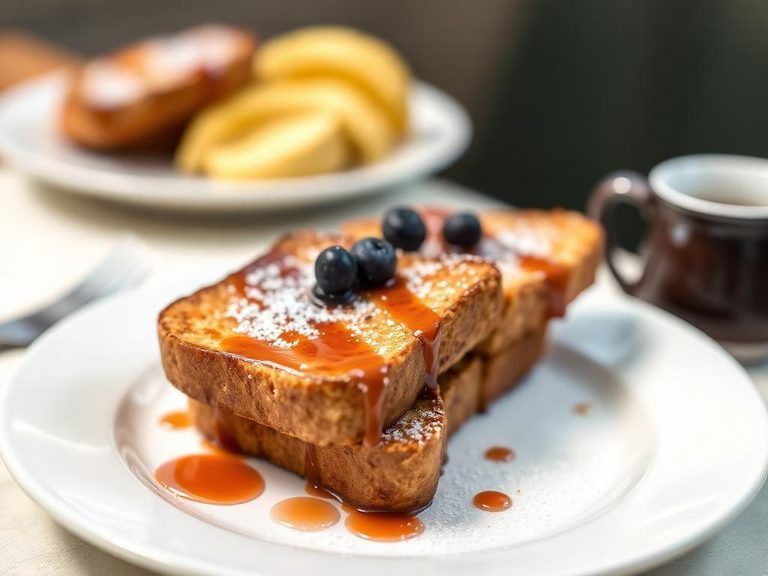
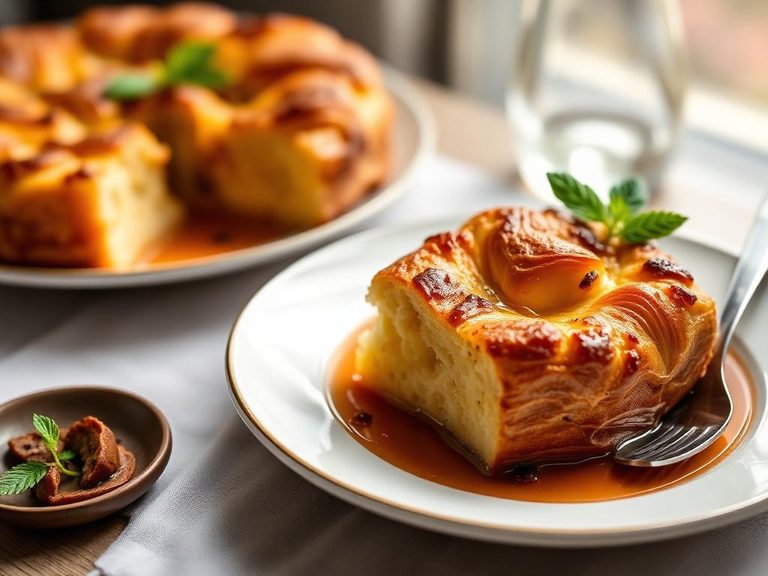
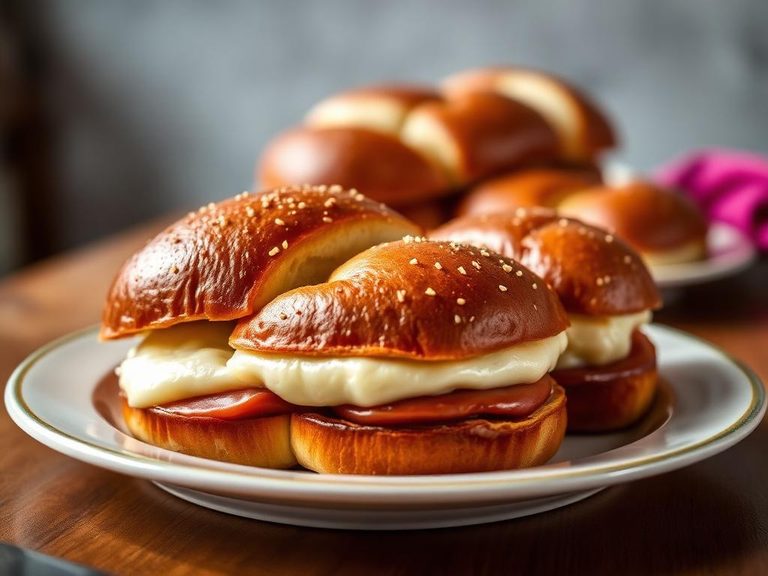
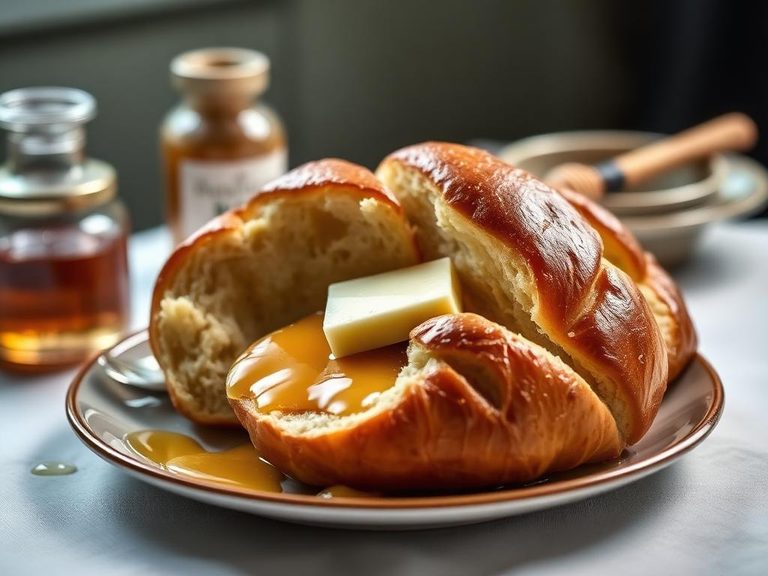
People adore toasted challah for its luxurious, slightly sweet flavor and the way it crisps up perfectly, creating a textural contrast that elevates any meal. Its cultural significance, especially in Jewish cuisine, adds a layer of comfort and tradition, making it a beloved staple for breakfast, French toast, or simply with butter.
⚠️ Watch-outs & how to enjoy it better
The high carbohydrate content (52.53g per 100g) can cause blood-sugar spikes, especially if consumed without protein or fat. It is also a common allergen (wheat, eggs) and may contain added sodium. To counteract this, pair it with protein-rich toppings like eggs or nut butter, or use smaller portions to manage blood sugar levels.
Key benefits
- High protein content for a bread, supporting muscle maintenance
- Provides sustained energy from complex carbohydrates
- Contains dietary fiber (2.5g) to aid digestion
- Versatile base for both sweet and savory meals
- Rich in B vitamins from the enriched flour and eggs
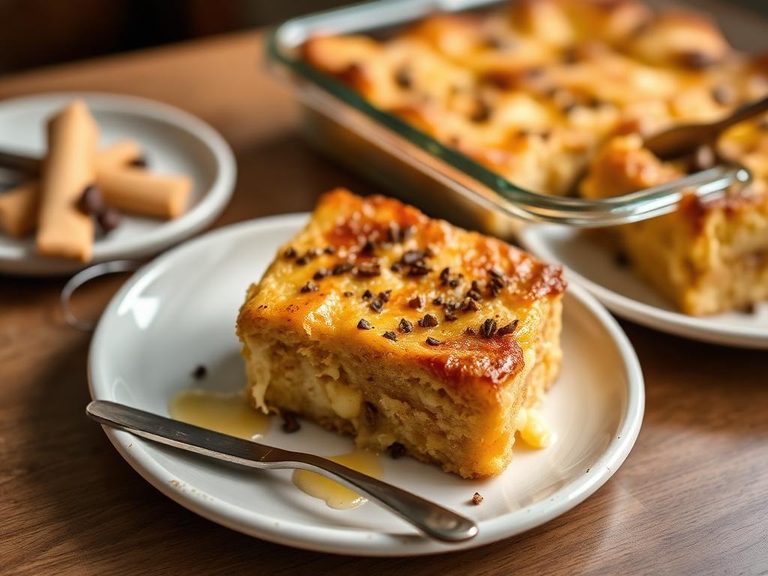
🍽️ Popular dishes
🌍 Where it's eaten
💡 Did you know?
Challah is traditionally braided to symbolize the twelve loaves of bread offered in the Temple in Jerusalem, and the braid itself represents unity and the intertwining of the six days of creation.
Full nutrition (USDA data · scales with serving)
| Water | 28.2 g |
| Energy | 315 kcal |
| Protein | 10.4 g |
| Total lipid (fat) | 6.6 g |
| Carbohydrate, by difference | 52.5 g |
| Fiber, total dietary | 2.5 g |
| Total Sugars | 2.0 g |
| Calcium, Ca | 102 mg |
| Iron, Fe | 3.3 mg |
| Magnesium, Mg | 21.0 mg |
| Phosphorus, P | 116 mg |
| Potassium, K | 126 mg |
| Sodium, Na | 418 mg |
| Zinc, Zn | 0.87 mg |
| Copper, Cu | 0.18 mg |
| Selenium, Se | 33.1 ug |
| Vitamin C, total ascorbic acid | 0.00 mg |
| Thiamin | 0.39 mg |
| Riboflavin | 0.48 mg |
| Niacin | 5.3 mg |
| Vitamin B-6 | 0.07 mg |
| Folate, total | 98.0 ug |
| Folic acid | 33.0 ug |
| Folate, food | 65.0 ug |
| Folate, DFE | 121 ug |
| Choline, total | 92.6 mg |
| Vitamin B-12 | 0.11 ug |
| Vitamin B-12, added | 0.00 ug |
| Vitamin A, RAE | 66.0 ug |
| Retinol | 66.0 ug |
| Carotene, beta | 0.00 ug |
| Carotene, alpha | 0.00 ug |
| Cryptoxanthin, beta | 0.00 ug |
| Lycopene | 0.00 ug |
| Lutein + zeaxanthin | 47.0 ug |
| Vitamin E (alpha-tocopherol) | 0.29 mg |
| Vitamin E, added | 0.00 mg |
| Vitamin D (D2 + D3) | 0.40 ug |
| Vitamin K (phylloquinone) | 1.0 ug |
| Alcohol, ethyl | 0.00 g |
| Caffeine | 0.00 mg |
| Theobromine | 0.00 mg |
Fat & fatty acid profile (per 100g)
| Fatty acids, total saturated | 1.8 g |
| SFA 4:0 | 0.00 g |
| SFA 6:0 | 0.00 g |
| SFA 8:0 | 0.00 g |
| SFA 10:0 | 0.00 g |
| SFA 12:0 | 0.00 g |
| SFA 14:0 | 0.02 g |
| SFA 16:0 | 1.2 g |
| SFA 18:0 | 0.51 g |
| Fatty acids, total monounsaturated | 2.5 g |
| MUFA 16:1 | 0.12 g |
| MUFA 18:1 | 2.4 g |
| MUFA 20:1 | 0.01 g |
| MUFA 22:1 | 0.00 g |
| Fatty acids, total polyunsaturated | 1.2 g |
| PUFA 18:2 | 1.1 g |
| PUFA 18:3 | 0.05 g |
| PUFA 18:4 | 0.00 g |
| PUFA 20:4 | 0.05 g |
| PUFA 20:5 n-3 (EPA) | 0.00 g |
| PUFA 22:5 n-3 (DPA) | 0.00 g |
| PUFA 22:6 n-3 (DHA) | 0.01 g |
| Cholesterol | 56.0 mg |
Amino acid profile (per 100g)
Estimated from Bread, salvadoran sweet cheese (quesadilla salvadorena) — USDA does not publish this profile for Bread.
| Tryptophan | 0.07 g |
| Threonine | 0.21 g |
| Isoleucine | 0.30 g |
| Leucine | 0.65 g |
| Lysine | 0.50 g |
| Methionine | 0.28 g |
| Cystine | 0.06 g |
| Phenylalanine | 0.37 g |
| Tyrosine | 0.23 g |
| Valine | 0.43 g |
| Arginine | 0.25 g |
| Histidine | 0.15 g |
| Alanine | 0.36 g |
| Aspartic acid | 0.59 g |
| Glutamic acid | 1.3 g |
| Glycine | 0.20 g |
| Proline | 0.83 g |
| Serine | 0.45 g |
| Hydroxyproline | 0.00 g |
FAQ
Is toasted challah healthier than regular bread?
Toasting doesn't significantly change the nutritional profile, but it can make the bread easier to digest and enhance its flavor. The main nutritional difference comes from the enriched dough, which includes eggs and sometimes oil, making it higher in protein and fat than plain bread.
Can I use toasted challah for French toast?
Absolutely! Toasted challah is ideal for French toast because its dense, eggy texture holds up well to soaking, and the toasting helps it crisp up beautifully when cooked.
How should I store toasted challah?
Store toasted challah in an airtight container at room temperature for up to 2 days, or freeze it for up to 3 months. Reheat in a toaster or oven to restore crispness.
Nutrient density (calculated · NRF9.3)
Nutrient Rich Foods index: beneficial nutrients (protein, fiber, vitamins, minerals) minus saturated fat, added sugar & sodium, per 100 kcal.
NRF9.3 index — Fulgoni, Keast & Drewnowski, 2009. Computed from USDA nutrients.
Weight-loss friendliness (composite index)
Energy density 3.15 kcal/g · 13% calories from protein · 2.5 g fiber · 2.0 g sugar per 100 g.
Composite of energy density (Rolls et al., 1999), protein & fiber satiety, minus sugar. A calculated heuristic — ranks satiety-per-calorie, not a clinical measure.
Dietary load (calculated from USDA values)
Potential renal acid load. Positive = acid-forming, negative = alkaline-forming.
Sodium-to-potassium ratio: 3.32 (lower is better — aim for ≤ 1)
Sodium:potassium per WHO potassium guidance. Computed from USDA nutrients.